Main Courses
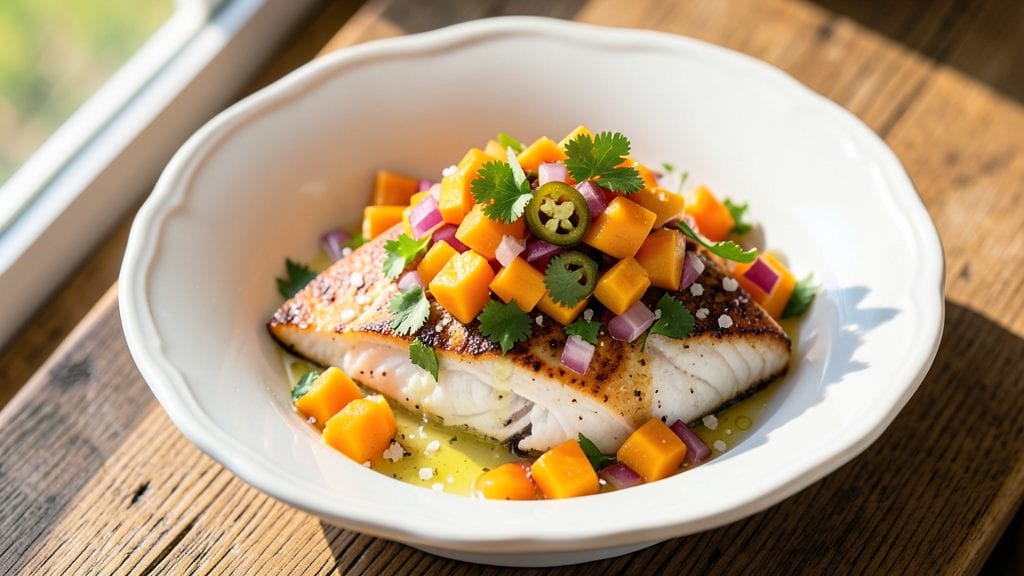
This baked fish with mango salsa recipe transforms simple weeknight dinners into vibrant tropical feasts that balance flaky perfection with bright, refreshing flavors.
The secret lies in a perfectly seasoned fillet that stays moist while developing a delicate crust, paired with a fresh mango salsa that adds sweet-tart complexity without overpowering the delicate fish.
I developed this recipe after years of testing different baking techniques and salsa combinations to achieve that ideal harmony between texture and flavor.
The beauty of this dish is its simplicity—just a few high-quality ingredients that come together in under 30 minutes of active prep time. The mango salsa requires no cooking; it's all about chopping fresh ingredients and letting their natural sweetness shine.
Meanwhile, the fish bakes at a precise temperature to ensure it remains tender and flaky while developing that subtle golden crust that makes every bite satisfying. This recipe works beautifully with white fish like cod or tilapia, but it also shines with firmer options like mahi-mahi or halibut.
What makes this dish truly special is how the flavors and textures play together. The juicy, ripe mango in the salsa provides a refreshing contrast to the warm, savory fish, while the cilantro and lime add bright, herbal notes that cut through the richness.
The result is a plate that's both elegant and approachable—perfect for dinner parties or a special weeknight meal when you want something that feels celebratory without being complicated. The salsa can be made ahead and stored in the refrigerator, making this a practical yet impressive recipe.
Serve this baked fish with a side of fluffy jasmine rice or a simple mixed greens salad to round out the meal. The salsa works equally well as a topping or a side, so feel free to experiment with how much you use.
For an extra touch of sophistication, garnish with fresh cilantro leaves or a sprinkle of flaky sea salt before serving. This recipe delivers restaurant-quality results with minimal effort—a true win for home cooks looking to impress.
Ingredients for baked fish with mango salsa
Bright tropical flavors meet delicate fish fillets in this effortless yet elegant dish.
| Ingredient | Amount | Notes |
|---|---|---|
| White Fish Fillets 🐟 | 4 pieces | Cod, tilapia, or mahi-mahi preferred |
| Ripe Mango 🍈 | 1 ½ cups | Diced, juicy variety like Ataulfo |
| Fresh Cilantro 🌿 | ½ cup | Chopped, stems removed |
| Red Onion 🧅 | ¼ cup | Finely diced, red preferred |
| Lime Juice 🍋 | ¼ cup | Freshly squeezed, seeds removed |
| Jalapeño Pepper 🌶️ | 1 whole | Seeded, minced for salsa |
| Extra-Virgin Olive Oil 🫒 | 2 tbsp | For fish and salsa |
| Garlic Cloves 🧄 | 3 cloves | Minced, fresh preferred |
| Salt 🧂 | 1 tsp | Sea salt, kosher preferred |
| Ground Black Pepper 🌶️ | ½ tsp | Freshly ground |
| Flaky Sea Salt 🧂 | 1 tbsp | For garnish, Maldon preferred |
| All-Purpose Flour 🌾 | 2 tbsp | For dredging fish |
| Lemon Pepper Seasoning 🍋 | 1 tbsp | Store-bought or homemade |
The fish is the foundation—look for fresh, firm fillets with minimal fishy odor. Whole Foods or local seafood markets often carry the best quality, especially for cod or mahi-mahi. If using frozen, thaw overnight in the fridge (never in warm water). The mango should be ripe but firm—think slightly soft when pressed, not mushy. Ataulfo or Tommy Atkins varieties work best for their sweetness and texture. For the cilantro, avoid the outer wilted leaves—pick the bright green stems for maximum flavor. The jalapeño adds just the right kick, but remove seeds if you prefer less heat. Fresh lime juice is non-negotiable here; bottled won't give the same bright acidity.
No ripe mango? Substitute with pineapple or peach—just adjust the sweetness to taste. Skip the jalapeño for a milder salsa, but add a pinch of ground cumin for depth. Running short on cilantro? Fresh basil or parsley work in a pinch, though the flavor will differ slightly. For the fish seasoning, if you don't have lemon pepper, mix 1 tsp lemon zest + 1 tsp black pepper. The flour dredge is optional but helps create that delicate crust—use all-purpose or gluten-free flour if needed. If you can't find flaky sea salt, regular kosher salt works, but it won't add the same elegant finish.
The mango salsa keeps beautifully in the fridge for up to 3 days—it actually tastes better after the flavors meld. Store it in an airtight container with a layer of plastic wrap pressed directly on the surface to prevent browning. The fish, once cooked, reheats well for 1-2 days in the fridge, though it's best served fresh. For meal prep, bake extra fish and store it separately, then assemble plates just before serving. The salsa freezes for up to 3 months if packed in a freezer-safe container, though texture may soften slightly. Garnish with extra cilantro and flaky salt right before serving to keep everything vibrant.
Why You'll Love This Recipe
- No Chopping Chaos: I swear by this recipe—just dice the onion and mango into rough chunks (no fancy techniques here). The salsa comes together in minutes while the fish bakes, and honestly? That’s all it takes.
- Sweet-Savory Magic: The mango’s natural sweetness cuts through the fish’s mild flavor, while lime juice and cilantro add that bright, herby kick. It’s the kind of balance that makes you reach for seconds without even thinking.
- Weeknight Hero: Throw it together before work and it’s ready by dinnertime—no last-minute stress. I’ve served it at family gatherings, potlucks, and even lazy Sunday brunches. It’s that reliable.
- Leftovers That Don’t Suck: Unlike takeout, this actually tastes better the next day. Pack the salsa separately, and you’ve got a lunch that feels like a treat—no sad, greasy leftovers in sight.
Step-by-step instructions for baked fish with mango salsa
Here's how to create a perfectly flaky baked fish with vibrant tropical salsa that complements every bite.
Prepare the Mango Salsa
In a medium bowl, combine the 1.5 cups diced ripe mango, 0.5 cup chopped fresh cilantro, 0.25 cup finely diced red onion, and 1 minced seeded jalapeño pepper. Mix gently to distribute all ingredients evenly. This step ensures the flavors meld together before adding the liquid components.
Add 0.25 cup freshly squeezed lime juice and 2 tablespoons extra-virgin olive oil to the bowl. Stir well to combine, then taste and adjust seasoning with 1 teaspoon salt and 0.5 teaspoon ground black pepper as needed. The salsa should be bright and slightly tangy, with the jalapeño adding just a hint of heat. Let it sit at room temperature for 10 minutes while you prepare the fish—this allows the flavors to fully develop.
Season and Dredge the Fish Fillets
Place the 4 white fish fillets on a clean work surface or plate. Sprinkle evenly with 1 tablespoon lemon pepper seasoning, pressing gently to ensure the seasoning adheres to the fish. This step is crucial for building flavor and ensuring each bite has a balanced taste.
In a shallow dish, combine 2 tablespoons all-purpose flour with an additional 0.5 teaspoon ground black pepper. Lightly dredge each fish fillet in the flour mixture, tapping off any excess. The flour creates a delicate crust that will become crispy when baked, contributing to the flaky texture promised in the title. Place the seasoned fillets on a parchment-lined baking sheet.
Bake the Fish to Flaky Perfection
Preheat your oven to 400°F to ensure it reaches the optimal temperature for baking the fish. Once preheated, place the baking sheet with the fish fillets on the middle rack. Bake for 12-15 minutes, or until the fish is opaque and flakes easily with a fork. The edges should appear lightly golden, indicating the crust has formed properly.
Here's the thing—don't overcook the fish. It's done when the center reaches 145°F internally, and the flakes separate cleanly. Overcooking even by a minute can make the fish dry and lose its delicate texture. If you're unsure, start checking at the 12-minute mark to avoid missing the window.
Assemble and Serve
Remove the baked fish from the oven and let it rest for 2-3 minutes on the baking sheet. This brief resting period allows the juices to redistribute, ensuring each bite remains moist and flavorful. While the fish rests, spoon the prepared mango salsa evenly over each fillet.
Sprinkle each fillet with 1 tablespoon flaky sea salt just before serving. The salt enhances the natural flavors of the fish and adds a delightful contrast to the sweet and tangy salsa. Serve immediately to enjoy the fish at its peak texture and temperature, with the salsa providing a refreshing tropical accompaniment.
Pro Tips For Making Baked Fish With Mango Salsa
- Preheat Like It Matters: Your oven should hit 425°F (220°C) and hold steady for 10 minutes before adding the fish. I learned this the hard way—cold pans and uneven heat mean fish that steams instead of crisps, and nobody wants sad, flaky mush. Trust me, the extra minute saves you from overcooking.
- Dice Mango Small: Cut the mango into ¼-inch cubes, not chunks—this ensures even distribution in the salsa and prevents a few giant pieces from drowning in lime while the rest stays bland. (Yes, I’ve eaten that mistake. No, it’s not fun.)
- Salt the Fish Last: Season the fillets right before baking, not when you start prepping. The salt draws out moisture, and if you do it too early, your fish will stick to the pan like glue. Pat it dry right after salting—this is the thing that matters most for that perfect crust.
- Use a Wire Rack: Skip the foil tent and place the fish on a wire rack over a baking sheet. The air circulates, so the skin gets crispy instead of soggy. (Your future self will thank you when the fish isn’t swimming in its own juices.) If you’re lazy, at least prop the fillets up on a folded paper towel—it’s not the same, but it’s better than nothing.
Troubleshooting perfect results
Fish Stays Dry
If your baked fish turns out dry, the most likely culprit is overcooking or improper prep. First, ensure your fillets are skin-on—the skin helps retain moisture during baking.
Pat them very dry with paper towels before seasoning, but don’t press too hard, as this can break down the fish fibers. Bake at 400°F for no more than 15 minutes—any longer and the delicate texture suffers.
For extra insurance, brush the fillets with 1 tablespoon olive oil before dredging in flour to create a moisture barrier. 🌡️
Salsa Too Watery
A watery mango salsa usually means overripe fruit or excess lime juice. To fix it, use firm but ripe mango (like Ataulfo) and squeeze the lime juice just before mixing—never ahead of time.
For a thicker texture, let the salsa sit uncovered in the fridge for 30 minutes to evaporate excess moisture. If it’s still too loose, mix in 1 teaspoon cornstarch dissolved in 1 teaspoon water, then stir in gently. This trick works wonders without altering the flavor. 💧
Fish Breaks Apart
Fish fillets that fall apart when handling or baking are often too thin or improperly seasoned. Choose 1-inch thick fillets for structure, and avoid overhandling them. The flour dredge should be light—just enough to coat, not encase.
For extra stability, place a parchment paper-lined baking sheet on the middle rack to prevent the fish from sticking or shifting during baking. If using delicate fish like tilapia, reduce baking time to 10-12 minutes to avoid overcooking. ✨
Salsa Loses Color
Bright mango salsa can dull if exposed to air or light. To prevent browning, store it in an airtight container with plastic wrap pressed directly onto the surface. For extra vibrancy, add 1 teaspoon freshly squeezed lemon juice just before serving—it brightens the colors and enhances the tropical flavors.
If the salsa sits too long, fold in 1 tablespoon chopped fresh cilantro to revive its freshness. 🌿
Uneven Cooking
If your fish cooks unevenly, the fillets are likely thickness-inconsistent or the oven isn’t calibrated. Use a meat thermometer to check the thickest part of each fillet—it should reach 145°F at the center. For even heat distribution, place the baking sheet on the middle rack and avoid crowding the pan.
If your oven runs hot, reduce the temperature to 375°F and bake for 18-20 minutes. A light spray of olive oil on the baking sheet also helps prevent hot spots. 🔥
Nutrition facts
Frequently asked questions
What's the best fish for this baked recipe?
White fish like cod, tilapia, or mahi-mahi work best—they stay moist and flaky. For firmer texture, try halibut or snapper. Avoid delicate fish like sole, which can break apart during baking. Always choose fillets with 1-inch thickness for perfect results.
Can I make the mango salsa ahead of time?
Yes! The salsa keeps well in an airtight container for 3 days in the fridge. For best flavor, let it sit at room temperature for 10 minutes before serving to revive its brightness. Freeze for 3 months if needed, though texture may soften slightly.
How do I adjust the heat in the salsa?
Remove jalapeño seeds for milder heat, or skip it entirely for no spice. For extra kick, add ½ teaspoon red pepper flakes or a dash of hot sauce. The lime juice naturally balances heat—adjust to taste after mixing.
Why does my fish stick to the baking sheet?
Use parchment paper or lightly oil the sheet to prevent sticking. Avoid overcrowding fillets—leave 1-inch space between them for even cooking. Pat fillets dry before seasoning to help them release from the pan.
What sides pair well with this dish?
Serve with fluffy jasmine rice, quinoa, or a simple cucumber salad. For a tropical theme, add grilled pineapple slices or avocado wedges. The salsa also works as a marinade for shrimp or chicken if you want to expand the meal.