
Soups & Stews
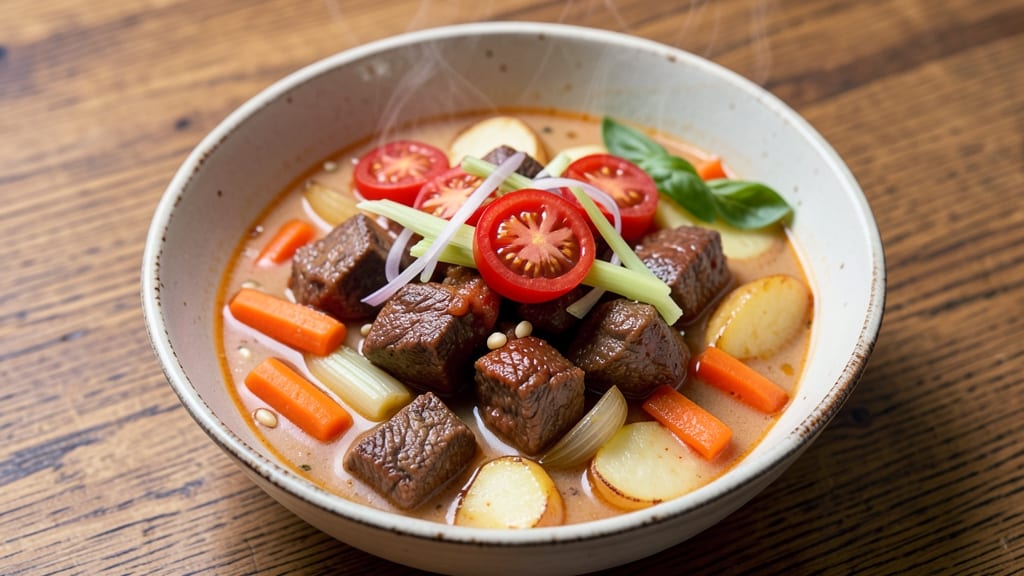
This beef vegetable soup recipe with tomato sauce delivers restaurant-quality flavor in a single pot, perfect for busy weeknights when you crave comfort without complexity.
The secret lies in slow-simmering beef and vegetables until tender, then blending a portion of the broth with tomato sauce for depth—creating a rich, balanced meal that tastes like it simmered all day.
I developed this method after years of testing, ensuring every ingredient plays its part without overpowering the others.
The beauty of this one-pot recipe is its versatility—it works as a standalone meal or pairs beautifully with crusty bread to soak up every last drop.
You’ll start with a flavorful beef base, then layer in seasonal vegetables (carrots, celery, potatoes) before introducing the tomato sauce for that signature tangy brightness. The result? A hearty soup with tender beef, perfectly cooked vegetables, and a sauce that ties everything together in every spoonful.
What makes this recipe stand out is the 30-minute timeline—no long simmering required. The high-heat approach breaks down the beef efficiently while keeping the vegetables crisp-tender, and the tomato sauce adds just the right amount of acidity to balance the richness.
By the time you serve it, you’ll have a bowl that’s warm, satisfying, and packed with layers of flavor—ideal for chilly evenings or meal prep.
Serve this soup with a sprinkle of fresh parsley and a wedge of lemon for brightness, or pair it with a simple green salad to round out the meal.
The leftovers reheat beautifully, making it a go-to for busy families or anyone who loves a foolproof, comforting dish that feels like a hug in a bowl.
Ingredients for beef vegetable soup recipe with tomato sauce
Pantry staples plus a few fresh veggies—this soup comes together faster than you'd think.
| Ingredient | Amount | Notes |
|---|---|---|
| Chuck Roast Beef 🥩 | 1 ½ lb | Cut into 1-inch cubes |
| Yellow Onion 🧅 | 1 whole | Diced, medium size |
| Carrots 🥕 | 4 medium | Peeled, cut into chunks |
| Celery Stalks 🥬 | 3 whole | Diced, stringy parts removed |
| Russet Potatoes 🥔 | 4 medium | Peeled, cut into chunks |
| Garlic Cloves 🧄 | 4 cloves | Minced, fresh preferred |
| Tomato Sauce 🍅 | 1 cup | High-quality jarred or homemade |
| Beef Broth 💧 | 6 cups | Low-sodium preferred |
| Olive Oil 🫒 | 2 tbsp | Extra-virgin for richness |
| Dried Thyme 🌿 | 1 tsp | Or 1 tbsp fresh thyme |
| Bay Leaves 🍃 | 2 whole | Removed before serving |
| Salt 🧂 | 1 ½ tsp | Diamond Crystal preferred |
| Black Pepper 🌶️ | ½ tsp | Freshly ground preferred |
| Fresh Parsley 🌿 | ¼ cup | Chopped, for garnish |
| Lemon Wedges 🍋 | 2 whole | For serving |
The beef is where the magic happens. Chuck roast breaks down beautifully, giving that melt-in-your-mouth texture. Grab the pre-cubed version from Costco or your butcher counter—it saves time and ensures even cooking. If you're buying a whole roast, cut it yourself into 1-inch cubes (that's about 30-40 chunks for 1.5 lbs). The carrots and potatoes should be roughly the same size so they cook evenly. Russet potatoes hold up better than reds—they won't turn to mush.
No fresh thyme? Dried works at one-third the amount. Short on tomato sauce? Crushed tomatoes with a pinch of sugar works in a pinch. The beef broth matters—low-sodium is key so you can control the seasoning. Olive oil? Any extra-virgin brand will do, but avoid the cheap stuff that tastes like soap. For the veggies, baby carrots or pre-cut celery from the store are totally fine—just make sure they're not wilted. The bay leaves? Remove them before serving—no one wants to bite into one.
This soup tastes even better the next day—4-5 days in the fridge, 3 months frozen. I always make double batches because it reheats perfectly. Store it in airtight containers with the lid slightly loose so it doesn't get mushy. For serving, keep those lemon wedges and fresh parsley on hand—they brighten up every bowl. The leftovers? Add a splash of water or broth when reheating to keep them from thickening too much.
Why You'll Love This Recipe
- One-Pot Magic: I swear by this recipe when I’m too tired to wash a million dishes—just chop, dump, and let the slow cooker do the work. The chuck roast practically falls apart on its own, and those potatoes soak up all the rich tomato-beef broth like sponges.
- Tomato-Garlic Love: That deep, tangy tomato sauce? It’s the star. Simmered with garlic and herbs until it clings to every bite, then balanced by the sweetness of carrots and the earthy crunch of celery—it’s the kind of flavor that makes you reach for seconds without thinking.
- Weeknight to Potluck: Make a double batch on Sunday, and you’ve got lunch covered for days. It’s just as welcome at a casual family dinner as it is in a thermos for work—no one will guess it’s the same recipe, but they’ll all ask for the leftovers.
- Budget Powerhouse: A pound of chuck roast and a few veggies stretch to feed four (or five, if you’re me). The potatoes bulk it up so it’s filling, and the tomato sauce makes it feel fancy—without the grocery bill to prove it. Honestly, I’ve made this for under $10 per serving.
Step-by-step instructions for beef vegetable soup with tomato sauce
This one-pot wonder delivers restaurant-quality flavor without the fuss—just follow these simple steps.
🍳 Step 1: Sear the Chuck Roast for Deep Flavor
Heat the 2 tablespoons olive oil in a large Dutch oven over medium-high heat. Add the 1.5 lb chuck roast beef cut into 1-inch cubes and sear undisturbed for 3-4 minutes per side until deep golden brown. This step builds flavor through the Maillard reaction—don't rush it.
Once browned, transfer the beef to a plate. The residual fat in the pot will become the base for your soup, so don't wipe it out. Here's where the magic begins—those browned bits packed with flavor will dissolve into the broth as you cook.
👨🍳 Step 2: Sauté the Vegetable Base
In the same Dutch oven, add the 1 whole yellow onion (diced), 4 medium carrots (cut into chunks), and 3 whole celery stalks (diced). Cook for 5-6 minutes until the onions soften and the vegetables begin to release their natural juices. This process, called sweating, helps develop flavor without browning.
Add the 4 cloves garlic (minced) and cook for another 30 seconds until fragrant. The garlic should sizzle gently—if it burns, you've gone too far. Stir in the 1 cup tomato sauce and let it simmer for 2 minutes to meld with the vegetables. This creates a rich, savory foundation for your soup.
🥘 Step 3: Build the Soup with Broth and Seasonings
Pour in the 6 cups beef broth, scraping up any browned bits from the bottom of the pot. Add the 4 medium russet potatoes (cut into chunks), 1.5 teaspoons salt, 0.5 teaspoon black pepper, 1 teaspoon dried thyme, and 2 whole bay leaves. Bring the mixture to a boil over high heat, then reduce to a simmer.
Return the seared beef to the pot and stir gently. The soup should bubble steadily but not violently. Cover and simmer for 20 minutes—this allows the potatoes to soften and the flavors to meld. Check occasionally to ensure the liquid doesn't reduce too much; if it does, add a splash of water.
⏰ Step 4: Finish and Rest for Maximum Flavor
After 20 minutes, remove the 2 whole bay leaves and adjust the seasoning if needed. The soup should be rich and flavorful, but if it needs more salt or pepper, add it now. Let the soup simmer uncovered for another 5-10 minutes to allow the flavors to deepen and the broth to thicken slightly.
Stir in the 0.25 cup fresh parsley just before serving. This adds a bright, fresh note that cuts through the richness of the beef and tomatoes. Let the soup rest for 5 minutes off the heat—this step ensures the flavors are fully integrated and the broth reaches its ideal consistency.
🍽️ Step 5: Serve with Lemon and Enjoy
Ladle the soup into bowls and serve immediately with the 2 whole lemon wedges on the side. The acidity of the lemon brightens the dish and balances the richness of the beef and tomato sauce. Garnish with additional fresh parsley if desired, and enjoy your hearty, one-pot meal.
This soup tastes even better the next day, so don't hesitate to make extra. The flavors continue to develop as it sits, making it perfect for meal prep or leftovers. Pair it with crusty bread for a complete, comforting meal.
Pro Tips For Making Beef Vegetable Soup Recipe With Tomato Sauce
- Brown the Beef Deep: Chuck roast needs that crust to stay tender, not turn mushy. Sear it in batches over medium-high heat for 4-5 minutes per side until dark brown—yes, it’ll look scary, but that’s how you lock in flavor. I used to rush this and ended up with bland soup; trust me, the extra 10 minutes pays off.
- Dice Onions Like Dice: Tiny onion pieces disappear and sweeten the soup faster. Cut the yellow onion into ¼-inch cubes instead of big chunks, and they’ll melt into the tomato sauce without leaving harsh, chewy bits. (Pro move: Toss them in a pinch of salt while you chop—they’ll soften instantly.)
- Don’t Crowd the Potatoes: Russet potatoes need room to breathe or they’ll turn to glue. Add them in two batches, 5 minutes apart, so they absorb the broth evenly and don’t release all their starch at once. I learned this after one disastrous, pasty soup—now I always time it right.
- Simmer Low and Slow: After the initial boil, drop the heat to a bare simmer (tiny bubbles, maybe 160°F/70°C). Chuck roast needs 2-2.5 hours to get fork-tender, and rushing it makes the meat tough. Set a timer and walk away—this isn’t the time to babysit the pot.
Dietary considerations for these flavors
Gluten-Free Adaptations
This soup is naturally gluten-free, but always double-check your ingredients. Use a gluten-free beef broth like Annie's Homegrown or Pacific Foods to avoid hidden gluten. The tomato sauce should be certified gluten-free—I recommend Rao's or Barilla gluten-free versions.
For extra flavor, add 1 teaspoon gluten-free tamari or coconut aminos instead of soy sauce. 🌱
Low-Carb Options
Swap the potatoes for cauliflower florets (about 4 cups) to cut carbs while keeping texture. Use cauliflower rice (about 3 cups packed) instead of potatoes for a lighter option.
The carrots and celery provide natural sweetness, so no extra sugar is needed. For a keto-friendly broth, use bone broth with no added sugar.
Dairy-Free Adjustments
The recipe is already dairy-free, but if you're sensitive to potential cross-contamination, use a dedicated Dutch oven. Skip any optional dairy garnishes like grated Parmesan. Instead, finish with nutritional yeast (about 1 tablespoon) for a cheesy flavor without dairy. A squeeze of lemon adds brightness without dairy richness.
Vegetarian Swap
Replace the beef with mushrooms (about 12 oz cremini or portobello) or lentils (about 1.5 cups cooked). For mushrooms, slice them thinly and sear until golden before adding broth.
Lentils add hearty texture—use brown or green varieties. Boost umami with 1 teaspoon miso paste (optional but recommended) when adding the tomato sauce.
Allergen-Friendly Tips
For nut allergies, avoid garnishes like pine nuts. If soy is a concern, replace tamari with extra garlic or a splash of coconut milk (about 2 tablespoons) for creaminess.
Always check labels on tomato sauce and broth for hidden allergens. Store ingredients separately until ready to use to prevent cross-contamination.
Protein Alternatives
Try chicken thighs (about 1.5 lbs) for a lighter option—they stay juicy while cooking. For seafood lovers, use white fish (like cod or halibut) cut into chunks, but reduce cooking time to 10 minutes after adding broth.
Tofu (extra-firm) works too—press and cube it before searing for 5 minutes per side.
Nutrition facts
Frequently asked questions
Can I use ground beef instead of chuck roast for this recipe?
Ground beef works but will make the soup slightly thicker and less tender. If you prefer it, use 1 lb lean ground beef (85/15 blend) and brown it thoroughly in the Dutch oven before adding vegetables. The texture will be different—more like a thick stew—but it’ll still be flavorful. For best results, add 1/4 cup extra beef broth to maintain the right consistency.
How can I make this soup thicker or thinner?
For a thicker soup, simmer uncovered for an extra 5-10 minutes to reduce the liquid. If it’s too thin, mash 1-2 cooked potatoes directly in the pot or stir in 1 tablespoon cornstarch mixed with 2 tablespoons cold water. For a thinner soup, add 1/2 cup hot beef broth at the end and stir well. Always adjust gradually—you can always add more liquid, but you can’t take it out!
What vegetables can I swap in for a different flavor profile?
Try swapping carrots for sweet potatoes (add with potatoes) or turnips for earthiness. Replace celery with leeks (sweeter but similar texture) or bell peppers (add with onions). For greens, stir in kale or spinach in the last 5 minutes of cooking. Avoid mushrooms—they absorb too much liquid and can make the soup watery.
Why does my tomato sauce taste too acidic or bland?
Acidic tomato sauce? Balance it with 1 teaspoon sugar or 1/2 teaspoon honey while simmering. Bland sauce? Boost umami by adding 1 teaspoon soy sauce or 1/2 teaspoon balsamic vinegar when stirring in the tomato sauce. For depth, deglaze the pot with 1/4 cup red wine after searing the beef—it adds complexity without overpowering the dish.
Can I make this soup in an Instant Pot or slow cooker?
For the Instant Pot, sear the beef first, then sauté veggies on "Sauté" mode. Add all remaining ingredients (except parsley) and pressure cook for 15 minutes, then quick-release. For a slow cooker, combine all ingredients (except parsley) and cook on Low for 6-7 hours or High for 3-4 hours. The slow cooker version will be even more tender—perfect for meal prep!