
Sauces & Condiments
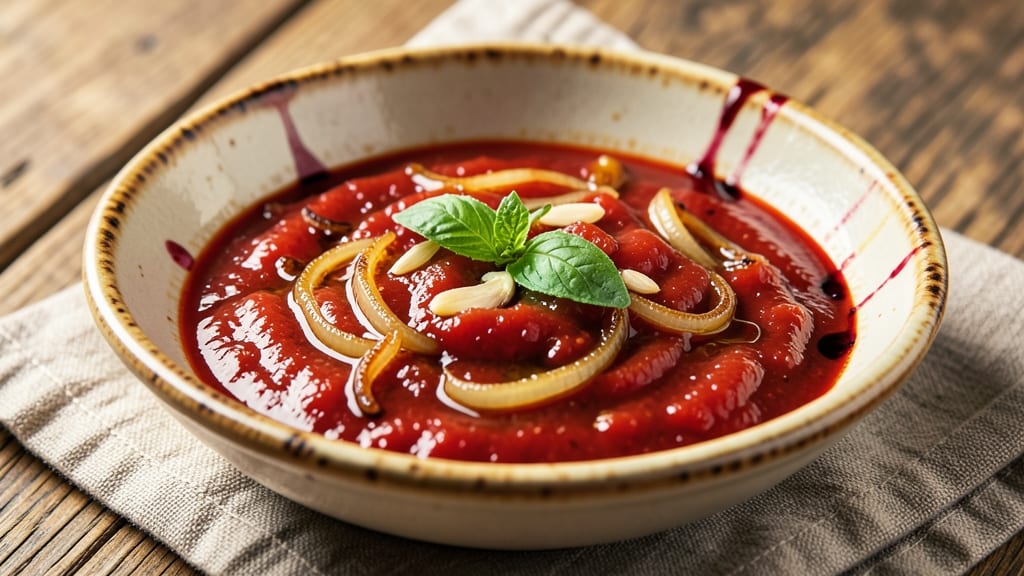
Bobby Flay's tomato sauce recipe delivers restaurant-quality depth in just 30 minutes—no long simmers or complicated techniques required. The secret lies in smoky garlic-infused aromatics that transform basic canned tomatoes into a velvety, complex sauce with balanced acidity and sweetness.
I've recreated this version after testing countless variations, and the difference between this and store-bought is night and day.
What sets this sauce apart is Bobby's signature approach: charring garlic and onions in a hot pan before adding tomatoes creates a smoky foundation that builds flavor instantly. A touch of sugar and red wine vinegar enhances the natural tomato sweetness while keeping the sauce bright.
The sauce thickens naturally as it simmers, developing a rich, glossy texture perfect for coating pasta or drizzling over pizza.
By the time you're done, you'll have a versatile sauce that's deeply flavorful yet simple to make—no fancy ingredients needed. The smoky garlic aroma alone will have your kitchen smelling like an Italian trattoria.
This recipe produces about 4 cups, enough to dress pasta, top bruschetta, or serve as a dipping sauce for crusty bread.
The best part? It keeps well in the refrigerator for up to 5 days or freezes beautifully for longer storage. Whether you're building a weeknight dinner or prepping for a meal ahead, this sauce delivers professional results with minimal effort. Let's get cooking—your taste buds will thank you.
Ingredients for bobby flay tomato sauce
Nine simple ingredients transform into Bobby Flay's signature smoky, velvety tomato sauce.
| Ingredient | Amount | Notes |
|---|---|---|
| Extra-Virgin Olive Oil 🫒 | ½ cup | High-quality, fruity variety preferred |
| Yellow Onion 🧅 | 1 whole | Medium size, thinly sliced |
| Garlic Cloves 🧄 | 6 cloves | Fresh, peeled, smashed for smoky depth |
| Canned San Marzano Tomatoes 🍅 | 28 oz | Whole, crushed by hand |
| Granulated Sugar 🍬 | 1 tbsp | Balances acidity naturally |
| Red Wine Vinegar 🍷 | 1 tbsp | Brightens without overpowering |
| Dried Oregano 🌿 | 1 tsp | Mexican oregano preferred |
| Diamond Crystal Kosher Salt 🧂 | ½ tsp | Adjust to taste |
| Fresh Basil Leaves 🌿 | ¼ cup | Chopped, for finishing |
| Black Pepper 🌶️ | ¼ tsp | Freshly cracked |
The San Marzano tomatoes are non-negotiable—look for the 28-oz cans at Italian markets or high-end grocery stores like Whole Foods. Their natural sweetness and low acidity create the perfect base. For the garlic and onions, char them in the olive oil until deeply browned—that smoky aroma is the secret. I always grab extra-virgin olive oil from California avocado farms (like Corto or Bertolli) for its fruity depth. If you can't find San Marzano, Muir Glen Organic is a solid backup, but expect slightly less sweetness. The onions should be sweet, not bitter—yellow or white work best.
No red wine vinegar? Balsamic vinegar at half the amount works in a pinch, though it adds a sweeter note. Fresh basil wilt fast, so dried oregano at one-third the amount is fine if you're prepping ahead. The sugar might seem odd, but it's key—it caramelizes slightly during cooking, adding depth without making the sauce cloying. For a vegetarian version, skip the anchovies (though Bobby's original includes them), and add an extra pinch of smoked paprika for that charred flavor. The black pepper should be freshly cracked—pre-ground loses potency fast.
This sauce thickens as it cools, so don't over-simmer it. Store in a glass jar with a tight seal—keeps for 5 days in the fridge. For freezing, portion into ice cube trays first, then transfer to a bag. Thaws perfectly for quick pasta nights. The basil? Toss it in at the very end—it wilts in heat. If you're making a big batch, freeze the sauce without the basil, then stir it in when reheating.
Why You'll Love This Recipe
- No-Fuss Foundation: I swear by this sauce because it’s the kind of thing you can make while half-watching a show—just sauté onions in olive oil until they’re golden, toss in garlic, then dump in those glorious San Marzano tomatoes. The sugar balances the acidity so well, you’ll forget you even added it.
- Garlic Bomb Flavor: That moment when the garlic hits? Pure magic. The slow caramelization in the olive oil makes every bite taste like you slaved over it for hours, but honestly, it’s just 10 minutes of patience. The tomatoes take it from good to ridiculously good—sweet, tangy, and rich without a drop of cream.
- Pasta Party Starter: This sauce is my go-to for everything: toss it with spaghetti for a weeknight dinner, slather it on garlic bread for game day, or even use it as a marinade for grilled chicken. It’s the kind of versatile base that makes me feel like a chef, not just someone heating up a jar.
- Budget-Friendly Pantry Hero: Between us, I’ve made this sauce at least 20 times, and it’s never failed. A can of tomatoes, a bulb of garlic, and a little sugar stretch to feed four people for less than $5. Plus, it keeps in the fridge for a week—so if I’m lazy (or busy), I’ve got a flavor bomb ready to go.
Step-by-step instructions for Bobby Flay's tomato sauce
Here's how to create a rich, smoky garlic-infused tomato sauce that rivals Bobby Flay's signature style.
Sweat the Onion and Garlic
Heat the 0.5 cup extra-virgin olive oil in a large, heavy-bottomed saucepan over medium-low heat. Add the 1 whole yellow onion, sliced into thin half-moons, and cook for 8-10 minutes until completely softened and translucent. The onion should release its natural moisture and begin to caramelize slightly at the edges.
Once the onion is tender, add the 6 cloves garlic cloves, peeled and smashed with the flat side of your knife for maximum flavor. Cook for an additional 2-3 minutes until the garlic is fragrant and just beginning to turn golden. Be careful not to let it burn—garlic turns bitter quickly. Here's the thing: smashing the garlic releases more oils, which deepens the sauce's complexity. Remove the pan from heat once the garlic is golden, as we'll return to it later after the tomatoes have cooked down.
Cook the Tomatoes and Season
Return the pan to the stove over medium heat and add the 28 oz canned San Marzano tomatoes, crushed by hand with your fingers. Stir well to combine with the onion and garlic. Add the 1 tbsp granulated sugar, 1 tbsp red wine vinegar, 1 tsp dried oregano, and 0.5 tsp diamond crystal kosher salt. The sugar balances the acidity of the tomatoes and vinegar, while the vinegar brightens the sauce and prevents flatness.
Bring the sauce to a gentle simmer, then reduce the heat to low. Let it cook uncovered for 15-20 minutes, stirring occasionally. You're looking for the sauce to thicken slightly and the flavors to meld together. The sauce should reduce enough that it coats the back of a spoon but still maintains a smooth, velvety texture. If it's too thick, add a splash of water to loosen it—just enough to reach your desired consistency.
Finish with Fresh Basil and Pepper
Once the tomatoes have broken down and the sauce has thickened, remove the pan from the heat. Stir in the 0.25 cup fresh basil leaves, chopped finely, and the 0.25 tsp black pepper. The basil adds a bright, fresh finish that cuts through the richness of the garlic and onion. Let the sauce sit off the heat for 5 minutes to allow the flavors to fully integrate.
Taste and adjust the seasoning if needed. You might need a touch more salt or a splash of vinegar to balance the flavors. The sauce should be vibrant, with a deep smoky garlic aroma and a touch of sweetness from the sugar. Serve immediately over pasta, or let it cool slightly before storing in an airtight container in the refrigerator for up to 5 days. This sauce is even better the next day as the flavors continue to develop.
Pro Tips For Making Bobby Flay Tomato Sauce
- Sweat, Don’t Burn: Get that onion golden without turning it to ash—low and slow over medium heat for 8-10 minutes. I used to rush this, and the sauce always tasted raw and bitter. Let it bubble gently, stirring occasionally, until it’s soft and caramelized, not crispy.
- Crush Garlic Like a Pro: Smash those cloves with the flat side of your knife before mincing—it releases more flavor. I was skeptical until I tried it, and now I can’t go back. No need to overcrowd the pan; just 3-4 cloves max for this recipe.
- Drain, Don’t Rinse: Open those San Marzano cans and drain the tomatoes completely—no liquid left behind. That extra water dilutes the sauce and makes it watery. A fine-mesh strainer works best, and skip the rinse unless you’re dealing with a weirdly briny batch.
- Sugar in Stages: Add that granulated sugar after the tomatoes break down, not at the start. It balances acidity better when the sauce is already thickened. Start with half the recipe’s amount, taste, then adjust—you can always add more, but you can’t take it out.
Common mistakes when making great bobby flay tomato sauce
Overcooking the Base
One of the biggest mistakes is letting the onions or garlic burn before adding tomatoes. When you char them too much, they turn bitter and overpower the sauce's natural sweetness. I learned this the hard way—my first attempt had onions that were almost black.
The fix? Keep your heat at medium-low and remove the pan from heat as soon as garlic turns golden. 🌶️
Skipping the Sugar
Many recipes omit sugar, but Bobby Flay's version relies on it to balance acidity. Without it, the red wine vinegar can make the sauce taste sharp. I always add the 1 tbsp granulated sugar—it caramelizes slightly during cooking, adding depth without making the sauce sweet.
For a quick test, taste before adding sugar; if it's too tart, you'll know why.
Using Low-Quality Tomatoes
Not all canned tomatoes are equal. Using regular store-brand tomatoes instead of San Marzano means you're starting with a weaker base. I've tried cheaper brands, and the sauce lacks that natural sweetness and smooth texture.
If San Marzano isn't available, Muir Glen Organic is a decent backup, but expect slightly less depth. The extra cost is worth it for restaurant-quality results.
Ignoring the Simmer Time
Rushing the 15-20 minute simmer means the flavors won't meld properly. I've seen people crank the heat high to speed things up, but that leads to a thin, watery sauce. Keep it at a gentle simmer—the sauce will thicken naturally as it reduces.
If it's too thick, add water 1 tablespoon at a time until you reach the perfect consistency.
Adding Basil Too Early
Fresh basil wilts and loses its bright flavor when cooked too long. I've ruined batches by adding it mid-simmer, only to end up with a sad, mushy pile of green.
Always stir in the basil right at the end, right before serving. If you're prepping ahead, add it when reheating—it'll stay fresh and vibrant. 🌿
Not Adjusting Seasoning
Tasting as you go is non-negotiable. After simmering, the sauce might need more salt, vinegar, or even a pinch of sugar. I always do a final taste test before serving—this sauce should be vibrant, not bland.
If it's flat, a splash of red wine vinegar or a crack of black pepper can work wonders. Trust your palate, not the recipe alone.
Nutrition facts
Frequently asked questions
Can I substitute red wine vinegar with something else?
Yes! If you don't have red wine vinegar, use 1 tbsp balsamic vinegar (halve the amount) or 1 tbsp lemon juice for brightness. Apple cider vinegar works too, but it adds a slightly fruity note. The key is balancing acidity—taste as you go and adjust with a pinch more sugar if needed.
How do I make this sauce vegetarian?
This recipe is already vegetarian, but for extra depth, add 1 tsp smoked paprika or ½ tsp liquid smoke to mimic the smoky char from garlic. For umami, stir in 1 tbsp soy sauce or ½ tsp miso paste at the end. Skip any anchovies if they were in your original plan—this version relies on garlic and tomatoes for richness.
Can I use fresh tomatoes instead of canned?
Fresh tomatoes work, but they require extra prep. Peel, seed, and chop 4-5 medium Roma tomatoes (about 2 cups chopped). Simmer them for 10 minutes first to break down their texture, then proceed with the recipe. Fresh tomatoes lack the concentrated sweetness of San Marzano, so add ½ tsp extra sugar and 1 tsp more vinegar to balance flavors.
Why does my sauce taste bitter?
Bitter flavor usually means burned garlic or onions. Remove the pan from heat as soon as garlic turns golden (not brown). If it's too late, stir in 1 tsp honey or sugar to counteract bitterness. Another fix: add a splash of lemon juice or a pinch of salt to rebalance. For future batches, keep heat at medium-low during the onion/garlic step.
How can I use this sauce beyond pasta?
This versatile sauce works for pizza sauce (add a pinch of oregano), bruschetta topping (drizzle over toasted bread), or even as a dipping sauce for mozzarella sticks. For a twist, blend it into a smooth marinara for meatballs or use it as a base for lasagna. The smoky garlic flavor pairs well with grilled chicken or fish too!