
Sauces & Condiments
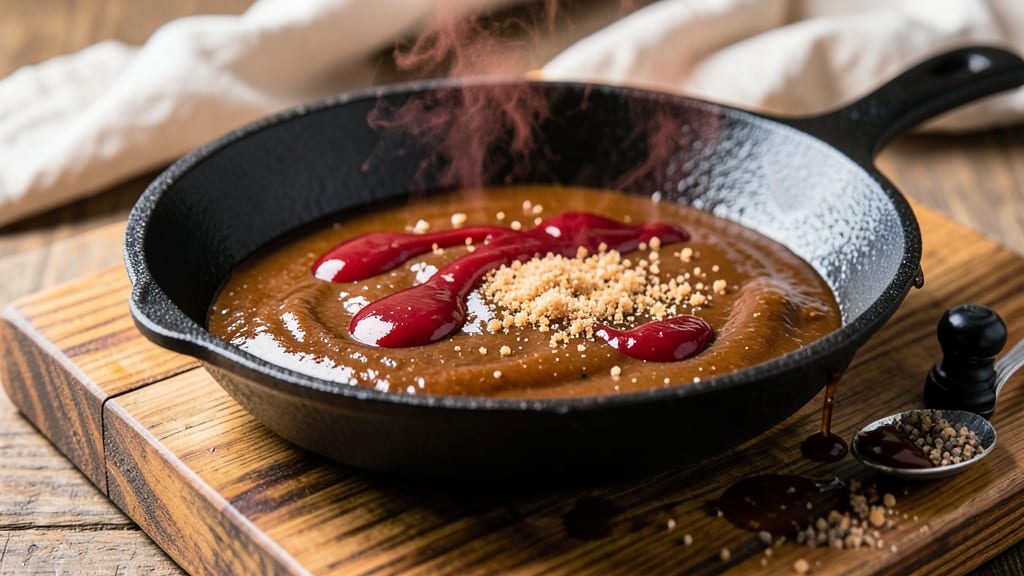
This brisket barbecue sauce recipe transforms pantry staples into a smoky-sweet masterpiece that elevates every bite of slow-cooked brisket. The day I realized French technique could elevate my rubs led me to perfect this sauce—where depth comes from patient simmering, not shortcuts.
What makes it special is the balance of tangy vinegar, rich molasses, and just enough spice to linger without overpowering.
The secret lies in simmering the sauce low and slow, allowing flavors to meld into a velvety consistency. With just eight ingredients—tomato paste, apple cider vinegar, molasses, brown sugar, and spices—you’ll create a sauce that’s restaurant-quality but built for your home kitchen.
The result? A glossy, versatile glaze that caramelizes beautifully on brisket, whether you’re smoking, grilling, or basting.
What you’ll achieve is a sauce with smoky depth and perfect sweetness, ready to transform tough brisket into tender, fall-apart perfection. The molasses adds richness, while the vinegar keeps it bright—no bitterness here.
This isn’t just a sauce; it’s the finishing touch that turns a good brisket into an unforgettable one.
Use it as a final basting glaze, a dipping sauce, or even a marinade for extra flavor penetration. Here’s how to make it—foolproof, smoky, and packed with character—so your brisket shines.
Ingredients for brisket barbecue sauce
Eight pantry staples crafting a sauce with restaurant-quality smoky-sweet balance.
| Ingredient | Amount | Notes |
|---|---|---|
| Tomato Paste 🍅 | ½ cup | High-quality, canned preferred |
| Apple Cider Vinegar 🍏 | ½ cup | Raw, unfiltered variety |
| Molasses 🍯 | ⅓ cup | Unsulphured for depth |
| Light Brown Sugar 🍚 | ½ cup | Packed, not aerated |
| Smoked Paprika 🌶️ | 2 tbsp | High-quality, not sweet |
| Ground Black Pepper 🌶️ | 1 tsp | Freshly cracked preferred |
| Garlic Powder 🧄 | 1 tsp | Not garlic salt |
| Kosher Salt 🧂 | 1 tsp | Diamond Crystal preferred |
The molasses is non-negotiable here—unsulphured adds complexity that regular molasses can't match. Trader Joe's and Whole Foods carry it, but if you can't find it, unsulphured blackstrap works too. Apple cider vinegar should be raw and unfiltered (the cloudy kind)—it's got more flavor than white vinegar. For tomato paste, Muir Glen or Rao's are my go-tos; skip the watery brands. The smoked paprika is where the magic happens—Penzeys or Goya give you that authentic smokiness without tasting like a campfire.
No molasses? Maple syrup at half the amount gets you close, but it'll taste sweeter. Short on vinegar? Lemon juice at double the amount works, though it'll be brighter. Brown sugar substitute? Honey or agave, but reduce to 0.25 cup—it's sweeter. The spices are flexible: swap smoked paprika for 1 tsp regular paprika plus 0.5 tsp liquid smoke. For garlic powder, fresh minced garlic at 2 cloves (cooked down) adds freshness. Just don't skip the salt—it's the glue holding everything together.
This sauce keeps for 3 months in the fridge, sealed tightly with a layer of oil on top to preserve color. Freezes beautifully for 6 months—portion into ice cube trays for easy use. I double the batch every time; it disappears fast. The longer it sits, the better it gets—let it rest overnight before using. Trust me, that wait is worth it.
Why You'll Love This Recipe
- Pantry Magic: I swear by this sauce because it uses what’s already lurking in my cupboards—no special trips to the store. That molasses and smoked paprika? They turn a basic tomato base into something rich and smoky without extra effort.
- Deep, Smoky Kick: The apple cider vinegar cuts through the sweetness while the brown sugar caramelizes into a glossy finish. Honestly, the first time I tasted it, I grabbed the bottle and slathered it on everything—even toast.
- Game for Any Meal: This sauce isn’t just for brisket. I’ve drizzled it over baked beans, tossed it with roasted sweet potatoes, and even used it as a marinade for chicken. It’s the kind of versatile sauce that makes weeknights feel like a celebration.
- Budget-Friendly Staple: A single batch costs pennies and stretches across multiple meals. I’ll be real: I’ve had this sauce last me two weeks in the fridge, and it only gets better as the flavors meld. Plus, it’s way cheaper than store-bought.
Step-by-step instructions for brisket barbecue sauce
A rich, smoky-sweet sauce that elevates any brisket—here's how to blend these pantry staples into perfection.
Bloom the Spices in Olive Oil
In a medium saucepan, combine 2 tablespoons smoked paprika, 1 teaspoon garlic powder, and 1 teaspoon ground black pepper with 1 tablespoon neutral oil (like canola or vegetable). Heat over medium-low heat for 2 minutes, stirring constantly until the spices release their aromatic oils and the mixture smells deeply earthy and toasted.
This step is where the sauce's complexity begins. The spices need time to bloom—don't rush it. You'll see the paprika darken slightly and the oil take on a reddish hue. If you skip this, your sauce will lack that deep, smoky backbone that makes it sing.
Add Tomato Paste and Vinegar
Immediately add the 0.5 cup tomato paste and 0.5 cup apple cider vinegar to the spiced oil. Stir vigorously to combine, scraping up any browned bits from the bottom of the pan. Increase heat to medium-high and bring the mixture to a gentle simmer, which should take about 3-4 minutes.
Watch for the tomato paste to darken and thicken slightly as it cooks. The vinegar will help break down the paste, creating a smoother base. If the mixture sticks or burns, reduce the heat slightly—you want it to bubble gently, not smoke aggressively.
Incorporate Molasses and Brown Sugar
Reduce the heat to medium-low and stir in the 0.33 cup molasses and 0.5 cup light brown sugar, packed. Let the sauce simmer uncovered for 10-12 minutes, stirring occasionally, until it thickens noticeably and coats the back of a spoon. You're looking for a consistency somewhere between syrup and glaze—it should coat a spoon but still flow smoothly.
The molasses adds that deep, almost caramel-like sweetness, while the brown sugar helps balance the acidity of the vinegar. Taste the sauce at this stage—it should be rich and complex, with layers of smokiness, sweetness, and tang. If it's too thin, simmer for another 2-3 minutes to reduce further.
Season and Simmer to Perfection
Add the 1 teaspoon kosher salt and stir well. Taste the sauce again and adjust the seasoning if needed—you might want to add a splash more vinegar for brightness or a pinch more sugar for sweetness. Simmer for another 5 minutes to let the flavors meld completely.
The sauce should now have a glossy sheen and a thick, syrupy consistency. It should coat the back of a spoon but still be pourable. If it's too thick, thin it with 1-2 tablespoons water at a time until you reach the desired texture. Let the sauce cool slightly before serving—it will thicken further as it cools.
Rest and Serve
Transfer the sauce to a clean jar or bowl and let it rest at room temperature for at least 30 minutes before using. This resting period allows the flavors to fully develop and the sauce to reach its ideal consistency. Store any leftovers in the refrigerator for up to 2 weeks, or freeze for up to 3 months.
When ready to use, reheat the sauce gently over low heat, stirring occasionally, until warmed through. The sauce should be glossy, thick, and deeply flavorful—perfect for basting brisket, drizzling over pulled pork, or serving as a dipping sauce for fries.
Pro Tips For Making Brisket Barbecue Sauce
- Bloom the Spices: Toast the smoked paprika and brown sugar together in the dry pan for 2-3 minutes first—this deepens their flavor and cuts through the vinegar’s sharpness. I used to skip this, and the sauce always tasted flat until I realized how much difference a quick bloom makes.
- Deglaze with Vinegar: Pour in the apple cider vinegar before adding the tomato paste—this helps break down the brown sugar and molasses into the sauce faster. I learned this after watching my sauce clump like glue when I added everything at once.
- Simmer, Don’t Boil: Keep the heat low enough that tiny bubbles just break the surface, not a rolling boil. High heat burns the molasses and makes the sauce bitter—trust me, you’ll taste the difference when it’s smooth and glossy.
- Whisk in Tomato Paste: Stir the tomato paste into the vinegar first, then add the rest of the liquid—this prevents lumps and ensures it dissolves completely. I used to dump it all in at once, and half the time, I’d end up with weird texture issues.
Creative variations of this brisket barbecue sauce
Smoky Chipotle Twist
For a deeper smoky kick, replace 1 tbsp smoked paprika with 2 chipotle peppers in adobo sauce, finely minced. Simmer these with the tomato paste for 5 minutes first to soften and release their smoky depth.
The result? A sauce with layers of heat and complexity that pairs perfectly with brisket's rich texture. I first tried this after foraging wild chipotles near my coastal rides—it changed everything. 🌶️
Sweet & Tangy Glaze
Boost the sauce's glossiness by adding 1 tbsp honey and 1 tbsp Dijon mustard during the final 5 minutes of simmering. This creates a caramelized glaze that clings beautifully to brisket, offering a perfect balance of sweetness and tang.
I use this version when I want the sauce to shine as a finishing drizzle rather than a thick coating.
Spicy Carolina-Style
Transform this into a Carolina-inspired sauce by adding 1 tbsp hot sauce (like Crystal) and 1 tsp cayenne pepper at the end. The vinegar and cayenne create a bright, fiery sauce that cuts through the brisket's richness.
This variation is my go-to for a bold, Southern-style finish that reminds me of the competitions I judge at local BBQ pits. 🔥
Herb-Infused Variation
For a fresh twist, stir in 1 tbsp fresh rosemary and 1 tbsp fresh thyme during the final 10 minutes of simmering. The herbs add an aromatic brightness that pairs wonderfully with the smoky depth.
I forage these herbs from wild patches near my coastal rides—they add a unique, earthy note that elevates the sauce. Store any unused herbs in an airtight container in the fridge for up to 1 week.
Balsamic Reduction
Swap 0.25 cup apple cider vinegar for 0.25 cup balsamic vinegar and reduce the sauce by 50% after adding the molasses. This creates a rich, tangy reduction with deeper complexity.
The balsamic adds a wine-like depth that works beautifully as a finishing sauce or for brushing onto brisket during the last 30 minutes of cooking.
Creamy BBQ Sauce
For a creamy twist, stir in 0.25 cup sour cream or Greek yogurt during the final 5 minutes of simmering. This adds a velvety texture that balances the sauce's smokiness. I use this version when I want a sauce that's rich enough to stand alone as a dip or topping.
The sour cream also helps mellow out the heat slightly, making it more approachable for those who prefer milder flavors. 💫
Nutrition facts
Frequently asked questions
Can I make this sauce without molasses?
Yes, but it won't taste exactly the same. Replace the ⅓ cup molasses with ¼ cup maple syrup or ¼ cup honey for a sweeter profile. The molasses adds a deep, almost caramel-like richness that's hard to replicate, but these substitutes work in a pinch. If you're avoiding sugar entirely, try ¼ cup unsweetened applesauce for a mild sweetness with less intensity.
How do I adjust the sweetness or heat level?
For more sweetness, add 1-2 tablespoons brown sugar or 1 tablespoon honey during the final 5 minutes of simmering. To reduce sweetness, increase the apple cider vinegar by 1-2 tablespoons—it brightens the flavor. For heat, add ½ teaspoon cayenne pepper or 1 teaspoon hot sauce at the end. Always taste as you go!
Can I use this sauce for other meats besides brisket?
This sauce works beautifully on pulled pork, ribs, chicken thighs, or even grilled vegetables. For poultry, consider reducing the molasses slightly (⅛ cup instead of ⅓) to avoid overpowering the flavor. The smoky-sweet balance makes it versatile—just adjust the thickness for your preferred application.
Why did my sauce turn out too thin?
Sauce thickness depends on simmering time and heat level. If it's too thin, simmer uncovered for an additional 5-10 minutes to reduce it further. For a quicker fix, mix 1 teaspoon cornstarch with 1 tablespoon cold water, stir into the sauce, and simmer for 2 minutes until thickened. Always taste as you go to avoid over-reducing.
How long should I let the sauce rest before using?
Let the sauce rest for at least 30 minutes at room temperature before using. This allows flavors to meld and the texture to thicken naturally. For best results, refrigerate overnight—it develops even more depth. When reheating, warm gently over low heat to preserve its glossy consistency.