
Sauces & Condiments
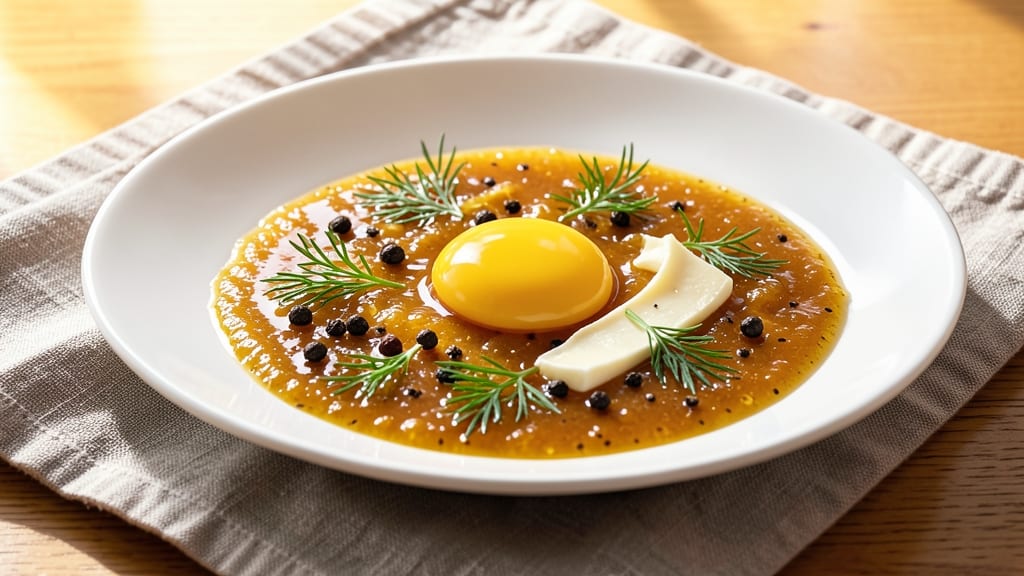
This classic Béarnaise sauce recipe delivers that signature buttery, tangy emulsion that elevates steak and fish to restaurant-quality perfection. The secret lies in precise technique—reducing white wine vinegar to concentrate its acidity before gently whisking egg yolks over a double boiler.
I’ve perfected this method over years of testing, ensuring a smooth, velvety sauce that never breaks or tastes raw.
The foundation of great Béarnaise is balance: sharp vinegar, rich butter, and fragrant tarragon must harmonize without overpowering. Traditional recipes call for shallots and peppercorns, but the star is fresh tarragon, which gives that unmistakable anise-like aroma.
A proper emulsion requires patience—adding butter slowly while whisking constantly transforms simple ingredients into something luxurious.
What you’ll end up with is a glossy, golden sauce that clings beautifully to grilled meats or roasted fish, its flavor profile evolving from tangy to rich as it coats each bite.
The key is maintaining heat control: too hot, and the eggs scramble; too cool, and the sauce won’t emulsify. This recipe delivers foolproof results every time, with just a few essential tools and ingredients.
Once mastered, Béarnaise becomes your go-to sauce for steakhouse dinners, seafood feasts, or even as a drizzle over roasted vegetables. The instructions walk through each critical step, including troubleshooting tips for common issues like separation. Let’s get started on creating this timeless condiment.
Ingredients for classic bearnaise sauce
Eight essential ingredients transform into restaurant-quality Béarnaise sauce with proper technique.
| Ingredient | Amount | Notes |
|---|---|---|
| White Wine Vinegar 🍷 | ½ cup | Dry, high-quality variety preferred |
| Fresh Tarragon Leaves 🌿 | ½ cup | Finely chopped, stems removed |
| Shallots 🧅 | 2 whole | Minced, approximately 2 tbsp |
| Freshly Ground Black Peppercorns 🌶️ | ½ tsp | Coarsely ground, not pre-ground |
| Large Egg Yolks 🥚 | 3 whole | Fresh, room-temperature preferred |
| Unsalted Butter 🧈 | 1 cup | Cold, cubed, European-style preferred |
| Diamond Crystal Kosher Salt 🧂 | ¼ tsp | Fine grain for precise seasoning |
| Freshly Squeezed Lemon Juice 🍋 | 1 tbsp | From organic lemons preferred |
The vinegar forms the sauce's backbone—opt for a dry, high-quality white wine vinegar like Bartles & Jaymes or Rosenhall. Fresh tarragon is non-negotiable; dried lacks the delicate anise notes. Local farmers markets often carry superior quality. Shallots should be firm with papery skins—avoid sprouting ones. For peppercorns, Penzeys carries premium varieties that elevate the sauce's complexity. The yolks must be fresh; older eggs increase separation risk. European-style butter adds superior flavor and better emulsification properties.
No tarragon? Fresh dill at half the amount mimics the anise profile, though results differ. Substitute white wine vinegar with apple cider vinegar (1:1 ratio) for a fruity twist. Pre-ground pepper loses potency—always grind fresh. For a dairy-free version, use vegetable shortening instead of butter, though texture suffers. The lemon juice can be omitted if using extra vinegar, but its acidity helps stabilize the emulsion. When selecting ingredients, prioritize freshness—wilted herbs or rancid butter will compromise the sauce's elegance.
Store unused vinegar in a cool, dark cabinet for up to 1 year. Fresh tarragon lasts 5-7 days wrapped in damp paper towels; freeze extra leaves for later use. Prepared Béarnaise keeps 3-4 days refrigerated in an airtight container with a thin butter layer on top to prevent oxidation. For longer storage, freeze in ice cube trays—thaw gently in warm water. Always reheat gently over low heat, whisking constantly to maintain emulsion.
Why You'll Love This Recipe
- I’ll be real: the only chopping is mincing shallots, and the rest? Stirring while the sauce emulsifies itself. That’s it—no blender, no stress, just a double boiler and 15 minutes of your life.
- No Fuss, Big Payoff: I’ll be real: the only chopping is mincing shallots, and the rest? Stirring while the sauce emulsifies itself. That’s it—no blender, no stress, just a double boiler and 15 minutes of your life.
- Tarragon Magic: Honestly, that bright, anise-like tarragon is what makes this sauce sing. Pair it with the sharp tang of white wine vinegar and the nutty depth of egg yolks, and suddenly your steak or fish feels like a fancy bistro dish—without the fancy price tag.
- Weeknight to Dinner Party: This sauce works just as well drizzled over grilled chicken for Tuesday dinner as it does on seared scallops for a date night. The same jar of leftovers (yes, it keeps beautifully) can be your secret weapon for days.
Step-by-step instructions for classic Béarnaise sauce
Master this timeless French emulsion with precise technique and fresh tarragon's signature aroma.
Create the Tarragon Vinegar Reduction
Combine the 0.5 cup white wine vinegar, 0.5 cup finely chopped fresh tarragon leaves, and 2 minced shallots in a small saucepan. Bring to a gentle simmer over medium heat and reduce by half—approximately 5-7 minutes—until the mixture thickens slightly and the tarragon's vibrant green color deepens. You'll smell the aromatic essence intensify as the liquid reduces.
Strain the reduction through a fine-mesh sieve into a heatproof bowl, pressing gently on the solids to extract every last drop of flavor. Discard the tarragon and shallots. This reduction forms the aromatic base of your sauce, so don't rush this step—proper reduction ensures balanced flavor in the final emulsion. Let the strained liquid cool slightly to room temperature before proceeding.
Prepare the Egg Yolk and Seasoning Base
In a separate bowl, whisk together the 3 large egg yolks, 0.25 teaspoon diamond crystal kosher salt, and 0.5 teaspoon freshly ground black peppercorns until the mixture becomes pale and slightly thickened. This is your emulsion foundation—the yolks will bind the butter and vinegar reduction into a stable sauce.
Slowly drizzle in 1 tablespoon freshly squeezed lemon juice while whisking constantly. The lemon juice adds brightness and helps stabilize the emulsion. Keep whisking until the mixture is completely smooth and homogeneous. This step is critical—any lumps will disrupt the sauce's silky texture, so take your time to achieve a perfectly smooth base.
Gradually Incorporate the Butter
Place the bowl over a saucepan of barely simmering water (double boiler method) to maintain a gentle, constant heat of 160-170°F. Begin adding the 1 cup cold, cubed unsalted butter one piece at a time, whisking vigorously after each addition. The butter should melt slowly and incorporate completely before adding the next piece.
This gradual process creates the classic béarnaise emulsion—a smooth, velvety sauce that holds its shape. If the sauce begins to curdle, immediately remove it from the heat and whisk in a few drops of the vinegar reduction to stabilize it. The sauce should thicken gradually as it emulsifies, achieving a glossy, satin-like consistency that clings beautifully to proteins.
Finish and Strain for Perfection
Once all the butter is incorporated and the sauce has thickened to a smooth, ribbon-like consistency, remove the bowl from the heat. The sauce should now coat the back of a spoon and hold its shape when drizzled. If it's too thick, whisk in a few drops of hot water to reach your desired consistency.
Strain the sauce through a fine-mesh sieve into a clean saucepan to remove any remaining lumps or potential bits of egg white. Keep the sauce warm over very low heat or at room temperature if serving immediately. The final béarnaise should have a rich, golden color with the unmistakable aroma of fresh tarragon—this is the hallmark of a properly executed classic sauce.
Serve Immediately with Proper Technique
Transfer the béarnaise to a warm sauceboat and serve immediately alongside grilled steak, fish, or asparagus. The sauce should be served at 140-150°F—hot enough to melt any residual butter but not so hot that it breaks the emulsion. For best results, keep the sauce covered with parchment paper to prevent a skin from forming.
To achieve professional presentation, use a small ladle to drizzle the sauce over your dish in elegant, controlled streams. The sauce should coat the food evenly, enhancing its natural flavors rather than overpowering them. Remember that properly made béarnaise sauce will naturally separate slightly when cold—always serve it warm to maintain its signature velvety texture.
Pro Tips For Making Classic Bearnaise Sauce
- Whisk Like You Mean It: The vinegar-shallot base needs to be fully emulsified before adding yolks—or you’ll end up with scrambled eggs in your sauce. Use a balloon whisk and go hard for 30 seconds, especially when combining vinegar and shallots. I learned this the hard way when my sauce broke and turned into a sad, lumpy mess.
- Toast Those Shallots: Cook the minced shallots in butter until they’re golden, not just translucent. That extra minute of browning adds depth—skip it, and your sauce will taste flat. My grandmother swore by this, and she was right: the flavor difference is noticeable.
- Strain the Tarragon: Don’t just chop tarragon—strain it through a fine-mesh sieve after infusing the vinegar. This removes bitter stems and keeps the sauce silky smooth. I was skeptical until I tried it; the texture is noticeably better.
- Temper the Yolks Slowly: Warm the yolks with a splash of the hot vinegar-butter mixture before adding them to the sauce. This prevents curdling—yes, even if you’re impatient like me. Add them one at a time, whisking like your life depends on it.
Make-ahead tips for this recipe
Prep Ahead Components
The vinegar-tarragon reduction can be made up to 3 days in advance and stored in an airtight container in the refrigerator. This is my go-to strategy for busy weeknights—I reduce the vinegar, tarragon, and shallots, then refrigerate it until ready to use.
When you're ready to make the sauce, simply strain and let it come to room temperature before proceeding with the egg yolks. This step eliminates last-minute prep and ensures maximum flavor extraction from the herbs.
Egg Yolk Prep
Whisk the egg yolks with salt and pepper 1 day ahead and store them in the refrigerator in a sealed container. When you're ready to finish the sauce, simply whisk in the lemon juice and proceed with the double boiler method.
The yolks will stay fresh and ready for emulsification. I've found that prepping the yolks this way saves time and reduces the risk of overcooking them during the sauce-making process.
Butter Storage Hack
Cube the unsalted butter and store it in a freezer-safe container for up to 2 weeks. When you're ready to make the sauce, simply let the butter sit at room temperature for 30 minutes before using.
Cold butter is essential for proper emulsification—it melts gradually and creates a stable sauce. I keep my butter cubes in the freezer year-round to maintain peak freshness and prevent spoilage.
Complete Sauce Assembly
For a truly stress-free experience, assemble the sauce 2 hours before serving. This allows you to make any necessary adjustments to consistency or flavor without rushing. Store the completed sauce in a warm, covered sauceboat in a 200°F oven to maintain its ideal serving temperature.
The residual heat keeps it warm and prevents skin formation while you finish preparing your main course.
Freezing Béarnaise
Béarnaise sauce freezes surprisingly well for up to 1 month if done correctly. Portion the sauce into ice cube trays and freeze until solid. Transfer the cubes to a freezer bag with all air removed.
To use, thaw in the refrigerator overnight, then reheat gently in a saucepan over low heat, whisking constantly to restore the emulsion. The texture may be slightly thicker after freezing, so adjust with water or vinegar reduction as needed.
Reheating for Perfection
When reheating Béarnaise, never use high heat—this is the number one cause of broken emulsions. Place the sauce in a lightly oiled saucepan and heat over very low heat (around 120°F), whisking constantly. If the sauce separates, whisk in 1 teaspoon of hot water to restore its velvety texture.
I always reheat my sauce directly in the sauceboat I plan to serve it from to maintain temperature control and presentation.
Nutrition facts
Frequently asked questions
Why does my béarnaise sauce break or separate?
Sauce separation usually happens from one of three issues: overheating, adding butter too quickly, or using warm butter. Always maintain a gentle 160-170°F heat using a double boiler, add butter one cube at a time while whisking vigorously, and keep your butter cold until the last moment. If it does break, whisk in 1 teaspoon of hot water or a few drops of vinegar reduction to restore the emulsion.
Can I make béarnaise without eggs for a vegan version?
Yes, but the texture will differ significantly. Use 1/4 cup aquafaba (chickpea brine) whisked with 1 tsp cornstarch as an egg substitute, then follow the same emulsification process. The sauce will be thinner and less rich, but still flavorful. For a more stable version, consider using silken tofu blended with vinegar instead of yolks.
What's the best way to store leftover béarnaise sauce?
Store in an airtight container with a thin layer of butter on top to prevent oxidation. It keeps for 3-4 days refrigerated or 1 month frozen in ice cube trays. To reheat, warm gently over low heat while whisking constantly—never microwave, as this will break the emulsion. The sauce should be served warm to maintain its signature velvety texture.
How can I adjust the flavor if my sauce tastes too tangy?
If the vinegar flavor dominates, balance it by adding more butter or a pinch of sugar. For a richer taste, whisk in 1/2 teaspoon of Dijon mustard (it also helps stabilize the emulsion). If the sauce tastes too mild, add a splash of extra vinegar reduction or a squeeze of lemon juice. Always taste as you go—béarnaise should have a harmonious blend of tangy, buttery, and herbal notes.
What are the best dishes to pair with béarnaise?
Béarnaise shines with rich, protein-forward dishes. Classic pairings include grilled steak (especially filet mignon), roasted chicken, pan-seared scallops, and asparagus. It also works beautifully with lobster tails or grilled trout. For vegetarian options, try drizzling it over roasted eggplant or portobello mushrooms—just be prepared for a more pronounced sauce flavor since there's no meat to balance it.