Sauces & Condiments
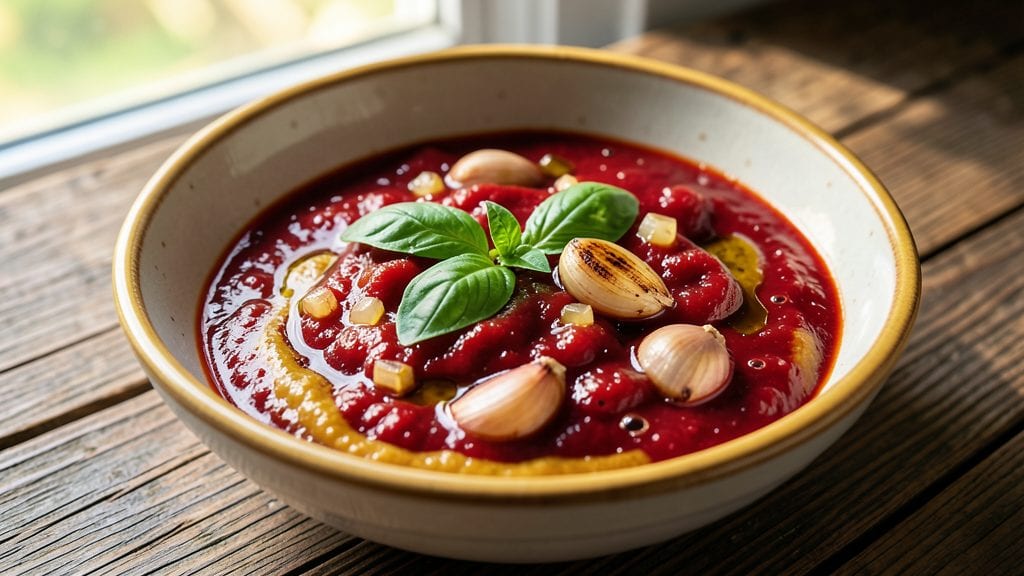
Creating a classic red sauce with slow-simmered tomato depth and fresh basil transforms simple ingredients into something extraordinary. This recipe delivers a rich, velvety sauce that clings perfectly to pasta, lasagna layers, or grilled meats—built on a foundation of aromatics and time.
The key lies in patience and technique, not shortcuts, ensuring every spoonful carries authentic Italian flavor.
What sets this sauce apart is the balance between acidity and sweetness, achieved through a precise blend of canned and fresh tomatoes, garlic, and onion. A long simmer develops deep, caramelized notes while preserving the bright herbal essence of fresh basil added at the end.
Unlike store-bought versions, this sauce builds flavor layer by layer, making it worth the effort.
The result is a smooth, vibrant red sauce with a texture that coats perfectly—neither watery nor overly thick. It serves 4 as a pasta sauce or doubles as a marinade for grilled chicken or vegetables.
The secret? Simmering uncovered to concentrate flavors and adjusting consistency with a splash of pasta water at the end.
For versatility, this recipe adapts easily to vegetarian needs by omitting meat or using vegetable broth. Store leftovers in the fridge for up to 5 days or freeze for 3 months—perfect for meal prep. Let’s create a sauce that elevates every dish it touches.
Ingredients for classic red sauce
Ten essential ingredients crafting a sauce with restaurant-quality depth and brightness.
| Ingredient | Amount | Notes |
|---|---|---|
| Extra-Virgin Olive Oil 🫒 | ½ cup | High-quality, fruity, cold-pressed |
| Yellow Onion 🧅 | 1 whole | Medium size, finely diced |
| Garlic Cloves 🧄 | 4 cloves | Fresh, peeled, minced |
| Canned San Marzano Tomatoes 🍅 | 28 oz | Crushed by hand, seeds removed |
| Fresh Basil Leaves 🌿 | ½ cup | Bright green, stems removed |
| Tomato Paste 🍅 | 2 tbsp | Smooth, no sugar added |
| Red Wine 🍷 | ½ cup | Dry, bold, like Chianti |
| Vegetable Broth 💧 | 1 cup | Low-sodium preferred |
| Granulated Sugar 🍬 | 1 tsp | Balances acidity |
| Diamond Crystal Kosher Salt 🧂 | 1 ½ tsp | Adjust to taste |
The quality of your tomatoes and olive oil defines this sauce. San Marzano canned tomatoes are the gold standard—their natural sweetness and low acidity create a balanced base. For olive oil, California avocado or Italian extra-virgin brands like Bertolli or Filippo Berio elevate the flavor profile. Fresh basil should be vibrant green with no brown stems; genovese basil from a trusted farmers' market or grocery store herb section works best. Red wine adds complexity—Chianti or Sangiovese are ideal, but any dry red will suffice. The tomato paste should be smooth and unsweetened; Barilla or Rao's brands are reliable choices.
No San Marzano tomatoes? Other high-quality canned tomatoes like Muir Glen or store-brand crushed tomatoes work well. Substitute red wine with dry white wine or additional vegetable broth if unavailable. Fresh basil can be swapped for dried basil at one-third the amount, but fresh is preferred for authentic flavor. For a vegetarian-friendly version, use vegetable broth exclusively instead of meat-based broths. The sugar balances acidity—reduce to ½ teaspoon if your tomatoes are particularly sweet. Salt should be adjusted to taste at the end, as flavors deepen during simmering.
This sauce develops best when made ahead. Simmer uncovered for 30-45 minutes to concentrate flavors. Store in an airtight container in the fridge for up to 5 days—it tastes even better the next day as flavors meld. For longer storage, freeze in ice cube trays for 3 months**; thaw and reheat gently on the stove. The sauce thickens as it cools, so always thin with a splash of pasta water before serving. Keep the fresh basil separate until ready to use to preserve its bright aroma.
Why You'll Love This Recipe
- No Chopping Chaos: I swear by this sauce because it’s actually low-effort—just dice one onion and mince a few garlic cloves. That’s it. The San Marzano tomatoes do all the heavy lifting, so you’re left with minimal prep and maximum flavor.
- Garlic-Basil Magic: Between us, that first taste of olive oil simmering with garlic until it’s golden but not burnt? Chef’s kiss. Then toss in fresh basil at the end—it brightens the whole thing like a summer afternoon. Simple, but it’s the kind of flavor that makes you pause mid-bite.
- Weeknight to Dinner Party: This sauce works for spaghetti on a Tuesday or as a base for lasagna when company’s coming. Freeze half for later, or drizzle it over grilled chicken for a no-fuss weeknight dinner. It’s my go-to because it never lets me down.
- Budget-Friendly Pantry Hero: A can of tomatoes and a few cloves of garlic? That’s all you need to stretch this into meals for days. I make a big batch, portion it out, and suddenly I’ve got lunch and dinner covered without breaking the bank. Plus, it tastes like I slaved over it—even when I didn’t.
Step-by-step instructions for classic red sauce recipe
Master this timeless technique for a rich, balanced sauce with layers of tomato flavor and aromatic depth.
Sauté Aromatics in Olive Oil
Heat the 0.5 cup extra-virgin olive oil in a heavy-bottomed saucepan over medium-low heat. Add the 1 whole yellow onion, diced into even ¼-inch pieces, and cook for 8-10 minutes until softened and translucent. The onion should release its sweetness without browning—this prevents bitterness in the finished sauce.
Add the 4 cloves minced garlic and cook for an additional 1-2 minutes until fragrant but not browned. Garlic burns quickly, so watch closely. Remove the pan from heat briefly if it starts to darken. This foundational step develops the sauce's aromatic complexity, forming the flavor base that carries through the entire simmering process.
Build the Sauce Base
Return the pan to medium heat and stir in the 2 tbsp tomato paste, spreading it evenly across the bottom to create a smooth, flavorful coating. Cook for 2-3 minutes while stirring constantly, allowing the paste to deepen in color and develop a slightly caramelized edge. This step intensifies the tomato flavor and adds body to the sauce.
Pour in the 0.5 cup red wine and scrape up any browned bits from the pan's surface with a wooden spoon. These concentrated flavors, known as fond, are essential for depth. Let the wine simmer for 3-4 minutes until reduced by half, allowing its acidity to mellow and integrate with the aromatics.
Incorporate Tomatoes and Broth
Add the 28 oz crushed San Marzano tomatoes and 1 cup vegetable broth, stirring to combine. Bring the mixture to a gentle simmer over medium-low heat, then reduce heat to low to maintain a steady, rolling boil. Partially cover the pan and let it simmer uncovered for 30-40 minutes, stirring occasionally to prevent skin formation.
During this time, the sauce will thicken naturally as water evaporates. You're aiming for a consistency where the sauce coats the back of a spoon but still flows freely. The tomatoes should break down completely, releasing their sweet, tangy essence. This slow simmering process is what transforms simple ingredients into a restaurant-quality classic.
Season and Finish
Stir in the 1 tsp granulated sugar and 1.5 tsp diamond crystal kosher salt, adjusting to taste. The sugar balances the acidity of the tomatoes, while the salt enhances all flavors. Taste the sauce and make any final adjustments—this is where you refine the balance between sweet, sour, and savory notes.
Remove the pan from heat and stir in the 0.5 cup fresh basil leaves, allowing them to wilt and infuse the sauce with their bright, herbal aroma. For an even more concentrated flavor, you can blend the sauce briefly with an immersion blender, though leaving it slightly rustic adds texture. The basil should be added at the end to preserve its vibrant qualities.
Rest and Serve
Let the sauce rest for 10-15 minutes before serving. This resting period allows flavors to meld and the sauce to thicken slightly as it comes to room temperature. The sauce should be glossy with a velvety texture, coating pasta or meat beautifully without being overly thick.
Serve immediately over your choice of pasta, sprinkled with additional fresh basil if desired. The sauce will continue to develop in flavor as it sits, becoming even more complex. For best results, use within 2-3 days or refrigerate for up to 5 days, reheating gently to preserve its texture and depth.
Pro Tips For Making Classic Red Sauce
- CRUSH THE ONIONS: Dice them small—think rice-sized pieces, not quartered wedges. I used to leave them chunky, but tiny onions dissolve into the sauce without leaving texture. Also, sweat them in olive oil until translucent before adding garlic; this prevents bitter flavors from creeping in later.
- LOW AND SLOW AFTER CRUSHING: Once tomatoes hit the pot, drop the heat to medium-low and let it simmer uncovered. I learned this the hard way—rushing it makes the sauce watery and dull. Give it 45-60 minutes, stirring occasionally, until it thickens enough to coat the back of a spoon.
- SALT THE TOMATOES FIRST: Drain the San Marzano tomatoes, then sprinkle them with a generous pinch of salt (about ½ teaspoon per can) before crushing. This pulls out excess water and seasons the base. Skip this, and you’ll end up with a thinner sauce that needs constant stirring to thicken.
- STIR IN BASIL LATE: Toss the fresh basil in at the very end—just before serving. It wilts fast, so if you add it too soon, you’ll end up with a sad, mushy pile at the bottom. (Yes, even if you’re impatient like me.) For extra flavor, tear the leaves instead of chopping; they release aroma better.
Perfect pairings for these flavors
Pasta Pairings
This red sauce clings perfectly to long, thin pasta shapes like spaghetti or linguine—their ribbed surfaces create ideal surface area for sauce adhesion. For heartier dishes, try rigatoni or penne, which hold sauce in their nooks and crannies.
I often toss 8 oz cooked pasta with 1.5 cups sauce and a splash of pasta water to loosen the sauce into a glossy coating. 🍝
For a rustic twist, serve over homemade gnocchi or fresh egg pasta—the sauce's acidity cuts through the richness beautifully. If you're feeling adventurous, try orecchiette ("little ears"), whose unique shape traps the sauce in each piece. Always cook pasta al dente and toss immediately with sauce to prevent sticking.
Meat Complements
This sauce elevates grilled chicken breasts or pan-seared pork chops with its bright acidity and herbal notes. I recommend brushing 6 oz chicken breast with 2 tbsp sauce before grilling, then finishing with additional sauce post-cook.
The sauce also pairs wonderfully with braised short ribs—simmer them in the sauce for the last 30 minutes of cooking to infuse deep flavor. 🍗
For Italian-inspired dishes, use it as a marinade for sausage or meatballs. Toss 1 lb Italian sausage with 1 cup sauce and marinate for 2-4 hours before cooking.
The sauce's acidity tenderizes the meat while adding layers of flavor. It also works as a dipping sauce for calzones or arancini—just warm gently before serving.
Vegetable Enhancers
Roasted eggplant or zucchini becomes irresistible when tossed with this sauce. I recommend roasting 2 medium eggplants at 400°F for 25 minutes, then drizzling with 1 cup sauce and fresh basil. The sauce's acidity balances the eggplant's natural bitterness beautifully. 🥒
For a vegetarian main dish, serve the sauce over grilled portobello mushrooms or stuffed bell peppers. The sauce's richness complements the earthy flavors perfectly. I also love using it as a topping for bruschetta—spread on toasted baguette slices with a sprinkle of pecorino cheese for a quick appetizer.
Cheese Pairings
Finish your dish with grated Parmigiano-Reggiano or Pecorino Romano—both enhance the sauce's umami notes. I recommend ¼ cup freshly grated cheese per serving, tossed through just before eating. For a creamy variation, stir in 2 tbsp heavy cream at the end for a carbonara-inspired twist. 🧀
For a vegetarian option, add ricotta cheese dollops to pasta dishes—they create a delightful contrast with the sauce's acidity. The sauce also pairs beautifully with burrata, drizzled over a simple salad or served alongside grilled meats.
Always add cheese at the table to maintain its creamy texture and vibrant flavor.
Bread Applications
Use leftover sauce to make garlic bread that steals the show. Spread ½ cup sauce on a baguette slice, top with ¼ cup mozzarella, and broil for 3-5 minutes until bubbly. The sauce's acidity cuts through the richness of the cheese beautifully. 🥖
For a quick appetizer, create arancini by stuffing rice balls with sauce-marinated mozzarella, then pan-frying until golden. The sauce's depth shines through in every bite. You can also use it as a dip for fresh breadsticks—simmer the sauce slightly thicker and serve warm with crusty bread for dipping.
Nutrition facts
Frequently asked questions
Why does simmering time matter in this red sauce recipe?
Simmering for 30-40 minutes is crucial—it allows the tomatoes to break down and develop deep, caramelized flavors. Skipping this step leaves the sauce thin and one-dimensional. The uncovered simmer also helps reduce excess liquid, creating that perfect velvety texture.
Can I use fresh tomatoes instead of canned?
Fresh tomatoes work, but they require extra prep: peel, seed, and chop 3 large tomatoes (about 1.5 cups½ teaspoon and simmer 10 minutes longer to balance flavors.
How do I fix a sauce that's too thick or too thin?
For a thick sauce, thin with 1-2 tbsp warm water or pasta water. For a thinner sauce, simmer uncovered 5-10 minutes longer to reduce. Always adjust gradually—adding too much liquid at once dilutes flavors.
Is this sauce suitable for meal prep?
Store in an airtight container in the fridge for 5 days or freeze for 3 months. Reheat gently on low heat, stirring occasionally. The flavors actually improve overnight as ingredients meld.
Can I make this sauce without wine?
Yes—replace the ½ cup red wine with ½ cup extra vegetable broth or apple cider vinegar (reduce to 2 tbsp). The acidity helps balance sweetness, but wine adds depth that's hard to replicate.