Sauces & Condiments
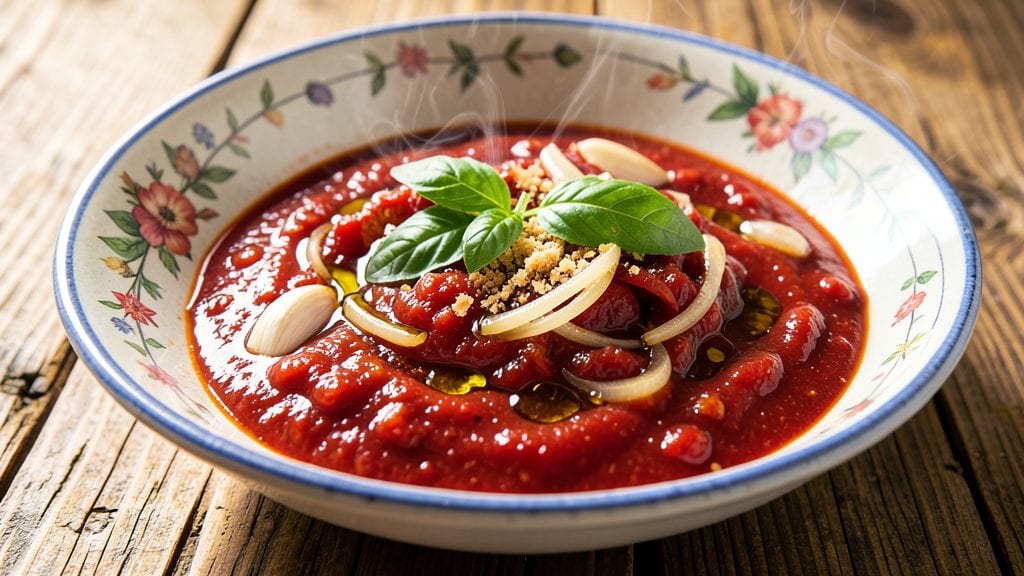
A cooked tomato salsa sauce recipe that delivers restaurant-quality depth without fresh tomatoes—this pantry-friendly sauce transforms canned tomatoes into something rich, complex, and versatile. I developed this after realizing how often I reached for store-bought salsa but craved homemade texture and flavor.
The secret lies in slow cooking the tomatoes with aromatics until they break down into a velvety, slightly sweet-savory sauce.
What makes this sauce special is its foolproof technique: no peeling or seeding required, just a few pantry staples and 20 minutes of active time. The onions and garlic caramelize beautifully, building layers of flavor while the tomatoes soften into a smooth, jam-like consistency.
Unlike fresh salsa, this sauce keeps well—stays fresh for 5 days in the fridge or 3 months in the freezer—making it perfect for meal prep.
The result is a smooth yet vibrant sauce with just the right balance of sweetness, acidity, and smokiness—ideal for drizzling over grilled meats, tossing with pasta, or using as a dip.
It’s the kind of sauce that elevates simple dishes into something special, and it’s so easy to customize with spices or herbs. Let’s make this sauce that tastes like summer, no matter the season.
Once you’ve mastered the base, you can adjust the texture to suit your needs—blend it completely for a silky consistency or leave it slightly chunky for a rustic touch.
Pair it with anything from tacos to toasted bread, and you’ll wonder why you ever bought store-bought. Here’s how to make it.
Ingredients for cooked tomato salsa sauce
Nine pantry staples transform canned tomatoes into restaurant-quality salsa sauce.
| Ingredient | Amount | Notes |
|---|---|---|
| Canned San Marzano Tomatoes 🍅 | 28 oz | Whole, crushed by hand |
| Yellow Onion 🧅 | 1 whole | Medium, thinly sliced |
| Garlic Cloves 🧄 | 4 cloves | Peeled, minced finely |
| Extra-Virgin Olive Oil 🫒 | ¼ cup | High-quality, fruity |
| Apple Cider Vinegar 🍎 | 2 tbsp | For brightness |
| Brown Sugar 🍚 | 1 tbsp | Lightly packed |
| Smoked Paprika 🌶️ | 1 tsp | For depth |
| Ground Cumin 🌿 | ½ tsp | Toasted for warmth |
| Salt 🧂 | 1 tsp | Diamond Crystal preferred |
| Fresh Cilantro 🌿 | ¼ cup | Chopped, optional garnish |
San Marzano tomatoes are the secret weapon here—their natural sweetness and low acidity make all the difference. Grab a 28-ounce can from the Italian section at Whole Foods or your local market. If you can’t find them, regular crushed tomatoes work, but you’ll need to add an extra 1 tbsp of brown sugar to balance the acidity. The onions and garlic? Yellow onions caramelize best, and fresh garlic is non-negotiable—jarred minced garlic will taste like sawdust. Toast your cumin seeds in a dry pan for 30 seconds before grinding if you’ve got the time—trust me on this.
No smoked paprika? Regular paprika plus a pinch of liquid smoke works in a pinch. Swap apple cider vinegar for white wine vinegar or lime juice, but the apple cider adds that subtle sweetness that makes this sauce sing. Fresh cilantro is ideal for garnish, but dried oregano at half the amount keeps the earthy notes. The olive oil matters—use something fruity and peppery, not that cheap vegetable oil. If you’re short on time, Trader Joe’s has a great 3.4-ounce bottle that’s perfect for this recipe.
This sauce tastes even better the next day as the flavors meld. Store in an airtight container in the fridge for up to 5 days, or freeze for 3 months in ice cube trays for single-serving portions. Double the batch—it disappears fast. The texture thickens as it cools, so add a splash of water if it’s too thick after chilling. Leftovers? Toss with pasta, drizzle over grilled meats, or use as a base for soups.
Why You'll Love This Recipe
- No-Can-Do Effort: I swear by this recipe because it’s the kind of thing I can make while scrolling through my phone—just dump the tomatoes, dice the onion (or buy pre-chopped), and let the garlic and olive oil do the work. The San Marzano tomatoes sweeten as they cook, so you end up with a sauce that’s ridiculously smooth without any extra fuss.
- Umami Bomb: That first spoonful? It’s like a flavor explosion. The vinegar brightens the sweetness of the tomatoes, the garlic deepens it, and the olive oil ties it all together—no fancy spices needed. Honestly, it’s the kind of taste that makes you pause mid-bite to wonder what else you could pair with it.
- Weeknight to Party: This sauce works just as well on a Tuesday night with grilled chicken as it does on a Sunday spread with crusty bread. I’ve drizzled it over pasta, used it as a pizza base, and even served it chilled as a dip—it’s that adaptable. (Yes, even on a Tuesday night.)
- Budget Magic: A single can of tomatoes and a bulb of garlic stretch across multiple meals. I make a big batch, freeze half, and still have leftovers for days—no waste, no stress. Plus, the vinegar and olive oil are pantry staples, so you’re not breaking the bank for anything. It’s my secret weapon for stretching groceries without sacrificing flavor.
Step-by-step instructions for cooked tomato salsa sauce
Here's how to transform simple pantry staples into a vibrant, restaurant-quality tomato sauce.
Sauté the Aromatics Until Fragrant
Heat the 0.25 cup extra-virgin olive oil in a medium saucepan over medium heat. Add the 1 whole yellow onion, sliced into thin half-moons, and cook for 5-6 minutes until the edges become translucent and the onion releases its sweet aroma. You'll know it's ready when the onion turns a pale golden color and you can smell that unmistakable caramelization.
Reduce the heat to medium-low and add the 4 cloves garlic cloves, minced finely. Stir constantly for 30-45 seconds until the garlic becomes golden and fragrant—never let it brown, or it will turn bitter. This step builds the flavor foundation, so don't rush it. The garlic should sizzle gently without coloring.
Add Spices and Cook Until Toasted
Increase the heat to medium and add the 1 tsp smoked paprika, 0.5 tsp ground cumin, and 1 tsp salt. Stir for 1 minute until the spices release their aromas and the mixture smells deeply earthy. This is where the sauce gets its complex, layered flavor profile—don't skip this step, even if it seems quick.
Next, add the 1 tbsp brown sugar and 2 tbsp apple cider vinegar. Stir for 30 seconds until the sugar dissolves and the vinegar brightens the mixture. The sugar will help balance the acidity and add subtle caramel notes as the sauce simmers. You'll notice the mixture darken slightly—this is normal and indicates the spices are properly incorporated.
Build the Sauce with Tomatoes
Pour in the 28 oz canned San Marzano tomatoes, crushing them by hand with your fingers or a wooden spoon to break them into rough chunks. This texture creates a rustic, handmade quality. Bring the mixture to a gentle boil over medium-high heat, then immediately reduce the heat to low and let it simmer uncovered for 25-30 minutes. Stir occasionally to prevent sticking.
You're looking for a sauce that thickens slightly and develops a glossy sheen. The tomatoes should break down into a rich, velvety consistency with a deep red hue. If the sauce reduces too quickly, add 1-2 tablespoons of water to maintain the right texture. The sauce should coat the back of a spoon but still be fluid enough to drizzle.
Finish and Garnish
Remove the sauce from heat and stir in the 0.25 cup fresh cilantro, chopped finely. Let it steep for 5 minutes to infuse the bright, citrusy notes of the cilantro into the warm sauce. This final step adds freshness that balances the deep, smoky flavors from the spices and tomatoes.
Taste and adjust the seasoning—add more salt if needed, or a splash of apple cider vinegar for brightness. The sauce should be vibrant, balanced, and full of layered flavors. Serve warm over pasta, drizzled over grilled meats, or as a dip for crusty bread. This sauce keeps well in the refrigerator for up to 5 days, so make extra for future meals.
Pro Tips For Making Cooked Tomato Salsa Sauce
- CRUSH THE ONIONS: Pulse them in a food processor until they’re almost paste—this dissolves their sharp bite faster than chopping. I used to slice them thin and watch them linger like a bitter aftertaste; now they melt into the sauce in 5 minutes instead of 15.
- SIMMER LOW AND SLOW: Once the tomatoes hit the pot, reduce heat to a bare simmer. After burning three batches trying to rush it, I learned this: 45 minutes at medium-low gives you deep flavor without scorching. (Yes, even if you’re impatient like me.)
- SALT THE TOMATOES FIRST: Toss the crushed tomatoes with 1 tsp salt and let them sit for 10 minutes before cooking. My grandmother swore by this, and she was right: it draws out excess water and concentrates the sweetness before you even start.
- VINEGAR LAST, NOT LEAST: Add the apple cider vinegar in the final 5 minutes—it brightens the sauce but evaporates quickly. I used to dump it in early and end up with a tangy, underdeveloped flavor. Now it cuts through the richness just right.
Make-ahead tips for cooked tomato salsa sauce
Prep Ahead Components
I always prep the aromatics first when I make this sauce ahead of time. Slice the 1 yellow onion into thin half-moons and store it in a sealed container in the fridge for up to 3 days.
The garlic stays fresh longest when stored whole in the fridge—just peel and mince it right before cooking. This saves you from dealing with pre-minced garlic that loses flavor fast. 🧅
Sauce Assembly Timeline
Make the sauce base up to 2 days in advance—just stop after simmering the tomatoes for 25 minutes. Store it in an airtight container in the fridge. When ready to serve, reheat it gently over low heat for 5-7 minutes and finish with fresh cilantro.
The flavors actually deepen overnight, so it tastes even better the second day.
Freezer-Friendly Adaptations
For long-term storage, freeze the sauce in ice cube trays for single-serving portions. Once frozen, pop them out and transfer to a ziplock freezer bag with all the air squeezed out.
These portions thaw perfectly in 10 minutes in the microwave or 30 minutes at room temperature. The texture remains smooth and vibrant.
Spice Toasting Shortcut
Toast your spices ahead of time if you're making multiple batches. Spread the 1 tsp smoked paprika and 0.5 tsp ground cumin on a baking sheet and toast in a 350°F oven for 5 minutes.
Let cool completely before storing in an airtight container. This step enhances their flavor significantly and saves time during cooking. ✨
Reheating Techniques
For best results, reheat the sauce on the stovetop over low heat with a splash of water or broth to prevent scorching. If using the microwave, stir after 1 minute to distribute heat evenly.
Never reheat directly from frozen—thaw overnight in the fridge first. The sauce thickens as it cools, so add a little water if needed to restore the right consistency.
Batch Prep Strategy
Double the recipe and store half in the fridge for 5 days and half in the freezer for 3 months. I label my containers with the date and method ("Fridge" or "Freezer") so I never forget.
This sauce is so versatile—use it on tacos, grilled chicken, or even as a pizza sauce base. Having it ready means you can whip up meals in minutes without sacrificing flavor. 💡
Nutrition facts
Frequently asked questions
Can I use regular canned tomatoes instead of San Marzano?
Yes, but you'll need to adjust the sweetness. Regular crushed tomatoes are more acidic, so add an extra 1 tbsp of brown sugar to balance the flavor. San Marzano tomatoes have thinner skins and less acidity, which makes them ideal for this rich, velvety sauce. The texture will still work well, just expect a slightly brighter taste.
How do I adjust the texture to be smoother or chunkier?
For a smoother sauce, blend it after simmering with an immersion blender or transfer to a regular blender. For chunkier texture, simply skip blending and leave the tomatoes slightly crushed. You can also stir in 1-2 tbsp of tomato paste before simmering to thicken it further. The sauce will naturally thicken as it cools, so adjust while warm.
What are the best ways to use this sauce beyond tacos?
This versatile sauce works beautifully as a marinade for grilled chicken or steak, a pizza base, or a pasta sauce. Drizzle it over roasted vegetables, use it in soups, or spread it on toast with melted cheese. It even makes a fantastic dip for chips or veggie sticks. The smoky-sweet flavor pairs well with almost any protein or grain.
Why did my sauce turn out too thick or too thin?
Sauce thickness depends on simmering time and moisture. If it's too thick, stir in 1-2 tbsp of water or broth while warm. If too thin, simmer uncovered for 5-10 more minutes to reduce. The ideal consistency should coat the back of a spoon but still be pourable. Remember, it thickens further as it cools, so adjust while warm.
Can I make this sauce without vinegar?
You can substitute vinegar with 1 tbsp of lemon juice or 1/2 tsp of citric acid for brightness, but vinegar adds that essential tang that balances the sweetness. If you omit it completely, the sauce will taste flatter. Apple cider vinegar works best as it adds subtle sweetness, but white wine vinegar is a good alternative.