Soups & Stews
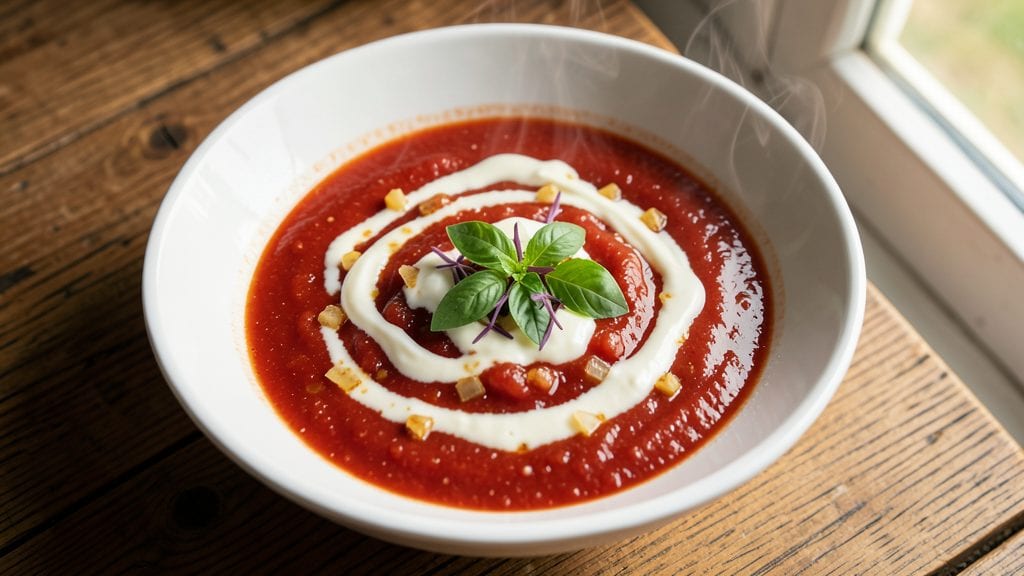
This creamy tomato soup recipe transforms simple tomato sauce into a velvety, restaurant-quality dish using just a few pantry staples. The secret lies in blending the sauce with broth and cream until it reaches that signature silky texture—no special ingredients required.
I developed this version after realizing how often store-bought soups fall short of homemade depth.
The process is straightforward yet precise: simmer the sauce with aromatics until flavors meld, then blend with warm broth and cream until completely smooth. Thirty minutes on the stove delivers a soup so rich it feels indulgent, yet remains light enough for any meal.
The result is a velvety base that coats your spoon perfectly, with just enough acidity to balance the creaminess.
This recipe serves four generously and pairs beautifully with crusty bread or grilled cheese sandwiches. For extra depth, finish with a swirl of cream and fresh basil, or sprinkle with parmesan for a classic touch.
The technique works equally well with homemade or store-bought tomato sauce, making it versatile for any pantry.
For dietary adaptations, substitute dairy cream with coconut milk for a vegan version, or use low-fat milk to reduce calories without sacrificing texture. The soup reheats beautifully, so it's perfect for meal prep or leftovers. Let's create this comforting classic that tastes like a hug in a bowl.
Ingredients for creamy tomato soup recipe with tomato sauce
Pantry staples transform into velvety perfection with just twelve ingredients and thirty minutes.
| Ingredient | Amount | Notes |
|---|---|---|
| Canned Tomato Sauce 🍅 | 2 cups | High-quality, no added sugar |
| Heavy Cream 🥛 | 1 cup | Full-fat for optimal texture |
| Vegetable Broth 💧 | 2 cups | Low-sodium preferred |
| Yellow Onion 🧅 | 1 whole | Diced, medium size |
| Garlic Cloves 🧄 | 4 cloves | Freshly minced |
| Olive Oil 🫒 | 2 tbsp | Extra-virgin for richness |
| Fresh Basil Leaves 🌿 | ¼ cup | Chopped, for garnish |
| Parmesan Cheese 🧀 | ¼ cup | Freshly grated, fine |
| Salt 🧂 | 1 tsp | Diamond Crystal kosher |
| Black Pepper 🌶️ | ½ tsp | Freshly ground |
| Sugar 🍚 | 1 tsp | Adjust to taste |
| Dried Thyme 🌿 | ½ tsp | Or 1 tbsp fresh |
| Red Pepper Flakes 🌶️ | ¼ tsp | Optional, for heat |
The foundation starts with high-quality canned tomato sauce—avoid brands with added sugar or preservatives. Rao's or Muir Glen organic varieties are ideal for their concentrated flavor. Fresh garlic and onion form the aromatic base, so use yellow onions with crisp texture and garlic cloves with tight skins for peak freshness. Whole Foods or Trader Joe's typically carry these in optimal condition. The heavy cream is non-negotiable for that signature silky texture—full-fat delivers the best mouthfeel, while low-fat versions can result in separation. For the broth, low-sodium options prevent over-salting during blending.
No heavy cream? Full-fat coconut milk creates a luscious vegan alternative, though the texture will be slightly lighter. Substituting vegetable broth for chicken broth? Ensure the flavor profile matches your preference—vegetable works universally, while chicken broth adds depth for meat-based pairings. Fresh basil is ideal for garnish, but dried basil at one-third the amount suffices in a pinch. The Parmesan cheese should be freshly grated from a block—pre-shredded contains anti-caking agents that alter texture. For heat, red pepper flakes can be omitted entirely or reduced to a pinch if serving children. The sugar balances acidity—adjust based on your sauce's sweetness level.
This soup reheats beautifully—gentle warming on low heat preserves its velvety texture. Store in an airtight container for up to 5 days in the refrigerator or 3 months frozen. For meal prep, portion into individual containers before freezing to maintain consistency. The fresh basil and Parmesan should be added post-reheating for maximum flavor retention. Leftovers taste even richer the next day as flavors meld further. For dietary adaptations, coconut milk replaces cream seamlessly, while low-fat milk reduces calories without compromising texture significantly.
Why You'll Love This Recipe
- Pantry-to-Pot Magic: I swear by this one—no fresh tomatoes needed. That canned tomato sauce? It’s my secret for rich flavor without the mess, and the heavy cream turns it into something velvety in minutes. Honestly, it’s the kind of recipe that makes me feel like a chef when I’m really just stirring a pot.
- Garlic-Kissed Comfort: Between us, the garlic and onion caramelize into something deep—like a slow-simmered sauce but with half the effort. The vegetable broth keeps it light, so it’s not too heavy, but that cream? It’s the hug you didn’t know you needed after a long day.
- Leftovers That Last: This soup tastes better the next day—yes, really. I make a big batch on Sundays, and by Wednesday, it’s still the star of my lunch. The flavors meld, and the texture? Even richer. Plus, it freezes like a dream, so I always have a backup for those "I can’t decide what to eat" nights.
- Budget-Friendly Luxury: Heavy cream makes it feel fancy, but the rest of the ingredients are cheap staples. A single can of sauce, a handful of garlic, and some broth stretch into meals for days. I’ll be real: it’s my go-to when I want to treat myself without breaking the bank.
Step-by-step instructions for creamy tomato soup recipe
Transform pantry staples into velvety tomato soup with this straightforward, foolproof method.
Sauté Aromatics Until Fragrant
Heat the 2 tablespoons olive oil in a large pot over medium heat. Add the diced yellow onion and cook for 5-6 minutes until softened and translucent. Stir occasionally to prevent browning—you want the onions to become tender without coloring.
Add the 4 minced garlic cloves and 0.5 teaspoon dried thyme to the pot. Cook for 1-2 minutes until the garlic releases its aroma and becomes lightly golden. This step builds the flavor foundation—don't rush it, as the garlic can burn quickly. The mixture should smell rich and earthy, signaling it's ready for the next ingredients.
Build the Tomato Base
Pour in the 2 cups canned tomato sauce and stir to combine with the aromatics. Add the 2 cups vegetable broth and 1 teaspoon sugar, then bring the mixture to a gentle simmer over medium-low heat. Let it cook uncovered for 10-12 minutes, stirring occasionally, until the flavors meld and the liquid reduces slightly.
The sugar balances the acidity of the tomato sauce, while the broth dilutes the intensity for a smoother texture. You'll notice the mixture darkening slightly as it simmers—this deepens the flavor. If the soup starts to stick, add a splash of water to maintain consistency.
Create the Creamy Texture
Reduce the heat to low and gradually whisk in the 1 cup heavy cream, adding it slowly to prevent curdling. Stir continuously for 2-3 minutes until the soup thickens and becomes velvety. The cream should blend seamlessly, creating a luxurious mouthfeel without breaking.
Season with the 1 teaspoon salt and 0.5 teaspoon black pepper, then taste and adjust as needed. For added depth, sprinkle in the 0.25 teaspoon red pepper flakes and let them steep for 1 minute to infuse heat. The soup should now be silky and rich, with a perfect balance of acidity and creaminess.
Finish and Serve
Remove the pot from heat and stir in the 0.25 cup freshly grated Parmesan cheese and 0.25 cup chopped fresh basil leaves. The cheese adds a sharp, umami note, while the basil brightens the dish with freshness. Let the soup sit for 5 minutes to allow the flavors to fully integrate.
Ladle the soup into bowls and garnish with additional basil and Parmesan if desired. Serve immediately for the best texture—this soup thickens slightly as it cools. The result is a restaurant-quality dish with a velvety texture and layers of flavor, all made from simple pantry ingredients.
Pro Tips For Making Creamy Tomato Soup Recipe With Tomato Sauce
- Sweat the Onion First: I learned this the hard way—drowning chopped onions in tomato sauce instead of cooking them first. Sauté the onion in a dry pan for 5-6 minutes until soft and translucent before adding garlic. This builds flavor that doesn’t get lost when you add the sauce later.
- Simmer Slow and Low: After burning three batches, I finally figured out: keep the heat at a gentle simmer (not a rolling boil) once the tomato sauce and broth come together. Too much heat turns the cream grainy and ruins the silky texture—this isn’t a race.
- Temper the Cream: Sounds weird, but it works: warm the heavy cream separately with a splash of broth or sauce before stirring it into the pot. Cold cream curdles like clockwork, and nobody wants lumpy soup. Just heat it to body temperature—about 110°F—before mixing.
- Balance the Acidity: Canned tomato sauce is often tangy enough to overpower the cream. Taste before adding the cream and adjust with a pinch of sugar (½ tsp) or a splash of broth if it’s too sharp. The goal? A smooth, rich mouthfeel—not a sour punch.
Pro cooking tips for perfect results
Blend Like a Pro
For that signature silky texture, blend your soup in two stages using an immersion blender—first for 10-15 seconds to break up chunks, then another 15-20 seconds for ultra-smooth perfection.
If using a countertop blender, let the soup cool slightly to avoid splattering, and blend in 2 batches for even consistency. I swear by the Ninja BN601 for its powerful yet gentle blending action—it handles hot liquids without overheating. 💫
Temperature Control
Never add cold cream to hot soup—this causes curdling and separation. Instead, warm the cream separately by whisking it into a small saucepan over low heat until it reaches 160°F, then gradually fold it into the soup while stirring constantly.
The ideal serving temperature is 185-190°F, where the cream fully incorporates without breaking. A thermometer helps monitor this precisely.
Prevent Graininess
Grainy texture happens when ingredients aren't fully emulsified. To avoid this, strain the soup through a fine-mesh sieve after blending, pressing with a spatula to extract every last drop of liquid.
For extra insurance, whisk in 1 tablespoon cornstarch mixed with 2 tablespoons cold water at the end—this naturally thickens the soup while smoothing out any roughness.
Cream Substitutes
For a dairy-free version, replace heavy cream with 1 cup full-fat coconut milk—simmer it with the soup for 5 minutes to develop flavor. For a lighter option, mix ½ cup Greek yogurt with ½ cup warm broth and whisk it into the soup off heat.
Both alternatives create velvety texture but require immediate serving to prevent separation. I recommend So Delicious coconut milk for its rich, neutral flavor.
Flavor Layering
Boost depth by adding 1 teaspoon balsamic vinegar during the simmering stage—it enhances the tomato's natural sweetness. For umami richness, stir in 1 teaspoon fish sauce (trust me, it disappears) or 1 tablespoon soy sauce during the final seasoning.
These additions elevate the soup from homemade to restaurant-worthy without overpowering the delicate creaminess. 🌟
Equipment Must-Haves
Invest in a heatproof measuring cup for precise cream additions and a wooden spoon for stirring—metal utensils can scorch the bottom. A microplane for garlic and chef's knife for onions ensure fine textures that blend smoothly.
For storage, use glass containers—they preserve flavor better than plastic over time. My go-to is Le Creuset stoneware for both cooking and leftovers.
Nutrition facts
Frequently asked questions
Can I make this soup without heavy cream?
For a lighter version, use ½ cup Greek yogurt mixed with ½ cup warm broth—whisk it in off heat for a tangy, creamy texture. For dairy-free, full-fat coconut milk works beautifully, though the texture will be slightly lighter. Always warm substitutes gently to prevent curdling.
Why did my soup turn grainy after blending?
Graininess usually means ingredients weren't fully emulsified. Strain the soup through a fine-mesh sieve after blending, or whisk in 1 tablespoon cornstarch mixed with 2 tablespoons cold water at the end. For ultra-smooth results, blend in two stages—first to break up chunks, then again for perfection.
How can I make this soup spicier?
Add ½ teaspoon red pepper flakes during the simmering stage and let them steep for 1-2 minutes to infuse heat. For extra depth, stir in 1 teaspoon smoked paprika or a dash of cayenne. Adjust to taste—this soup handles bold flavors beautifully while keeping its velvety texture.
Can I use tomato paste instead of tomato sauce?
Yes, but adjust the liquid ratio. Replace the 2 cups tomato sauce with 1 cup tomato paste mixed with 1 cup warm broth to maintain consistency. The paste adds deeper flavor but requires extra broth to prevent thickness. Simmer slightly longer to develop the rich, concentrated taste.
Will this soup reheat well?
Yes, it reheats beautifully! Warm gently on low heat or in the microwave (stirring halfway) until just hot. For best texture, add a splash of warm broth or milk if it thickens too much. Avoid boiling, as this can break the cream and make it separate.