
Sauces & Condiments
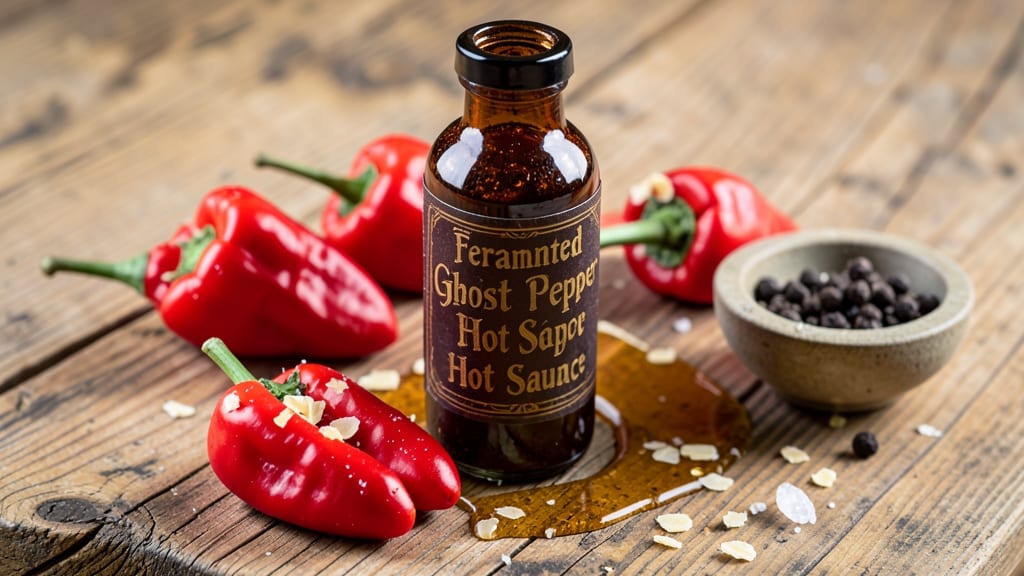
Creating fermented ghost pepper hot sauce transforms raw heat into complex, layered flavor through natural fermentation—something store-bought versions can never replicate. The process unlocks deep umami notes while preserving the pepper’s signature fiery punch, but requires patience and precision to balance safety with bold flavor development.
This recipe uses ghost peppers, apple cider vinegar, and sea salt in carefully measured ratios to create a sauce that’s both vibrant and stable.
Fermentation takes 7-10 days, during which enzymes break down the peppers’ cellular structure, releasing oils and compounds that mellow the initial burn into a smooth, smoky depth. The vinegar acts as a preservative while enhancing fermentation, ensuring safety without sacrificing intensity.
What you’ll end up with is a glossy, amber-hued sauce with a slow-building heat that lingers—ideal for drizzling over grilled meats, seafood, or even mixing into cocktails. Every batch develops unique character based on fermentation time, so you can adjust for heat preference while maintaining the sauce’s restaurant-quality complexity.
Proper storage extends shelf life for months.
Safety is critical when working with ghost peppers—always wear gloves and avoid touching your face. The fermentation process also requires sterile equipment to prevent contamination. Let’s walk through the exact steps to achieve professional results at home.
Ingredients for fermented ghost pepper hot sauce
Six ghost peppers and eight simple ingredients transform into a sauce with restaurant-quality complexity.
| Ingredient | Amount | Notes |
|---|---|---|
| Ghost Peppers 🌶️ | 6 whole | Organic, medium heat level preferred |
| Apple Cider Vinegar 🍏 | 1 cup | Raw, unfiltered for fermentation |
| Sea Salt 🧂 | ½ tsp | Diamond Crystal preferred |
| Granulated Garlic 🧄 | 2 tsp | Freshly minced preferred |
| Honey 🍯 | 1 tbsp | Raw, unprocessed preferred |
| Black Peppercorns 🌶️ | ½ tsp | Freshly cracked for depth |
| Fresh Ginger 🌿 | ¼ cup | Finely grated, organic preferred |
| Filtered Water 💧 | ½ cup | Sterile for fermentation |
| Xanthan Gum 🧪 | ¼ tsp | Stabilizes texture after fermentation |
Ghost peppers are the heart of this sauce, so quality matters. Buy them fresh from a Latin market or specialty grocer—they should be firm, vibrant red, and free of soft spots. Wear gloves when handling them; ghost peppers pack a serious punch. The vinegar should be raw and unfiltered (like Bragg) to support fermentation. For the salt, Diamond Crystal is ideal—its coarse texture dissolves perfectly without clouding the sauce. If you can't find ghost peppers, habaneros or Scotch bonnets work in a pinch, but expect a different flavor profile.
No raw honey? Agave nectar or maple syrup can substitute, though the fermentation process may vary slightly. Fresh ginger and garlic are non-negotiable for depth—dried versions lack the complexity. The black peppercorns add subtle warmth, but if you're sensitive to heat, reduce to 0.25 tsp. For sterilization, boil all equipment (glass jars, utensils) for 10 minutes before use. If you're short on time, pasteurized vinegar can replace raw vinegar, but fermentation will be less pronounced.
This sauce develops best in sterilized glass jars sealed with airlock lids (or regular lids with a small gap for fermentation gases). Store in a cool, dark place for 7-10 days, tasting daily after the first 48 hours. Once fermented, transfer to a clean jar with a tight seal and refrigerate—it’ll keep for up to 6 months. For gifting, use amber glass bottles to protect the sauce from light. Always label with the date and heat level (e.g., 'Medium Heat').
Why You'll Love This Recipe
- I’ll be real: you don’t need a day to ferment this. Just chop the peppers (carefully—those things pack a punch), toss them in vinegar with salt and garlic, and let them sit for a week. No fancy equipment, no constant stirring—just set it and forget it.
- Ghost Peppers in Minutes: I’ll be real: you don’t need a day to ferment this. Just chop the peppers (carefully—those things pack a punch), toss them in vinegar with salt and garlic, and let them sit for a week. No fancy equipment, no constant stirring—just set it and forget it.
- Sweet Heat Balance: That honey isn’t just for looks. It smooths out the ghost pepper’s fiery bite while letting the garlic’s sharpness shine through. Drizzle it on eggs, toss it in tacos, or eat it straight—it’s the kind of heat that lingers without burning your mouth out.
- Your Pantry’s New MVP: This sauce turns every meal into a showstopper. Slather it on grilled chicken, mix it into marinades, or use it to wake up bland takeout. Honestly, I’ve even added it to Bloody Marys when I’m feeling wild. One jar handles a dozen meals, so it’s always ready.
Step-by-step instructions for fermented ghost pepper hot sauce
Here's how to transform raw heat into complex, fermented flavor through precise technique.
Prepare and Sterilize the Ghost Peppers
Begin by thoroughly washing the 6 whole ghost peppers under cool running water to remove any surface contaminants. I like to use a vegetable brush for stubborn residue—these peppers pack serious heat, and cleanliness prevents unwanted bacteria from competing with your fermentation.
Next, sterilize a clean glass jar with a lid by rinsing it with sterile filtered water and then sanitizing it with apple cider vinegar. This creates an acidic environment that discourages harmful microbes while allowing beneficial fermentation to occur. Let the jar air-dry completely before use—any moisture left behind could dilute your final product.
Create the Fermentation Brine
In a separate bowl, combine the 0.5 cup filtered water, 0.5 tsp sea salt, 2 tsp granulated garlic, 0.5 tsp black peppercorns, and 0.25 cup finely grated fresh ginger. Stir vigorously until the salt and peppercorns fully dissolve—this creates the brine that will preserve and flavor your peppers during fermentation.
Add the 1 tbsp honey to the mixture and whisk until completely incorporated. The honey serves as a natural sweetener that balances the pepper's heat while also providing subtle antimicrobial properties. Pour this prepared brine into the sterilized glass jar, leaving about 1 inch of headspace at the top.
Pack and Seal the Peppers
Carefully place the 6 whole ghost peppers into the jar, packing them vertically to maximize space efficiency. You want them standing upright rather than stacked horizontally to prevent bruising. Press down gently but firmly to ensure they're fully submerged in the brine—this prevents mold growth and ensures even fermentation.
Cover the jar with its lid but don't seal it completely. Instead, loosely fasten the lid to allow for gas escape during fermentation. This is critical—fermentation produces carbon dioxide, and a completely sealed jar could cause dangerous pressure buildup. Place the jar in a dark, warm location (around 75-80°F) where it can ferment undisturbed.
Ferment for 7-10 Days
Let the peppers ferment for 7-10 days, checking daily for signs of activity. You'll notice bubbles forming in the brine and a slight effervescence when you gently shake the jar—this indicates active fermentation. The peppers will develop a soft texture and deepen in color to a rich, almost translucent red.
After 7 days, taste one of the peppers to assess the heat level. If it's still too raw or underdeveloped, continue fermenting for up to 3 more days. The ideal fermentation point occurs when the peppers are tender but still hold their shape, and the flavor has developed a complex, almost umami depth beyond just raw heat.
Strain, Blend, and Stabilize
Once fermentation is complete, remove the peppers from the jar and transfer them to a blender. Add the fermented brine from the jar (strain it through a fine-mesh sieve to remove any sediment) and blend until completely smooth. The result should be a vibrant red puree with a thick, syrupy consistency.
Return the puree to the sterilized jar and whisk in the 0.25 tsp xanthan gum. This stabilizer ensures your hot sauce maintains its texture even after bottling. Stir vigorously for 2-3 minutes until the gum fully dissolves and the mixture becomes noticeably thicker. Seal the jar tightly and store in the refrigerator for up to 6 months—the cold temperature slows further fermentation while preserving all those developed flavors.
Pro Tips For Making Fermented Ghost Pepper Hot Sauce
- STRIP PEPPERS THOROUGHLY: Ghost pepper seeds and membranes pack the most heat—remove every last one, even if it means cutting through the flesh with scissors. I learned this the hard way after a batch turned into a week-long fire alarm drill.
- WEIGH NOT GUESS SALT: Use a scale for sea salt—1% of your total weight (peppers + vinegar) guarantees proper fermentation without overpowering. My first batch tasted like a salt lick because I eyeballed it.
- FERMENT COOL, NOT WARM: Keep your fermenting jar between 68-72°F (20-22°C)—any warmer and mold wins. I once left mine in a sunny window and had to toss it after 48 hours.
- STRAIN TWICE, BLEND ONCE: After fermenting, strain through a fine-mesh sieve first, then a cheesecloth for ultra-smooth sauce. Skipping the second strain leaves gritty texture—trust me, your teeth will notice.
Perfect pairings for fermented ghost pepper hot sauce
Spicy Cocktail Pairings
This hot sauce transforms classic cocktails into fiery, complex sippers. Add 1-2 dashes to a Margarita (vodka, lime, triple sec) for a ghost pepper twist that lingers without overpowering. For a Whiskey Sour, replace simple syrup with 1 tsp of the sauce—the smoky depth complements bourbon beautifully.
I like to serve these with a lime wedge on the rim for acidity contrast. 🍹
Grilled Meats Elevation
Use this sauce as a post-grill baste for ribeye steaks or pork chops. Brush on during the last 2 minutes of cooking to caramelize the sugars while adding heat.
For pulled pork, mix 1 tbsp per pound into the BBQ sauce before serving. The fermentation mellows the ghost pepper’s bite, creating a smoky-sweet crust that’s addictive. 🔥
Seafood Harmony
Drizzle over grilled shrimp skewers or seared scallops for a bright, spicy contrast to the richness of seafood. The acidity in the sauce cuts through butter, while the ginger and garlic add umami depth.
For fish tacos, use it as a substitute for mayo—just 1 tsp per taco adds heat without drowning the fish. 🦞
Cheese Board Balance
Pair this sauce with aged cheddar, pepper jack, or goat cheese for a savory-spicy contrast. The fermentation mellows the ghost pepper’s heat, making it safe for cheese pairings.
I like to serve it in a small ceramic dish with crackers and nuts for dipping. The honey in the sauce also complements blue cheese beautifully. 🧀
Asian-Inspired Fusion
Use this sauce as a dipping sauce for dumplings or spring rolls—mix 1 tbsp per ½ cup soy sauce for a ghost pepper version of chili garlic sauce. Stir-fry tofu or chicken with 1 tsp of the sauce and 1 tbsp hoisin for a fiery, fermented glaze.
The ginger and garlic bridge Eastern and Western flavors seamlessly. 🥢
Breakfast Heat
Add ½ tsp to scrambled eggs or breakfast tacos for a morning kick. The fermentation mellows the heat, making it safe for early meals. For bloody marys, replace Worcestershire sauce with 1 tsp of this sauce—the smoky depth enhances the cocktail’s complexity.
Serve with pickled veggies to balance the spice. ☕
Nutrition facts
Frequently asked questions
Why ferment ghost pepper hot sauce instead of cooking it immediately?
Fermentation transforms raw heat into complex, layered flavors by breaking down the pepper's cellular structure. This process develops umami depth and mellows the sharpness, creating a smoother sauce with smoky, almost sweet notes that cooking alone can't replicate. The vinegar and salt in the brine also preserve the sauce while enhancing fermentation.
How do I know when the fermentation is complete?
Check for tender but firm peppers and a slightly effervescent brine after 7 days. Taste one pepper—it should have a complex, developed flavor rather than raw heat. If it's still too sharp, ferment 2-3 more days. Over-fermenting risks softness or off-flavors, so monitor daily after day 5.
Can I adjust the heat level in this recipe?
Yes! For milder heat, reduce peppers to 4-5 or add 1 extra tbsp honey to balance. For extra intensity, use 7-8 peppers or ferment 1-2 days longer. Always wear gloves when handling ghost peppers—they cause severe burns if touched with bare hands.
What if mold appears during fermentation?
Discard the batch immediately—mold indicates contamination. To prevent this, always use sterile equipment, keep peppers fully submerged in brine, and ferment in a cool (75-80°F), dark place. If you see white fuzz, it's likely harmless yeast, but black or green spots mean discard.
How long does the finished sauce last, and can I make it shelf-stable?
The sauce keeps 6 months refrigerated or 3 months in the pantry if you add 0.25 tsp citric acid per cup before bottling. For true shelf stability, process in a water bath for 10 minutes after blending. Store in amber glass bottles to protect from light, which degrades heat compounds over time.