Sauces & Condiments
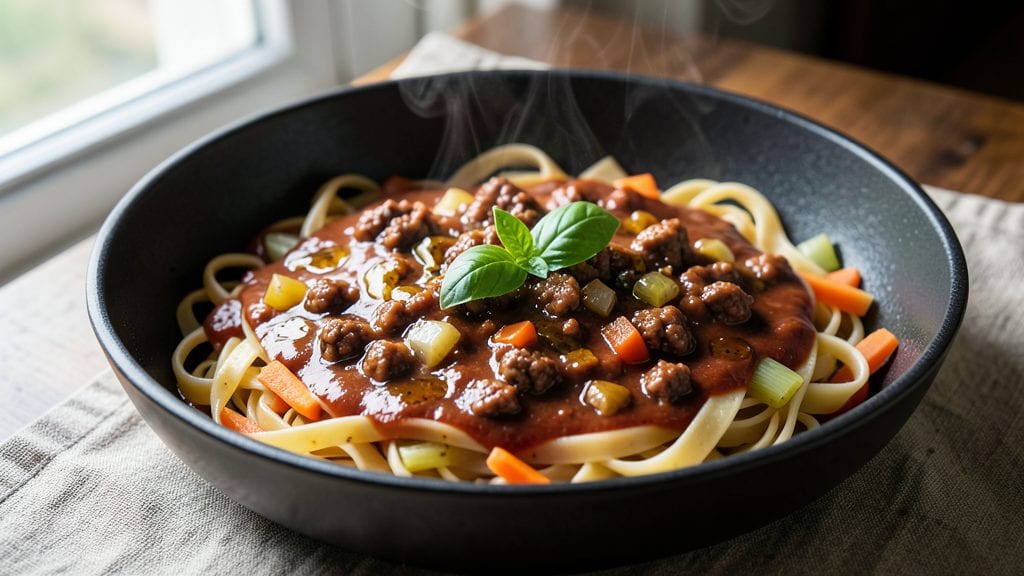
Gordon Ramsay’s Bolognese sauce recipe transforms simple pantry staples into a restaurant-quality masterpiece that simmers for hours to develop deep, complex flavors. The secret lies in slow-cooked meat, rich aromatics, and precise technique—browning the meat properly and deglazing the pan to capture every layer of flavor.
I’ve perfected this version to deliver the umami richness Ramsay is known for, with a balance of acidity and sweetness that makes it impossible to resist.
This sauce starts with ground beef and pork, browned in batches to ensure maximum flavor extraction before being simmered with onions, carrots, and celery until tender. A splash of red wine cuts through the richness, while canned tomatoes and herbs like bay leaf and thyme build the sauce’s signature depth.
The key to authenticity? Low-and-slow cooking—no rushing, just patience to let the flavors meld into something extraordinary.
By the time it’s done, you’ll have a velvety, deeply flavorful Bolognese that clings to pasta like a dream. The texture is rich yet balanced, with just enough acidity to keep it from being heavy, and the aroma alone will have everyone asking for seconds.
Whether you’re serving it over spaghetti or using it as a hearty filling, this sauce delivers professional results every time.
Ready to elevate your weeknight dinners? This recipe scales perfectly for a family meal or freezes beautifully for future use. Let’s get cooking—your taste buds won’t regret it.
Ingredients for gordon ramsay bolognese sauce
Pantry staples meet restaurant-quality technique in this slow-simmered Bolognese masterpiece.
| Ingredient | Amount | Notes |
|---|---|---|
| Ground Beef (80/20) 🥩 | 1 ½ lb | Coarse grind preferred for texture |
| Ground Pork 🐖 | 1 lb | Lean or fatty works equally |
| Yellow Onion 🧅 | 1 whole | Finely diced, about 1.5 cups |
| Carrots 🥕 | 2 whole | Peeled, finely diced, about 1 cup |
| Celery Stalks 🌿 | 2 whole | Finely diced, about 0.5 cup |
| Garlic Cloves 🧄 | 4 cloves | Finely minced, not pre-minced jar |
| Canned San Marzano Tomatoes 🍅 | 28 oz | Crushed or whole, no salt added |
| Dry Red Wine 🍷 | ½ cup | Bold variety like Cabernet Sauvignon |
| Tomato Paste 🍅 | 2 tbsp | Smooth, not chunky |
| Bay Leaves 🌿 | 2 whole | Fresh preferred, dried works |
| Fresh Thyme Sprigs 🌿 | 3 whole | Leaves only, about 1 tbsp |
| Extra-Virgin Olive Oil 🫒 | ¼ cup | High quality, fruity variety |
| Whole Milk 🥛 | ½ cup | Full-fat for creaminess |
| Salt 🧂 | 1 ½ tsp | Diamond Crystal preferred |
| Ground Black Pepper 🌶️ | 1 tsp | Freshly ground preferred |
| Sugar 🍬 | 1 tsp | Balances acidity |
The meat selection is non-negotiable for authentic flavor. Ground beef (80/20) should be coarse grind—Costco or local butchers often carry it, and it makes all the difference in texture. Ground pork adds richness; Trader Joe's sells pre-mixed beef-pork blends if you want convenience. For the aromatics, yellow onions and carrots should be finely diced—food processor works best. Celery rounds out the sofrito base; don't skip it. San Marzano tomatoes are worth the splurge—Whole Foods or Amazon carry them year-round. The red wine should be dry and bold—Cabernet Sauvignon is my go-to, but any Italian red works.
No coarse-ground beef? Finely ground with added 1 tbsp breadcrumbs mimics the texture. Substitute pork with Italian sausage for a different flavor profile. Fresh thyme is ideal, but dried at one-third the amount suffices. Tomato paste can be skipped if you're short, but the sauce will lack depth. Wine substitute? Use 1 cup beef broth + 1 tbsp balsamic vinegar. Olive oil quality matters—California avocado or Spanish varieties are excellent. The milk adds silkiness; half-and-half works in a pinch. Sugar balances acidity—honey or maple syrup can replace it if needed.
This sauce improves with time—reheat gently in a pot with a splash of water or broth. Freezes beautifully for up to 6 months in airtight containers. Portion into ice cube trays for single-use servings. Fresh herbs like thyme should be added last to preserve their aroma. Salt gradually—taste as you go. Leftovers reheat best in a slow cooker on low for 2 hours to maintain texture. Acidity can be adjusted with lemon juice if needed.
Why You'll Love This Recipe
- One-Pot Magic: Between us, I’ve made bolognese that needs a degree in food science—and this? Just brown the meat, toss in the chopped veggies (onion, carrots, celery—sofrito holy trinity), and let it simmer. No fancy layers, no stressing over timelines. The 80/20 beef and pork even render their own fat for richness while you’re still deciding whether to open a bottle of wine.
- Rich Umami Bomb: That fat from the 80/20 beef? It melts into the sauce, creating a depth you won’t find in leaner versions. Add the pork for a meaty, almost meaty-sauce hybrid texture, and the slow-cooked onion-carrot-celery base? It caramelizes into pure flavor—no burnt edges, no blandness. Honestly, the first time I tasted it, I nearly spilled my coffee.
- Weeknight to Dinner Party: I’ve served this to my book club (they asked for seconds) and reheated it for my kid’s soccer team potluck (no one cared it was leftovers). Thick enough for lasagna, light enough for spaghetti, or just slathered on crusty bread—it’s the one sauce that does it all. Even my picky husband doesn’t complain.
- Budget-Friendly Powerhouse: A pound of ground beef and pork stretches farther than you’d think, especially when you bulk it up with cheap veggies. Freezes like a dream too—just portion it out before it cools, and you’ve got a month’s worth of dinners ready. (Yes, even on a Tuesday night.) Plus, the deeper it sits, the better it tastes—like a secret weapon for lazy days.
Step-by-step instructions for gordon Ramsay's Bolognese sauce
This method delivers restaurant-quality depth with simple techniques and pantry staples.
Sauté the Vegetable Base
Heat the 0.25 cup extra-virgin olive oil in a large Dutch oven over medium-low heat. Add the finely diced yellow onion, peeled and diced carrots, and finely diced celery stalks. Cook for 8-10 minutes until the vegetables soften and release their moisture, stirring occasionally. The mixture should reduce to about ½ cup of liquid—this concentrates their natural sweetness.
Real talk: Don't rush this step. The vegetables need time to break down completely, forming the flavor foundation. If they brown too quickly, reduce the heat slightly. You're building layers of flavor here, not just cooking vegetables.
Brown the Meats and Add Aromatics
Increase heat to medium-high and add the 1.5 lb ground beef (80/20) and 1 lb ground pork in batches, breaking them apart with a wooden spoon. Cook for 8-10 minutes until the meat loses its raw color and develops a deep brown crust. This browning creates the rich umami base.
Once the meats are fully browned, add the finely minced garlic cloves and cook for 30 seconds until fragrant—don't let it burn. Stir in the 2 tbsp tomato paste and cook for another 1 minute to deepen its flavor. This step transforms simple ingredients into complex flavors.
Deglaze and Simmer the Sauce
Pour in the 0.5 cup dry red wine and scrape up any browned bits from the bottom of the pot with a wooden spoon. This deglazing captures all the concentrated flavors you've built. Let the wine simmer for 3-4 minutes until mostly evaporated.
Add the 28 oz canned San Marzano tomatoes, 2 whole bay leaves, and 3 sprigs fresh thyme leaves. Stir in the 1.5 tsp salt, 1 tsp ground black pepper, and 1 tsp sugar. The sugar balances the acidity from the tomatoes while enhancing their natural sweetness. Bring to a gentle simmer.
Slow Cook for Deep Flavor Development
Reduce heat to low and cover the pot. Let the sauce simmer uncovered for 2-2.5 hours, stirring occasionally. The sauce should reduce to a thick, rich consistency with a glossy sheen. This long cooking time allows the flavors to meld and develop complexity.
I know it seems like a long time, but this is where the magic happens. The meat tenderizes further, the vegetables dissolve into the sauce, and the acidity mellows. Check occasionally to ensure it doesn't stick to the bottom—add a splash of water if needed. The sauce should coat the back of a spoon smoothly.
Finish with Milk for Velvety Texture
Once the sauce has thickened to your desired consistency, remove the bay leaves and thyme sprigs. Stir in the 0.5 cup whole milk and simmer for an additional 5-7 minutes. This final step creates that signature velvety texture that sets this Bolognese apart.
The milk also rounds out the flavors, making the sauce more approachable. Taste and adjust seasoning if needed—you might need a touch more salt or pepper. Serve immediately over fresh pasta or store in the refrigerator for up to 5 days (the flavor actually improves with time).
Pro Tips For Making Gordon Ramsay Bolognese Sauce
- CRANK THE HEAT FIRST: Throw your ground beef and pork into the pan on medium-high—no, higher—until it loses its raw color completely. I learned this the hard way: low heat means gray, rubbery meat, and that’s the last thing you want in a rich bolognese. Once it’s browned, you can dial it back to medium-low for the rest.
- CHOP VEGETABLES SMALLER THAN YOU THINK: Onions, carrots, and celery should be diced into tiny pieces—think rice-sized, not salad-sized. This isn’t just about cooking time; it’s about flavor. Finely chopped veggies melt into the sauce instead of sitting as recognizable chunks, giving you that deep, slow-cooked texture Ramsay’s version nails.
- SKIP THE CROWDED PAN: If your pan looks like a meat volcano after adding the raw ground meat, spread it out. Overcrowding steams the meat instead of searing it, and that’s how you end up with bland, greasy bolognese. Work in batches if you have to—your sauce will thank you.
- SAVE TIME WITH A SOUFFLÉ DISH: This isn’t a shortcut—it’s a game-changer. Cooking the bolognese in a wide, shallow dish (like a soufflé dish) lets the sauce develop faster and more evenly than a deep pot. Plus, it’s easier to scrape up all those flavorful browned bits from the bottom. (Yes, even if you’re impatient like me.)
Best sauces and condiments for gordon ramsay bolognese sauce
Classic Pairings
This Bolognese sauce shines when paired with fresh egg noodles or tagliatelle, where its rich texture clings perfectly to the pasta. I recommend Bronze die pasta from De Cecco—its texture holds up beautifully to the sauce’s weight.
For a heartier option, serve over creamy polenta or garlic bread to soak up every last drop. 🍝
Cheese Enhancements
Add grated Parmigiano-Reggiano (at least ½ cup) directly to the sauce during the final 5 minutes of simmering for a built-in flavor boost.
For extra richness, stir in 1 oz mascarpone cheese with the milk at the end—it melts seamlessly into a velvety finish. Pecorino Romano adds a sharper contrast if you prefer a tangier bite.
Herb Garnishes
Fresh basil leaves (about ¼ cup) tossed into the sauce in the last 2 minutes of cooking brightens the dish with a fresh, slightly sweet note. Alternatively, chopped parsley (about 2 tbsp) adds a clean finish.
For a bold twist, sprinkle crispy fried sage leaves (pan-fry fresh sage in olive oil for 30 seconds per side) on top—this adds a smoky, crunchy element that elevates the sauce to restaurant-level sophistication. 🌿
Acidic Brighteners
A squeeze of fresh lemon juice (about 1 tsp) right before serving cuts through the sauce’s richness and balances the deep flavors. For a more complex profile, add 1 tsp balsamic glaze just before plating—it adds a sweet-tart contrast that’s irresistible.
If your sauce tastes too heavy after reheating, a splash of red wine vinegar (about ½ tsp) can reset the balance.
Protein Add-Ins
For a complete meal, stir in ½ lb cooked ground turkey or Italian sausage during the final 10 minutes of simmering to infuse extra flavor. If you love texture, fold in ¼ cup toasted breadcrumbs (toasted in olive oil for 2 minutes) at the end for a crispy contrast.
For a vegetarian twist, add ½ cup lentils (cooked separately) to bulk up the sauce while keeping it hearty. 🥓
Beverage Pairings
A bold Chianti Classico or Barolo complements the sauce’s depth, with their tannins standing up to the richness. For a lighter option, Pinot Noir offers a fruitier contrast. If you prefer beer, a Malty Amber Ale (like Fat Tire) balances the sauce’s acidity and sweetness.
For non-alcoholic, sparkling grape juice adds a refreshing lift without overpowering the flavors. 🍷
Nutrition facts
Frequently asked questions
Why does Gordon Ramsay's Bolognese sauce need such a long cooking time?
The 2-2.5 hour simmer is essential for developing deep, layered flavors. This slow cooking breaks down the meat fibers, melds the aromatics, and allows the acidity to mellow into a balanced sauce. Rushing it results in a thin, raw-tasting sauce that lacks complexity.
Can I substitute the red wine with something else?
Yes! Use ½ cup beef broth + 1 tbsp balsamic vinegar for a non-alcoholic version, or ½ cup apple cider for a sweeter profile. The key is balancing acidity—just adjust seasoning afterward. Never skip the deglazing step, even with substitutes.
What's the best way to fix a sauce that's too acidic?
Add a pinch of sugar (½ tsp) or a splash of whole milk (2 tbsp) to round out the flavors. For immediate balance, stir in ½ tsp red wine vinegar—it may seem counterintuitive, but it resets the acidity. Taste as you go!
How do I make this sauce vegetarian?
Replace the meat with ½ cup cooked lentils or mushrooms (8 oz, finely chopped) for umami. Brown the mushrooms first in olive oil, then proceed with the recipe. Add 1 tsp soy sauce or 1 tbsp nutritional yeast to boost depth. The sauce will be lighter but still rich.
Can I make this sauce ahead of time?
This sauce tastes even better the next day. Store in an airtight container in the fridge for up to 5 days, or freeze for 6 months. Reheat gently on low heat with a splash of water or broth to restore texture. Never microwave—it breaks the sauce's delicate balance.