
Sauces & Condiments
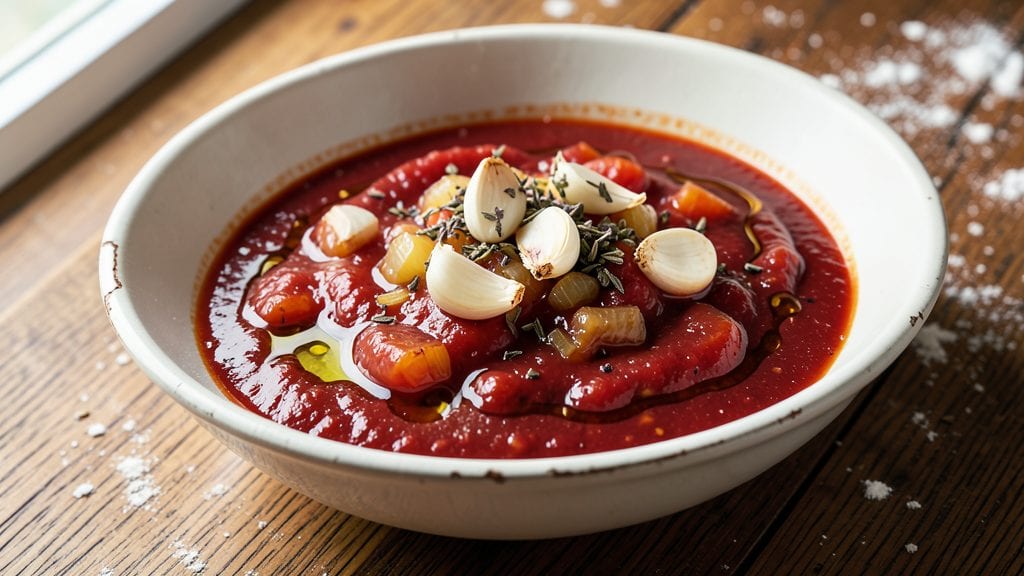
Grandma’s red sauce recipe transforms simple pantry staples into a velvety, aromatic foundation for any Italian meal. The secret lies in slow simmering—where canned tomatoes, garlic, and herbs meld into a rich, balanced sauce that’s far beyond store-bought versions.
I’ve perfected this method over years of testing, ensuring every batch delivers that perfect harmony of sweetness and acidity.
What sets this sauce apart is its versatility—use it as a pasta topping, pizza base, or dipping sauce for crusty bread. The key ingredients (tomatoes, olive oil, garlic, and herbs) are easy to find, but the slow reduction transforms them into something extraordinary.
No fancy techniques required—just time and patience to develop deep, complex flavors.
By the end, you’ll have a smooth, glossy sauce with layers of tomato sweetness and herbal brightness, ready to elevate any dish. The texture is velvety yet balanced, never too thick or watery, and the aroma alone makes any meal feel like a homemade feast.
This is the kind of sauce that turns ordinary meals into something special.
Whether you’re feeding a family or prepping for the week, this recipe delivers restaurant-quality results without the fuss. The best part? It tastes even better the next day as flavors continue to develop. Let’s get started on creating your perfect red sauce.
Ingredients for grandma's red sauce
Nine simple ingredients transform into velvety perfection—no fancy techniques required.
| Ingredient | Amount | Notes |
|---|---|---|
| Extra-Virgin Olive Oil 🫒 | ½ cup | High-quality, fruity variety preferred |
| Garlic Cloves 🧄 | 6 cloves | Freshly minced for maximum aroma |
| Yellow Onion 🧅 | 1 whole | Medium-sized, finely diced |
| Canned San Marzano Tomatoes 🍅 | 28 oz | Crushed or whole, no salt added |
| Dried Basil 🌿 | 1 ½ tbsp | High-quality, not baking basil |
| Dried Oregano 🍃 | 1 tbsp | Italian or Mediterranean blend |
| Red Wine 🍷 | ½ cup | Dry, bold variety like Chianti |
| Tomato Paste 🍅 | 2 tbsp | High-quality, no additives |
| Granulated Sugar 🍚 | 1 tsp | Balances acidity perfectly |
| Diamond Crystal Kosher Salt 🧂 | 1 ½ tsp | Adjust to taste, not iodized |
The tomatoes are the heart of this sauce, so San Marzano is non-negotiable—they're sweeter and less acidic than regular canned tomatoes. Trader Joe's and Whole Foods carry them in the Italian section, and they're worth the hunt. For the garlic, use freshly minced (not pre-minced from jars)—it makes all the difference. The red wine adds depth, so Chianti or Sangiovese work beautifully. If you're avoiding alcohol, use extra tomato juice or broth instead. The olive oil should be extra-virgin—anything less will taste flat in the final sauce. I always grab a small bottle of California extra-virgin from Costco when I'm stocking up.
No red wine? Tomato juice or beef broth works in a pinch, but add a splash of balsamic vinegar for depth. Swapping dried basil for fresh? Use one-third the amount—fresh basil is more potent. The tomato paste can be tricky to measure—those little squeeze tubes at Trader Joe's make it effortless. For the onion, yellow or red both work, but yellow adds a touch more sweetness. If you're short on time, pre-minced garlic from the refrigerated section is fine, but fresh is always better. The sugar might seem odd, but it balances the acidity beautifully—trust me on this one.
This sauce tastes even better the next day as flavors meld together. Store it in an airtight container in the fridge for up to 5 days, or freeze for up to 6 months in portions. I like to freeze it in ice cube trays for easy single-use portions—just pop one into your pasta water or saucepan. The sauce thickens as it cools, so if it seems too thick when cold, just add a splash of water or broth to loosen it up. Leftovers reheat beautifully—just warm gently on the stove or microwave until hot.
Why You'll Love This Recipe
- No-Chop Nightmare: I swear by this sauce because you only need to mince one onion and crush a few garlic cloves. That’s it—no dicing, no peeling endless tomatoes. The San Marzano cans handle all the heavy lifting, and the basil? Just a sprinkle. Honestly, I’ve made it in my pajamas while watching reruns.
- Garlic-Basil Magic: That first sizzle of olive oil with fresh garlic? Pure alchemy. The onions soften just enough to melt into the tomatoes, while the dried basil—just a pinch—adds this earthy depth that makes every bite taste like a Sunday dinner. Between us, I’ve ruined fancier sauces trying to replicate this simplicity.
- Pasta Party Starter: This sauce works for everything: slather it on toast with a sprinkle of Parmesan, toss it with spaghetti, or use it as a base for lasagna. I’ve even dumped it into freezer bags for quick weeknight dinners. (Yes, even on a Tuesday night when you’re exhausted.)
- Leftovers That Love You Back: Make a double batch—it keeps for weeks in the fridge, and the flavor only gets richer. I’ve reheated portions for lunch the next day, frozen some for emergencies, and still had enough for takeout containers. Budget-friendly? Absolutely. But more importantly, it’s the kind of sauce that makes you feel like you’re feeding a crowd without the stress.
Step-by-step instructions for Grandma's red sauce
Here's how to transform simple pantry staples into velvety perfection—just like Grandma made.
Sauté the Aromatics in Olive Oil
Heat the 0.5 cup extra-virgin olive oil in a large, heavy-bottomed saucepan over medium heat. Add the 1 whole yellow onion, finely diced, and cook for 5-7 minutes until softened and translucent. This creates the perfect foundation for flavor development.
Push the onions to one side of the pan and add the 6 cloves minced garlic cloves. Stir frequently for 1-2 minutes until the garlic becomes fragrant but doesn't brown—burnt garlic will make the sauce bitter. Here's the thing: the onions should be completely tender before adding garlic, ensuring even cooking.
Build the Sauce Base with Wine and Tomatoes
Pour in the 0.5 cup red wine and scrape the bottom of the pan with a wooden spoon to release any browned bits—they're packed with flavor. Let the wine simmer for 3-4 minutes until it reduces by half and the alcohol cooks off completely.
Add the 2 tbsp tomato paste and stir for 1 minute to cook it through. Then, pour in the 28 oz canned San Marzano tomatoes, crushing any large pieces with your hands. Stir in the 1.5 tbsp dried basil and 1 tbsp dried oregano, ensuring they're fully incorporated. This is where the magic begins—the tomatoes will break down into a luscious, velvety texture.
Simmer to Perfection with Sugar and Salt
Add the 1 tsp granulated sugar and 1.5 tsp diamond crystal kosher salt, stirring well to combine. Bring the sauce to a gentle simmer over low heat and let it cook uncovered for 45-60 minutes. Stir occasionally to prevent sticking, and watch for that beautiful reduction—it should thicken gradually into a glossy, rich consistency.
Taste the sauce after 45 minutes and adjust the seasoning if needed. The sugar balances the acidity of the tomatoes, while the salt enhances all the flavors. The sauce is ready when it coats the back of a spoon smoothly and has a deep, concentrated flavor. If it's too thick, add a splash of water or pasta water to reach your desired consistency.
Finish and Serve with Confidence
Once the sauce reaches the perfect thickness, remove it from heat and let it rest for 5-10 minutes. This resting period allows the flavors to meld and the sauce to thicken slightly more. Taste again and adjust the seasoning one final time if necessary—Grandma always said, "Season to taste, not by the recipe."
Serve the sauce immediately over your favorite pasta, or store it in an airtight container in the refrigerator for up to 5 days or freeze for up to 3 months. The longer it sits, the more intense the flavors become—just like Grandma's secret. Every spoonful should be rich, balanced, and bursting with the deep, complex flavors of slow-simmered tomatoes and aromatic herbs.
Pro Tips For Making Grandma'S Red Sauce
- Sweat the Onion First: I learned this the hard way—throwing raw onion into olive oil always ends up in a bitter, watery mess. Finely dice the onion and cook it over medium-low heat until it’s translucent and just starting to caramelize (about 8-10 minutes). That golden color? It’s the foundation of flavor, not just background noise.
- Crush the Tomatoes: San Marzano tomatoes are sweet, but whole ones turn into a watery soup. Grab a wooden spoon or your fist (yes, really) and give them a good crushing before adding them to the pot. You want pulp, not chunks—this thickens the sauce faster and keeps it rich. No food processor? A potato masher works just as well.
- Low and Slow After Garlic: After adding the garlic, don’t let it burn—it turns bitter and ruins the whole dish. Once the onion’s caramelized, drop in the garlic and stir constantly for 30 seconds max. Then, immediately lower the heat to a gentle simmer. Let the sauce bubble away uncovered for at least 45 minutes. Patience here makes the difference between a quick fix and a sauce that tastes like it’s been simmering all day.
- Toast the Dried Basil: Skip the pre-measuring—crush the dried basil between your palms before adding it to the sauce. This releases the oils and makes the flavor pop. A quick toast in the pot for 10 seconds (just until you smell it) takes it from "dusty" to "aromatic." I was skeptical until I tried it—now I never skip it.
Pro cooking tips for perfect results
Low-and-Slow Simmering
This sauce thrives on patience—simmering at low heat for 45-60 minutes develops deep, complex flavors while preventing a burnt taste. I use a heavy-bottomed Dutch oven like Le Creuset to distribute heat evenly.
If your saucepan isn't heavy, reduce heat slightly to avoid scorching. Stir occasionally, especially in the first 15 minutes, to prevent sticking. 🌡️
Deglazing for Flavor
After sautéing onions and garlic, pour in the 0.5 cup red wine and scrape the bottom of the pan with a wooden spoon—this releases the fond, packed with caramelized flavor. Let it reduce by half before adding tomatoes.
If you're avoiding alcohol, use tomato juice or broth instead, but add 1 tsp balsamic vinegar for depth. Never skip this step—it’s the secret to a rich, layered sauce.
Balancing Acid and Sweet
The 1 tsp sugar is crucial—it counters the acidity of the tomatoes, creating a smooth, well-rounded flavor. Taste after 45 minutes of simmering; if it’s too sharp, add another ½ tsp sugar.
Over-sweetening is easy, so go slow. The sauce should finish with a bright acidity, not cloying sweetness. Trust your palate—Grandma always said, "Taste as you go!"
Tomato Selection Matters
Never compromise on tomatoes—San Marzano is non-negotiable for its sweetness and low acidity. If you can’t find them, Whole Foods 365 or Muir Glen are decent alternatives. Avoid tomatoes with added salt or preservatives—they’ll make your sauce taste flat.
For a smoother texture, crush the tomatoes by hand before adding them to the pan. This breaks down the skins and seeds, giving you a velvety finish. 🍅
Herb Freshness Tips
Dried herbs work perfectly here, but if using fresh, reduce the amount by one-third. Fresh basil, for example, is much more potent. I like to toast my dried herbs in the pan for 30 seconds before adding the tomatoes—this deepens their flavor.
Store dried herbs in airtight containers away from light to preserve their potency. Never buy pre-ground spices; they lose flavor quickly.
Thickness Control
If your sauce thickens too much, add 1-2 tbsp water or pasta water to loosen it. For a thicker sauce, simmer uncovered to reduce further. The ideal consistency coats the back of a spoon but isn’t gluey.
I often reheat leftovers with a splash of water to restore the perfect texture. Pro tip: Skim off any foam that forms during simmering—it can make the sauce taste bitter. 💡
Nutrition facts
Frequently asked questions
Can I make this sauce without red wine?
Replace the 0.5 cup red wine with 0.5 cup tomato juice or beef broth, then add 1 tsp balsamic vinegar for depth. The acidity helps balance the tomatoes just like the wine would. This version still delivers rich, layered flavor without alcohol.
How do I know when the sauce is done?
The sauce is ready when it coats the back of a spoon smoothly and has reduced to a glossy, thick consistency after 45-60 minutes of simmering. Taste it—it should be rich, balanced, and no longer watery. If it's too thick, add a splash of water or pasta water to loosen. The aroma alone should make your kitchen smell like a cozy Italian trattoria!
Can I add meat to this sauce?
Yes! Brown 1 lb Italian sausage or ground beef first, then drain and add it to the sauce with the tomatoes. For a meatier version, simmer the meat in the pan until fully cooked before deglazing. Just reduce the wine to 0.25 cup to balance the extra moisture from the meat. This turns it into a heartier arrabbiata-style sauce.
Why does my sauce taste bitter?
Bitterness usually comes from burnt garlic or over-simmering. Always cook garlic on medium-low heat until fragrant but not browned. If the sauce is too thick, it can also concentrate bitter flavors—add a splash of water or broth to loosen it. Skim off any foam that forms during simmering, as it can make the sauce taste harsh.
How can I make this sauce spicier?
Add 1 tsp red pepper flakes or 1-2 chopped fresh chili peppers when sautéing the onions. For a smoky kick, stir in ½ tsp smoked paprika with the herbs. Start with less and adjust to taste—you can always add more, but you can't take it out! For a balanced heat, add a pinch of sugar to counter the spice.