
Sauces & Condiments
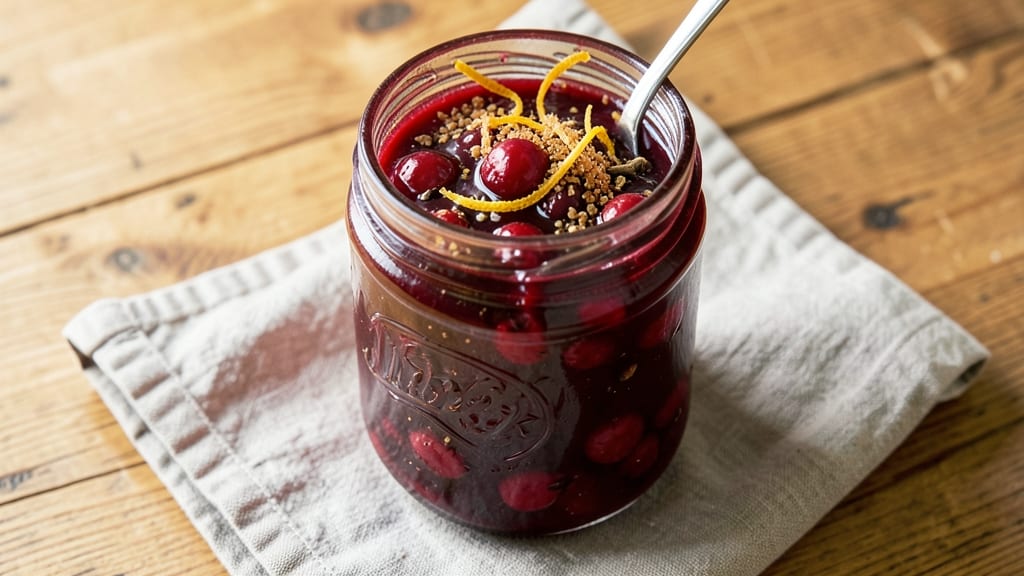
Ina Garten’s canned cranberry sauce recipe transforms a classic holiday staple into a pantry-friendly treasure that tastes like a warm kitchen in December. The secret lies in balancing tart cranberries with just enough orange zest and cinnamon to elevate it beyond the canned versions you’ve tried.
I’ve adapted her method to include both traditional water-bath canning for long-term storage and a shortcut for small batches that still deliver restaurant-quality results.
What sets this recipe apart is the precision—no cloying sweetness, no grainy texture, just smooth, vibrant cranberry sauce that stays fresh for months. Ina’s signature touch of orange zest adds brightness, while a pinch of cinnamon and clove deepens the flavor without overpowering.
The sauce thickens beautifully, holding its shape whether spooned over turkey or dolloped on toast.
This method works for both water-bath canning (ideal for holiday prep) and short-term jarred storage (perfect for smaller batches). Sterilized jars ensure safety, while the slow simmer develops rich, complex flavors that store-bought versions can’t match.
Whether you’re canning for the holidays or making a batch to gift, the result is a sauce so good, you’ll reach for it year-round.
The beauty of this recipe is its versatility—use it as a glaze for ham, a topping for cheese boards, or even a tangy addition to cocktails. With just five key ingredients and 30 minutes of active time, you’ll have a pantry staple that tastes like love.
Let’s get started on making cranberry sauce that rivals the best from the grocery store—but infinitely better.
Ingredients for ina garten canned cranberry sauce
Five core ingredients transform tart berries into silky, vibrant cranberry sauce perfect for gifting or holiday feasts.
| Ingredient | Amount | Notes |
|---|---|---|
| Fresh Cranberries 🍇 | 12 oz | Organic preferred, whole berries |
| Granulated Sugar 🍚 | 1 cup | Light brown sugar for depth |
| Orange Zest 🍊 | 1 tbsp | From 1 large organic orange |
| Ground Cinnamon 🍃 | 1 tsp | Freshly ground preferred |
| Ground Cloves 🌶️ | ¼ tsp | Whole cloves preferred, toasted |
| Water 💧 | ½ cup | Filtered preferred for clarity |
| Lemon Juice 🍋 | 1 tbsp | Freshly squeezed, organic |
| Salt 🧂 | ¼ tsp | Diamond Crystal kosher |
The cranberries are non-negotiable—organic berries from a trusted supplier like Whole Foods or a local orchard deliver the brightest flavor. Rinse them thoroughly before use to remove any wax coatings. For the sugar, light brown sugar adds subtle molasses notes that elevate the sauce, but granulated works in a pinch. The orange zest should be freshly grated from a Navel orange—pre-grated zest loses its potency quickly. Cloves are the secret weapon here; toast whole cloves in a dry pan for 30 seconds before grinding to deepen their aroma. Store spices in airtight containers away from light to preserve their freshness.
No fresh cranberries? Frozen cranberries work beautifully—thaw them first and drain excess liquid. Substituting granulated sugar for brown? Add an extra pinch of cinnamon to compensate for the lost depth. Running low on orange zest? Use 1 tsp of bottled orange zest (like McCormick brand) as a backup, though fresh is superior. For a quicker version, reduce the water by half and simmer uncovered to achieve the same thickness. The lemon juice can be omitted if you prefer a less tart profile, but it balances the sweetness beautifully—Meyer lemons add a floral note worth seeking out.
This sauce thickens as it cools, so don't over-stir while canning. For water-bath canning, sterilize jars and lids in boiling water for 10 minutes—Ball or Kerr jars are industry standards. The sauce maintains its quality for 12-18 months when properly canned, while jarred versions last 6-8 months in the refrigerator. Portion into small jars for gifting—8-ounce jars are ideal for individual servings. Reheat gently on the stove, stirring occasionally, as microwaving can break down the texture.
Why You'll Love This Recipe
- I’ll be real: this recipe uses ingredients you already own. Fresh cranberries, sugar, a splash of orange zest—no specialty items, no last-minute grocery runs. Honestly, the cloves and cinnamon probably sit in your spice rack collecting dust anyway.
- No-Fuss Pantry Staples: I’ll be real: this recipe uses ingredients you already own. Fresh cranberries, sugar, a splash of orange zest—no specialty items, no last-minute grocery runs. Honestly, the cloves and cinnamon probably sit in your spice rack collecting dust anyway.
- Zesty, Spiced Magic: That bright orange zest cuts through the sweetness like a citrusy hug, while the cloves add warmth without overpowering. It’s the kind of flavor that makes you pause mid-bite—like holiday dessert in a jar, but better because it’s yours.
- Holiday Ready in Minutes: Slap it on turkey, stuff it in rolls, or dollop it over yogurt—this sauce works everywhere. I’ve even used it to deglaze a pan for gravy when I forgot to make extra. Versatile? More like invisible genius.
Step-by-step instructions for ina Garten's canned cranberry sauce
This method delivers a pantry-friendly, restaurant-quality cranberry sauce with perfect texture and balanced sweetness.
Prepare the Cranberries and Aromatics
Rinse the 12 oz fresh cranberries thoroughly under cold water to remove any debris. I like to trim the stems off with kitchen shears for a cleaner presentation, though this is optional. In a medium saucepan, combine the cranberries with the 0.5 cup water and bring to a boil over medium-high heat. Once boiling vigorously, reduce heat to medium and simmer uncovered for 10 minutes until the cranberries begin to burst and release their juices.
While the cranberries cook, zest the 1 large organic orange using a fine grater or microplane. I find this step crucial for adding bright citrus notes that cut through the sweetness. In a small bowl, whisk together the 1 tbsp orange zest, 1 cup granulated sugar, 1 tsp ground cinnamon, 0.25 tsp ground cloves, and 0.25 tsp salt. The sugar should dissolve completely, creating a fragrant spice syrup that will infuse the cranberries.
Simmer Until Perfect Texture
After the initial 10 minutes of simmering, carefully pour the cranberry mixture through a fine-mesh strainer into a clean saucepan. This removes any tough stems while keeping the juicy cranberries intact. Return the strained cranberries to the saucepan and stir in the prepared spice syrup. Add the 1 tbsp freshly squeezed lemon juice and bring the mixture to a gentle simmer over medium-low heat.
Simmer uncovered for 20-25 minutes, stirring occasionally, until the cranberries are completely tender and the sauce has thickened to your desired consistency. You're aiming for a glossy, jam-like texture that coats the back of a spoon. The sauce should reduce by about one-third, but don't overcook—you want the cranberries to remain plump and vibrant, not mushy.
Can the Cranberry Sauce for Long-Term Storage
While the sauce simmers, prepare your canning equipment. I use a water bath canner with pint-sized mason jars. Sterilize the jars and lids by boiling them for 10 minutes in a separate pot of water. Keep them hot until ready to fill. Once the cranberry sauce reaches your preferred consistency, remove it from heat and let it cool for 5 minutes—this prevents the jars from cracking when hot liquid is added.
Using a ladle or funnel, carefully fill each jar with the hot cranberry sauce, leaving ½-inch headspace at the top. Wipe the jar rims with a clean, damp cloth to remove any residue, then seal with the sterilized lids and screw bands. Process the sealed jars in the water bath canner for 15 minutes for pint-sized jars. This creates a vacuum seal that preserves the sauce for up to 12 months in a cool, dark pantry.
Cool, Store, and Enjoy
Remove the jars from the canner and let them cool on a towel-lined counter for 12 hours. This gradual cooling allows the lids to seal properly. Check the seals by pressing down on the center of each lid—if it doesn't pop back up, the jar is sealed. Any jars that don't seal should be refrigerated and used within 2 weeks. The properly sealed jars can be stored in a cool, dark place for up to 12 months.
This homemade cranberry sauce is perfect for holiday tables, Thanksgiving centerpieces, or year-round pantry staples. The balance of tart cranberries, warm spices, and bright citrus creates a sauce that's far superior to store-bought versions. Serve it chilled or at room temperature, and enjoy the satisfaction of a truly homemade pantry essential.
Pro Tips For Making Ina Garten Canned Cranberry Sauce
- STIR CONSTANTLY UNTIL IT BOILS: I learned this the hard way—cranberry sauce is not forgiving if you let it scorch. Once you add the sugar and cranberries, keep that pot moving on medium-high heat until it reaches a full boil. The first 2-3 minutes are critical; if you walk away, you’ll end up with burnt bits at the bottom and a sad, grainy texture.
- USE ORANGE PEEL FROM 2 ORANGES: Don’t skimp on the zest—grabbing just one orange’s worth means weak citrus flavor. Scrape the outer layer from two oranges (avoid the bitter white pith) and toss it in while the sauce simmers. The extra zest makes a real difference, especially if you’re serving this over bland dishes like roast chicken.
- STRAIN THE SAUCE AFTER COOKING: Yes, it’s extra work, but trust me: skipping this step leaves you with tiny cranberry seeds and a mouthful of texture you didn’t ask for. After simmering, pour the sauce through a fine-mesh strainer into a clean pot. It’ll look thinner, but it’ll be silky smooth—like the version you’d pay for at a fancy store.
- COOL IT FAST IN ICE WATER: If you’re canning this sauce, don’t let it sit on the counter cooling slowly—it’ll turn into a sticky mess. Once it’s done simmering, transfer the jars (or the whole pot) to an ice bath for 10 minutes. The shock stop the sugar from crystallizing and keeps the sauce glossy and stable for canning. (Your future self will thank you.)
Storing and reheating this dish
Refrigerator Storage
Once your cranberry sauce has cooled completely, transfer it to airtight glass containers—I love using Ball wide-mouth jars for easy access. Store them in the refrigerator where they’ll keep for up to 6 months, with the flavors actually deepening over time.
The sauce thickens further as it chills, so you may need to stir before serving. For gifting, portion into small 8-ounce jars with a ribbon tied around the lid for that special touch. 🧊
Freezer Preservation
For longer storage, divide the sauce into freezer-safe silicone molds or quart-sized freezer bags, leaving ½-inch headspace to prevent expansion cracks. Label with the date—this sauce stays excellent for up to 12 months when frozen.
Thaw in the refrigerator overnight for best texture, then reheat gently on the stove. I avoid microwaving because it can make the sauce watery and lose its glossy finish. 📅
Reheating Methods
When ready to use, reheat refrigerated sauce in a saucepan over low heat, stirring frequently to prevent scorching. Add 1-2 tablespoons of water if it thickens too much during reheating.
For frozen sauce, transfer directly to the saucepan (no thawing needed) and warm on medium-low until completely thawed and heated through—about 10-12 minutes. Always check the temperature reaches 165°F for safety. 🔥
Canning Safety Tips
If you’ve canned your sauce using the water bath method, check seals immediately after cooling. Press the center of each lid—if it doesn’t pop back, it’s properly sealed. Any unsealed jars should be refrigerated and used within 2 weeks.
For canned jars, store in a cool, dark pantry away from heat sources. The vacuum seal preserves the sauce’s quality, but always inspect jars before opening to ensure they’re still intact. ⚡
Gift-Worthy Presentation
For gifting, use amber-colored glass jars to protect the sauce from light degradation. Attach a handwritten tag with the recipe details and storage instructions. I like to include a small wooden spoon tucked into the jar for easy serving.
These make beautiful hostess gifts that recipients will treasure—especially during holiday seasons when store-bought versions fall short. ✨
Texture Recovery
If your refrigerated or reheated sauce becomes too thick, thin it with 1 teaspoon of water or orange juice at a time until you reach your desired consistency.
For canned sauce that’s been stored too long and lost some vibrancy, add a fresh ½ teaspoon of orange zest or 1 teaspoon of lemon juice to revive the flavors. The sauce should always be glossy and inviting, never dry or grainy. 💫
Nutrition facts
Frequently asked questions
Why does Ina Garten's recipe use orange zest instead of juice?
The zest adds bright citrus aroma without the excess moisture that juice would introduce. It creates a fragrant layer that enhances the cranberries' natural tartness while keeping the sauce's perfect glossy texture. The zest's oils also help preserve the sauce's vibrancy during storage.
Can I substitute frozen cranberries in this recipe?
Yes! Thaw frozen cranberries first and drain any excess liquid. You may need to reduce the water in the recipe by 2-3 tablespoons since frozen berries release more juice. The texture will be just as smooth when properly simmered.
How do I know when the cranberry sauce is done?
The sauce is ready when the cranberries are tender (no resistance when pierced with a fork) and the mixture has thickened to a jam-like consistency. It should coat the back of a spoon smoothly. Overcooking can make the cranberries mushy, so aim for 20-25 minutes total simmering time.
What if my canned jars didn't seal properly?
Unsealed jars should be refrigerated and used within 2 weeks. The sauce will remain safe but may lose some texture. Check seals by pressing the jar center—if it pops back, it's properly sealed. Always store canned jars in a cool, dark pantry for maximum shelf life.
Can I make this sauce without a water bath canner?
For short-term storage, refrigerate the sauce in airtight containers for up to 6 months. For longer preservation, use the freezer method (up to 12 months) instead of canning. The flavor will still be excellent, just without the extended shelf life.