
Sauces & Condiments
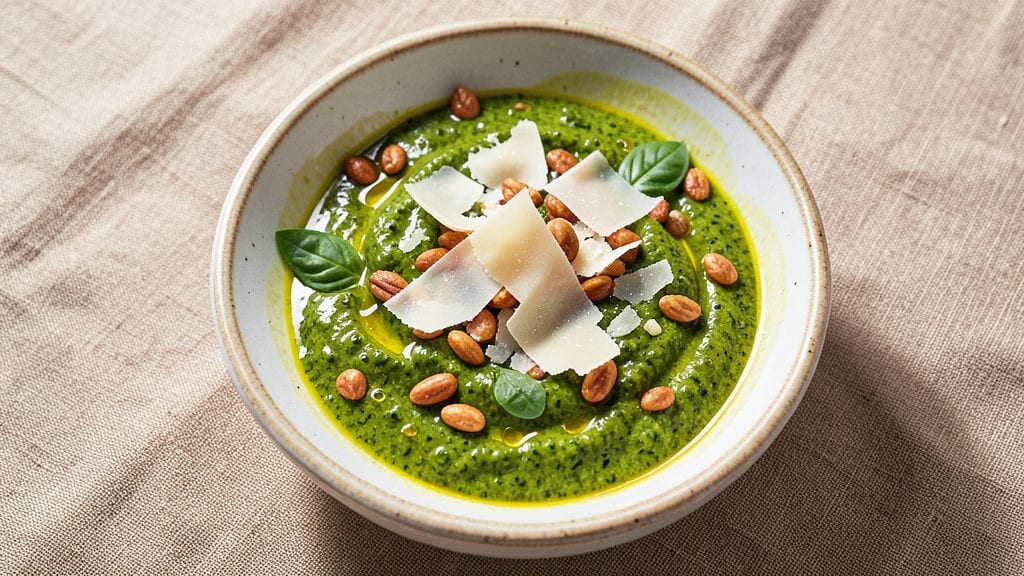
Martha Stewart’s pesto sauce recipe delivers that signature nutty, herb-packed freshness we all crave—creamy, vibrant, and ready in minutes. The secret lies in balancing fresh basil, toasted pine nuts, and aged Parmesan for depth, while a touch of garlic and lemon brightens every bite.
I’ve perfected this version to stay true to Martha’s standards while making it foolproof for home cooks.
This sauce isn’t just for pasta—it elevates grilled chicken, sandwiches, and even roasted vegetables with restaurant-quality flair. The key is using high-quality ingredients: fresh basil (not dried), toasted nuts for crunch, and a splash of olive oil to bind everything together.
With just 10 minutes of prep and a food processor, you’ll have a versatile sauce that keeps for up to a week in the fridge.
What makes this recipe stand out is its adaptability. Swap pine nuts for walnuts or sunflower seeds for a nut-free version, or add a spoonful of vegan cheese for a plant-based twist.
The possibilities are endless—drizzle it over bruschetta, mix it into soups, or use it as a dip for fresh bread. Martha’s method ensures every batch turns out smooth, flavorful, and irresistibly green.
For best results, store any leftovers in an airtight container with a thin layer of olive oil on top to preserve freshness. Whether you’re hosting a dinner party or prepping for the week, this pesto sauce is your new kitchen essential. Let’s get started!
Ingredients for martha stewart pesto sauce
Fresh basil, toasted pine nuts, and aged Parmesan—Martha’s secret to vibrant, restaurant-quality pesto.
| Ingredient | Amount | Notes |
|---|---|---|
| Fresh Basil Leaves 🌿 | 3 cups | Packed, stems removed, vibrant green |
| Toasted Pine Nuts 🥜 | ¾ cup | Lightly browned for depth |
| Garlic Cloves 🧄 | 4 cloves | Peeled, roughly chopped |
| Parmesan Cheese 🧀 | 1 cup | Freshly grated, aged 24+ months |
| Extra-Virgin Olive Oil 🫒 | 1 cup | High-quality, fruity, cold-pressed |
| Lemon Juice 🍋 | 2 tbsp | Freshly squeezed, no pulp |
| Diamond Crystal Kosher Salt 🧂 | ½ tsp | Fine grain preferred |
| Freshly Ground Black Pepper 🌶️ | ¼ tsp | None of that pre-ground dust |
| Granulated Sugar 🍬 | ½ tsp | Balances acidity |
The basil is non-negotiable—farmers market or grocery store bunches with leaves so bright they practically glow. Trader Joe's and Whole Foods carry the freshest, but any store’s basil works if the leaves are crisp and green. Toast the pine nuts in a dry pan until golden—3-4 minutes max, or they’ll burn and turn bitter. For Parmesan, buy a wedge and grate it yourself. Pre-grated is a crime against this sauce. The olive oil? Don’t cheap out here. A good EVOO makes all the difference—California Olive Ranch or Colavita are my go-tos.
No pine nuts? Walnuts or sunflower seeds work beautifully—just toast them first. Short on garlic? Two cloves with extra lemon juice keeps things bright. The sugar seems odd, but it rounds out the acidity from the lemon. No sugar? Add a pinch more salt instead. For a vegan version, swap Parmesan for nutritional yeast or vegan Parm. And if you’re feeling fancy, add a splash of white wine to the food processor—it mellows the flavors beautifully.
Pesto oxidizes fast, so cover the surface with olive oil before sealing. Keeps for 5-7 days in the fridge, 3 months frozen in ice cube trays. I make a double batch—one for the week, one to freeze for lazy nights. The oil layer is key—just a thin pour over the top keeps it green and fresh.
Why You'll Love This Recipe
- No Pulse Required: I swear by this recipe because it’s the only pesto I’ll make after burning my hand on a food processor the first time. Just pile those basil leaves, toasted pine nuts, and garlic into a bowl—no fancy tools, no stress. The olive oil does all the blending work for you.
- Garlic-Basil Magic: That moment when you taste the first bite? The garlic’s sharp punch softens into something rich, while the basil shines like a sunlit garden. Honestly, I’ve tried store-bought, but nothing beats the freshness of this—especially when the pine nuts add that nutty crunch.
- Pasta’s Best Friend: Slather it on spaghetti for a Tuesday night, toss it with roasted veggies for a weeknight dinner, or even spread it on sandwiches (yes, really). It’s my go-to for anything needing a bright, herby lift—no matter the occasion.
- Lasts All Week: Between us, I make a big batch and it never lasts past Thursday. The olive oil keeps it fresh, and the Parmesan adds a depth that makes it taste even better the next day. Plus, it’s cheaper than buying jars of pesto—my wallet thanks me every time.
Instructions for Martha Stewart's pesto sauce recipe: nutty, herb-packed freshness in minutes
This classic pesto comes together faster than you'd think—just follow these simple steps.
Toast the Pine Nuts for Maximum Flavor
Heat a dry skillet over medium-low heat and add the 0.75 cup toasted pine nuts. Toast them for 3-4 minutes, stirring constantly, until they're lightly golden and fragrant. Watch closely—they burn quickly once they start to color. Remove immediately when golden and set aside to cool slightly. This toasting enhances their nutty depth, which becomes the backbone of your pesto's flavor profile.
I like to spread them out on a plate to cool completely before processing. Warm pine nuts release more oil during blending, which can make your pesto too greasy. Let them cool for about 5 minutes—you'll notice the aroma intensify as they cool, signaling they're ready for the next step.
Blend the Basil, Garlic, and Cheese
In a high-powered food processor, combine the 3 cups fresh basil leaves, 4 cloves garlic cloves, and 1 cup freshly grated Parmesan cheese. Pulse a few times until the basil is roughly chopped and the garlic is minced. This preliminary chopping prevents the food processor from overheating when you add the olive oil later. You want a coarse texture here—think chunky, not smooth.
I always add the garlic last in this step because it's more potent. If you add it first, you risk overpowering the basil's bright, fresh flavor. The cheese should be finely grated—large chunks won't blend evenly and will create an unappealing texture in the final sauce.
Stream in the Olive Oil While Processing
With the food processor running, slowly pour in the 1 cup extra-virgin olive oil through the feed tube. This gradual addition prevents the processor from seizing up and ensures the oil emulsifies perfectly with the other ingredients. Process for 1-2 minutes until the mixture is smooth but still retains some texture—you want that classic pesto look with visible flecks of basil and nuts.
If the mixture seems too thick, you can add 1-2 tablespoons of water to loosen it, but it should be creamy without being runny. The olive oil should be high-quality—you can taste the difference in the final product. I like to use a fruity, cold-pressed variety that adds complexity to the sauce.
Finish with Lemon, Salt, Pepper, and Sugar
Transfer the pesto to a mixing bowl and stir in the 2 tablespoons lemon juice, 0.5 teaspoon diamond crystal kosher salt, 0.25 teaspoon freshly ground black pepper, and 0.5 teaspoon granulated sugar. The lemon juice brightens the flavors and cuts through the richness of the cheese and nuts. The sugar balances the acidity, while the salt and pepper round out the seasoning.
Taste and adjust the seasoning as needed—you might want to add a pinch more salt or a splash more lemon juice. The sugar is crucial here; it might seem odd, but it prevents the pesto from tasting too sharp or bitter. Stir well to combine all the ingredients thoroughly. The final texture should be smooth yet vibrant, with a rich, nutty aroma that makes your kitchen smell like a Tuscan garden.
Store Properly for Maximum Freshness
Transfer the pesto to an airtight container and press a piece of plastic wrap directly onto the surface to prevent oxidation. Store in the refrigerator for up to 5 days, or freeze for up to 3 months. To extend shelf life, you can also cover the surface with a thin layer of olive oil, which acts as a preservative. When ready to use, give it a good stir—it thickens slightly when refrigerated but will return to its original consistency.
This pesto is incredibly versatile—toss it with pasta, spread it on sandwiches, or use it as a marinade for grilled meats. The key to its success lies in the quality of your ingredients and the care you take in blending. Every step matters, from toasting the nuts to balancing the lemon and sugar. Once you master this recipe, you'll have a go-to sauce that elevates any dish it touches.
Pro Tips For Making Martha Stewart Pesto Sauce
- TOAST NUTS LOW: I learned this the hard way—pine nuts burn faster than you think. Keep heat at medium-low and stir constantly until they’re golden, not brown. A quick 3-4 minutes max, or you’ll end up with bitter, crispy bits instead of nutty flavor.
- STACK THE CHEESE: Martha’s recipe calls for Parmesan, but don’t just grate it—press it. Use a fine grater and pack the cheese into a small pile, then grate straight into the mortar (or food processor). This keeps the shavings consistent and maximizes the umami punch without clumping.
- PULSE DON’T PUREE: If you’re using a food processor, pulse the basil in batches. Over-blending turns it to soup, and you’ll lose that bright, herby texture. Stop when it’s just chopped, not liquid—you can always add more oil later to emulsify.
- SALT THE BASIL: Toss the basil leaves with a pinch of salt before blending. It softens the leaves and draws out moisture, making the pesto creamier right from the start. (Yes, even if you’re using a food processor—this isn’t just for mortar purists.)
Troubleshooting great martha stewart pesto sauce
Pesto Too Thick?
If your pesto turns out thicker than expected, don’t panic—this happens when the nuts release too much oil or the basil isn’t finely chopped enough. Add 1-2 tablespoons of warm water while processing to loosen it up.
For a smoother texture, blend for an extra 30 seconds, but avoid over-processing or it’ll lose its vibrant color. I’ve found that using sunflower seeds instead of pine nuts reduces oiliness, making the sauce easier to adjust. 💡
Pesto Too Thin?
A runny pesto usually means too much olive oil or insufficient cheese. Let it sit for 10 minutes in the fridge—it’ll thicken naturally. If you need to fix it immediately, stir in 1 tablespoon of grated Parmesan or 1 teaspoon of toasted nuts to absorb excess liquid.
Avoid adding flour or cornstarch, as they’ll alter the flavor. For future batches, measure your olive oil carefully—1 cup is plenty for this recipe. ✨
Basil Turning Brown?
If your pesto develops a dull, brownish hue, it’s oxidizing—this happens when basil sits too long before blending or when exposed to air. To prevent this, blend the basil immediately after washing and drying it thoroughly.
Store finished pesto under a thin layer of olive oil (about 1 tablespoon) to create a protective barrier. For extra freshness, freeze pesto in ice cube trays—each cube keeps its vibrant green color and can be thawed as needed. 🥗
Nuts Burning Quickly?
Pine nuts (and other nuts/seeds) burn faster than you’d expect—watch them like a hawk! Toast them over medium-low heat and stir constantly. If they start smoking, remove them immediately and let them cool.
For a foolproof method, spread nuts on a baking sheet and toast in a 350°F oven for 5-6 minutes, stirring halfway. This gives you more control over the toasting process. 🥜
Pesto Losing Flavor Fast?
Freshness is key here—oxidation and exposure to air are the biggest culprits. Always store pesto in an airtight container with plastic wrap pressed directly onto the surface to minimize air contact. For longer storage, freeze it in small portions—this prevents freezer burn and keeps the flavor intact.
When reheating, add a splash of lemon juice to revive the brightness. I’ve found that adding 1 teaspoon of lemon zest to the original recipe extends freshness by 2-3 extra days. 💪
Cheese Clumping Together?
Pre-grated Parmesan is the usual suspect—always grate your own for this recipe. Use a fine-hole grater and pass the cheese through twice for even consistency. If clumps still form, pulse the cheese in the food processor for 10-15 seconds before adding the basil.
For a smoother texture, strain the pesto through a fine-mesh sieve after blending. This ensures a silky finish without sacrificing flavor. 🧀
Nutrition facts
Frequently asked questions
Why does Martha Stewart's pesto recipe include sugar?
The 0.5 teaspoon granulated sugar balances the acidity from the lemon juice, preventing a sharp or bitter taste. It also rounds out the nutty, herby flavors for a more complex profile. Think of it as a subtle flavor enhancer—without it, the sauce can taste overly tangy.
Can I make this pesto without pine nuts?
Swap pine nuts for 0.75 cup walnuts or 0.75 cup sunflower seeds—just toast them first. For a nut-free version, use 1 cup cooked chickpeas (drained) instead. The texture will differ slightly, but the flavor remains rich and vibrant.
How do I prevent my pesto from turning brown?
Oxidation causes browning, so work quickly: blend the basil immediately after washing and drying it thoroughly. Store finished pesto under a thin layer of olive oil (about 1 tablespoon) to block air exposure. For freezing, portion into ice cube trays—this preserves color and freshness.
What’s the best way to use up leftover pesto?
Beyond pasta, try it as a marinade for grilled chicken or fish, a spread for bruschetta, or a dip for veggie sticks. Stir 1-2 tablespoons into soups or stews for extra depth. For a quick fix, mix with 1 cup Greek yogurt for a creamy dip. The possibilities are endless!
Can I make this pesto ahead of time?
Yes! Prepare it up to 3 days ahead and store in an airtight container with plastic wrap pressed directly on the surface. For longer storage, freeze in small portions (up to 3 months). Thaw in the fridge overnight—no microwave needed. The flavors develop beautifully over time!