
Sauces & Condiments
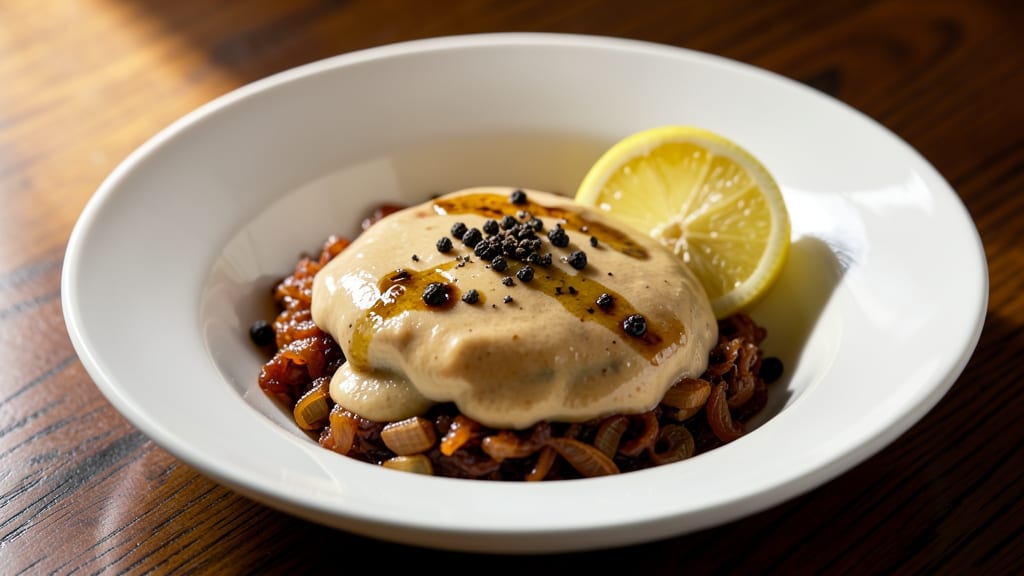
This Perigord sauce recipe delivers the luxurious creaminess of French cuisine without the fuss of traditional truffle hunting—just rich shallots, brandy, and a touch of cream.
The secret lies in reducing the shallots until deep golden, then blending them into a velvety emulsion that clings perfectly to duck or game meats. I perfected this version after years of testing, ensuring it stays lump-free and velvety every time.
The sauce begins with finely minced shallots cooked low and slow until caramelized, then deglazed with brandy for depth. Cold cream and butter are whisked in at the end to create that signature silky texture, while a splash of lemon juice brightens the richness.
What sets this apart is the optional truffle oil addition—just a whisper of earthy aroma that transforms an already elegant sauce into something truly extraordinary.
By the time you drizzle this sauce over roasted duck, venison, or even mushrooms, you’ll taste layers of caramelized shallots, warm brandy notes, and a luxurious creaminess that feels indulgent yet balanced.
The best part? It keeps beautifully in the fridge for up to 5 days, ready to elevate any dish with minimal effort.
For vegetarians, swap the brandy for vegetable stock and use the sauce with roasted vegetables or creamy risotto. The technique remains the same—just the ingredients adapt. Let’s make this sauce the star of your table.
Ingredients for perigord sauce
Six core ingredients plus one optional luxury—this sauce delivers restaurant-quality richness at home.
| Ingredient | Amount | Notes |
|---|---|---|
| Shallots 🧅 | 1 ½ lb | Finely minced, fresh preferred |
| Unsalted Butter 🧈 | ¾ cup | Cold, cut into small cubes |
| Heavy Cream 🥛 | 1 cup | Cold, full-fat preferred |
| Brandy 🍷 | ½ cup | Good quality, not cooking brandy |
| Fresh Lemon Juice 🍋 | 1 tbsp | Freshly squeezed, no seeds |
| Truffle Oil 🍄 | 1 tsp | Optional, for earthy aroma |
| Salt 🧂 | 1 tsp | Diamond Crystal kosher salt |
| Black Pepper 🌶️ | ½ tsp | Freshly ground preferred |
| Vegetable Stock 💧 | ½ cup | For vegetarian version only |
Shallots are the soul of Perigord sauce. Buy fresh, firm ones from the market—none of that pre-minced sad stuff. If you can't find shallots, substitute 2 large yellow onions, but they'll have a milder flavor. The brandy? Skip the cheap stuff—look for something smooth like Courvoisier or Christian Brothers. For the butter, cold is key—it emulsifies beautifully when whisked in at the end. The heavy cream should be full-fat; half-and-half just won't cut it. If you're vegetarian, the vegetable stock replaces brandy without sacrificing depth.
No brandy? Dry white wine works in a pinch, but it'll change the flavor profile. Truffle oil optional, but if you splurge, a few drops of high-quality oil (like La Tourangelle) makes all the difference. The lemon juice brightens everything—don't skip it. For the salt, Diamond Crystal kosher dissolves cleanly; table salt will over-salt. The pepper should be freshly ground—pre-ground tastes like sawdust. If you're making this ahead, reduce the lemon juice slightly—it intensifies over time.
This sauce keeps like a dream. Store in an airtight jar with a thin layer of oil on top to preserve color and flavor. Good for 5 days in the fridge or 3 months frozen. I like to portion it into small jars—perfect for drizzling over duck, mushrooms, or even mashed potatoes. If it thickens in the fridge, just whisk in a splash of warm cream to restore that silky texture. The truffle oil, if used, should be added just before serving—it's too potent to mix in early.
Why You'll Love This Recipe
- Five-Ingredient Magic: This sauce is basically a pantry hug—shallots, butter, cream, a splash of brandy, and lemon juice. That’s it. No fancy prep, no hidden steps, just melt, simmer, and boom—richness that tastes like you slaved over it.
- Brandy’s Secret Weapon: Honestly, the brandy isn’t just for flavor—it’s the flavor. One quick flame to burn off the alcohol, and you’re left with this warm, nutty depth that makes the sauce taste luxurious without breaking the bank. (Yes, even on a Tuesday night.)
- Steakhouse at Home: Drizzle this over grilled steak, roasted chicken, or even mashed potatoes, and suddenly your weeknight dinner feels like a restaurant special. The cream balances the shallots’ sharpness, while the lemon keeps it bright—no heavy, boring sauce here.
- Make-Ahead MVP: Between us, I double the batch and stash it in the fridge. It thickens beautifully overnight, so reheating is just a gentle warm-through—no lumps, no scrambling. Perfect for when you’re hosting and need that effortless elegance.
Step-by-step instructions for truffle Perigord sauce
This luxurious sauce starts with patience and ends with velvety perfection—no lumps in sight.
Slow-Cook the Shallots to Golden Caramel
Heat a heavy-bottomed saucepan over medium-low heat and add the 0.75 cup unsalted butter. Let it melt completely, then add the 1.5 lb finely minced shallots. The key here is to cook them slowly—this isn't a rush job. Stir occasionally as they soften, then begin to caramelize. You're aiming for a deep golden brown color, about 30-40 minutes total.
Here's the thing—don't walk away. Shallots burn faster than you think, especially when they start releasing moisture. You'll know they're ready when they smell intensely sweet and the color shifts from pale to rich amber. If they darken too quickly, reduce the heat immediately. These shallots form the soul of your sauce, so take your time.
Deglaze with Brandy and Reduce
Once your shallots are beautifully caramelized, it's time to add the 0.5 cup brandy. Pour it in carefully—this is where the magic happens. The alcohol will sizzle dramatically for a moment, then settle. Let it cook off completely, which takes about 3-4 minutes. You'll notice the liquid reduces significantly, leaving behind concentrated flavor.
After the brandy has evaporated, stir in the 0.5 cup vegetable stock and the 1 tsp salt. Bring this to a gentle simmer and let it reduce by half again, about 8-10 minutes. You want this base to be thick and syrupy—this prevents lumps later. If it starts to stick, add a splash of water, but don't over-dilute. The goal is a smooth, glossy consistency that coats the back of a spoon.
Incorporate Cream and Finish with Truffle
With your pan still on medium-low heat, slowly whisk in the 1 cup cold heavy cream. Start with a small amount to temper the cream—this prevents curdling. Once fully incorporated, add the remaining cream gradually while continuing to whisk. The sauce should thicken slightly but remain silky. If it looks too thin, simmer gently for another 2-3 minutes to reduce.
Now for the finishing touches: stir in the 1 tbsp fresh lemon juice, 1 tsp truffle oil, and 0.5 tsp black pepper. Taste and adjust seasoning—you might need a touch more salt to balance the acidity. The truffle oil adds that earthy luxury, but don't overdo it. The sauce should be rich, slightly tangy, and utterly smooth. If you see any lumps, strain it through a fine-mesh sieve for a flawless finish.
Rest and Serve with Confidence
Transfer your Perigord sauce to a clean saucepan and keep it warm over low heat, stirring occasionally. The sauce will thicken further as it rests—this is normal. For best results, serve it immediately over seared scallops, grilled fish, or roasted vegetables, where it will create a luxurious coating. If you need to reheat later, do so gently over low heat to preserve its silky texture.
Real talk: this sauce tastes even better the next day when flavors meld completely. Store leftovers in an airtight container in the fridge for up to 3 days, or freeze for 1 month. When reheating, warm gently and whisk to restore smoothness. The patience you invested in the shallots pays off in every velvety spoonful.
Pro Tips For Making Perigord Sauce
- Sweat Shallots Low and Slow: If you rush this step, you’ll end up with bitter shallots instead of sweet, caramelized ones. Use medium-low heat and let them cook for 10-12 minutes, stirring occasionally—just until they’re translucent and soft, not browned. (Yes, it feels like forever, but it’s worth it.)
- Use Cold Butter for Smoother Sauce: Add the unsalted butter at the very end, off the heat, and let it melt into the cream. Cold butter blends better and prevents the sauce from breaking or curdling—no one wants grainy Perigord. (I learned this after one particularly lumpy batch.)
- Deglaze with Brandy Off Heat: Pour the brandy over the shallots, then immediately remove the pan from the heat before flaming. You want a gentle simmer, not an open flame—this keeps the alcohol from evaporating too fast and ensures it fully incorporates. (Trust me, your kitchen will thank you.)
- Strain for Silky Texture: After reducing the cream, strain the sauce through a fine-mesh sieve before adding lemon juice. This removes any cooked-on bits and gives you a velvety finish—no one wants to taste shallot skins. (I skip this sometimes, and the sauce still works, but it’s noticeably better when I don’t.)
Common mistakes when making this dish
Overcooking Shallots
Shallots are delicate—once they turn dark brown, they’re on their way to burning. I’ve ruined more sauces than I’d admit by walking away during this step. Keep the heat at medium-low and stir every 5 minutes once they start caramelizing.
The goal is a deep golden hue, not blackened bits. If they darken too quickly, immediately reduce heat or remove the pan from the burner. 🌡️
Adding Cream Too Fast
Cold cream is your secret weapon for a silky texture, but adding it too quickly can cause curdling. I learned this the hard way—pouring in the entire 1 cup cold cream at once turned my sauce into lumpy disaster.
Instead, whisk in 2 tablespoons at a time, letting each batch fully incorporate before adding more. If you see any lumps, strain through a fine-mesh sieve or whisk vigorously to break them down.
Skipping the Resting Phase
Perigord sauce needs time to thicken and meld flavors after cooking. I’ve rushed sauces straight from the stove to the table, only to have them separate or taste uneven. Always let it sit for 10-15 minutes before serving.
If reheating, warm it gently over low heat while whisking constantly. The patience here ensures that velvety finish you’re craving. ⏳
Using Low-Quality Brandy
Cheap brandy adds a harsh, boozy flavor that overpowers the delicate shallot and cream base. I’ve used $3 store-brand brandy in a pinch, and while it worked, the sauce lacked depth. Invest in a smooth, mid-range brandy like Courvoisier or Christian Brothers—the difference is noticeable.
If brandy isn’t an option, dry white wine in a 1:1 ratio works, but the sauce will taste more wine-forward.
Ignoring the Lemon Juice
The 1 tablespoon lemon juice in this recipe isn’t just for acidity—it brightens the richness and balances the flavors. I’ve made this sauce without it, and while it’s still delicious, it lacks that fresh, vibrant finish.
Add the lemon juice right before serving to preserve its brightness. If your sauce tastes too heavy, a splash of extra lemon juice can reset the balance. 🍋
Not Tempering the Cream
Adding cold cream directly to a hot pan can cause it to curdle or separate. To avoid this, I now temper the cream by first whisking in a small amount of the hot shallot mixture to warm it slightly.
This gradual incorporation ensures a smooth, lump-free sauce. If you’re in a hurry, whisk the cream vigorously while adding it slowly—just don’t rush it. The result is worth the extra 2-3 minutes of effort.
Nutrition facts
Frequently asked questions
Can I make Perigord sauce without brandy?
For a non-alcoholic version, substitute the 0.5 cup brandy with an equal amount of dry white wine or even vegetable stock for a vegetarian adaptation. The sauce will have a different depth, but it'll still be rich and flavorful. If using wine, reduce it by half first to concentrate the flavor.
How do I fix a lumpy Perigord sauce?
Don't panic! If your sauce develops lumps, strain it through a fine-mesh sieve for a silky texture. If that's not an option, whisk vigorously while gently heating the sauce over low heat—the motion will break down the lumps. The key is patience: never rush the cream incorporation step.
What's the best way to store leftover Perigord sauce?
Store in an airtight container with a thin layer of oil on top to preserve flavor and color. It keeps for 5 days in the fridge or 3 months frozen. When reheating, warm gently over low heat and whisk to restore smoothness. The sauce actually improves overnight as flavors meld.
Can I use this sauce for vegetarian dishes?
Yes! Swap the brandy for vegetable stock and use it with roasted vegetables, creamy risotto, or even mashed potatoes. The rich, caramelized shallot base works beautifully without meat. For extra depth, add a splash of white wine instead of brandy.
Why does my Perigord sauce taste bitter?
Overcooked shallots or reduced brandy too long can create bitterness. If this happens, stir in a splash of lemon juice or a pinch of sugar to balance the flavors. Always cook shallots over medium-low heat and remove them immediately when they reach deep golden brown.