
Breakfast & Brunch
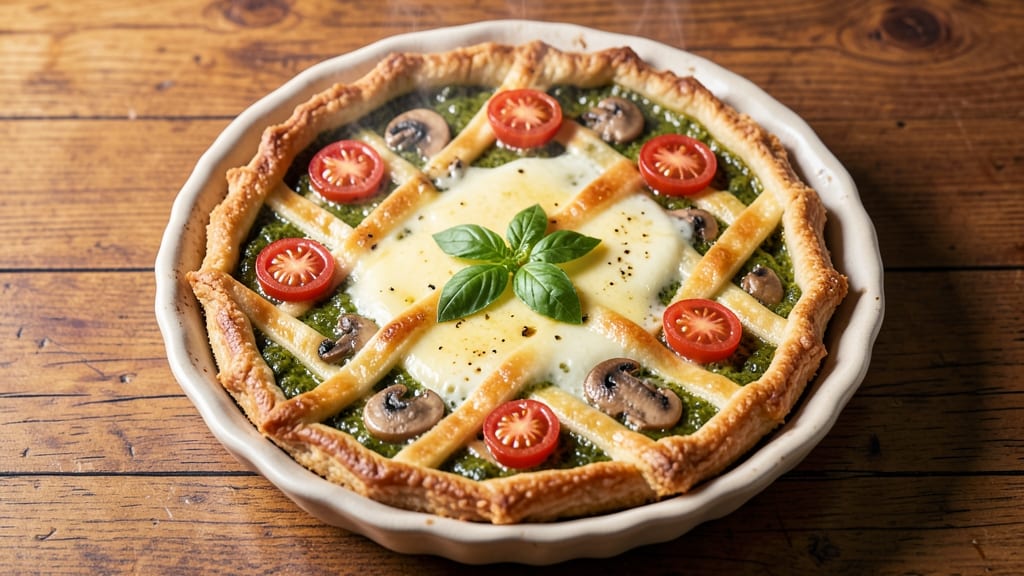
This pesto quiche recipe transforms a classic breakfast into a flavor-packed showstopper with basil-infused crust and gooey melted cheese. The secret lies in blending pesto directly into the crust dough for an herbaceous base that carries through every bite—no soggy bottoms or bland centers here.
I developed this version after years of trial and error, ensuring the crust stays crisp while the filling achieves that perfect golden finish.
The beauty of this quiche is its versatility—it works equally well for brunch gatherings or quick weeknight meals. Pre-baking the crust prevents sogginess, while a precise egg-cheese-pesto ratio creates that signature creamy yet firm texture.
Optional add-ins like spinach or mushrooms let you customize it to your taste, but the pesto-infused crust and rich filling are non-negotiable for maximum flavor impact.
By the time it emerges from the oven, you'll have a quiche with a perfectly golden crust, a creamy egg filling infused with basil's bright aroma, and melted cheese that pulls just enough to create irresistible gooeyness.
The combination of textures—crisp crust, velvety filling, and melty cheese—makes this far more exciting than your average quiche.
Serve warm with a simple arugula salad or crusty bread to soak up every last bit of that flavorful filling. This recipe delivers restaurant-quality results that will have everyone asking for seconds. Let's get started!
Ingredients for pesto quiche
Fresh basil pesto meets flaky crust and melty cheese in this vegetarian showstopper.
| Ingredient | Amount | Notes |
|---|---|---|
| All-Purpose Flour 🌾 | 2 cups | For crisp crust base |
| Cold Unsalted Butter 🧈 | ¾ cup | Cubed for flaky texture |
| Ice Water 💧 | ½ cup | For pie crust consistency |
| Salt 🧂 | 1 tsp | Fine sea salt preferred |
| Fresh Basil Pesto 🌿 | 1 cup | Homemade or quality store-bought |
| Large Eggs 🥚 | 6 whole | Room temperature for even cooking |
| Heavy Cream 🥛 | 1 cup | Full-fat for rich filling |
| Shredded Gruyère Cheese 🧀 | 1 ½ cups | Freshly grated from block |
| Shredded Parmesan Cheese 🧀 | ½ cup | Freshly grated preferred |
| Fresh Spinach 🍃 | 2 cups | Chopped, optional add-in |
| Garlic Cloves 🧄 | 2 cloves | Minced for extra flavor |
| Black Pepper 🌶️ | ½ tsp | Freshly ground for heat |
| Nutmeg 🌿 | ¼ tsp | Freshly grated for warmth |
The pesto is everything here—homemade with fresh basil gives the most vibrant flavor, but Trader Joe's or Whole Foods brands work too. For the crust, cold butter is non-negotiable—European-style unsalted butter like Plugrá or Land O'Lakes makes the difference. If you're using store-bought pesto, check for added preservatives. Penzeys basil pesto is my go-to when I don't want to make it from scratch. The Gruyère needs to be real Swiss cheese—pre-shredded gets rubbery when melted. Grab a wedge and grate it yourself for the best texture.
No fresh basil? Dried basil at half the amount works in a pinch, but it won't have that same bright punch. Swapping Gruyère for fontina or sharp cheddar changes the flavor but keeps things creamy. The spinach is optional, but if you skip it, add another 0.5 cup of shredded cheese for richness. For extra flakiness in the crust, freeze the butter cubes for 15 minutes before mixing. The nutmeg is subtle but essential—don't skip it. If you're sensitive to dairy, vegan butter and dairy-free cheese work, though the texture will differ.
This quiche keeps beautifully—3 days in the fridge sealed tightly, or 2 months in the freezer for meal prep. Reheat covered at 350°F for 20 minutes to restore crispiness. I always make an extra crust for pesto flatbread—just roll it out and bake. The filling reheats best when covered with foil to prevent over-browning. For serving, a quick arugula salad with lemon vinaigrette cuts through the richness perfectly.
Why You'll Love This Recipe
- No-Fuss Dough: I swear by that cold butter cut into flour—no food processor, no stress. Just fingertips and a bowl, and you’ve got a crust that’s flaky enough to make you proud (even if it’s not perfect).
- Pesto Powerhouse: That fresh basil pesto isn’t just green—it’s bright, with garlic and pine nuts clinging to every bite. The crust stays crisp while the filling melts into creamy, herby perfection.
- Weeknight or Guest Day: Make it for Tuesday dinner or Sunday brunch—same effort, different vibes. Slice it for lunchboxes or serve whole for a crowd. (Honestly, I’ve even used it to impress in-laws.)
- Leftovers That Don’t Suck: Unlike some quiches, this one reheats like a dream. Pack it for work or freeze portions—no soggy crust here. The pesto flavor only gets richer overnight, if you can believe it.
Step-by-step instructions for pesto quiche
Here's how to build a quiche with a golden crust and creamy pesto filling that melts perfectly.
Make the Crust Using Cold Butter Technique
In a large bowl, combine the 2 cups all-purpose flour and 1 teaspoon salt. Cut in the 0.75 cup cold unsalted butter using a pastry cutter or your fingers until the mixture resembles coarse crumbs with pea-sized butter pieces. This cold butter creates flaky layers when baked.
Gradually add the 0.5 cup ice water, 1 tablespoon at a time, mixing gently with a fork just until the dough comes together. The dough should be slightly shaggy but hold when pressed. Avoid overmixing—this develops gluten and makes the crust tough. Shape into a disk, wrap in plastic, and chill for 30 minutes.
Prepare the Pesto Filling
Preheat your oven to 375°F. Roll out the chilled dough on a floured surface to fit a 9-inch pie dish, about 1/8-inch thick. Transfer to the dish, trim excess dough, and crimp the edges with a fork. Prick the bottom all over with a fork to prevent bubbling.
In a separate bowl, whisk together the 6 large eggs, 1 cup heavy cream, 1 cup fresh basil pesto, 1.5 cups shredded gruyère cheese, 0.5 cup shredded parmesan cheese, 2 cups chopped fresh spinach, 2 cloves minced garlic, 0.5 teaspoon black pepper, and 0.25 teaspoon nutmeg. The filling should be thick but pourable. Pour evenly into the prepared crust.
Blind-Bake the Crust
Line the crust with parchment paper and fill with pie weights or dried beans. Bake for 15 minutes at 375°F until the edges begin to golden. Remove the weights and parchment, then bake an additional 5 minutes until the crust is lightly golden. This step prevents a soggy bottom.
Bake Until Set and Golden
Return the quiche to the oven and bake for 35-40 minutes until the center is just set (it should still jiggle slightly in the center) and the top is golden brown. The filling should pull away from the edges but remain creamy. If the top browns too quickly, tent loosely with foil.
Rest and Serve
Let the quiche cool for 10 minutes before slicing. This resting time allows the filling to set properly and prevents it from running when you cut. Serve warm or at room temperature with a simple green salad or crusty bread. The crust should be crisp, the filling rich and creamy, and the flavors perfectly balanced.
Pro Tips For Making Pesto Quiche
- Blindfold the dough test: Dip your finger in ice water first—this mimics the dough’s final moisture level better than dry fingers. I used to skip this and end up with a crust that either cracked or stayed doughy; now it’s foolproof every time.
- Pre-cook the pesto: Spread that fresh basil pesto on a parchment-lined tray and bake at 350°F (175°C) for 8–10 minutes before adding eggs. It mellows the raw garlic and basil flavors while concentrating the aroma—no more biting into a mouthful of uncooked pesto.
- Salt the crust edges: Sprinkle a pinch of salt along the crust’s rim before baking—it crisps faster and prevents soggy spots where the filling leaks. I learned this after my first quiche had a sad, limp border that refused to brown.
- Chill the filling: Let the egg-pesto mixture sit in the fridge for 15 minutes after mixing. The cold slows the eggs’ cooking time, so your center stays just-set rather than rubbery. I was skeptical until I tried it—now it’s non-negotiable.
Pro cooking tips for this dish
Crust Perfection
For a truly flaky crust, work with cold butter and ice water—never warm ingredients. I use a pastry cutter or my fingers to cut butter into flour until pea-sized pieces remain.
Overmixing develops gluten, so handle the dough minimally. Chill the dough for 30 minutes before rolling to prevent shrinking. 🧈
Blind-baking the crust is non-negotiable for avoiding sogginess. Line the crust with parchment and fill with pie weights or dried beans, baking for 15 minutes at 375°F. Remove weights and bake 5 more minutes until golden. This creates a sturdy base that holds up to the creamy filling.
Filling Balance
The egg-to-cheese ratio is critical—6 eggs with 2 cups total cheese creates the ideal creamy yet firm texture. Whisk ingredients just until combined to avoid over-aerating, which can lead to a dense filling. I always use room-temperature eggs for even cooking and better binding.
For extra richness, fold in 1 cup heavy cream and 1 cup pesto directly into the egg mixture. The pesto's basil flavor should shine through, so avoid overpowering it with too many add-ins. Fresh spinach wilts beautifully and adds freshness without competing.
Baking Precision
Bake the quiche at 375°F until the center jiggles slightly—this indicates perfect doneness. Overbaking dries out the filling, while underbaking leaves it too runny. I check doneness at 35 minutes and adjust time based on my oven's hot spots.
If the top browns too quickly, tent loosely with foil. The crust should be golden and crisp, while the filling remains velvety. A 10-minute rest before slicing prevents the filling from sliding out. This resting time also lets flavors meld beautifully. 🌟
Cheese Selection
Use Gruyère for its nutty depth and excellent melting properties. Pre-shredded cheese contains anti-caking agents that make it rubbery when melted. Always grate your own cheese from a block for the best texture. Parmesan adds umami and saltiness that complements the pesto perfectly.
For a sharper flavor, substitute fontina or sharp cheddar. If you're sensitive to dairy, vegan cheese alternatives can work, though they won't melt as beautifully. The cheese should be freshly grated—never pre-shredded—for optimal results. 🧀
Nutrition facts
Frequently asked questions
Can I make this quiche ahead of time?
This quiche actually tastes better the next day. Store it in an airtight container in the fridge for up to 3 days. For longer storage, freeze individual slices wrapped tightly for 2 months. Reheat covered at 350°F for 20 minutes to restore crispiness.
What's the secret to preventing a soggy crust?
The blind-baking step is critical. Line the crust with parchment, fill with pie weights, and bake for 15 minutes before adding filling. This creates a sturdy base that won't absorb moisture from the creamy egg mixture.
Can I substitute other cheeses?
Gruyère is ideal, but fontina or sharp cheddar work well too. For a milder flavor, try mozzarella, though it melts differently. Always use freshly grated cheese—pre-shredded contains anti-caking agents that make it rubbery when melted.
How do I know when it's fully cooked?
The center should jiggle slightly when the quiche is done—it'll firm up as it cools. The top should be golden brown, and the filling should pull away from the edges but remain creamy. A toothpick inserted should come out clean or with just a few moist crumbs.
What are good add-ins besides spinach?
Try sautéed mushrooms, roasted red peppers, or sun-dried tomatoes for extra depth. For a lighter touch, add wilted kale or arugula. Keep portions to 1 cup total to maintain the perfect egg-cheese balance. The pesto flavor should remain dominant.