Sauces & Condiments
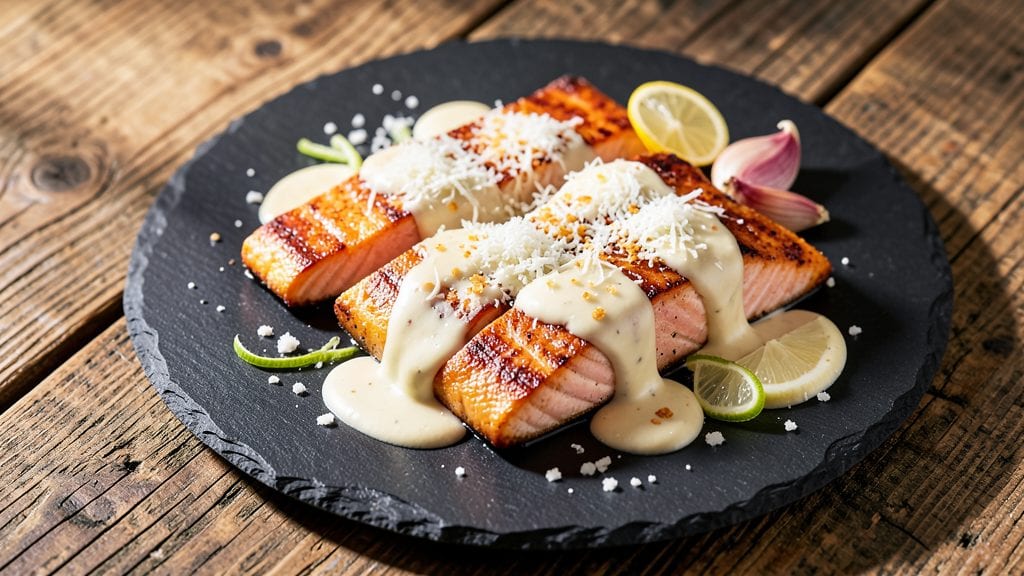
This salmon with alfredo sauce recipe transforms simple weeknight dinner into a restaurant-worthy meal with just two components: perfectly cooked salmon and a velvety, buttery alfredo sauce.
The secret lies in achieving flaky salmon with a crisp exterior while creating a sauce so rich it clings to every bite—no lumps, no separation, just pure creaminess. I developed this recipe after years of testing, ensuring the sauce thickens properly and the fish stays moist despite the high-fat sauce.
The process begins with pan-searing the salmon skin-side down until golden, then finishing in the oven to reach 125–145°F internal temperature—just enough to keep it tender. Meanwhile, the alfredo sauce simmers gently with butter, cream, and parmesan, creating a creamy, velvety consistency that coats the fish perfectly.
The sauce’s richness balances the salmon’s natural flavor, making each bite luxurious without being heavy.
What you’ll end up with is a dish that looks as impressive as it tastes: golden salmon topped with a glossy, creamy sauce that drips with every forkful. The sauce’s smooth texture clings to the flaky fish, while the crisp skin adds contrast.
Serve with roasted asparagus or garlic bread to soak up every last drop—this is comfort food elevated to fine dining.
Ready in 30 minutes with minimal cleanup, this recipe proves gourmet meals don’t require hours in the kitchen. The sauce can be made ahead, and the salmon cooks in one pan, making it ideal for busy weeknights. Let’s get cooking—your taste buds will thank you.
Ingredients for salmon with alfredo sauce
Four salmon fillets, creamy sauce essentials, and a touch of acidity—this is your gourmet weeknight foundation.
| Ingredient | Amount | Notes |
|---|---|---|
| Center-Cut Salmon Fillets 🐟 | 4 pieces | Skin-on, 6-8 oz each |
| Unsalted Butter 🧈 | ¾ cup | Cold, cut into 1-inch pieces |
| Heavy Whipping Cream 🥛 | 1 ½ cups | Full-fat for best texture |
| Parmesan Cheese 🧀 | 1 cup | Freshly grated, fine grade |
| Garlic Cloves 🧄 | 4 cloves | Minced, for sauce depth |
| Fresh Lemon Juice 🍋 | 1 tbsp | Brightens sauce flavor |
| Extra-Virgin Olive Oil 🫒 | 1 tbsp | For pan searing |
| Diamond Crystal Kosher Salt 🧂 | 1 tsp | For seasoning fish |
| Freshly Ground Black Pepper 🌶️ | ½ tsp | Cracked peppercorns preferred |
| Fresh Parsley 🌿 | ¼ cup | Chopped, for garnish |
| All-Purpose Flour 🌾 | 1 tbsp | For sauce thickening |
| Dry White Wine 🍷 | ¼ cup | Optional, for sauce depth |
The salmon is non-negotiable here. Center-cut fillets with skin keep their shape better than tail-end pieces. I always check for bright pink color and firm texture at the store—avoid anything with a fishy smell. For the best results, buy them the day you plan to cook. Trader Joe's and Whole Foods carry excellent quality, but your local seafood counter will often have fresher options. If you can't find center-cut, look for fillets with the skin intact—it's what creates that perfect crispy crust during searing.
No heavy whipping cream? Half-and-half plus a splash of milk works in a pinch, though the sauce won't be quite as rich. The Parmesan should be real Parmigiano-Reggiano—pre-grated has anti-caking agents that prevent proper melting. For the wine, Sauvignon Blanc or Pinot Grigio are ideal, but a dry white table wine will do. Fresh parsley is best for garnish, but dried parsley at one-third the amount works if you're in a hurry. The flour is crucial for thickening—don't skip it, even if you're using heavy cream. And for the love of all things creamy, never use margarine—the flavor difference is night and day.
This sauce reheats beautifully—just warm it gently on the stove with a splash of milk or cream to restore its velvety texture. The salmon itself should be eaten immediately after cooking, but you can make the sauce ahead and reheat it separately. Store the sauce in an airtight container in the fridge for up to 5 days, or freeze it for 3 months. For the salmon, cook it fresh if possible, but if you're prepping ahead, store it uncovered in the fridge for up to 12 hours to dry-brine the skin for better crispiness.
Why You'll Love This Recipe
- One-Pan Magic: I swear by this recipe because it’s that easy—just sear the salmon, toss in the garlic butter, then let the cream and Parmesan melt together. No extra pans, no fuss, and honestly? That crispy salmon skin with the velvety sauce underneath is worth every second.
- Rich Without Effort: Between us, this sauce is dangerously good—creamy from the heavy cream, nutty from the Parmesan, and brightened just enough by the garlic. The salmon stays moist while the sauce clings to it like a hug. (Yes, even on a Tuesday night.)
- Weeknight to Dinner Party: Serve it over pasta for a quick weeknight dinner, or plate it elegantly with asparagus for a guest-worthy meal. The same simple sauce works both ways—I’ve even turned leftovers into breakfast hash with eggs and toast.
- Leftovers That Don’t Suck: Most salmon dishes turn rubbery the next day, but this one? The sauce keeps it tender, and the flavor only deepens. I freeze portions too—just reheat with a splash of cream, and it’s like you made it fresh. Budget-friendly and foolproof.
Step-by-step instructions for salmon with alfredo sauce
Here's how to achieve that perfect balance of buttery richness and delicate flakiness in every bite.
Season and Sear the Salmon Fillets
Pat the 4 pieces of center-cut salmon fillets dry with paper towels, removing any moisture from the skin. Season both sides generously with the 1 teaspoon of diamond crystal kosher salt and 0.5 teaspoon of freshly ground black pepper. I like to press the seasoning firmly into the flesh so it penetrates slightly and creates a flavorful crust.
Heat the 1 tablespoon of extra-virgin olive oil in a large skillet over medium-high heat until shimmering. Place the salmon fillets skin-side down in the pan and let them sear undisturbed for 3-4 minutes until the skin becomes crispy and golden brown. The edges should lift easily when you gently press with a spatula—this indicates the skin is ready to release. Flip carefully and cook the flesh side for another 2-3 minutes until it reaches an internal temperature of 125°F for medium-rare perfection.
Prepare the Alfredo Sauce Base
Remove the salmon from the pan and set aside on a warm plate. Reduce the heat to medium and add the 0.75 cup of unsalted butter to the same skillet. Let it melt completely, then add the 4 cloves of minced garlic and cook for 30 seconds until fragrant—don't let it brown or it will become bitter.
Pour in the 0.25 cup of dry white wine and scrape up any browned bits from the bottom of the pan. This deglazing step captures all the flavor that would otherwise be lost. Let the wine simmer for 2-3 minutes until reduced by half, then sprinkle in the 1 tablespoon of all-purpose flour and stir vigorously for 1 minute to create a smooth paste.
Create the Creamy Alfredo Sauce
Slowly pour in the 1.5 cups of heavy whipping cream while whisking continuously to prevent lumps from forming. Bring the mixture to a gentle simmer and cook for 3-4 minutes until it begins to thicken. Add the 1 cup of freshly grated parmesan cheese and 1 tablespoon of fresh lemon juice, stirring constantly until the cheese melts completely and the sauce becomes velvety smooth.
Taste and adjust the seasoning if needed—you may need a pinch more salt or pepper to balance the richness. The sauce should coat the back of a spoon but still be pourable. If it thickens too much, whisk in 1-2 tablespoons of hot water to reach your desired consistency. Keep the sauce warm over low heat while you finish the salmon.
Finish and Serve
Return the salmon fillets to the skillet with the sauce and spoon the creamy mixture generously over the top. Let it heat through for 1-2 minutes, allowing the flavors to meld together. The salmon should be perfectly flaky when you gently press on it with a fork.
Transfer the salmon to serving plates and garnish with the 0.25 cup of chopped fresh parsley. Serve immediately with the remaining sauce spooned over the top. The combination of crispy skin, flaky flesh, and rich alfredo creates a restaurant-quality dish right in your kitchen. Each bite delivers that perfect balance of buttery creaminess and delicate fish flavor that makes this recipe so special.
Pro Tips For Making Salmon With Alfredo Sauce
- Dry the Salmon First: Salmon sticks to the pan like glue if it’s wet—pat those fillets thoroughly with paper towels before searing. I used to skip this and ended up with a sad, uneven crust every time.
- Melt Butter Slowly: Don’t drown the garlic in butter—use just 1 tablespoon per fillet and let it melt gradually over medium heat. After burning three batches, I finally figured out that rushing this step turns your sauce into a bitter, brown mess.
- Strain the Alfredo: The cream and Parmesan will separate if you don’t strain the sauce through a fine-mesh sieve. Sounds tedious, but it guarantees a silky texture instead of a lumpy, grainy disaster.
- Use Cold Cream: Whisk the heavy cream cold into the warm butter-Parmesan mixture—this keeps the sauce from curdling. I was skeptical until I tried it, and now it’s the thing that matters most for a smooth, restaurant-quality finish.
Pro cooking tips for great salmon with alfredo sauce
Perfect Searing Technique
For crispy skin without overcooking the delicate flesh, use a 12-inch cast iron skillet (like Lodge) on medium-high heat until it's smoking hot. Pat the salmon fillets completely dry with paper towels—any moisture will prevent proper browning.
I press the fillets gently with my fingers to check dryness before searing. 🔥
Sear skin-side down for exactly 3-4 minutes until the edges curl and the skin releases easily from the pan. This is your cue to flip—if you wait too long, the fish will overcook.
I use a thin metal spatula to carefully lift the edges before flipping completely. The flesh side only needs 2 minutes to reach 125°F internal temperature.
Sauce Thickening Secrets
The key to a velvety alfredo sauce is proper thickening. After whisking in the flour, cook it for 1 full minute to remove the raw taste before adding cream.
I use a whisk with a long handle to reach every corner of the pan while pouring in the cream slowly to prevent lumps.
For extra insurance, I add 1 teaspoon cornstarch mixed with 1 tablespoon cold water> to the sauce at the end. Simmer for 2 minutes> until the sauce reaches your desired consistency.
The sauce should coat the back of a spoon but still be pourable—this ensures it clings perfectly to the salmon without being gloppy.
Temperature Control
Use a meat thermometer> to monitor the salmon's internal temperature—125°F> for medium-rare is ideal. Overcooking by even 5°F> turns flaky salmon into dry fish. I recommend the ThermoWorks Dot> for its accuracy and ease of use.
Keep the sauce warm at 160°F> while finishing the salmon. I transfer the sauce to a small saucepan and maintain low heat. If the sauce separates, whisk in 1 tablespoon cold cream> to restore its silky texture. The temperature difference helps re-emulsify any broken sauce.
Flaky Perfection
The secret to flaky salmon lies in proper resting. After removing the fillets from the pan, let them rest on a warm plate for 3-5 minutes**>. This allows the juices to redistribute throughout the flesh. I cover them loosely with aluminum foil to retain heat.
When serving, I gently press the salmon with a fork to create clean seams between the flakes. This makes each bite more dramatic and ensures the creamy alfredo sauce clings beautifully to every piece.
The contrast between the crispy skin and tender flesh is what makes this dish truly special. 💫
Nutrition facts
Frequently asked questions
Can I substitute heavy cream for something lighter?
You can use half-and-half mixed with 2 tablespoons milk to lighten the sauce slightly, but the texture won't be as rich. For a creamier alternative, try Greek yogurt (mix 1 cup yogurt with 1 cup milk)—it adds protein while keeping the sauce velvety. Just reduce the parmesan by 0.25 cup to balance the flavors.
Why did my sauce separate?
Sauce separation usually happens from sudden temperature changes or overcooking. To fix it, whisk in 1 tablespoon cold cream or milk while stirring vigorously over low heat. For prevention, never boil the sauce—keep it at a gentle simmer (160°F) and whisk constantly when adding cream. A splash of lemon juice also helps stabilize the emulsion.
How do I make this dish ahead of time?
Prepare the alfredo sauce up to 2 days ahead and store it in an airtight container in the fridge. Reheat gently on the stove, stirring in 1 tablespoon cold cream to restore smoothness. For the salmon, cook it fresh for best results, but you can prep it 12 hours ahead by seasoning and refrigerating uncovered—this dries the skin for better crispiness.
What's the best way to serve this?
Pair with roasted asparagus or garlic mashed potatoes to balance the richness. For extra elegance, serve with crusty bread or fresh arugula salad**>. The acidity from lemon or vinegar in sides cuts through the creaminess beautifully. Garnish with extra parsley and a sprinkle of black pepper right before serving.
Can I bake the salmon instead of pan-searing?
Yes! Preheat oven to 400°F and bake salmon skin-side down on a wire rack over a baking sheet for 10-12 minutes until skin is crispy. For extra flavor, broil for 1-2 minutes at the end. The sauce can be made separately and spooned over the baked salmon. Just watch the oven temp—it runs hotter than stovetop searing.