
Sauces & Condiments
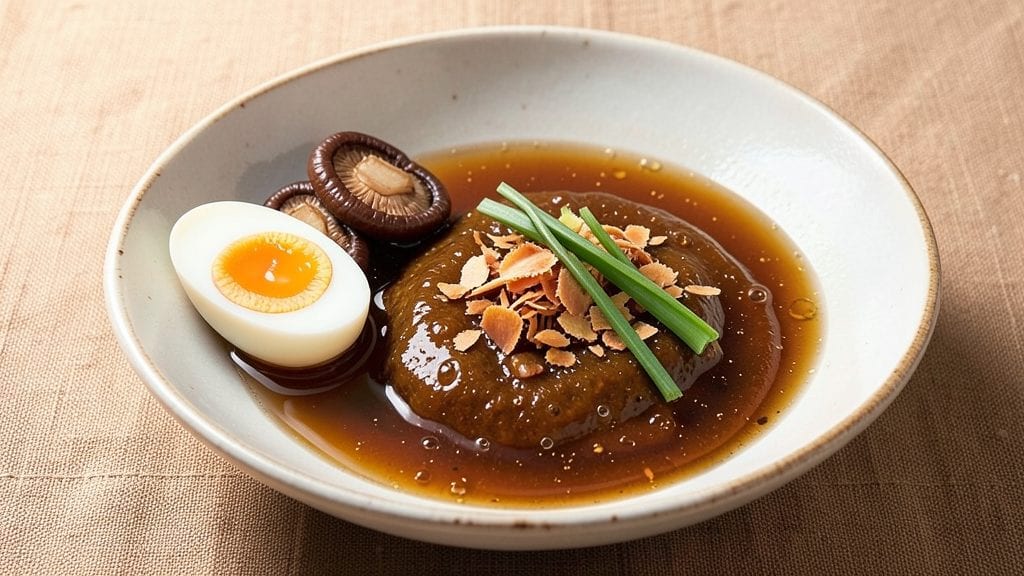
This tsuyu sauce recipe transforms simple dashi into the silky, umami-rich foundation of ramen bowls—where delicate kombu and bonito flakes dissolve into a fragrant broth, then marry with silky egg ribbons and just the right touch of soy.
The balance between salty, sweet, and savory is what makes tsuyu unforgettable, and I’ve perfected a method that delivers restaurant-quality results at home with precise technique and traditional ingredients.
The secret lies in building layers of flavor through slow simmering and careful straining, ensuring the sauce remains clear and aromatic without bitterness.
You’ll start with kombu and bonito to create a rich dashi base, then add shiitake mushrooms for earthy depth before finishing with a light soy kiss and whisked egg ribbons for that signature velvety texture. This isn’t just a sauce—it’s the heart of your ramen experience.
What sets this tsuyu apart is its clarity and balance: the kombu adds a clean, oceanic note, while the bonito contributes a toasty, umami richness. The egg ribbons dissolve into the broth, creating a luxurious mouthfeel that elevates every spoonful.
Whether you’re making classic ramen or drizzling it over noodles, this sauce will transform your dish into something truly special.
For those adapting to dietary preferences, a vegetarian version swaps bonito for dried shiitake and kombu, while vegans can use mushroom-based dashi. The technique remains the same—just the ingredients shift. Let’s get started on creating your perfect tsuyu.
Ingredients for tsuyu sauce
Eight essential ingredients crafting umami harmony in every spoonful of this refined tsuyu.
| Ingredient | Amount | Notes |
|---|---|---|
| Dried Kombu 🍃 | 1 sheet | High-quality, 6-inch variety preferred |
| Dried Bonito Flakes 🐟 | ½ cup | Grade A, unsmoked flakes |
| Dried Shiitake Mushrooms 🍄 | 4 whole | Thick stems removed, rehydrated |
| Light Soy Sauce 🥄 | ¼ cup | Kikkoman preferred for balance |
| Mirin 🍶 | ¼ cup | High-quality, 14% sweetness |
| Fresh Eggs 🥚 | 4 whole | Room temperature, organic preferred |
| Granulated Sugar 🍚 | 1 tbsp | Fine grain for even dissolving |
| Water 💧 | 4 cups | Filtered or spring water |
The foundation begins with dried kombu and bonito flakes—traditional dashi ingredients that demand quality. Source kombu from Japanese specialty markets or reputable online retailers like Nijiya or Marukome for authentic flavor. Bonito flakes should be grade A, unsmoked, and stored in an airtight container away from light to preserve their delicate aroma. Dried shiitake mushrooms add earthy depth; opt for thick, dense caps from Asian grocery stores or bulk suppliers like Penzeys. The soy and mirin should be Kikkoman light soy and high-quality mirin (like Hakkaisan)—cheaper versions lack the nuanced sweetness critical for balance. Fresh eggs elevate the sauce, so use organic, free-range eggs for richer flavor.
Substitutions require precision to maintain balance. Need a vegetarian version? Replace bonito with additional dried shiitake (1 oz) and 1 tbsp kombu extract for umami. Mirin shortages? Swap with equal parts white wine and sugar, though the acidity will differ slightly. Light soy unavailable? Use 1 tbsp dark soy sauce for color, but reduce to 0.2 tbsp to avoid overpowering. For vegan tsuyu, replace eggs with 4 tbsp aquafaba (chickpea brine) and adjust sugar to 1.5 tbsp for binding. Fresh shiitake mushrooms can replace dried (1 cup sliced), but reduce water by 0.5 cup since they release less moisture. Always taste as you build layers—adjust sugar or soy incrementally.
Store prepared tsuyu in an airtight glass jar in the refrigerator for up to 5 days, though flavor peaks within 24 hours. For longer storage, freeze in ice cube trays—each cube makes a perfect single-serving addition to ramen or noodles. Reheat gently over low heat, stirring constantly to preserve clarity. The egg ribbons dissolve completely when reheated, so whisk vigorously before serving. Never boil—tsuyu’s delicate balance is ruined by heat above 160°F. For restaurant-quality results, prepare fresh daily, but the frozen cubes ensure you’re always starting with a flavorful base.
Why You'll Love This Recipe
- Pantry Magic: I swear by this sauce because it’s made entirely from things I already have—no last-minute grocery runs. Just kombu, bonito, and shiitake soaking in soy and mirin while I sip my coffee. That’s it.
- Umami Bomb: The moment those dried shiitake and bonito flakes hit the hot water? Instant depth—salty, sweet, and smoky all at once. It’s the kind of flavor that makes you pause mid-bite, like, "Wait, how did you do that?"
- Weeknight Hero: This sauce turns a sad bowl of ramen or grilled fish into something special in 10 minutes. Honestly, I’ve used it to dress up everything from stir-fries to rice bowls—it’s my lazy night’s best friend.
- Budget-Friendly Luxury: A little goes a long way, and the ingredients cost next to nothing. I make a big batch, freeze half, and still have enough to drizzle over takeout or toss with veggies. Frugal? Yes. Delicious? Absolutely.
Step-by-step instructions for tsuyu sauce recipe
Mastering tsuyu sauce begins with precision—each ingredient plays a role in balancing umami, sweetness, and silkiness.
Prepare the Dashi Base
Place the 1 sheet dried kombu in a clean pot and cover it with 4 cups water. Heat over medium-low heat until the water reaches 140°F, then immediately remove the kombu. This gentle heating extracts the delicate umami without bitterness. The water should smell subtly sweet and vegetal—this is your foundation.
Return the water to a boil, then add the 0.5 cup dried bonito flakes and 4 whole dried shiitake mushrooms (previously rehydrated in hot water for 20 minutes). Simmer for 5 minutes until the bonito flakes turn a rich amber color and float to the surface. Strain through a fine-mesh sieve into a clean pot, pressing gently to extract all flavor. Discard the solids—this liquid is now your aromatic dashi base.
Build Flavor with Soy and Sweetness
Return the strained dashi to the pot and add 0.25 cup light soy sauce and 0.25 cup mirin. Bring to a gentle simmer over low heat, stirring occasionally. The sauce should reduce slightly, deepening in color to a rich amber hue. Taste and adjust seasoning—this is where balance matters. The mirin should mellow the soy's saltiness while the sugar (1 tbsp granulated sugar) adds subtle sweetness to complement the umami.
Simmer for 8-10 minutes until the sauce thickens slightly but remains silky. You're aiming for a consistency that coats the back of a spoon—this ensures the sauce clings beautifully to noodles or rice. If it reduces too quickly, add 1-2 tablespoons water to maintain balance.
Create Silky Egg Ribbons
While the sauce simmers, prepare the 4 whole fresh eggs by whisking them lightly in a bowl—just enough to combine yolks and whites without creating bubbles. Heat a separate small saucepan over low heat and add the eggs. Stir constantly with a silicone spatula, creating thin ribbons as they cook. The eggs should transform into delicate, translucent strands in 2-3 minutes—this is the signature texture of tsuyu.
Remove the egg ribbons from heat immediately to prevent curdling. They should look like delicate, glossy threads—almost like pulled sugar. If they thicken too much, whisk in 1 tablespoon hot dashi to restore silkiness.
Combine and Finish
Gently fold the egg ribbons into the simmering sauce, stirring just enough to distribute them evenly. The heat of the sauce will finish cooking the eggs slightly, creating a luxurious mouthfeel. Taste again and adjust seasoning—you may need a pinch more salt or sugar to refine the balance.
Serve immediately over hot noodles or rice, where the sauce will cascade like liquid silk. The tsuyu should coat each strand perfectly, with a harmonious blend of umami, sweetness, and the delicate texture of the egg ribbons. For best results, use within 2 hours—freshness ensures the sauce remains vibrant and silky.
Pro Tips For Making Tsuyu Sauce
- Soak Kombu First: Toss that dried kombu in cold water for 10–15 minutes before simmering—it’ll soften and release its umami punch faster. I used to skip this and ended up with a sauce that tasted flat until I realized the kombu needed a head start.
- Burn Bonito Slowly: Low heat is your friend here. If you crank the flame, you’ll get bitter smoke instead of sweet, toasted bonito aroma. Simmer those flakes gently, stirring often, until they’re just golden—not blackened.
- Rehydrate Shiitake Properly: Split those dried shiitake caps and soak them in hot water (not boiling) for 20 minutes. Cold water leaves them tough, and boiling water turns them to mush. Strain them well—you don’t want grit in your sauce.
- Reduce Mirin Last: Add mirin near the end of cooking—it burns off fast. If you toss it in early, you’ll lose its sweetness and depth. A splash at the finish guarantees that glossy, balanced flavor everyone loves.
Pro cooking tips for perfect results
Dashi Clarity Control
Straining your dashi is where the magic happens—clarity defines tsuyu quality. After simmering kombu and bonito, strain through a fine-mesh sieve lined with cheesecloth for maximum filtration. Press gently but firmly with a wooden spoon to extract every last drop of umami without introducing sediment.
I swear by a double-straining method: first through a sieve, then through a coffee filter for that restaurant-worthy transparency. 🥄
Egg Ribbon Perfection
The egg ribbons are the soul of tsuyu, and low, even heat is non-negotiable. Use a nonstick saucepan (I love All-Clad Stainless) and maintain lowest possible heat—any hotter and you’ll get curdled eggs. Stir constantly with a silicone spatula in one direction to create those signature strands.
If they thicken too quickly, immediately whisk in 1 tbsp hot dashi to restore silkiness. The goal? Ribbons that dissolve like silk on your tongue. 💫
Balancing Umami Layers
Tsuyu’s harmony comes from three umami sources: kombu (clean oceanic), bonito (toasty depth), and shiitake (earthy richness). Taste after each addition—mirin first to mellow soy’s saltiness, then sugar to brighten.
If your sauce tastes flat, add ½ tsp kombu extract or a pinch of MSG (optional) for that fifth-flavor boost. Pro tip: Let the sauce sit 5 minutes off heat before tasting—flavors meld during this time. ✨
Heat Management Secrets
Never let tsuyu boil—maximum heat is 160°F, or you’ll break the egg ribbons and scorch the sauce. Use a candy thermometer for precision. When combining egg ribbons, remove sauce from heat first—then fold gently to avoid sudden temperature spikes.
For reheating leftovers, warm over lowest stove setting or microwave on 50% power for 30 seconds, stirring constantly. 🌡️
Equipment Upgrades
Skip the cheap tools—invest in these three items for pro results: a fine-mesh tamis sieve (for crystal-clear dashi), a silicone spatula (for perfect egg ribbons), and a digital thermometer (to nail that 140°F kombu infusion).
My go-to brands are OXO Good Grips for the sieve and ThermoWorks for temperature control. These upgrades make all the difference in texture and clarity. 💡
Troubleshooting Cloudy Sauce
Cloudiness usually means over-straining or heat shock from sudden temperature changes. Fix it by whisking in 1 tsp cold water to break up particles, then strain again through a clean coffee filter.
If the problem persists, your dashi base may have oxidized—start fresh with fresh kombu and bonito. For egg-related cloudiness, ensure your eggs were room temperature before cooking (cold eggs cause curdling). 🔍
Nutrition facts
Frequently asked questions
What makes tsuyu different from regular ramen broth?
Tsuyu is a silky, clarified dipping sauce that focuses on delicate umami and sweetness rather than a hearty broth. It's made by straining kombu and bonito dashi to crystal clarity, then finishing with light soy, mirin, and silky egg ribbons—creating a sauce that clings beautifully to noodles while keeping the broth's essence intact.
Can I make tsuyu without eggs for a vegetarian version?
Replace the eggs with 4 tbsp aquafaba (chickpea brine) or 1 tbsp cornstarch mixed with 3 tbsp water to mimic the silky texture. The key is maintaining the sauce's velvety consistency—whisk vigorously and adjust sugar slightly to compensate for the missing richness.
Why does my tsuyu look cloudy after straining?
Cloudiness usually means either over-straining (breaking up fine particles) or heat shock from sudden temperature changes. Fix it by whisking in 1 tsp cold water to break up particles, then strain again through a clean coffee filter. For future batches, avoid pressing too hard during straining.
How long can I store homemade tsuyu?
Fresh tsuyu is best used within 2 hours for peak texture, but it keeps in an airtight container in the fridge for 3-4 days. For longer storage, freeze in ice cube trays—each cube makes a perfect single-serving addition. Just thaw overnight in the fridge before using.
What's the secret to balancing the flavors in tsuyu?
The magic is in the three-step taste test: first add mirin to mellow soy's saltiness, then sugar to brighten, and finally adjust with a pinch of salt if needed. Let the sauce sit 5 minutes off heat before tasting—flavors meld during this time for perfect harmony.