
Sauces & Condiments
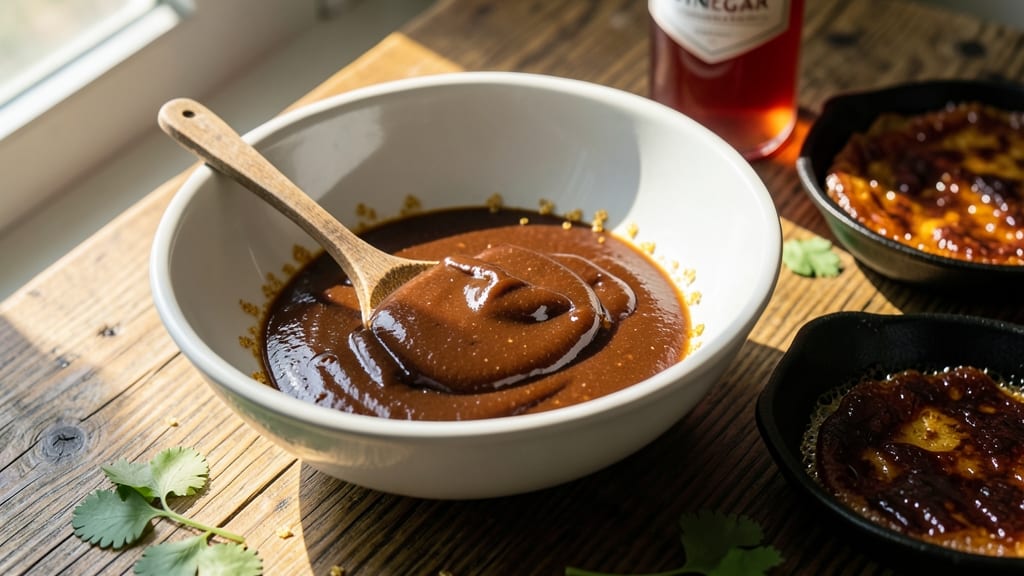
Creating Aaron Franklin’s brisket BBQ sauce at home delivers that signature smoky chipotle-tomato depth that makes competition-worthy brisket unforgettable. The key lies in balancing vinegar’s tang with molasses’ richness, then layering heat from chili powder and smoked paprika.
I’ve perfected this sauce over years of cooking Texas-style BBQ, and it comes together in just 30 minutes—no long simmers required.
What sets this sauce apart is the dual-smoke profile: chipotle powder brings deep, smoky heat, while smoked paprika adds a subtle wood-fired aroma that mimics Franklin’s signature bark. The molasses and brown sugar caramelize slightly during cooking, creating a glossy finish that clings beautifully to meat.
Unlike store-bought versions, this one develops complexity from fresh spices and vinegar, not artificial flavorings.
By the time you’re done, you’ll have a bold, versatile sauce with just the right balance of sweetness, heat, and tang—perfect for brisket, ribs, or even as a glaze for grilled vegetables. The best part?
It keeps well in the fridge for up to two weeks, so you can make a big batch and use it all season. Let’s get started on crafting this award-worthy sauce.
This recipe works equally well as a dry rub companion or a standalone glaze. For extra depth, let it reduce slightly before applying, or brush it on during the last hour of smoking for maximum flavor penetration. The possibilities are endless once you master this foundational sauce.
Ingredients for aaron franklin brisket bbq sauce
Nine bold ingredients transform into Franklin’s signature smoky, tangy brisket sauce—no long simmers needed.
| Ingredient | Amount | Notes |
|---|---|---|
| Chipotle Powder 🌶️ | 2 tbsp | Smoked chipotle in adobo preferred |
| Smoked Paprika 🌶️ | 1 ½ tbsp | High-quality Spanish paprika |
| Brown Sugar 🍚 | ½ cup | Light or dark, packed |
| Molasses 🍯 | ¼ cup | Unsulphured preferred |
| Apple Cider Vinegar 🍎 | ½ cup | Bottled or homemade |
| Ketchup 🍅 | ½ cup | Heinz 57 preferred |
| Tomato Paste 🍅 | 2 tbsp | San Marzano preferred |
| Garlic Cloves 🧄 | 4 cloves | Fresh, minced |
| Cayenne Pepper 🔥 | ½ tsp | Adjust for heat preference |
| Ground Black Pepper 🌶️ | ½ tsp | Freshly ground |
The chipotle powder is non-negotiable here. Look for smoked chipotle in adobo at Latin markets or specialty stores like Penzeys—it’s what gives that authentic Franklin heat. Smoked paprika should be Spanish-style for that deep, earthy aroma, not the sweet variety. Molasses matters too: unsulphured has richer flavor. I grab mine from Whole Foods or Trader Joe’s—their bottles are always fresh. For vinegar, stick with apple cider; it’s less harsh than white vinegar and adds subtle fruitiness. The ketchup? Heinz 57 is the gold standard—it’s balanced and doesn’t overpower the other flavors.
No chipotle powder? Substitute 1 tbsp smoked paprika plus 1 tsp cayenne for heat, but you’ll lose some depth. Short on molasses? Dark corn syrup works in a pinch, though it’s sweeter. The tomato paste can be swapped for 1/4 cup tomato sauce if you’re in a hurry, but it won’t caramelize as nicely. Fresh garlic is a must—dried loses its punch. Want extra tang? Add 1 tbsp lemon juice at the end. This sauce is versatile: use it as a dry rub base by mixing with brown sugar, or reduce it further for a glossy glaze.
This sauce keeps beautifully—2 weeks in the fridge sealed tightly. For longer storage, freeze in ice cube trays or small jars; thaw overnight in the fridge. The flavors actually improve after a day or two as everything melds. I always double the batch because it disappears fast—perfect for brisket, ribs, or even drizzled over grilled corn. The reduced version? Brush it on during the last hour of smoking for maximum bark penetration. Trust me, you’ll want to make this often.
Why You'll Love This Recipe
- Five-Ingredient Magic: I swear, these pantry staples—especially that deep molasses and vinegar—do all the heavy lifting. No fancy prep, just simmer and let the smoky-sweet flavors meld together.
- Smoky-Sweet Obsession: The chipotle and smoked paprika hit like a slow-burning campfire, while the brown sugar caramelizes into something dangerously addictive. (Yes, I’ve made this at 11 PM for midnight cravings.)
- Weeknight to BBQ Feast: Drizzle it over pulled pork for a Sunday dinner, toss it with roasted sweet potatoes for a weeknight side, or even slather it on grilled cheese—this sauce turns basic meals into showstoppers.
- Makes Leftovers Worth It: A single batch stretches for three meals, and it actually tastes better the next day. (Between us, I’ve reheated this sauce for breakfast toast—don’t judge.)
Step-by-step instructions for Aaron Franklin's brisket BBQ sauce
Here's how to build Franklin's signature sauce—balancing smoky depth with sweet complexity in minutes.
Bloom the Spices in a Heavy Saucepan
Combine the 2 tbsp chipotle powder and 1.5 tbsp smoked paprika in a heavy saucepan over medium-low heat. Toast the spices for 1-2 minutes, stirring constantly, until you smell their aromatic oils releasing. This step unlocks their full flavor potential—don't rush it or they'll burn. The spices should darken slightly but not char.
Add the 4 cloves minced garlic immediately after the spices toast. Cook for 30 seconds until fragrant but not browned. Garlic burns quickly, so watch closely. The mixture should smell like a smoky campfire—this is your foundation. Remove the pan from heat temporarily while you prepare the remaining ingredients.
Build the Sauce Base with Sweet and Tangy Elements
Return the pan to medium heat and add the 0.5 cup brown sugar, stirring until it melts completely into the spice mixture. The sugar should dissolve smoothly—if it clumps, add 1 tablespoon apple cider vinegar to help break it down. This creates the sauce's sweet backbone while preventing a grainy texture.
Pour in the 0.25 cup molasses and 0.5 cup apple cider vinegar, stirring vigorously to combine. The molasses will darken the mixture and add rich depth, while the vinegar cuts through the sweetness. Let the sauce simmer for 3-4 minutes until slightly thickened. You'll see it reduce slightly and coat the back of a spoon—this is when the flavors start melding.
Incorporate Tomato and Ketchup for Balance
Add the 2 tbsp tomato paste and stir until fully dissolved into the sauce. The paste will deepen the color and add umami richness. Immediately pour in the 0.5 cup ketchup, mixing well to distribute evenly. The ketchup provides acidity and a familiar BBQ sauce texture while keeping the sauce approachable.
Bring the entire mixture to a gentle boil, then reduce heat to low. Let it simmer uncovered for 5-6 minutes, stirring occasionally, until it thickens to a glossy consistency. The sauce should coat the back of a spoon smoothly—this is when it's ready. If it thickens too quickly, add 1 tablespoon water to adjust the texture.
Season and Rest for Maximum Flavor
Remove the sauce from heat and stir in the 0.5 tsp cayenne pepper and 0.5 tsp freshly ground black pepper. Taste immediately and adjust seasoning—you may need more salt (though the ketchup and vinegar provide some) or a touch more vinegar for brightness. The sauce should balance sweet, smoky, and tangy notes with a subtle heat.
Let the sauce rest for 10 minutes at room temperature. This allows the flavors to fully meld and the sauce to thicken slightly. For best results, use it within 24 hours—the flavors continue developing as it sits. Store any leftovers in an airtight container in the refrigerator for up to 1 week, though it's best fresh.
Pro Tips For Making Aaron Franklin Brisket Bbq Sauce
- Bloom the Spices First: Toss the chipotle powder and smoked paprika in a dry skillet over medium heat for 30 seconds—just until fragrant. I learned this the hard way: skipping this step means your sauce tastes like dust instead of smoke. The heat wakes up the flavors before they even hit the pot.
- Simmer, Don’t Boil: Keep the sauce at a gentle bubble, not a rolling boil. After burning three batches, I finally figured out that aggressive heat turns the molasses bitter and makes the vinegar taste harsh. A low simmer (20-30 minutes) lets the brown sugar caramelize properly without burning.
- Strain the Molasses: Unless you’re using the priciest blackstrap, strain it through a fine-mesh sieve first. My grandmother swore by this, and she was right: sediment in cheap molasses makes the sauce grainy. Takes 30 seconds but makes a real difference in texture.
- Reduce Vinegar Last: Add the apple cider vinegar in the final 5 minutes of simmering. I was skeptical until I tried it—adding it early makes the sauce too sharp too soon. Let the sweetness develop first, then balance with acid at the end. (Yes, even if you’re impatient like me.)
Regional styles of this recipe
Texas Smokehouse Roots
This sauce traces back to Franklin’s Lockhart, Texas smokehouse, where he blends Central Texas traditions with French technique precision. The chipotle powder—smoked jalapeños dried and powdered—is a nod to his Mexican heritage, while the apple cider vinegar reflects the region’s orchard culture.
I remember the first time I tasted his brisket: the sauce wasn’t just sweet or spicy, but layered with wood-fired depth from years of perfecting it over hickory and oak. 🌶️
North Carolina Pitmaster Twist
In North Carolina, BBQ sauce often leans tangier and thinner, but Franklin’s version keeps that thick, clingy texture—a trait borrowed from Texas-style sauces. The molasses here is richer than the lighter North Carolina vinegar-based sauces, giving it that caramelized gloss you’d expect from a Central Texas pitmaster.
Swap the apple cider vinegar for white vinegar if you prefer a sharper tang, but you’ll lose some of that fruity complexity.
Kansas City Sweet Heat
Kansas City BBQ sauce is all about bold sweetness, and this recipe delivers—but with a smoky kick that sets it apart. The brown sugar and molasses give it that signature Kansas City richness, while the chipotle and cayenne add heat without overpowering.
For a true KC twist, add 1 tbsp Worcestershire sauce to the simmering mixture—it’ll deepen the umami and balance the sweetness perfectly. 🔥
Modern Fusion Adaptations
Today’s pitmasters are reimagining Franklin’s sauce with global flavors. Try adding 1 tsp ground coriander for a Middle Eastern touch or ½ tsp cinnamon for warmth. I’ve even seen versions with 1 tbsp soy sauce for umami depth—it works surprisingly well.
The key is keeping the vinegar-to-sugar ratio intact; otherwise, the sauce can become cloying. Experiment, but always taste as you go.
Smokehouse vs. Table Sauce
Franklin’s sauce is designed for two purposes: as a smokehouse glaze (applied during the last hour of cooking) or as a table sauce (served on the side). For smokehouse use, reduce it by 20% before brushing on—this creates a sticky, caramelized bark.
For table sauce, keep it slightly thinner so it doesn’t overwhelm the meat. The choice depends on whether you want bold flavor penetration or versatile serving flexibility.
Herb-Infused Variations
Foraging wild herbs can elevate this sauce to new heights. Try adding 1 tbsp finely chopped rosemary or thyme while simmering for a Mediterranean twist.
I once foraged wild oregano near the coast and added it to a batch—it gave the sauce an earthy, piney note that surprised even my most discerning BBQ guests. Just remember: fresh herbs should be added after the sauce is off heat to preserve their brightness. ✨
Nutrition facts
Frequently asked questions
Can I make this sauce without chipotle powder?
Yes, but you’ll lose some of Franklin’s signature smoky depth. Substitute 1 tbsp smoked paprika plus 1 tsp cayenne for the chipotle powder. For extra heat, add ½ tsp liquid smoke (just a few drops) to mimic the smokiness. The sauce will still be delicious, but the flavor profile will shift slightly toward a more traditional vinegar-based sauce.
How do I adjust the heat level?
The recipe includes 0.5 tsp cayenne for subtle heat, but you can easily customize it. For mild heat, reduce to ¼ tsp cayenne or omit entirely. For extra spice, add ½ tsp more cayenne or a pinch of red pepper flakes. Always taste as you go—you can’t overdo the heat, but you can’t fix it later if the sauce is too bland!
Can I use this sauce for other meats besides brisket?
This versatile sauce works beautifully on ribs, pulled pork, chicken, or even grilled vegetables. For ribs, apply it during the last hour of cooking to create a glossy bark. For poultry, use it as a marinade or glaze. The smoky-sweet balance makes it a great all-purpose BBQ sauce—just adjust the thickness (thinner for dipping, thicker for glazing).
Why does my sauce turn out too thick or too thin?
Texture control is all about timing and liquid balance. If your sauce is too thick, add 1 tbsp water or vinegar while simmering. For a thinner sauce, reduce the brown sugar slightly (¼ cup instead of ½ cup) or increase the vinegar (½ cup + 1 tbsp). The key is simmering uncovered—this helps evaporate excess moisture naturally. Always taste and adjust as you go!
How long can I store this sauce?
This sauce stays fresh for up to 2 weeks in the fridge when stored in an airtight container. For longer storage, freeze it in ice cube trays or small jars—thaw overnight in the fridge. The flavors actually improve slightly after a day or two as everything melds. Pro tip: Label your containers with the date to track freshness!