
Sauces & Condiments
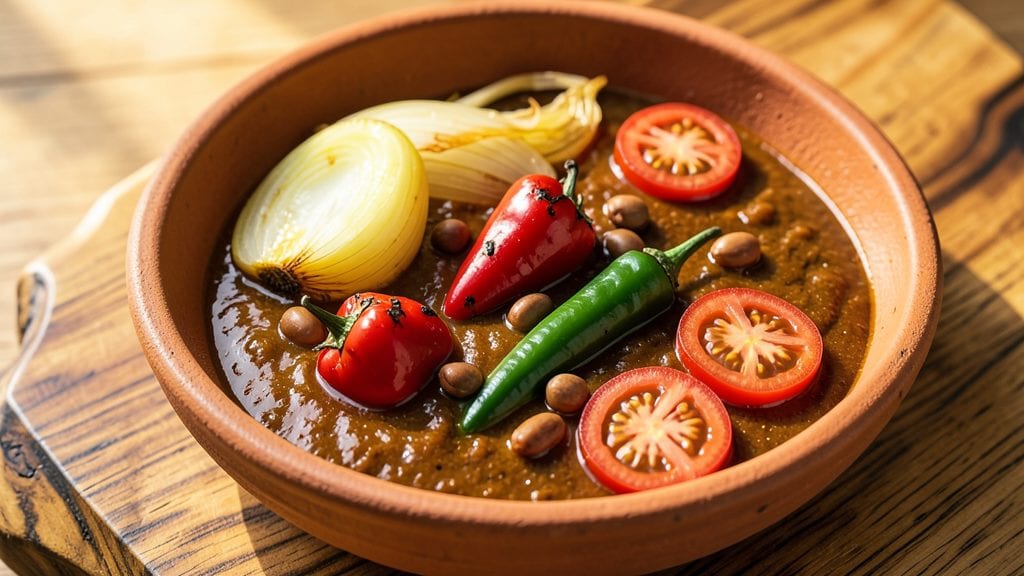
This Auju sauce recipe transforms simple stir-fries and noodles into a symphony of bold African flavors—deep umami from locust beans, smoky heat from peppers, and rich palm oil that coats every bite like liquid sunshine. 🌟 I first discovered it while researching West African cuisine, and the balance of spices and textures became an instant game-changer for my home cooking.
The sauce’s versatility makes it perfect for everything from grilled meats to fried plantains, yet its preparation is straightforward enough for weeknight meals.
At its core, Auju sauce relies on three key ingredients: palm oil for its signature golden hue and richness, locust beans (iru) for that unmistakable umami depth, and fresh peppers for a controlled heat that builds as you cook.
Traditional recipes often include onions, tomatoes, and spices like ginger or garlic, but the magic happens when you toast the locust beans first—this step unlocks their full flavor potential.
What sets this sauce apart is how it enhances other dishes without overpowering them, making it a pantry essential for anyone craving authentic African flavors.
The result is a glossy, aromatic drizzle that clings to noodles, meats, or vegetables like a second skin, infusing each bite with layers of smoky, spicy, and savory complexity. The texture is velvety yet slightly thickened, perfect for tossing or spooning over finished dishes.
What’s remarkable is how this simple sauce elevates everyday meals—turning a basic stir-fry into a restaurant-worthy experience with minimal effort. Once you taste the difference, store-bought sauces won’t compare.
For modern kitchens, this recipe adapts easily: substitute locust beans with dried shrimp or anchovies if needed, and adjust the heat level by controlling the peppers. The sauce keeps well in the fridge for up to 5 days or freezes for 3 months, making it ideal for meal prep.
Whether you’re serving a crowd or treating yourself, this Auju sauce is the bold, flavorful drizzle your dishes deserve.
Ingredients for auju sauce
Eleven ingredients craft this bold West African sauce that transforms simple meals into flavorful masterpieces.
| Ingredient | Amount | Notes |
|---|---|---|
| Red Bell Peppers 🌶️ | 1 whole | Seeds removed for mild heat |
| Scotch Bonnet Peppers 🌶️ | 1 whole | Adjust for desired heat level |
| Palm Oil 🫒 | ½ cup | Unrefined for authentic flavor |
| Locust Beans (Iru) 🌿 | 2 tbsp | Toasted until fragrant first |
| Yellow Onions 🧅 | 1 whole | Medium size, finely chopped |
| Fresh Tomatoes 🍅 | 2 medium | Ripe, chopped into chunks |
| Fresh Ginger 🌿 | 1 inch | Peeled, roughly chopped |
| Garlic Cloves 🧄 | 4 cloves | Peeled, lightly crushed |
| Dried Shrimp 🦐 | 1 tbsp | Substitute for locust beans |
| Ground Black Pepper 🌶️ | ½ tsp | Freshly ground for depth |
| Salt 🧂 | 1 tsp | Diamond Crystal preferred |
Locust beans are the heart of Auju sauce, and toasting them first unlocks their full umami potential. If you can't find them at specialty stores like African markets or Whole Foods, dried shrimp or anchovies work beautifully as substitutes. For palm oil, unrefined versions from Latin or African grocery stores deliver the richest flavor—avoid the refined, bleached kind. The peppers are where you control the heat: Scotch bonnet for fire, red bell for mild sweetness. I always double-check the peppers' freshness—they should feel firm and smell vibrant, not wilted or moldy.
No locust beans? Dried shrimp or anchovies at half the amount bring similar depth. Fresh tomatoes can be swapped for 1 cup tomato paste if you're in a pinch, but fresh gives that bright acidity. The ginger and garlic can be adjusted to taste—more ginger for heat, more garlic for savory punch. For a smokier profile, add 1 tsp smoked paprika. The sauce thickens as it cooks, so if it seems too thin, let it reduce uncovered for 2-3 minutes. Trust me, the longer it simmers, the better it gets.
This sauce keeps beautifully in the fridge for up to 5 days, with flavor actually deepening over time. For longer storage, freeze in ice cube trays—perfect for single portions. The palm oil solidifies when cold, so give it a minute to soften before using. I like to make a big batch and drizzle it over everything from stir-fries to roasted plantains. The leftovers? Even better the next day as the flavors meld.
Why You'll Love This Recipe
- Minimal Chopping Needed: I swear by this—just dice the onions, slice the peppers, and let the locust beans do the heavy lifting. No blenders, no strainers, just a pot and a wooden spoon.
- Heat That Stays True: That Scotch bonnet doesn’t fade—it lingers just enough to wake up every bite, while the palm oil gives it that rich, velvety depth. Honestly, the first time I tasted it, I grabbed the bottle and poured seconds.
- Sauce for Everything: Slather it on rice, toss it with beans, or drizzle it over grilled fish—this stuff works as a dip, a dressing, or a full-on sauce. Between us, I’ve even used it in place of ketchup on burgers (don’t judge).
- Stretches Your Grocery Budget: A little palm oil and a handful of locust beans go a long way—this sauce keeps for days in the fridge, so you’re not scrambling for last-minute takeout. My wallet thanks me every time.
Step-by-step instructions for bold umami-spiced Auju sauce
Let's create this vibrant West African sauce that transforms simple dishes into flavor explosions.
🔥 Step 1: Toast the Locust Beans for Deep Flavor
Heat a dry skillet over medium heat and add the 2 tablespoons locust beans (iru). Toast them for 3-4 minutes until they release an intense, nutty aroma and turn a rich golden brown. You'll know they're ready when the beans smell toasty and slightly charred at the edges.
This toasting step is crucial—it develops the beans' natural oils and creates that signature umami depth. Keep the beans moving constantly in the pan to prevent burning. Once toasted, remove them immediately and set aside, keeping them warm for the next step.
🍳 Step 2: Build the Base with Aromatics in Palm Oil
In the same skillet (no need to clean it—the toasted bean bits add flavor), add the ½ cup palm oil and heat over medium-low heat. Add the 1 whole yellow onion and 1 whole red bell pepper (seeds removed), both finely chopped, along with the 1 inch fresh ginger (peeled and roughly chopped) and 4 cloves garlic cloves (lightly crushed).
Cook for 8-10 minutes until the onions are translucent and the peppers begin to soften. The oil should be shimmering but not smoking—this gentle cooking allows the aromatics to release their sweetness without burning. Stir occasionally to prevent sticking, and watch for the peppers to develop a slight char on their edges.
🍳 Step 3: Incorporate Heat and Umami Elements
Add the 1 whole scotch bonnet pepper (seeds removed if you prefer mild heat) and the toasted locust beans to the skillet. Cook for another 3-4 minutes until the scotch bonnet releases its signature heat and the beans soften slightly. The sauce should begin to develop a rich, dark color and a complex aroma.
Here's where the magic happens: add the 1 tablespoon dried shrimp and 2 medium fresh tomatoes (chopped into chunks). The shrimp will rehydrate and add a briny depth, while the tomatoes provide acidity to balance the richness. Cook for 5-6 minutes until the tomatoes break down and the mixture forms a thick, chunky sauce.
🥘 Step 4: Season and Simmer to Perfection
Add the 1 teaspoon salt and ½ teaspoon ground black pepper, stirring well to combine. Reduce the heat to low and let the sauce simmer uncovered for 10-12 minutes. You're looking for the sauce to reduce slightly and thicken—it should coat the back of a spoon but still maintain a vibrant texture.
Taste and adjust seasoning if needed. The sauce should be bold, with layers of heat from the scotch bonnet, umami from the locust beans and shrimp, and sweetness from the peppers and tomatoes. If it's too thick, add 1-2 tablespoons water to reach your desired consistency. Remove from heat and let it cool slightly before serving.
Pro Tips For Making Auju Sauce
- Blister Scotch Bonnet First: Remove the stems and seeds, then hold the pepper directly over a gas flame (or under a broiler) until the skin blackens in spots—this makes peeling the flesh off effortless. I used to struggle with stubborn skins until I realized heat does the heavy lifting here.
- Toast Locust Beans Low: Spread the iru beans in a single layer on a dry pan and cook over low heat, stirring constantly, until they turn a deep golden brown—not burnt, just fragrant. High heat turns them bitter, and nobody wants that in their auju.
- Sweat Onions Slowly: Dice the onions finely and cook them in palm oil over medium-low heat for 8–10 minutes until they’re translucent but not browned. Rushing this step makes the sauce taste raw and sharp—patience here pays off.
- Strain Twice for Smoothness: After blending, strain the sauce through a fine-mesh sieve first, then a cheesecloth for a velvety texture. The first strain catches big chunks; the second removes the grittiness that ruins the sauce’s silky mouthfeel. (Yes, it’s extra work, but it’s worth it.)
Pro cooking tips for great auju sauce
Toast Locust Beans Properly
Never skip toasting the locust beans (iru)—this step unlocks their full umami potential. Heat your dry skillet over medium heat and toast the 2 tablespoons for exactly 3-4 minutes until they turn golden brown and release an intense, nutty aroma.
Watch closely to avoid burning, as they can go from perfect to bitter in seconds. I use a 10-inch cast iron skillet for even heat distribution. 🔥
Control Heat with Peppers
The scotch bonnet pepper is where you control the heat level. For mild heat, remove seeds and membranes before cooking. If you prefer serious fire, leave them intact. I recommend starting with 1 whole pepper and adjusting to taste—you can always add more later.
The pepper should cook for 3-4 minutes until its oils release and the sauce takes on a vibrant red hue.
Use Unrefined Palm Oil
Refined palm oil lacks the rich, nutty flavor and deep color that make Auju sauce authentic. I source mine from African grocery stores or online retailers like African & Caribbean Foods. The unrefined version has a reddish hue and subtle caramel notes that refined versions simply can't replicate.
Use exactly ½ cup—too much will make the sauce too oily, while too little won't provide enough richness.
Simmer Low and Slow
After adding all ingredients, reduce heat to low and simmer uncovered for 10-12 minutes. This slow reduction allows the flavors to meld and the sauce to thicken naturally. Stir occasionally to prevent sticking, especially when the tomatoes begin to break down.
The sauce should reduce by about 20%—this concentration is what makes it cling beautifully to dishes. 💫
Substitute with Dried Shrimp
If locust beans are unavailable, dried shrimp makes an excellent substitute. Use exactly 1 tablespoon—they'll rehydrate and add a briny, oceanic depth that mimics the umami of iru.
Toast them briefly in the skillet before adding other ingredients to develop their flavor. For extra richness, add ½ teaspoon smoked paprika alongside the shrimp.
Adjust Thickness as Needed
The sauce should coat the back of a spoon but remain pourable. If it's too thick after simmering, add 1-2 tablespoons water and let it reduce again for 2-3 minutes. For a thicker consistency, simmer uncovered for an additional 5 minutes.
I find that letting the sauce rest for 10 minutes after cooking allows it to thicken further naturally. This resting step is often overlooked but makes a noticeable difference in texture.
Nutrition facts
Frequently asked questions about Auju sauce
What makes auju sauce different from other West African pepper sauces?
Auju sauce stands out for its deep umami flavor from toasted locust beans (iru) and the rich, reddish hue from unrefined palm oil. Unlike milder pepper sauces, it balances smoky heat with briny shrimp or fish notes, creating a complex profile perfect for bold dishes. The toasting step is key—it develops nutty, caramelized flavors that set it apart from raw or blended sauces.
Can I make auju sauce without locust beans?
Yes! Use 1 tablespoon dried shrimp or 2 anchovies as a substitute—they provide a similar briny umami depth. Toast them briefly in the skillet first to develop their flavor. For extra richness, add ½ teaspoon smoked paprika alongside the substitute. The texture will be slightly different but still delicious.
How do I adjust the heat level in auju sauce?
Control heat by modifying the scotch bonnet pepper: Remove seeds and membranes for mild heat, or leave them intact for intense spice. Start with 1 whole pepper and taste before serving—you can always add more later. For a smoky kick without heat, swap in 1 tablespoon dried chili flakes instead.
What’s the best way to store leftover auju sauce?
Store in an airtight container in the fridge for up to 5 days, where flavors deepen over time. For longer storage, freeze in ice cube trays—thaw overnight in the fridge. The palm oil may solidify when cold, so let it sit at room temperature for 10 minutes before using. The sauce reheats beautifully in a saucepan over low heat.
What dishes pair best with auju sauce?
Auju sauce elevates grilled meats (like chicken or fish), fried plantains, stir-fries, and rice dishes. Its rich texture clings perfectly to noodles or wraps. For a quick meal, drizzle it over steamed vegetables or use it as a marinade for 2-3 hours before cooking. The sauce’s bold flavor works as a condiment or main component.