
Sauces & Condiments
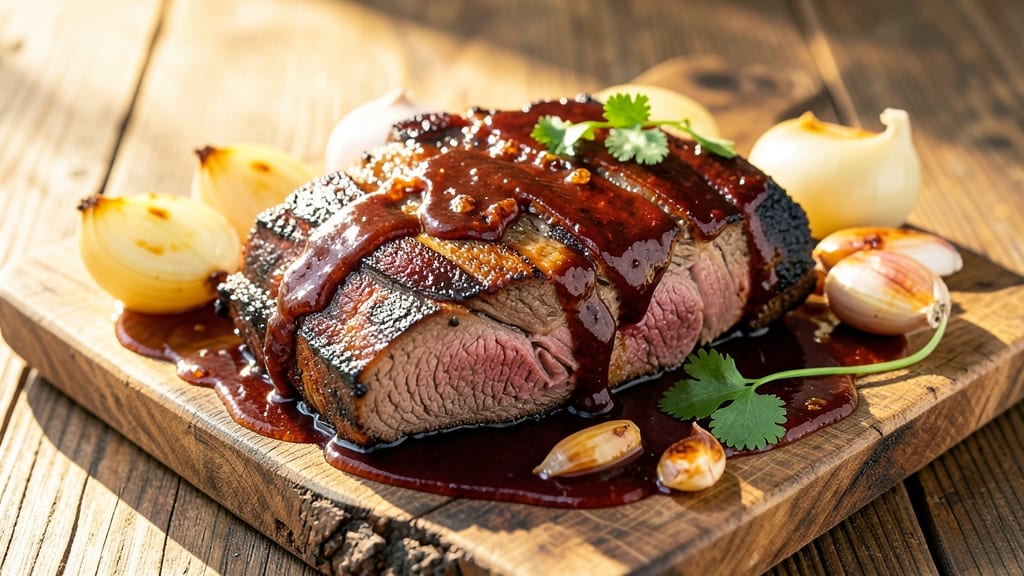
This beef brisket with barbecue sauce recipe turns tough cuts into melt-in-your-mouth perfection—just like the first time I tasted my grandfather’s slow-smoked brisket at a family cookout. The secret lies in patience: letting the meat break down over hours while building a smoky-sweet crust that seals in flavor.
This recipe blends classic pitmaster techniques with a homemade sauce that cuts through the richness, creating harmony in every bite.
What sets this brisket apart is the balance between tradition and approachability. You don’t need a smoker—an oven works just as well—though the results are just as tender and deeply flavorful.
The sauce, made from scratch with tangy vinegar, rich molasses, and aromatic spices, clings to the meat like a second skin. It’s the kind of dish that rewards your time with a centerpiece-worthy meal that feeds a crowd or satisfies a craving for comfort.
By the time you’re done, you’ll have brisket that falls apart at the touch of a fork, with a caramelized bark that’s both crisp and sticky. The sauce adds layers of depth, balancing smoky heat with sweetness that lingers.
Serve it sliced thin over buttery mashed potatoes or on crusty bread, and you’ll understand why this dish is a staple at every pitmaster’s table. Let’s get started—your kitchen is about to smell like Sunday dinner.
This recipe works equally well for weekend gatherings or weeknight dinners, with optional sides like roasted corn or collard greens to round out the meal. The key is confidence: trust the process, and the brisket will deliver restaurant-quality results every time.
Your guests won’t just taste the meat—they’ll feel the love baked into every bite.
Ingredients for beef brisket with barbecue sauce
Six core ingredients transform tough brisket into melt-in-your-mouth perfection with smoky-sweet crust.
| Ingredient | Amount | Notes |
|---|---|---|
| Beef Brisket 🥩 | 4 lb | Whole packer cut, fat cap intact |
| Yellow Onion 🧅 | 1 whole | Large, sliced into wedges |
| Garlic Cloves 🧄 | 8 cloves | Peeled, smashed for flavor |
| Beef Broth 💧 | 2 cups | Low-sodium preferred |
| Apple Cider Vinegar 🍏 | ½ cup | For tangy depth |
| Molasses 🍯 | ¼ cup | Unsulphured for best flavor |
| Brown Sugar 🍚 | ½ cup | Light or dark works |
| Smoked Paprika 🌶️ | 2 tbsp | For authentic smoky flavor |
| Ground Black Pepper 🌶️ | 1 ½ tbsp | Freshly cracked preferred |
| Salt 🧂 | 2 tbsp | Kosher or sea salt |
| Yellow Mustard 🟡 | 2 tbsp | For sauce binding |
| Ketchup 🍅 | ¼ cup | For color and balance |
| Worcestershire Sauce 🥫 | 1 tbsp | For umami depth |
| Vegetable Oil 🫒 | 2 tbsp | For searing brisket |
The brisket is your star—look for a whole packer cut with intact fat cap at Costco or your butcher shop. A 4-pound piece is perfect for a crowd, but if you're feeding more, grab a 6-pounder. The fat renders down during cooking, creating that irresistible bark. Most grocery stores carry brisket in the meat case, but local butchers often have better cuts. If you're unsure which end is which, don't worry—they both work, but the flat side cooks slightly faster. The onions and garlic? Yellow onions add sweetness, while garlic brings depth—both should be fresh, not wilting or bruised. I always grab extra garlic because it's the backbone of the flavor here.
No smoked paprika? Regular paprika plus a pinch of liquid smoke works in a pinch. Short on brown sugar? Honey or maple syrup adds sweetness, though molasses gives that classic brisket depth. The apple cider vinegar is key for tang—substitute with white vinegar if needed, but don't skip it. For the sauce, store-bought ketchup is fine, but homemade adds layers. The beef broth should be low-sodium to avoid overpowering the meat. If you're using a pre-made sauce, add a splash of vinegar to brighten it up—trust me, it makes a difference. And if you're feeling fancy, swap the Worcestershire for a dash of fish sauce for extra umami.
This brisket is a marathon, not a sprint. Start it in the morning if you're cooking for dinner—it needs at least 4-5 hours in the oven. The sauce can be made ahead and stored in the fridge for up to 1 week or frozen for 3 months. The brisket itself keeps well in the fridge for 4-5 days if wrapped tightly in foil. For leftovers, reheat in the oven at 300°F until warmed through—microwaving makes it tough. I always make extra sauce because it's perfect on sandwiches or as a dip for roasted veggies. The brisket freezes beautifully too—just slice it thin and store in portions for quick meals.
Why You'll Love This Recipe
- One-Pot Magic: I swear by this recipe when I’m too tired to juggle pots—just toss the brisket, onions, and garlic in a deep skillet with broth and vinegar, then let the sauce simmer down. The onions caramelize right in the pan, so you skip chopping extra veggies or dirtying more dishes.
- Deep, Smoky Richness: That apple cider vinegar cuts through the beef’s richness while the slow simmer lets the brisket get fork-tender and the sauce cling like it’s been braising all day. Honestly, the first bite makes me forget I didn’t spend hours smoking it.
- Leftovers That Shine: This recipe actually improves the next day—better than takeout, even. I’ll slice the brisket thin for sandwiches or chop it into a hearty salad, and the sauce stays thick and flavorful. My freezer is always stocked with portions because it reheats like a dream.
- Budget Feast: A pound of brisket stretches for four meals, and the other ingredients cost pennies. Between us, this is how I feed my family for under $10 without sacrificing taste. The beef broth adds depth without breaking the bank, and the vinegar keeps it bright.
Step-by-step instructions for beef brisket with barbecue sauce
Here's how to transform a tough cut into melt-in-your-mouth perfection with a glossy, smoky-sweet glaze.
Prepare the Brisket for Maximum Flavor
Begin by trimming the beef brisket to remove any large chunks of silver skin, but leave the fat cap intact—this will baste the meat as it cooks. Place the brisket fat-side down on a cutting board and use a sharp knife to score the fat cap in a crosshatch pattern, being careful not to cut into the meat. This creates more surface area for flavor penetration.
In a small bowl, combine the 2 tablespoons smoked paprika, 1.5 tablespoons ground black pepper, and 2 tablespoons salt. Rub this mixture generously over all sides of the brisket, including the fat cap. Let the seasoned brisket sit at room temperature for 30 minutes while you prepare the rest of your ingredients. This resting period ensures even cooking throughout.
Sear the Brisket to Lock in Juices
Heat 2 tablespoons vegetable oil in a large Dutch oven over medium-high heat until shimmering. Carefully place the brisket fat-side down in the pot and sear undisturbed for 5-6 minutes until a deep golden brown crust forms. This step is crucial—it creates the foundation for that beautiful bark we're after.
Flip the brisket and continue searing for another 3-4 minutes until the second side is also golden brown. Remove the brisket from the pot and set it aside on a plate. You'll notice the fat cap has rendered some oil, which will contribute to the flavor of your sauce later. Don't wipe out the Dutch oven—those browned bits are pure flavor.
Build the Flavor-Packed Barbecue Sauce
In the same Dutch oven, add the sliced yellow onion and cook over medium heat for 5 minutes until softened. Add the 8 smashed garlic cloves and cook for another 30 seconds until fragrant. Pour in the 0.5 cup apple cider vinegar and let it simmer for 2 minutes to cook off the raw vinegar taste.
Stir in the 0.25 cup molasses, 0.5 cup brown sugar, 2 tablespoons yellow mustard, 0.25 cup ketchup, and 1 tablespoon Worcestershire sauce. Add the 2 cups beef broth and bring to a gentle simmer. Let this mixture cook uncovered for 10 minutes, stirring occasionally, until it thickens slightly and the flavors meld together. The sauce should coat the back of a spoon with a glossy sheen.
Braise the Brisket Until Fork-Tender
Return the brisket to the Dutch oven, fat-side up, and pour the sauce over the top. Bring everything to a gentle simmer, then reduce the heat to low. Cover the pot and let it cook for 2.5 to 3 hours, maintaining a gentle bubble at the edges. This low-and-slow approach is key—it breaks down the tough connective tissue and infuses the meat with all that beautiful sauce flavor.
After 2 hours, check the internal temperature using a meat thermometer. When it reaches 195°F, your brisket is ready. The meat should be fork-tender and pull apart easily. If the sauce has reduced too much, add a splash of water or beef broth to maintain the right consistency. The brisket will continue cooking slightly as it rests, so don't worry if it's not quite at temperature yet.
Rest and Serve with Perfect Sauce
Transfer the brisket to a cutting board and tent loosely with aluminum foil. Let it rest for 15-20 minutes before slicing. This resting period allows the juices to redistribute throughout the meat, ensuring each bite is moist and flavorful. During this time, you can skim any excess fat from the sauce if desired, but I like to leave some for that rich, velvety texture.
Slice the brisket against the grain into ½-inch thick slices. Spoon the barbecue sauce over the top and serve immediately. The result should be tender, fall-apart meat with a glossy, smoky-sweet glaze that clings beautifully to each slice. This brisket makes an impressive centerpiece for any gathering, with enough leftovers to enjoy for days.
Pro Tips For Making Beef Brisket With Barbecue Sauce
- Trim the Fat Cap: That thick layer of fat on the brisket isn’t just for looks—it renders down into flavor gold. Scrape it down to about ¼-inch thick before seasoning so it crisps beautifully instead of turning into a greasy mess. (Yes, even if you’re tempted to leave it thick—trust me, you’ll regret it later.)
- Sear with a Lid: After searing the brisket, toss a metal lid on the pan and let it steam for 2 minutes. This locks in juices that would otherwise evaporate into smoke, giving you a richer base for the barbecue sauce later. (I used to skip this and wondered why my sauce tasted watered down.)
- Deglaze with Vinegar First: Dump that apple cider vinegar into the hot pan immediately after searing—it cuts through the fond like a knife, pulling up all the browned bits for a deeper flavor. Wait too long, and you’ll be scraping burnt bits off the bottom instead of dissolving them into the sauce.
- Sauce Late, Sauce Right: Tossing the brisket in barbecue sauce too early turns it soggy. Instead, brush it on after the brisket hits 195°F, when it’s tender enough to slice. Even better, save half the sauce for basting at the end—it’ll caramelize into a glossy finish. (Your future self will scream at you if you sauce it early.)
Best sauces and condiments for beef brisket with barbecue sauce
Classic Homemade Sauce
My go-to sauce starts with a balance of apple cider vinegar and molasses—the tang cuts through the richness while the molasses adds that signature caramel depth. I use unsulphured molasses for the best flavor, but if you're in a pinch, dark corn syrup works in a bind.
The key is simmering it low and slow for 10 minutes to let the flavors meld. Don’t skip the Worcestershire sauce—it adds that umami punch that makes the sauce sing. 🔥
Store-Bought Shortcuts
If you’re short on time, Sweet Baby Ray’s Original BBQ Sauce is my top pick for store-bought—it’s got the right balance of sweet and smoky without overpowering the brisket. For a smokier profile, try Stubb’s Original BBQ Sauce.
Just thin it slightly with a splash of beef broth if it’s too thick, and don’t be afraid to add a pinch of smoked paprika to deepen the flavor. I’ve even used chipotle BBQ sauce for a spicier kick when serving to a crowd that loves heat. 🌶️
Sweet and Tangy Variations
For a fruitier twist, swap half the ketchup for crushed pineapple or peach preserves—it adds a bright, summery note that pairs perfectly with the smoky brisket.
If you’re feeling adventurous, try a honey-mustard glaze by reducing ½ cup honey with 2 tablespoons Dijon mustard and a splash of vinegar. Brush this on the brisket during the last 30 minutes of cooking for a sticky, glossy finish. 🍯
Spicy and Smoky Options
Crank up the heat with a chipotle-lime sauce by blending 2 tablespoons adobo sauce with 1 lime’s worth of juice, 1 tablespoon honey, and a pinch of cayenne. Drizzle this over the brisket in the final 15 minutes of cooking.
For a Texas-style smoky kick, add 1 tablespoon chipotle powder and ½ teaspoon cayenne directly to the sauce. I like to finish with a sprinkle of crumbled cotija cheese for a salty contrast. 💥
Sauce Consistency Tips
If your sauce is too thick, thin it with beef broth or apple cider vinegar—just 1 tablespoon at a time until it reaches a glossy, spoonable consistency. For extra richness, stir in 1 tablespoon butter at the end.
Pro tip: Simmer the sauce uncovered to prevent it from getting gluey. And if you’re serving the brisket sandwich-style, keep the sauce on the side so guests can adjust to their taste. The brisket’s natural juices will keep it moist either way. ✨
Nutrition facts
Frequently asked questions
Can I use a smoker instead of an oven for this brisket?
A smoker will give you that authentic wood-fired flavor. Use hickory or applewood chips for a classic taste, and maintain a temperature of 225-250°F for 4-6 hours until the internal temp hits 195°F. The key is patience—let the smoke work its magic without rushing. For oven smokers, wrap the brisket in foil after 2 hours to speed up cooking while keeping it moist.
How do I know when the brisket is done?
Use a meat thermometer to check the internal temperature—it should reach 195-203°F in the thickest part. The meat should also probe like butter, with the fibers pulling apart easily. If you don’t have a thermometer, look for a deep golden bark and check if the point of a knife slides in smoothly. Never rely on time alone, as brisket thickness varies.
Can I make the barbecue sauce ahead of time?
Yes! This sauce keeps well in the fridge for up to 1 week or freezes for 3 months. Make it a day ahead to let the flavors deepen—it’ll taste even richer. Just reheat it gently on the stove before using. For extra flavor, add a splash of beef broth when reheating to restore moisture. Store it in an airtight container to preserve its glossy texture.
Why did my brisket turn out dry?
Most likely, you sliced it too soon or overcooked it. Always rest the brisket for 15-20 minutes before slicing to let juices redistribute. If you cooked it past 205°F, it may have dried out. Next time, check the temp at 195°F and wrap it in foil during the last hour to retain moisture. The fat cap should also render enough juice to keep the meat tender.
What’s the best way to reheat leftover brisket?
Slice it thin and reheat in a 300°F oven with a splash of beef broth for 10-15 minutes until warmed through. Avoid microwaving—it makes the meat tough. For sandwiches, warm the brisket with a little sauce in a skillet over low heat for 3-4 minutes per side. Leftovers keep for 4-5 days in the fridge, wrapped tightly in foil.