
Sauces & Condiments
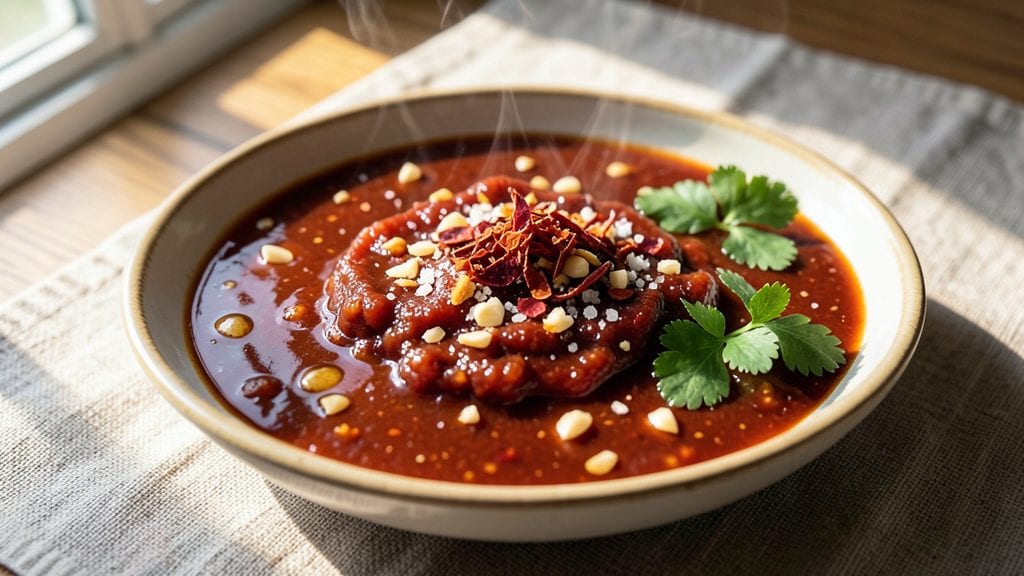
This boil sauce recipe transforms simple pantry staples into a smoky, tangy condiment that elevates fried chicken, noodles, and grilled meats to restaurant-quality levels. The process involves simmering fermented fish, vinegar, and chili into a rich, balanced sauce with just the right amount of heat and depth.
I first discovered boil sauce while researching Southeast Asian flavors, and its versatility made it a staple in my kitchen.
The beauty of boil sauce lies in its three core ingredients: fermented fish sauce for umami, vinegar for tang, and chili for heat. These combine with sugar to create a sauce that’s both complex and approachable—no special equipment required.
The reduction process concentrates flavors, resulting in a glossy, aromatic sauce that clings perfectly to food without overpowering it.
What sets this boil sauce apart is its smoky tomato undertone, achieved through careful simmering. The sauce thickens into a velvety consistency, ideal for drizzling over crispy fried chicken, tossing with noodles, or brushing onto grilled meats.
It’s the kind of condiment that transforms ordinary meals into something extraordinary with minimal effort.
Once mastered, this sauce keeps well in the refrigerator for up to two weeks, making it perfect for meal prep or gifting. Whether you’re serving a crowd or simply craving bold flavors, this recipe delivers restaurant-quality results with just a few pantry staples.
Ingredients for boil sauce
Pantry staples combine to create this restaurant-quality condiment with smoky tomato heat.
| Ingredient | Amount | Notes |
|---|---|---|
| Fermented Fish Sauce 🐟 | ½ cup | Red Boat brand preferred for quality |
| White Vinegar 💧 | 1 cup | Distilled vinegar works too |
| Tomato Paste 🍅 | ½ cup | Canned, unsweetened preferred |
| Granulated Sugar 🍬 | ¼ cup | White or brown sugar works |
| Dried Chili Flakes 🌶️ | 2 tbsp | Adjust for preferred heat level |
| Garlic Cloves 🧄 | 4 cloves | Freshly minced for optimal flavor |
| Shallots 🧅 | 2 whole | Finely diced, 1 tbsp each |
| Salt 🧂 | 1 ½ tsp | Diamond Crystal kosher preferred |
| Black Peppercorns 🌶️ | ½ tsp | Freshly cracked for depth |
| Smoked Paprika 🌶️ | 1 tsp | For authentic smoky depth |
The fermented fish sauce is non-negotiable—Red Boat delivers the most authentic umami without overpowering. Look for brands labeled 'premium' or 'imported' at Asian markets or well-stocked grocery stores like Whole Foods or Trader Joe's. If you can't find Red Boat, Thai Kitchen fish sauce is a solid backup. The vinegar should be white distilled for clean acidity, though apple cider vinegar adds subtle complexity. For tomato paste, Muir Glen or Hunt's unsweetened varieties work best—avoid sweetened versions that can alter the sauce's balance. The dried chili flakes should be freshly toasted in a dry pan for 30 seconds to enhance their aroma before adding to the sauce.
No fish sauce? Soy sauce or Worcestershire at half the amount provides umami depth, though the flavor profile shifts slightly. Substituting vinegar with rice vinegar maintains tang but adds a milder sweetness. If you're sensitive to heat, reduce chili flakes to 1 tbsp or use mild paprika instead. For garlic, garlic powder works in a pinch (use half the amount), but fresh minced garlic delivers superior complexity. The shallots can be swapped for red onion (finely diced) if unavailable. Smoked paprika is essential for that signature depth—McCormick or Penzeys brands provide consistent quality. Always taste as you go; the sugar balances acidity, so adjust gradually.
This sauce thickens beautifully when refrigerated, developing richer flavors over 24 hours. Store in an airtight glass jar in the fridge for up to 2 weeks, though it often disappears faster. For longer storage, freeze in ice cube trays—thaw and whisk to restore consistency. The sauce pairs exceptionally well with fried chicken, grilled meats, and noodle dishes, where its smoky-sweet profile shines. Portion into small containers for easy drizzling, and always stir before using as settling may occur. Leftovers make excellent meal prep staples or thoughtful gifts for fellow food enthusiasts.
Why You'll Love This Recipe
- Pantry Magic: I swear by this sauce—no fresh herbs, no fancy prep, just five pantry staples. The fermented fish sauce and vinegar cut through everything like a knife, while the sugar and tomato paste balance it into something smooth and addictive.
- Umami Bomb: That fermented fish sauce? It’s the secret weapon. One spoonful and you’ve got this deep, salty-sweet punch that clings to noodles, grilled meats, or even scrambled eggs like it’s been there forever.
- Weeknight Swiss Army: It’s my go-to for lazy dinners, quick marinades, or even a last-minute dipping sauce. Toss it with rice and eggs for breakfast, slather it on takeout, or use it to revive dry stir-fries—it’s the flavor equivalent of a multitool.
- Budget Stretch: A little goes a long way, and it keeps forever in the fridge. I make a big batch, store it in a jar, and suddenly my grocery bill feels lighter while my meals taste richer—no fancy ingredients, just pure flavor bang for your buck.
Step-by-step instructions for boil sauce recipe
Master this smoky, tangy sauce with precise technique and pantry staples you already own.
Bloom the Aromatics in Vinegar
Combine the 1 cup white vinegar, finely diced 2 whole shallots, and minced 4 cloves garlic in a medium saucepan. Bring to a gentle boil over medium heat, then immediately reduce to a simmer. This step extracts maximum flavor from the aromatics while preventing burning—watch closely as vinegar boils down quickly.
The vinegar should reduce by about half (to roughly ½ cup) while the shallots soften and garlic becomes fragrant. This process takes about 5-7 minutes. If you notice the mixture darkening too quickly, reduce heat to low to maintain clarity. The goal is a concentrated aromatic base without charring.
Incorporate Fermented Fish Sauce and Tomato Paste
Remove the pan from heat and whisk in the 0.5 cup fermented fish sauce and 0.5 cup tomato paste. Return to medium-low heat and stir continuously for 3-4 minutes until the mixture thickens slightly. The sauce should transform from a thin liquid to a glossy, paste-like consistency.
At this stage, the sauce will smell intensely umami with a bright acidity. If it appears too thick, add 1-2 tablespoons water to loosen it. The fish sauce adds depth while the tomato paste provides body—this combination is essential for authentic boil sauce texture.
Sweeten and Season with Precision
Add the 0.25 cup granulated sugar, 2 tbsp dried chili flakes, 1.5 tsp salt, 0.5 tsp cracked black peppercorns, and 1 tsp smoked paprika all at once. Return to medium heat and stir vigorously for 2-3 minutes until the sugar fully dissolves and the spices disperse evenly.
The sauce should now have a balanced sweetness cutting through the acidity and heat. Taste and adjust seasoning—you may need an additional ½ tsp salt or 1 tsp sugar depending on your vinegar's acidity level. The smoked paprika and chili flakes should be uniformly distributed without clumping.
Simmer to Perfection
Reduce heat to low and let the sauce simmer uncovered for 15-20 minutes, stirring occasionally. This slow reduction concentrates the flavors and develops the signature smoky depth. The sauce should thicken to a syrup-like consistency, coating the back of a spoon when stirred.
Watch for small bubbles forming at the edges—this indicates proper reduction. If the sauce darkens too quickly, cover loosely with a lid to slow evaporation. The final product should have a glossy sheen and cling to ingredients rather than pool at the bottom.
Rest and Adjust for Optimal Texture
Remove from heat and let the sauce rest for 10 minutes at room temperature. This resting period allows flavors to meld and the sauce to thicken further. If it's too thick for your preference, thin with 1 teaspoon water at a time until reaching a pourable yet clinging consistency.
For best results, use immediately or store in an airtight container in the refrigerator for up to 2 weeks. The sauce will continue developing flavor over time, with the vinegar's acidity mellowing slightly. This versatile sauce pairs beautifully with fried dishes, grilled meats, or as a dipping sauce for spring rolls.
Pro Tips For Making Boil Sauce
- Simmer Slow and Steady: After burning my first batch, I learned to keep the heat low once everything’s combined—just a whisper of a simmer. Boil sauce needs time to marry its flavors, not rush them. If you’re impatient like me, set a timer for 20 minutes and resist the urge to crank the heat.
- Strain the Fish Sauce: Fermented fish sauce can leave gritty bits that ruin texture. Strain it through a fine-mesh sieve or cheesecloth before adding it to the sauce—yes, it’s extra work, but the smoothness makes a real difference. I used to skip this and wondered why my sauce always felt "off."
- Toast the Chili Flakes: Dry-toast your chili flakes in the pan for 30 seconds before adding vinegar—they’ll deepen in color and flavor. This isn’t just about heat; it’s about waking up those dried peppers. Skip this, and your sauce will taste flat, even if the recipe says otherwise.
- Balance Sugar Last: Add sugar after the vinegar and tomato paste have simmered together—this lets the acidity mellow first. Taste as you go; if it’s too sharp, a little more sugar fixes it. I learned this the hard way when I dumped everything in at once and ended up with a one-note sauce.
Storing and reheating this boil sauce
Refrigerator Storage
Transfer your boil sauce to an airtight glass jar once cooled to room temperature—I use Ball mason jars for their tight seals. Store in the refrigerator where it’ll keep for up to 2 weeks, with flavors actually deepening over time.
The sauce thickens further when chilled, so give it a quick stir before using. For portion control, I recommend small 4-ounce jars for easy drizzling. 💛
Freezing for Later Use
For longer storage, freeze the sauce in ice cube trays—each cube equals about 1 tablespoon of sauce. Once frozen, transfer cubes to a ziplock freezer bag with all air removed. This method preserves texture perfectly; simply thaw and whisk to restore consistency.
The sauce maintains quality for up to 3 months in the freezer. I label bags with the date to track freshness. ❄️
Reheating Techniques
If your refrigerated sauce has thickened too much, gently reheat in a small saucepan over low heat with 1-2 teaspoons water, stirring constantly until smooth. For microwave reheating, use 30-second intervals on medium power, stirring between each interval to prevent hot spots.
Never boil the sauce—just warm until pourable. Always taste after reheating to adjust seasoning. 🔥
Texture Restoration
If your sauce separates or thickens excessively after storage, whisk in ½ teaspoon water at a time until reaching your desired consistency. For extra gloss, add ¼ teaspoon cornstarch mixed with 1 teaspoon water, then simmer for 1 minute.
The sauce should return to its clinging, velvety texture perfect for drizzling. I find this works best with freshly made sauce that's been stored for 3-5 days.
Shelf Life Indicators
Watch for these signs your sauce has gone bad: an off vinegary smell, mold growth, or a sour taste beyond normal acidity. Discard immediately if you notice any of these. Properly stored sauce will always have that bright, smoky aroma when opened.
I keep a small jar in my fridge for quick access and always make fresh batches every 2 weeks for peak flavor. 🌟
Nutrition facts
Frequently asked questions
What's the secret to balancing the heat in boil sauce?
The key is the sugar-vinegar ratio. The 0.25 cup sugar cuts through the 1 cup vinegar and 2 tbsp chili flakes to create harmony. Taste as you go—add sugar first to mellow the acid, then adjust chili if needed. The sauce should finish with a lingering warmth, not a sharp burn.
Can I make boil sauce without fermented fish sauce?
Yes, but the flavor will differ. Substitute with 2 tbsp soy sauce + 1 tbsp Worcestershire sauce for umami, though it won't replicate the authentic depth. The vinegar-tomato base will still work, but expect a milder, less complex sauce. For best results, use Red Boat fish sauce if possible.
How do I know when the sauce is reduced enough?
The sauce is ready when it coats the back of a spoon with a syrup-like consistency (about 15-20 minutes of simmering). It should have a glossy sheen and small bubbles at the edges. If it's too thick, thin with 1 tsp water at a time. The final texture should cling to food without pooling.
What are the best dishes to pair with this sauce?
Boil sauce excels with fried chicken, grilled pork ribs, or shrimp. Drizzle over noodles like pho or ramen, or use as a dipping sauce for spring rolls. Its smoky-sweet profile also enhances burgers and tacos. For maximum flavor, let the sauce sit on hot food for 1-2 minutes before serving.
Why does my sauce taste too salty?
Fermented fish sauce is already salty—taste before adding the 1.5 tsp salt and adjust gradually. If it's too strong, thin with 1 tsp water and simmer longer to mellow the flavors. The vinegar reduction also concentrates saltiness, so reduce heat slightly if needed. Start with 1 tsp salt and taste frequently.