
Sauces & Condiments
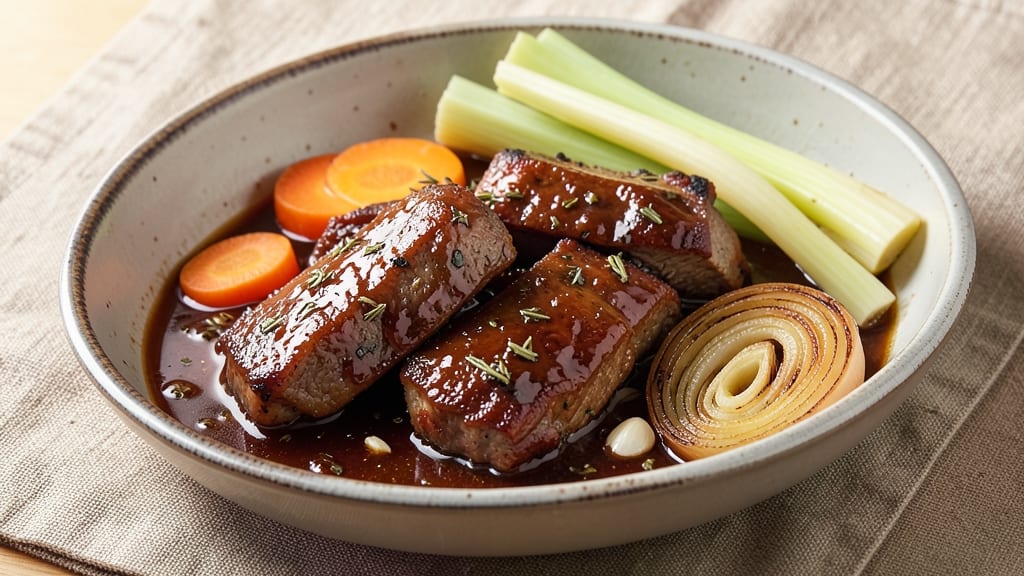
Creating a braised short ribs sauce recipe that delivers restaurant-quality depth and richness starts with a red-wine reduction packed with umami intensity. This sauce transforms ordinary braising liquid into a velvety, complex sauce that clings to every bite of tender meat.
The key lies in proper reduction techniques and layering flavors through slow cooking and careful deglazing.
What sets this sauce apart is its balance of acidity, sweetness, and umami—achieved through red wine, beef broth, and aromatic vegetables like carrots and celery. The sauce develops its signature depth during a 3-hour simmer, where flavors meld and the liquid reduces to a glossy, concentrated consistency.
This isn't just a finishing sauce; it's the backbone of your braised dish, infusing every piece of meat with its rich, caramelized essence.
The result is a sauce that's equally impressive poured over braised short ribs or served as a dipping sauce for crusty bread. Its velvety texture and complex flavor profile make it a showstopper, elevating any braised meat dish to professional-level quality.
The best part? It keeps beautifully in the refrigerator for up to 5 days, allowing you to make a big batch for multiple meals.
Whether you're preparing a weekend centerpiece or meal prepping for the week, this sauce delivers consistent, restaurant-worthy results with minimal effort. The technique is straightforward, but the flavor development requires patience—something that pays off in every rich, umami-packed spoonful. Let's create this sauce that will become your braised dish staple.
Ingredients for braised short ribs sauce
Red wine, aromatic veggies, and slow simmering create this velvety umami sauce perfect for braised short ribs.
| Ingredient | Amount | Notes |
|---|---|---|
| Dry Red Wine 🍷 | 1 cup | Bold variety like Cabernet Sauvignon |
| Beef Broth 🥫 | 2 cups | Low-sodium preferred for balance |
| Carrots 🥕 | 1 whole | Medium size, peeled and sliced |
| Celery Stalks 🧅 | 2 whole | Trimmed and cut into chunks |
| Onion 🧅 | 1 whole | Yellow or red, chopped |
| Garlic Cloves 🧄 | 4 cloves | Peeled and lightly crushed |
| Tomato Paste 🍅 | 2 tbsp | Smooth, not chunky |
| Balsamic Vinegar 🍶 | 1 tbsp | For depth and acidity |
| Unsalted Butter 🧈 | 2 tbsp | Cold, for finishing |
| Fresh Thyme 🌿 | 2 sprigs | Or 1 tsp dried thyme |
| Salt 🧂 | 1 ½ tsp | Kosher or sea salt |
| Black Peppercorns 🌶️ | ½ tsp | Freshly cracked |
The red wine is non-negotiable—Cabernet Sauvignon or Merlot work best, but any bold dry red will do. Trader Joe's has great affordable options, or hit the liquor store for a bottle you'd actually drink. The beef broth should be rich but not salty—Swanson or Pacific Foods are solid choices. For the vegetables, freshness matters: carrots and celery should be crisp, not limp. I usually grab a whole bunch of celery and use half for this recipe, saving the rest for soups. The tomato paste? Those little squeeze tubes from Trader Joe's are perfect—no waste, and they keep forever.
No red wine? Beef broth with 1 tbsp balsamic vinegar gets you close, though it'll lack that winey depth. Fresh thyme is ideal, but dried works at one-third the amount. The tomato paste can be swapped for 1/4 cup crushed tomatoes if you're in a pinch, though it'll add water. For the butter, full-fat is a must—it's what gives the sauce that silky finish. If you're making this ahead, you can freeze the sauce before adding the butter, just toss in a couple extra tablespoons at the end when reheating. The garlic? Don't skip the crushing—it releases more flavor during the simmer.
This sauce tastes even better the next day—make a double batch if you're planning to use it over multiple meals. It keeps in the fridge for 5-6 days, sealed tightly in a jar. For freezing, portion into ice cube trays, then transfer to a freezer bag—perfect for single servings. When reheating, warm gently on the stove and stir in extra butter at the end. The sauce thickens as it cools, so don't worry if it looks too thin right after making it. Trust the process—it'll come together beautifully.
Why You'll Love This Recipe
- One-Pot Magic: That’s right—just chop, sear, and simmer. No fancy gadgets, no stress. The wine and broth do all the heavy lifting while you sip your coffee and pretend you’re a French chef.
- Rich Without Effort: Honestly, the red wine and beef broth combo is chef’s kiss—deep, savory, and effortlessly luxurious. Even my picky husband doesn’t complain when the carrots and celery turn tender and sweet.
- Leftovers? More Like Goldmines: This sauce keeps beautifully for days. Toss it over mashed potatoes, noodles, or even eggs the next morning. (Yes, even on a Tuesday night.)
- Budget-Friendly Luxury: Short ribs might sound fancy, but the sauce itself is dirt cheap—wine, broth, and veggies stretch into meals for weeks. My wallet thanks me every time.
Step-by-step instructions for braised short ribs sauce
Here's how to build a rich, velvety sauce that transforms simple ingredients into something extraordinary.
Sauté the Vegetable Base Until Golden
Heat a large Dutch oven over medium heat. Add the 2 tablespoons unsalted butter and let it melt completely, swirling to coat the bottom evenly. Toss in the chopped onion, sliced carrots, and chopped celery stalks. Cook for 8-10 minutes, stirring occasionally, until the vegetables soften and begin to caramelize slightly.
This is where all the flavor starts to develop. You'll notice the onions turn translucent first, then the carrots and celery take on a beautiful golden hue. Don't rush this step—patient cooking builds depth. If the vegetables start sticking, add a splash of the dry red wine to deglaze and keep everything moving.
Build Depth with Aromatics and Tomato
Add the 4 cloves peeled and lightly crushed garlic cloves and cook for 30 seconds until fragrant. Stir in the 2 tablespoons tomato paste and cook for another 2 minutes, stirring constantly. This creates a rich, concentrated base that will form the foundation of your sauce.
Next, pour in the 1 cup dry red wine and scrape up any browned bits from the bottom of the pot. Let it simmer for 3-4 minutes until the wine reduces by about half. This step is crucial—it deepens the flavor and removes the alcohol's sharpness. You'll smell the wine transforming into something more complex and inviting.
Simmer with Broth and Seasonings
Pour in the 2 cups beef broth and bring the mixture to a gentle simmer. Add the 2 sprigs fresh thyme, 1.5 teaspoons salt, and 0.5 teaspoon freshly cracked black peppercorns. Stir in the 1 tablespoon balsamic vinegar. The sauce should bubble gently but not vigorously—this ensures even cooking and proper flavor extraction.
Reduce heat to low and let the sauce simmer uncovered for 25-30 minutes. You'll notice the liquid gradually reduce and thicken, intensifying the flavors. Stir occasionally to prevent sticking. The sauce should coat the back of a spoon by the end, with a rich, glossy appearance and deep red color.
Finish with Butter for Velvety Texture
Remove the fresh thyme sprigs and stir in the remaining 2 tablespoons cold unsalted butter, one tablespoon at a time. The butter will melt into the sauce, creating a silky, velvety texture that coats beautifully. Taste and adjust seasoning if needed—you might need a pinch more salt or pepper to balance the flavors.
This sauce is now ready to serve over braised short ribs or any other rich protein. The butter finish elevates the sauce from good to extraordinary, adding richness and rounding out the flavors. Serve immediately while warm, or store in an airtight container in the refrigerator for up to 5 days—it actually tastes better the next day as the flavors continue to meld.
Pro Tips For Making Braised Short Ribs Sauce
- Deglaze with Wine First: I learned this the hard way—adding wine later just makes your sauce taste thin and watery. Scrape up those browned bits in the pan with a wooden spoon first, then pour in the red wine right away. Let it simmer for 2-3 minutes until it reduces by half before adding broth. That deep, concentrated flavor is what turns a good sauce into something special.
- Cut Onions Thinly: I used to chop onions into big chunks for braising, thinking it’d save time. Wrong. Thinly sliced onions (about 1/8-inch) cook faster and dissolve into the sauce, giving it that rich, sweet depth without leaving tough bits. Do this prep step first—it’s tedious, but worth it.
- Don’t Rush the Broth: Low and slow is the only way here. If you crank the heat to speed things up, your beef broth will just boil off, leaving you with a cloying, one-dimensional sauce. Keep it at a gentle simmer—tiny bubbles, occasional swirls—so the flavors meld properly. Patience here makes the difference between "meh" and "wow."
- Strain the Celery: Yes, even if you’re in a hurry. After the veggies have softened, strain out the celery stalks and carrots before blending or reducing the sauce further. They add bulk and bitterness that no one notices but everyone complains about. A fine-mesh strainer takes 30 seconds—skip it, and you’ll regret it.
Troubleshooting your braised short ribs sauce
Sauce Too Thin?
If your sauce isn't thickening enough during simmering, reduce the heat to lowest setting and let it cook uncovered for an extra 15-20 minutes. The liquid should reduce naturally—if it's still too thin, remove the lid and simmer vigorously for 5 minutes to evaporate excess moisture.
For immediate thickening, mix 1 teaspoon cornstarch with 1 tablespoon cold water, stir into the sauce, and simmer for 2 minutes until glossy. 🌡️
Wine Overpowering?
The alcohol in red wine burns off during reduction, but if you detect harshness, add 1 teaspoon brown sugar or ½ teaspoon honey to balance the acidity. Simmer for 5 extra minutes to let the flavors meld.
For a deeper flavor without wine, substitute with 1 cup beef broth + 1 tablespoon balsamic vinegar—it won't be identical, but it'll still be delicious.
Sauce Too Salty?
If you over-salted, dilute the sauce with ¼ cup warm water or beef broth and simmer for 5 minutes to reduce again. Alternatively, add 1-2 slices of fresh pear or apple (peeled) and simmer for 10 minutes)—the fruit's natural sweetness counteracts saltiness beautifully. Taste frequently to avoid over-diluting.
Vegetables Too Soft?
If your carrots and celery turn mushy, you likely simmered too long. Next time, reduce the simmering time to 20-25 minutes and add the vegetables later—after the wine reduction step.
For a quicker fix, blend the softened vegetables with the sauce (strain if you prefer smooth texture) to maintain body. The key is balance: vegetables should soften but retain structure.
Butter Separating?
If the butter separates when reheating, whisk vigorously or use an immersion blender to re-emulsify. For prevention, always add cold butter at the end of cooking, not during simmering.
If the sauce is too thick after reheating, thin with 1 tablespoon warm water or broth and stir in another ½ tablespoon butter to restore richness. 🧈
Flavor Too Mild?
Boost umami by adding 1 teaspoon soy sauce or ½ teaspoon fish sauce at the end (for non-meat dishes). For depth, deglaze the pot with 2 tablespoons red wine vinegar instead of regular wine, then proceed with the recipe.
If the sauce tastes flat, simmer uncovered for 10 extra minutes to concentrate flavors—this works wonders for underdeveloped taste.
Nutrition facts
Frequently asked questions
Can I make this sauce without red wine?
Yes! Replace the 1 cup red wine with 1 cup beef broth plus 1 tablespoon balsamic vinegar for depth. The sauce will still be rich but with a slightly different profile. For extra umami, add 1 teaspoon soy sauce at the end. The wine's alcohol burns off during reduction, so don't worry about harshness.
How long can I store this sauce?
This sauce keeps beautifully in an airtight container in the fridge for 5-6 days. For longer storage, freeze it in ice cube trays (perfect for single servings) or a sealed bag for up to 3 months. Always thaw in the refrigerator before reheating. The flavors actually deepen overnight, so it tastes even better the next day!
Can I use this sauce for other dishes besides short ribs?
This versatile sauce works perfectly over braised beef, pork shoulder, or even lamb chops. It's also fantastic as a dipping sauce for crusty bread or polenta. For a lighter option, drizzle it over roasted vegetables or grilled chicken. The rich, umami-packed flavor complements hearty proteins beautifully.
Why does my sauce sometimes turn out too thin?
Sauce consistency depends on simmering time and heat level. If it's too thin, reduce heat to lowest setting and simmer uncovered for 15-20 extra minutes to evaporate excess liquid. For immediate thickening, mix 1 teaspoon cornstarch with 1 tablespoon cold water, stir into the sauce, and simmer for 2 minutes. Always taste as you go!
What's the secret to making this sauce extra flavorful?
The key is patience and proper technique. Let the vegetables caramelize fully in the butter, deglaze with wine to capture browned bits, and simmer uncovered for 25-30 minutes to concentrate flavors. For extra depth, add a bay leaf during simmering or finish with a splash of red wine vinegar to brighten the acidity. The butter finish is also crucial for that velvety texture!