
Sauces & Condiments
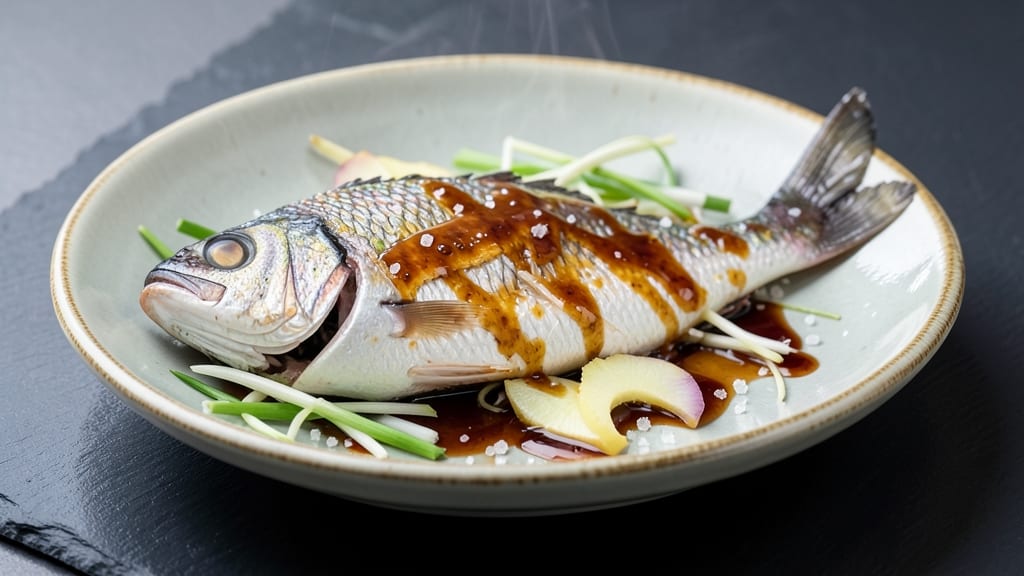
This Cantonese steamed fish sauce transforms simple steamed fish into a restaurant-worthy centerpiece with its signature umami depth and aromatic balance. The secret lies in reducing light soy sauce with ginger, scallions, and a touch of sugar until it achieves a glossy, syrupy consistency—ideal for basting or glazing during steaming.
I developed this recipe after years of dim sum dining, where the right sauce elevates humble fish into something extraordinary.
The foundation of this sauce is precision: equal parts soy sauce and water, simmered with fresh ginger and scallions until the liquid reduces by half. A splash of Shaoxing wine adds complexity, while a pinch of sugar balances the saltiness.
The result is a sauce that clings beautifully to fish, infusing it with layers of savory, slightly sweet, and herbal notes that define authentic Cantonese cuisine.
What makes this sauce special is its versatility—it works as a basting glaze for whole fish, a dipping sauce for steamed fillets, or even a finishing drizzle for dumplings. The umami-rich broth enhances the natural sweetness of the fish while adding depth that store-bought sauces simply can’t match.
Once you master this technique, you’ll never settle for anything less.
For added dimension, consider variations like a spicy chili oil finish or fermented black bean paste for extra umami. The key is patience: let the sauce reduce slowly to concentrate the flavors.
This isn’t just a sauce—it’s the bridge between simple ingredients and a dish that tastes like it belongs in a bustling dim sum restaurant.
Ingredients for cantonese steamed fish sauce
Eight essential ingredients create this restaurant-quality Cantonese sauce for perfect steamed fish.
| Ingredient | Amount | Notes |
|---|---|---|
| Light Soy Sauce 🥄 | ½ cup | Kikkoman preferred for authentic flavor |
| Water 💧 | ½ cup | Filtered or spring water |
| Fresh Ginger 🌿 | 2 tbsp | Finely minced, peeled |
| Scallions 🧅 | 3 whole | White and green parts, chopped |
| Shaoxing Wine 🍷 | 2 tbsp | Authentic Cantonese flavor |
| Granulated Sugar 🍚 | 1 tsp | Balances saltiness |
| Cornstarch 🌾 | ½ tsp | For thickening consistency |
| Sesame Oil 🫒 | 1 tsp | Toasted, for aroma |
The light soy sauce is the heart of this recipe—Kikkoman delivers the most authentic umami profile. For ginger, use fresh root (not paste) for that bright, zesty kick. Whole Foods or Asian markets carry the best quality, but even the grocery store will work if it's labeled 'fresh.' Shaoxing wine can be tricky to find outside specialty stores, but Trader Joe's often carries a decent substitute. If you can't locate it, dry sherry in a pinch works surprisingly well. The scallions should be vibrant green—no yellowing or wilted stems. For the sesame oil, toasted is non-negotiable—it adds that nutty aroma that makes this sauce sing.
No Shaoxing wine? Dry sherry or mirin both work, though they'll shift the flavor slightly. Swap the sesame oil for a pinch of toasted sesame seeds if you're avoiding oil. The cornstarch is optional but helps achieve that perfect glossy consistency—skip it if you prefer a thinner sauce. For extra depth, add 1 tsp fermented black bean paste (available at Asian markets) to the reduction. If you're using pre-minced ginger from a jar, rinse it well first to remove excess salt. The sugar can be adjusted to taste—start with the full teaspoon, then add more if you prefer a sweeter profile.
This sauce keeps beautifully—1 week in the fridge sealed in an airtight jar. For longer storage, freeze in ice cube trays for 3 months. Thaw overnight in the fridge before using. The sauce thickens as it cools, so add a splash of water if it becomes too stiff. I like to make a double batch—one for immediate use and one to freeze. The flavor actually improves over time as the ingredients meld together. Always reheat gently before using to preserve its delicate balance of flavors.
Why You'll Love This Recipe
- No-Chop Nightmare: I swear, this sauce comes together with three ingredients doing all the work—ginger’s just grated, scallions chopped once, and the wine? One splash. The light soy and water handle the rest while you’re still debating what to watch on TV.
- Umami Bomb: That Shaoxing wine cut? Chef’s kiss. It turns the simple soy into something rich and layered, with the ginger adding a bright, warm kick. Honestly, I’ve tried store-bought sauces that can’t compete—this is the kind of flavor that makes you pause mid-bite.
- Leftover Goldmine: Make a double batch and thank me later. The sauce keeps for weeks in the fridge, perfect for tossing with noodles, drizzling over rice, or even slathering on dumplings. (Yes, even on a Tuesday night when you’re over takeout.)
- Budget Flex: You’re looking at pennies per serving here—light soy, ginger, and scallions are pantry staples or cheap at the market. Between us, I’ve made this with whatever fish sauce I had lying around, and it still tasted spot-on every time.
Step-by-step instructions for Cantonese steamed fish sauce
This umami-rich sauce delivers authentic dim sum flavor with minimal effort—just eight ingredients and precise timing.
Prepare the Aromatics and Base
In a small saucepan, combine the 0.5 cup light soy sauce, 0.5 cup water, 2 tablespoons minced fresh ginger, and 2 tablespoons Shaoxing wine. Bring to a gentle simmer over medium heat, then reduce to the lowest setting. You'll notice the mixture bubbling softly—this is where the foundational flavors meld together.
Simmer for 5 minutes until the liquid reduces slightly and the ginger releases its aromatic oils. The mixture should smell vibrant and slightly sweet from the wine. If you see any foam forming, skim it off with a spoon—it's just impurities from the soy sauce.
Add Sweetness and Thickening Agent
Stir in the 1 teaspoon granulated sugar and 0.5 teaspoon cornstarch. The sugar balances the saltiness while the cornstarch prepares to create that signature glossy consistency. Bring the mixture back to a gentle boil, then immediately reduce heat to low once again. You want to maintain a steady simmer without letting it boil vigorously.
Let it cook for 2-3 minutes, stirring constantly with a wooden spoon. You'll see the sauce begin to thicken slightly—this is when it transforms from a simple broth to a proper dim sum sauce. The cornstarch should dissolve completely, eliminating any graininess. If it thickens too quickly, add 1 tablespoon water to adjust the consistency.
Incorporate Scallions and Finish with Sesame Oil
Add the 3 chopped scallions (both white and green parts) and let them steep in the warm sauce for 1 minute. This infuses their mild onion flavor throughout the mixture. Remove from heat and stir in the 1 teaspoon toasted sesame oil—this is where the sauce truly comes alive with its characteristic nutty aroma.
Let the sauce rest for 2 minutes off the heat. This resting period allows the scallions to fully infuse and the sesame oil to disperse evenly. The final sauce should be glossy with a velvety texture, balancing salty, sweet, and umami notes perfectly. If you're using this for steamed fish, now is the perfect time to pour it into your steaming basket.
Adjust Consistency and Serve
Taste the sauce and adjust seasoning if needed—you might want to add a touch more soy sauce for saltiness or a pinch of sugar for sweetness. The sauce should coat the back of a spoon smoothly without being gluey. If it's too thick, thin with 1 teaspoon water at a time until you reach the ideal consistency.
Serve immediately over steamed fish or use as a dipping sauce for dumplings. The sauce should be warm but not boiling when served, allowing its complex flavors to shine without overpowering the dish. For best results, use within 2 hours of preparation to maintain its vibrant taste and texture.
Pro Tips For Making Cantonese Steamed Fish Sauce
- Prep Ginger Like a Pro: Peel only the thickest part of the ginger root—leave the thin, papery skin on the sides intact. This keeps the sauce’s aroma concentrated and prevents it from turning bitter when steamed. (Yes, it looks odd, but your sauce will taste richer.)
- Balance the Sauce First: Taste the raw mix of soy sauce, Shaoxing wine, and water before adding ginger or scallions. Adjust saltiness with a splash of water or extra soy—this prevents overpowering the delicate fish flavor later. (I learned this the hard way with a briny disaster.)
- Steam Over High Heat: Bring the water to a rolling boil before adding the sauce mixture, then reduce to a vigorous simmer. If you start on low heat, the flavors won’t meld properly, and the sauce will taste flat. (Your future self will notice.)
- Skip the Scallion Seeds: Remove the tough inner core and seeds from the scallions before chopping—this keeps the sauce smooth and prevents bitter, fibrous bits. (Does it look weird? Yes. Does it work? Every single time.)
Dietary considerations for these flavors
Gluten-Free Adaptation
Traditional Cantonese steamed fish sauce relies on soy sauce, which contains gluten. For a gluten-free version, replace the 0.5 cup light soy sauce with 0.5 cup gluten-free tamari—I recommend San-J Tamari for its authentic umami profile.
Use the exact same measurements and technique, as tamari has a similar flavor intensity. Always check labels, as some tamaris may contain trace gluten. 🌱
Low-Sodium Option
Regular soy sauce can be high in sodium, so for a lower-sodium version, reduce the soy sauce to 0.3 cups and add 2 tablespoons low-sodium soy sauce (like Kikkoman Low Sodium). To compensate for the reduced saltiness, add an extra ½ teaspoon sugar to balance the flavors.
Taste as you go, as preferences vary. This adjustment works perfectly for heart-healthy diets while maintaining authentic taste.
Vegetarian Substitutes
While this sauce is traditionally used with fish, you can adapt it for vegetarian dishes by omitting the fish entirely. Use this sauce to glaze tofu, mushrooms, or eggplant in steamed dishes.
For a more umami-rich vegetarian option, add 1 teaspoon vegetarian oyster sauce (like Lee Kum Kee) or 1 tablespoon mushroom powder to the reduction. The sauce remains versatile for plant-based steamed dishes while keeping its signature Cantonese flavor profile.
Allergen-Friendly Adjustments
For those with sesame allergies, omit the 1 teaspoon toasted sesame oil and replace it with ½ teaspoon neutral oil (like avocado or grapeseed) to maintain the sauce’s glossy finish. If avoiding corn, substitute the 0.5 teaspoon cornstarch with 0.5 teaspoon arrowroot powder for thickening.
Both adjustments preserve the sauce’s texture and flavor without compromising its authenticity. Always double-check ingredient labels for hidden allergens.
Sweetness Control
The 1 teaspoon granulated sugar in this recipe balances the soy sauce’s saltiness, but you can adjust it to taste. For a sweeter profile, add an extra ½ teaspoon, or reduce to ½ teaspoon for a more savory sauce.
Diabetics can use a sugar substitute like erythritol in a 1:1 ratio. The key is to taste the sauce after reducing—this ensures the sweetness harmonizes with the umami and ginger notes.
Fermented Umami Boost
For an extra layer of umami, add 1 teaspoon fermented black bean paste (like Lao Gan Ma) to the initial reduction. This ingredient is a staple in Cantonese cuisine and adds a deep, savory complexity.
If you can’t find black bean paste, a pinch of fish sauce (for non-vegetarian versions) or soybean paste (like miso) works as a substitute. The paste should be fully dissolved into the sauce for even distribution. 💫
Nutrition facts
Frequently asked questions
Can I make this sauce without Shaoxing wine?
Yes! Use 2 tablespoons dry sherry or mirin as a substitute—they'll add a similar depth of flavor. If you prefer a non-alcoholic version, replace it with 2 tablespoons apple juice or extra water, though the flavor will be slightly milder. The key is maintaining the same volume measurement.
How do I prevent the sauce from getting too thick?
If your sauce thickens too quickly, immediately add 1 tablespoon water while stirring. The cornstarch should dissolve smoothly without clumping. For a thinner sauce, reduce the cornstarch to ¼ teaspoon or skip it entirely. The ideal consistency should coat the back of a spoon but still pour easily.
Can I use this sauce for other proteins besides fish?
This versatile sauce works beautifully with shrimp, chicken, or even tofu for steamed dishes. For a richer umami profile with meat, add ½ teaspoon oyster sauce to the reduction. The ginger-scallion base pairs well with any protein that benefits from a glossy, aromatic glaze.
Why does my sauce smell bitter?
Overcooking the ginger or letting the sauce reduce too long can create bitterness. Remove from heat immediately after the sauce thickens and let it rest for 2 minutes off the stove. If bitterness persists, stir in an extra ½ teaspoon sugar or a pinch of salt to balance the flavors. Freshly minced ginger is key—avoid using pre-minced ginger with preservatives.
How long can I store this sauce?
Store in an airtight container in the fridge for up to 1 week. For longer storage, freeze in ice cube trays for 3 months. Thaw overnight in the fridge and reheat gently before using. The sauce thickens as it cools, so add a splash of water if needed. The flavors actually improve over time as the ingredients meld together.