
Sauces & Condiments
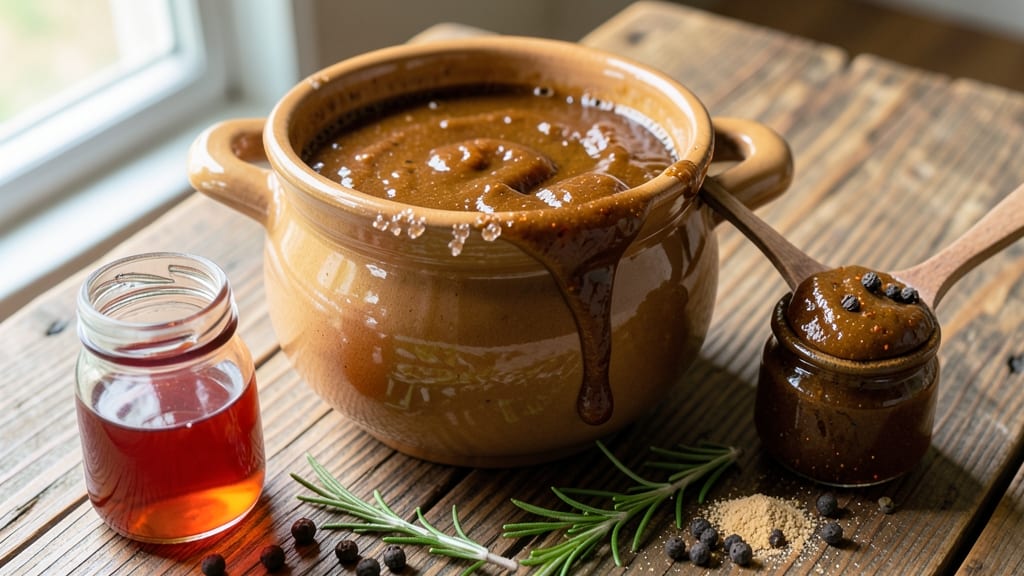
This Carolina BBQ sauce recipe delivers that signature tangy-sweet balance with a smoky vinegar base that transforms pulled pork into something unforgettable. 🔥 After years of perfecting the art of Carolina BBQ—where vinegar takes center stage instead of tomato—I’ve developed a method that captures both traditional roots and modern convenience.
The key lies in simmering apple cider vinegar with spices until it develops deep, complex flavors, then balancing that sharp acidity with just enough sweetness to create the perfect glaze.
The beauty of this sauce is its versatility—it works equally well on ribs, pulled pork, or even as a marinade for grilled chicken. What sets it apart is the careful reduction process, which concentrates the flavors into a thick, glossy sauce that clings to meat without overwhelming it.
Unlike many commercial versions, this recipe avoids artificial ingredients while delivering that signature Carolina tang that’s both bold and balanced.
What you’ll end up with is a sauce that’s rich in smoky depth from black pepper and cayenne, brightened by vinegar, and sweetened just enough to create that addictive sweet-spicy contrast.
The texture is perfect for glazing or basting, with a consistency that’s neither too thin nor too thick—ideal for drizzling over your favorite BBQ dishes.
This is the kind of sauce that makes every bite of pulled pork or smoked meat taste like it came straight from a North Carolina pitmaster’s kitchen.
Whether you’re hosting a backyard cookout or meal prepping for the week, this sauce keeps beautifully in the fridge for up to two weeks. The best part? It’s easier to make than you think—just a few simple ingredients and an hour of simmering time.
Let’s get started on creating a sauce that’ll elevate your BBQ game to the next level.
Ingredients for carolina bbq sauce
Nine simple ingredients transform into Carolina BBQ magic—smoky, tangy, and perfectly balanced.
| Ingredient | Amount | Notes |
|---|---|---|
| Apple Cider Vinegar 🍎 | 1 cup | Raw, unfiltered preferred |
| Brown Sugar 🍚 | ¾ cup | Light or dark works |
| Black Peppercorns 🌶️ | 1 tbsp | Freshly cracked for depth |
| Cayenne Pepper 🔥 | 1 tsp | Adjust for heat preference |
| Ground Black Pepper 🌶️ | 1 tsp | Freshly ground preferred |
| Garlic Powder 🧄 | 1 tsp | Not garlic salt |
| Onion Powder 🧅 | 1 tsp | Freshly ground preferred |
| Smoked Paprika 🌶️ | 1 tbsp | For authentic smoky flavor |
| Salt 🧂 | 1 tsp | Kosher or sea salt |
| Water 💧 | ½ cup | For thinning consistency |
The apple cider vinegar is non-negotiable—Bragg or Texas Pete are my go-tos, but any raw, unfiltered kind works. Look for smoky depth in the vinegar, not just sharpness. The brown sugar can be light or dark, but muscovado adds molasses notes that take it to the next level. For the black peppercorns, crack them fresh in a mortar or with a rolling pin—pre-ground loses its punch fast. If you're near a Latin market, grab smoked paprika from Penzeys—it's worth the splurge for that authentic Carolina vibe.
No cayenne? Red pepper flakes at half the amount works in a pinch, but you'll lose some of that signature Carolina kick. Short on vinegar? White vinegar plus 1 tbsp apple juice mimics the tang. The garlic and onion powders are just flavor boosters—skip them if you're using fresh in your BBQ rub. For the water, filtered is best—tap water can add off-flavors. Pro tip: If your sauce turns out too thick, a splash of apple juice (not water) keeps it balanced. Too thin? Simmer uncovered until it reduces to your desired consistency.
This sauce keeps for up to 2 weeks in the fridge, but the flavor actually improves over time—the acidity mellows and the smokiness deepens. For longer storage, freeze in ice cube trays—perfect for single-use portions. When reheating, do it low and slow to avoid burning the sugar. Leftovers? Use them on pulled pork, ribs, or even as a marinade—just don't boil it, or you'll lose that glossy finish. Trust me, the first batch won't last long.
Why You'll Love This Recipe
- Five-Ingredient Magic: I swear by this recipe—just vinegar, sugar, and peppers. No fancy prep, no waiting for hours. Simmer it down, and you’ve got a sauce that’s actually worth the effort.
- Sweet Heat Balance: That cayenne brings the fire, but the brown sugar keeps it smooth and approachable. Honestly, it’s the kind of heat you’ll crave without burning your mouth out.
- Weeknight BBQ Hero: Slather it on pulled pork for a Tuesday dinner or drizzle it over baked beans for a quick side. It’s my go-to when I need flavor fast—no excuses.
- Pantry Staple Power: You’re already using what’s in your cupboard. No last-minute grocery runs, no wasted ingredients. This sauce turns scraps into something special.
Step-by-step instructions for Carolina BBQ sauce
Here's how to craft that signature tangy-sweet Carolina BBQ sauce with perfect heat balance.
🍳 Step 1: Toast the Spices for Maximum Flavor
Heat a dry skillet over medium heat and add the 1 tbsp black peppercorns. Toast them for 2-3 minutes until they begin to pop and release their aroma—this is where the magic happens. You'll smell the peppercorns darkening slightly and releasing their essential oils. Immediately transfer them to a spice grinder or mortar and pestle.
While still warm, grind the toasted peppercorns into a fine powder. This step concentrates their flavor and removes any bitterness. Keep this freshly ground pepper nearby—we'll use it in the next step. Don't skip this toasting; it makes all the difference in the depth of your sauce's heat profile.
🍳 Step 2: Bloom the Spices in the Vinegar
In a medium saucepan, combine the 1 cup apple cider vinegar with the 1 tbsp smoked paprika, 1 tsp garlic powder, 1 tsp onion powder, 1 tsp cayenne pepper, 1 tsp ground black pepper, 1 tsp salt, and the freshly ground peppercorns. Bring this mixture to a gentle simmer over medium heat, stirring occasionally to prevent sticking.
Let it simmer for 5 minutes—this blooms all the spices and lets their flavors meld with the vinegar. You'll notice the mixture darkening slightly and developing a rich, aromatic smell. This is the foundation of your sauce's complex flavor profile. Keep the heat at a steady simmer; you don't want it to boil vigorously yet.
🥘 Step 3: Sweeten and Thicken the Sauce
Reduce the heat to low and gradually whisk in the 0.75 cup brown sugar until completely dissolved. The sauce will begin to thicken immediately as the sugar caramelizes. Here's the thing—add the sugar slowly to prevent clumping. Stir continuously for 3-4 minutes until the mixture becomes syrupy and coats the back of a spoon.
Next, add the 0.5 cup water all at once. This thins the sauce slightly and helps balance the sweetness with acidity. Let it simmer uncovered for another 5-7 minutes, stirring occasionally. You're looking for a sauce that's thick enough to coat the back of a spoon but still pours smoothly—this is the perfect consistency for Carolina BBQ sauce.
⏰ Step 4: Simmer to Perfection
Continue simmering the sauce for 15-20 minutes total (including previous cooking time) until it reduces by about one-third. This concentration deepens the flavors and creates that signature glossy finish. You'll know it's ready when it reaches a thick, syrupy consistency that clings to ribs or pulled pork beautifully.
Taste and adjust seasoning if needed—add a pinch more salt if it's too tangy, or a touch more cayenne for extra heat. The sauce should balance sweet, tangy, smoky, and spicy flavors perfectly. Let it cool slightly before using, as it will thicken more as it cools. This sauce keeps well in the refrigerator for up to 2 weeks, so make extra for future BBQ sessions!
Pro Tips For Making Carolina Bbq Sauce
- Simmer Slow and Steady: Carolina BBQ sauce needs time to marry its flavors—don’t rush it. After combining vinegar, sugar, and spices, bring it to a gentle boil, then reduce to a low simmer for at least 20 minutes. I used to crank the heat, thinking it’d speed things up, but that just burns the sugar and makes the sauce bitter. Let it bubble quietly until it thickens enough to coat the back of a spoon.
- Toast the Peppercorns First: Skip the pre-ground black pepper—whole peppercorns make a real difference. Lightly toast them in a dry pan for 30 seconds until fragrant, then grind them fresh. This step deepens the pepper’s aroma and cuts through the sweetness better than store-bought powder. (Yes, even if you’re impatient like me.)
- Strain Out the Burned Sugar: Brown sugar can scorch before the sauce thickens. If you see dark, bitter bits clinging to the bottom, immediately remove the pot from heat and strain the sauce through a fine-mesh sieve. I learned this the hard way—once, I let a batch turn almost black, and no amount of vinegar could save it.
- Balance Heat with a Pinch of Salt: Cayenne can overpower before you realize it. After adding the pepper, taste and adjust with a tiny pinch of salt—this mutes the sharpness without muting the flavor. I was skeptical until I tried it; now I add it even if the recipe doesn’t mention it. (Your future self will notice.)
Pro cooking tips for this recipe
Toast Spices Properly
That first step of toasting the black peppercorns might seem small, but it’s what transforms good sauce into great sauce. I’ve learned this the hard way—skipping the toasting means missing out on the deep, aromatic complexity that comes from releasing those essential oils.
Use a dry skillet over medium heat and toast just until they pop—about 2-3 minutes. The moment they darken slightly and you smell that rich, peppery aroma, they’re ready. Immediately grind them while still warm to preserve that freshness. 🌶️
Bloom Spices Correctly
When you simmer the spices with the apple cider vinegar, you’re not just heating them—you’re blooming them. This means the spices release their full flavor potential into the liquid. I always simmer for exactly 5 minutes over medium heat to avoid burning.
Stir occasionally to prevent sticking, and you’ll notice the mixture darkening slightly and developing that unmistakable Carolina BBQ aroma. This step is where the foundation of your sauce’s flavor profile gets built.
Control Sugar Caramelization
The sugar is what gives Carolina BBQ sauce its signature sweetness, but it’s easy to burn if you’re not careful. Add the brown sugar gradually while stirring continuously over low heat—this prevents clumping and ensures even caramelization.
I like to let it simmer for 3-4 minutes until it becomes syrupy. If you rush this step, you’ll end up with a bitter, burnt flavor instead of that rich, glossy sweetness we all love. Patience here is key.
Balance Sweet and Tang
This is where many home cooks go wrong—they either make the sauce too sweet or too tangy. The trick is adding water after the sugar has dissolved to thin the sauce just enough to balance those flavors. Let it simmer uncovered for 5-7 minutes more, and taste frequently.
If it’s too tangy, add a pinch of sugar. If it’s too sweet, a splash of vinegar or a pinch of cayenne will bring it back into balance. The goal is that perfect harmony of sweet, tangy, and spicy.
Simmer to Perfect Consistency
Don’t rush the final simmering step—this is where the sauce develops its signature glossy finish. Simmer for 15-20 minutes total, stirring occasionally, until it reduces by about one-third. You’re looking for a sauce that’s thick enough to coat the back of a spoon but still pours smoothly.
I always let it cool slightly before using because it will thicken more as it sits. This is the moment where all those flavors come together into something truly special.
Adjust for Your Heat Level
If you’re sensitive to heat, reduce the cayenne pepper to ½ tsp or even ¼ tsp. For those who love a kick, add an extra ¼ tsp or even a pinch of crushed red pepper flakes.
Remember, you can always add more heat later, but you can’t take it out. I like to keep a small jar of extra cayenne on hand just in case—you never know when you’ll want to dial up the heat a little more. 🔥
Nutrition facts
Frequently asked questions
Why does this recipe use vinegar instead of tomato?
Traditional Carolina BBQ sauce relies on vinegar for that signature tangy sharpness that sets it apart from other styles. The acidity cuts through the richness of smoked meats, creating that perfect balance. While tomato-based sauces are common in other BBQ regions, vinegar-based versions like this one deliver that authentic North Carolina flavor profile with a bold, bright kick.
Can I make this sauce without cayenne pepper?
If you prefer less heat, simply reduce the cayenne to ½ tsp or omit it entirely. For a milder version, you could also substitute with ¼ tsp smoked paprika instead. The sauce will still have depth from the black pepper and vinegar—just without the spicy kick.
How do I know when the sauce is done?
The sauce is ready when it reduces by about one-third and coats the back of a spoon smoothly. You'll notice a glossy sheen and rich aroma. Taste it at the end—it should balance sweet, tangy, and smoky flavors. If it's too thin, simmer uncovered a few more minutes. If too thick, thin with a splash of water or apple juice.
Can I use this sauce on chicken or vegetables?
While this sauce excels on pork and ribs, it works beautifully on grilled chicken too! For vegetables, use it as a marinade or glaze for roasted corn, Brussels sprouts, or even as a dipping sauce. Just remember that the acidity may tenderize delicate vegetables more quickly, so use it as a finishing touch rather than a long marinade.
What if my sauce gets too thick or too thin?
For a thicker sauce, simmer uncovered until it reduces further. If too thin, add 1 tbsp at a time of brown sugar and simmer until dissolved. For thinning, use water or apple juice—never water alone, as it can dilute the flavor. The goal is a consistency that clings to meat without being cloying.