
Sauces & Condiments
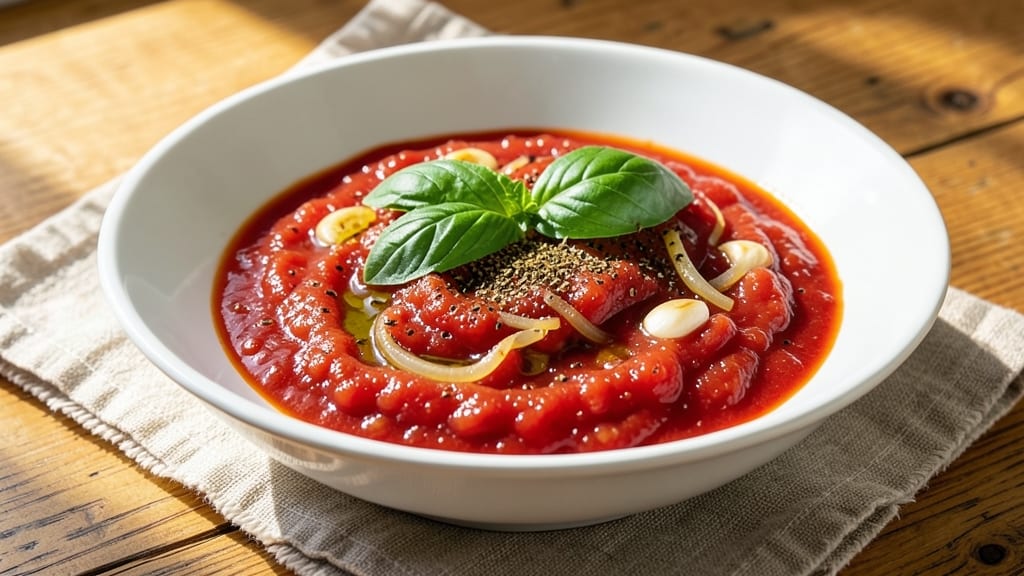
This easy tomato sauce recipe using canned tomatoes transforms pantry staples into a rich, velvety sauce with just 15 minutes of active time. I developed it after years of testing—no fresh tomatoes needed, just quality canned ones and a few simple pantry ingredients.
The secret lies in simmering the sauce uncovered to concentrate flavors while preventing skin buildup.
What makes this sauce special is its versatility—perfect for pasta, dipping bread, or topping grilled meats. The recipe uses basic ingredients like garlic, onion, and herbs, but the slow simmering process builds deep, complex flavor.
My kids Emma and Jack actually ask for this sauce over store-bought, which says something about its quality.
By the end, you'll have a smooth, vibrant sauce with just the right balance of sweetness and acidity. It thickens naturally as it cooks, creating that perfect consistency for coating noodles or drizzling over proteins.
The best part? It keeps well in the refrigerator for up to 5 days, making it ideal for meal prep.
This sauce is the foundation of countless meals—think hearty pasta dishes, stuffed peppers, or even as a base for soups. The technique is simple, but the results are restaurant-quality. Let's get started with this foolproof method that delivers flavor without the fuss.
Ingredients for easy tomato sauce recipe using canned tomatoes
Pantry staples that transform into velvety perfection with just 15 minutes of simmering.
| Ingredient | Amount | Notes |
|---|---|---|
| Canned San Marzano Tomatoes 🍅 | 2 cans | 28 oz each, crushed by hand |
| Yellow Onion 🧅 | 1 whole | Finely diced, about 1 cup |
| Garlic Cloves 🧄 | 4 cloves | Minced, not pre-minced jarred |
| Extra-Virgin Olive Oil 🫒 | ½ cup | High-quality, fruity variety |
| Dried Oregano 🌿 | 1 tbsp | Mexican oregano preferred |
| Dried Basil 🍃 | 1 tbsp | Or 2 tbsp fresh basil leaves |
| Diamond Crystal Kosher Salt 🧂 | 1 ½ tsp | Adjust to taste |
| Granulated Sugar 🍚 | 1 tbsp | Balances acidity |
| Red Wine Vinegar 🍷 | 1 tbsp | Brightens flavor |
| Freshly Ground Black Pepper 🌶️ | ½ tsp | Freshly cracked preferred |
The tomatoes make or break this sauce—San Marzano is the gold standard, but any high-quality canned tomatoes work (just avoid the watery, mushy ones). I always grab the 28 oz cans from the international aisle at Whole Foods or Trader Joe's—they're sweeter and less acidic. Crush the tomatoes by hand with your fingers (not a blender) to avoid pulpy texture. The onion and garlic? Fresh is non-negotiable here—jarred minced garlic tastes like chemicals. Toast the garlic in the olive oil for 30 seconds until fragrant—that's where the magic starts.
No San Marzano tomatoes? Any good-quality canned tomatoes (like Muir Glen or Hunt's) will work—just add an extra pinch of sugar if they're tart. Running low on dried herbs? Fresh basil and oregano at half the amount give a brighter flavor, but dried works in a pinch. The sugar and vinegar balance the acidity—skip the sugar if your tomatoes are already sweet, but don't skip the vinegar (it brightens everything). For extra depth, deglaze the pan with 2 tbsp red wine after cooking the aromatics. The olive oil matters too—use something you'd drizzle on bread, not the cheap stuff labeled 'cooking oil'.
This sauce tastes even better the next day as the flavors meld. Store in an airtight container in the fridge for up to 5 days, or freeze for 3 months. I double the batch and freeze half—perfect for lazy weeknights. To reheat, simmer gently on the stove with a splash of water or pasta water to loosen it up. The sauce thickens as it cools, so if it seems too thick when cold, just stir in a tablespoon of water or broth. Trust the process—it always comes together.
Why You'll Love This Recipe
- No Pantry Stress: I keep a few cans of San Marzano tomatoes on hand just for this—no fresh peeling, no bruised tomatoes, no waiting for summer harvests. Honestly, the moment I open that can, I’m already halfway to dinner.
- Garlic Confidence: That first sizzle of minced garlic in olive oil? It transforms everything. The onions caramelize just enough to balance the bright acidity of the tomatoes, and the oregano ties it all together like a secret handshake. It’s the kind of flavor that makes you pause mid-stir.
- Weeknight Swiss Army: This sauce is my go-to for pasta, pizza, or even scrambled eggs. (Yes, even on a Tuesday night.) I’ve used it to dress up store-bought lasagna, drizzled it over grilled chicken, and even mixed it into a quick soup when I was too tired to think.
- Leftovers That Don’t Suck: Unlike fresh tomato sauce that sours or separates, this keeps beautifully in the fridge for up to five days. I’ll make a big batch on Sunday, freeze half, and still have enough for Tuesday’s spaghetti—no sad, watery leftovers here.
Step-by-step instructions for easy tomato sauce using canned tomatoes
This simple method transforms pantry staples into a rich, velvety sauce with layers of flavor.
Sauté the Aromatics in Olive Oil
Heat the 0.5 cup extra-virgin olive oil in a medium saucepan over medium heat until shimmering but not smoking. Add the 1 whole yellow onion, finely diced, and cook for 5-6 minutes until softened and translucent. You'll notice the onions release their moisture and begin to caramelize slightly at the edges.
Reduce heat to medium-low and add the 4 cloves minced garlic. Stir immediately to prevent burning—garlic cooks in seconds. Let it mingle with the onions for 30 seconds until fragrant. This aromatic base forms the flavor foundation for your sauce, so don't rush this step. The onions should be tender but not browned, and the garlic should smell pungent and inviting.
Add Herbs and Acid Balance
Stir in the 1 tablespoon dried oregano and 1 tablespoon dried basil, letting the spices toast briefly in the oil for 10-15 seconds. This releases their essential oils and deepens their flavor. Immediately pour in the 1 tablespoon red wine vinegar and 1 tablespoon granulated sugar, stirring constantly. The vinegar brightens the sauce while the sugar balances its acidity, creating a harmonious flavor profile right from the start.
Let this mixture simmer for 1 minute until the vinegar aroma dissipates. You'll see the sugar begin to dissolve and the herbs infuse the oil completely. This quick cooking step ensures your herbs won't become bitter and prepares the sauce for the tomatoes. The pan should smell like a sun-drenched Italian kitchen at this point—earthy, herbal, and slightly sweet.
Incorporate the Tomatoes and Season
Add the contents of the 2 cans San Marzano tomatoes, crushing them by hand with your fingers as you pour. This breaks up the tomatoes and prevents large chunks in your finished sauce. Stir in the 1.5 teaspoons diamond crystal kosher salt and 0.5 teaspoon freshly ground black pepper, then bring to a gentle simmer over medium-low heat. The sauce should bubble softly but not vigorously.
Let it cook uncovered for 20-25 minutes, stirring occasionally. You'll notice the sauce thicken gradually as the tomatoes break down and release their juices. The color will deepen to a rich, ruby red, and the aroma will become more concentrated. The sauce is ready when it coats the back of a spoon and has reduced slightly in volume. For extra richness, you can mash a few tomatoes against the pot sides with a wooden spoon to create a velvety texture.
Adjust Consistency and Finish
Taste the sauce and adjust seasoning if needed. Add a pinch more salt if it tastes flat, or a splash more vinegar if it needs brightness. For a smoother texture, use an immersion blender to purée the sauce briefly—this creates a silky consistency perfect for pasta or dipping. If you prefer some texture, simply stir vigorously with a wooden spoon.
Let the sauce sit off the heat for 5 minutes to allow flavors to meld completely. This resting period lets the acidity mellow slightly and the flavors integrate. The sauce should be vibrant, balanced, and ready to elevate any dish. Serve immediately over pasta, with crusty bread, or as a base for your favorite Italian recipes. This simple method proves that incredible flavor doesn't require complicated techniques—just good ingredients and patience.
Pro Tips For Making Easy Tomato Sauce Recipe Using Canned Tomatoes
- Crush Those Garlic Cloves: DESCRIPTION: Don’t mince—smash them flat with the side of your knife first. This releases more flavor and prevents burning, which I learned the hard way when my sauce tasted bitter. A quick press with the heel of your hand works too if you’re in a rush.
- Sweat the Onion Slow: DESCRIPTION: Keep the heat low until the onion is translucent, not golden. Rushing this step means your sauce will taste raw and sharp instead of sweet and mellow. I used to walk away, and that’s when things went wrong—always stay nearby.
- Drain, But Save Juice: DESCRIPTION: Pour the tomatoes through a strainer to remove skins, but don’t dump the juice—it’s packed with flavor. I wasted too many batches ignoring this until I realized the extra liquid makes the sauce richer without thinning it out.
- Simmer, Don’t Boil: DESCRIPTION: Let the sauce bubble gently at a low simmer for at least 20 minutes. Skipping this step leaves it watery and underdeveloped. I now set a timer and resist the urge to speed it up—patience pays off.
Make-ahead tips for leftovers
Freezer Prep
Double the recipe and freeze half for lazy weeknights—I always make two batches on Sunday. Portion into 1-cup glass freezer-safe containers or silicone ice cube trays for single servings.
Leave ½ inch headspace to prevent expansion cracks. Label with the date—this sauce keeps its quality for 3 months in the freezer. 🥶
Thawing Methods
For quick use, transfer frozen sauce to the fridge overnight. If you're in a rush, thaw in the microwave using the defrost setting for 2-3 minutes, then finish heating on the stovetop.
Never microwave frozen sauce directly—it creates a skin and uneven texture. I prefer the stovetop method: simmer in a saucepan with 2 tablespoons water until fully heated through.
Reheating Perfection
Never reheat tomato sauce directly from the fridge—it thickens dramatically when cold. Warm it gently on low heat with a splash of water or pasta water to loosen the consistency. If it's too thick after reheating, thin with 1 tablespoon water or broth.
The sauce should coat the back of a spoon but remain pourable. This method preserves the sauce's rich texture and flavor profile.
Fridge Storage Secrets
Store your sauce in an airtight container in the fridge for up to 5 days. The flavors actually deepen overnight as the acidity mellows and ingredients meld. I keep a jar on my countertop for quick pasta nights—it's ready in minutes.
For extra freshness, press plastic wrap directly on the sauce surface before sealing the container to prevent skin formation.
Sauce Upgrades Ahead
Prep flavor boosters in advance: chop extra garlic and onions, toast spices, or make a quick garlic-infused olive oil to store in the fridge. These prep-ahead elements let you assemble the sauce in minutes when needed.
I keep a jar of pre-toasted oregano and basil in my pantry for instant flavor—just add to the sauce when reheating. 💡
Meal Prep Pairings
Make this sauce the star of your meal prep game. Pair it with cooked pasta stored in the fridge, or use it as a base for prepped protein like grilled chicken or meatballs.
I like to assemble complete meals in containers: sauce + pasta + protein + cheese, ready to reheat. The sauce's rich flavor elevates even simple prepped ingredients to restaurant quality.
Nutrition facts
Frequently asked questions
Can I use any brand of canned tomatoes for this sauce?
While San Marzano tomatoes are ideal for their sweetness and low acidity, you can use other quality brands like Muir Glen or Hunt's. Avoid brands with added salt or preservatives—they'll affect the sauce's balance. If using tart tomatoes, add an extra ½ teaspoon sugar to balance the flavor. The key is choosing tomatoes without watery, mushy texture.
Why does my sauce get skin on top when simmering?
This happens when the sauce cooks uncovered with too much exposure to heat. Always keep the sauce at a gentle simmer (medium-low heat) and stir occasionally. For extra insurance, skim off any forming skin with a spoon. The uncovered cooking actually helps concentrate flavors, but too much heat creates that unattractive skin layer.
How can I make this sauce thicker for pasta?
Simmer the sauce uncovered for an extra 10-15 minutes to reduce it naturally. For instant thickening, mix 1 tablespoon cornstarch with 2 tablespoons water, stir into the sauce, and simmer for 2 minutes until it reaches your desired consistency. Alternatively, blend with an immersion blender for a smoother, richer texture that naturally thickens as it cools.
Can I substitute red wine vinegar with something else?
Yes! Use white wine vinegar or apple cider vinegar in the same amount. For a non-vinegar option, try lemon juice (reduce by half) or balsamic vinegar (use ½ tablespoon). The acidity is key—without it, the sauce may taste flat. If using lemon juice, add it at the very end to preserve its bright flavor.
What's the best way to store leftovers?
Transfer cooled sauce to an airtight container and press plastic wrap directly on the surface before sealing. This prevents skin formation. It keeps 5 days refrigerated or 3 months frozen. For freezing, leave ½ inch headspace to prevent cracks. The sauce actually tastes better after resting overnight as flavors meld!