Sauces & Condiments
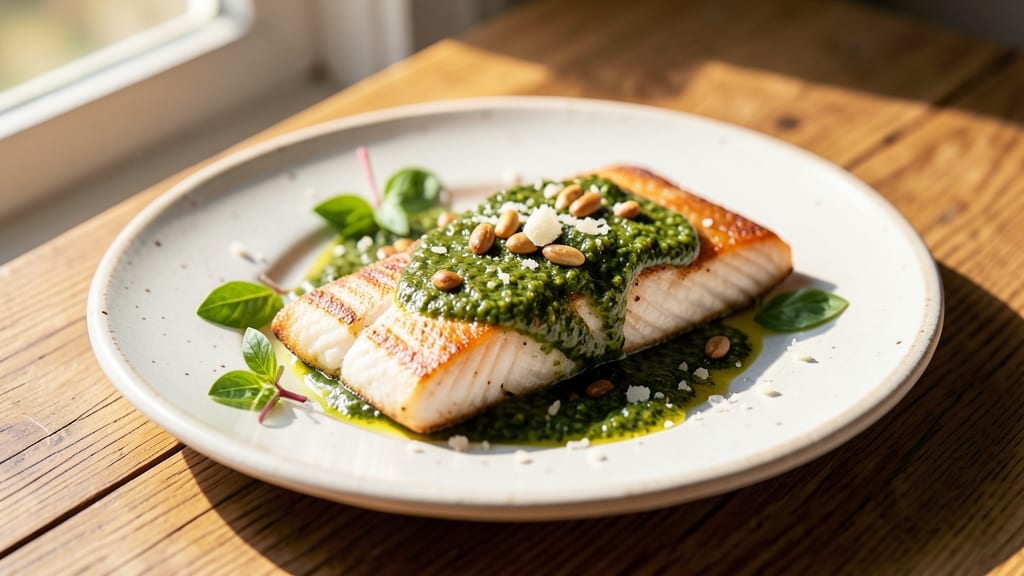
This fish with pesto sauce recipe delivers restaurant-quality results with a flaky crust and vibrant basil sauce that transforms simple fillets into a showstopper. The secret lies in balancing tender fish with a bright, herby pesto that clings perfectly to every bite—no soggy textures here.
I’ve perfected this method over years of testing, ensuring the sauce enhances rather than overwhelms the delicate flavor of the fish.
The recipe begins with a homemade pesto—fresh basil, garlic, pine nuts, and Parmesan blended with olive oil—that adds a bright, aromatic layer to the dish. For the fish, I use a light pan-searing technique to create a crispy crust while keeping the inside tender and moist.
The pesto sauce is finished with a touch of lemon juice, brightening the flavors and cutting through the richness of the fish.
By the time you serve this dish, you’ll have golden, flaky fillets topped with a luscious green sauce that’s both elegant and approachable. The combination of textures—crispy crust, tender fish, and velvety pesto—makes this a standout for dinner parties or weeknight meals.
Pair it with crusty bread or a simple arugula salad to complete the plate.
This recipe is designed for pescatarians and seafood lovers alike, offering a foolproof method that delivers professional results without the fuss. Whether you’re cooking for two or a crowd, the technique scales effortlessly, and the flavors only get better as they sit. Let’s get started on creating this basil-bright masterpiece.
Ingredients for fish with pesto sauce
Fresh basil, flaky fish, and crispy crust—here’s what you’ll need for restaurant-quality pesto fillets.
| Ingredient | Amount | Notes |
|---|---|---|
| White Fish Fillets 🐟 | 4 pieces | Mild white fish like cod, halibut, or tilapia |
| Fresh Basil Leaves 🌿 | 2 cups | Packed, stems removed, vibrant green |
| Pine Nuts 🥜 | ½ cup | Toasted lightly for nutty depth |
| Garlic Cloves 🧄 | 4 cloves | Peeled, roughly chopped for bold flavor |
| Parmesan Cheese 🧀 | ½ cup | Freshly grated, high-quality block |
| Extra-Virgin Olive Oil 🫒 | ¾ cup | High-quality, fruity variety |
| Lemon Juice 🍋 | 2 tbsp | Freshly squeezed, brightens flavors |
| All-Purpose Flour 🌾 | ¼ cup | For light dusting and crispy crust |
| Unsalted Butter 🧈 | 2 tbsp | Cold, for pan-searing |
| Sea Salt 🧂 | 1 tsp | Fine grain, enhances all flavors |
| Freshly Ground Black Pepper 🌶️ | ½ tsp | Freshly cracked for optimal flavor |
| Crusty Bread 🍞 | 4 slices | For serving, optional garnish |
The fish is the star, so opt for high-quality fillets—cod or halibut hold up best to pan-searing. Look for fillets with a firm texture and vibrant color at your local seafood market or trusted grocery store like Whole Foods. If you’re unsure, ask the fishmonger for the freshest cut. The pesto’s freshness is equally critical: farmers market basil delivers the brightest flavor, but grocery store basil works in a pinch if it’s fresh and green. For the nuts, pine nuts from Trader Joe’s are a reliable choice—they’re toasted and ready to use, saving you time. The Parmesan should be real Parmigiano-Reggiano, freshly grated, as pre-grated cheese lacks the depth needed for this dish.
No pine nuts? Walnuts or cashews work well, though they’ll alter the texture slightly. Short on basil? Stretch it with fresh parsley (use up to half the amount). For the fish, if you can’t find cod or halibut, tilapia or mahi-mahi are good substitutes, but they’re more delicate. The olive oil is non-negotiable—use a high-quality extra-virgin for the best flavor. If you’re out of lemon juice, lime juice works in a pinch, though the flavor will be slightly different. For the crust, if you don’t have flour, panko breadcrumbs can work, but they’ll add a different texture. Always taste your pesto before serving—adjust the lemon or salt as needed to balance the flavors.
The pesto sauce can be made up to 3 days ahead and stored in the fridge, covered with a thin layer of olive oil to preserve its vibrant color. The fish, however, is best cooked fresh—it loses its crispy texture if reheated. If you’re prepping ahead, make the pesto and store it separately, then assemble the dish just before serving. The crusty bread can be toasted in the oven at 375°F for 5-7 minutes to keep it fresh. Leftovers? The pesto keeps for 5 days in the fridge, while the fish is best enjoyed immediately for optimal texture.
Why You'll Love This Recipe
- One-Pan Magic: I swear by this recipe when I’m too tired to scrub pots—just toss the fish and pesto on a sheet pan, pop it in the oven, and walk away. The basil and garlic do all the heavy lifting while you sip wine and pretend you’re not cooking.
- Pesto Perfection: That bright, herby pesto—crisp garlic, toasty pine nuts, and fresh basil—transforms flaky white fish into something ridiculously good. The cheese melts just enough to make every bite feel like a little Italian vacation.
- Weeknight or Date Night: Same recipe, zero effort, totally different vibes. Serve it over pasta for a lazy Tuesday, or plate it with crusty bread and a salad for when you’re trying to impress someone. It’s the chameleon of dinners.
- Budget-Friendly Luxury: Fresh basil and pine nuts sound fancy, but a little goes a long way—this recipe stretches to feed four for under $20. And the leftovers? Just as good cold the next day, packed in lunches or reheated with a squeeze of lemon.
Step-by-step instructions for basil-bright crust on flaky fillets
Here's how to create perfectly flaky fish with a vibrant pesto crust that balances rich flavors and tender texture.
Prepare the Pesto Base
In a food processor, combine the 2 cups fresh basil leaves, 0.5 cup pine nuts, 4 cloves garlic cloves, and 0.5 cup parmesan cheese. Pulse until the pine nuts are finely chopped but not powdered. With the processor running, slowly drizzle in the 0.75 cup extra-virgin olive oil until smooth. Transfer to a bowl and stir in the 2 tablespoons lemon juice.
This blend should be vibrant green with a thick, spreadable consistency. If it's too thick, add 1 tablespoon water at a time until it reaches a smooth, pourable texture. The acidity from the lemon juice brightens the basil flavor while balancing the richness of the cheese and nuts.
Create the Crust and Sear the Fish
Lightly dust each of the 4 white fish fillets with the 0.25 cup all-purpose flour, pressing gently to adhere. Heat the 2 tablespoons unsalted butter in a large skillet over medium heat until it foams. Place the floured fillets in the skillet and cook for 3-4 minutes per side until golden brown and crispy.
Don't press down on the fillets during cooking—this prevents the crust from forming properly. You'll know they're ready when the crust turns golden and the fish releases easily from the pan. Transfer to a plate and tent loosely with foil to keep warm.
Assemble with Pesto and Finish Cooking
Return the skillet to medium heat and add half of the prepared pesto. Let it warm for 1 minute until fragrant, then spoon it evenly over the fish fillets. Place the fillets pesto-side down in the skillet and cook for an additional 2-3 minutes until the pesto melts into a glossy coating.
The fish should reach an internal temperature of 145°F when measured at the thickest part. Watch carefully—the pesto will bubble slightly as it cooks, indicating it's ready. Remove from heat immediately to prevent overcooking.
Rest and Serve
Let the fish rest for 2-3 minutes before serving. This brief resting period allows the juices to redistribute, ensuring each bite remains moist and flaky. Plate the fillets with the remaining pesto drizzled artistically over the top and serve immediately with the 4 slices crusty bread.
For presentation, garnish with additional fresh basil leaves and a sprinkle of freshly ground black pepper. The crust should be golden and crisp, while the fish beneath should flake effortlessly at the touch of a fork. Serve with lemon wedges on the side for an extra brightness of flavor.
Pro Tips For Making Fish With Pesto Sauce
- Pat the fish dry: Wet fish steams instead of sears, and you’ll end up with sad, gray pesto sauce drowning soggy fillets. Grab paper towels and press firmly—especially on thick cuts—so the heat can work its magic and create that golden crust. (Yes, even if you’re impatient like me.)
- Toast pine nuts low and slow: I learned this the hard way—blasting them on high turns them bitter faster than you can say "disaster." Use medium heat, stir constantly, and pull them out the second they’re fragrant (about 3-4 minutes). Overcooked nuts ruin the whole pesto vibe.
- Cook fish just until opaque: The moment the center hits 145°F (or the flesh flakes with a fork), it’s done. Fish keeps cooking off the heat, and pushing it past that point turns it rubbery. Use a meat thermometer if you’re unsure—your guests will notice if you overcook.
- Add pesto last, not first: Tossing pesto on raw fish? Big mistake. The acid in the sauce will break down the fish’s texture before it even hits the pan. Sear the fish first, then spoon pesto on top and broil for 1-2 minutes to melt the cheese and crisp the edges. (Your future self will thank you.)
Flavor customization for this recipe
Classic Basil Variations
For a more intense basil flavor, I blend in 1 tbsp fresh lemon thyme or 2 tbsp chopped mint with the basil—this adds a bright, herbal complexity that pairs beautifully with the fish.
If you prefer a sweeter pesto, add 1 tbsp honey or 1 tsp maple syrup to the sauce before serving. 🌿
Nutty Twists
Swap pine nuts for walnuts or pecans for a richer, earthier flavor—just toast them first in a dry skillet for 2-3 minutes until fragrant. For a nut-free option, use toasted pumpkin seeds, which add a subtle sweetness and crunch.
I’ve also experimented with almonds for a milder, slightly buttery note.
Cheese Alternatives
Parmesan is classic, but Pecorino Romano adds a sharper, saltier kick that cuts through the richness of the fish. For a dairy-free option, use nutritional yeast (about ¼ cup)—it mimics the umami depth of cheese without the dairy.
If you love feta, crumble 2 tbsp into the finished pesto for a tangy twist.
Herb-Forward Adaptations
Add ½ cup fresh spinach or arugula to the pesto for a peppery, slightly bitter contrast that brightens the dish. For a Mediterranean touch, blend in 1 tbsp dried oregano or 1 tsp red pepper flakes for a subtle heat.
I’ve also used cilantro in place of basil for a zesty, citrusy profile.
Smoky & Spicy Kicks
Infuse the olive oil with 1 tsp smoked paprika or ½ tsp chipotle powder while heating it—this adds a deep, smoky warmth to the pesto. For heat lovers, stir in 1 tbsp hot honey or ½ tsp cayenne pepper at the end.
A drizzle of balsamic glaze over the finished dish ties everything together with a tangy-sweet balance. 🌶️
Seasonal Brightness
In summer, add 1 tbsp finely chopped fresh dill or 2 tbsp chopped chives> for a fresh, airy note. For fall, swap basil for kale or Swiss chard (use 1 cup stems removed) and add 1 tsp cinnamon for warmth.
Winter calls for sautéed mushrooms (about ½ cup) blended into the pesto for an earthy depth.
Nutrition facts
Frequently asked questions
What's the best fish to use for this pesto recipe?
Mild white fish like cod, halibut, or tilapia work best—they stay tender while developing a crispy crust. For extra flavor, try mahi-mahi or snapper. Avoid delicate fish like flounder, which can fall apart during cooking.
Can I make the pesto ahead of time?
Yes! Store homemade pesto in an airtight container with a thin layer of olive oil on top. It keeps for 3 days in the fridge or 1 month in the freezer. The oil preserves color and prevents browning. Just stir before using.
How do I prevent the fish from sticking to the pan?
Pat the fillets completely dry before dusting with flour, and make sure your skillet is hot but not smoking when adding butter. A lightly oiled pan also helps—just coat it with a thin layer of olive oil before heating.
What if I don't have pine nuts?
No problem! Swap for walnuts, almonds, or even pumpkin seeds (toasted for 2-3 minutes). For a nut-free version, use sunflower seeds. The texture will change slightly, but the flavor remains rich and aromatic.
How do I know when the fish is fully cooked?
The fish is done when it reaches 145°F internally and flakes easily with a fork. The crust should be golden brown, and the pesto will bubble slightly when heated. Overcooking by even 1 minute can make it dry—watch carefully!