
Sauces & Condiments
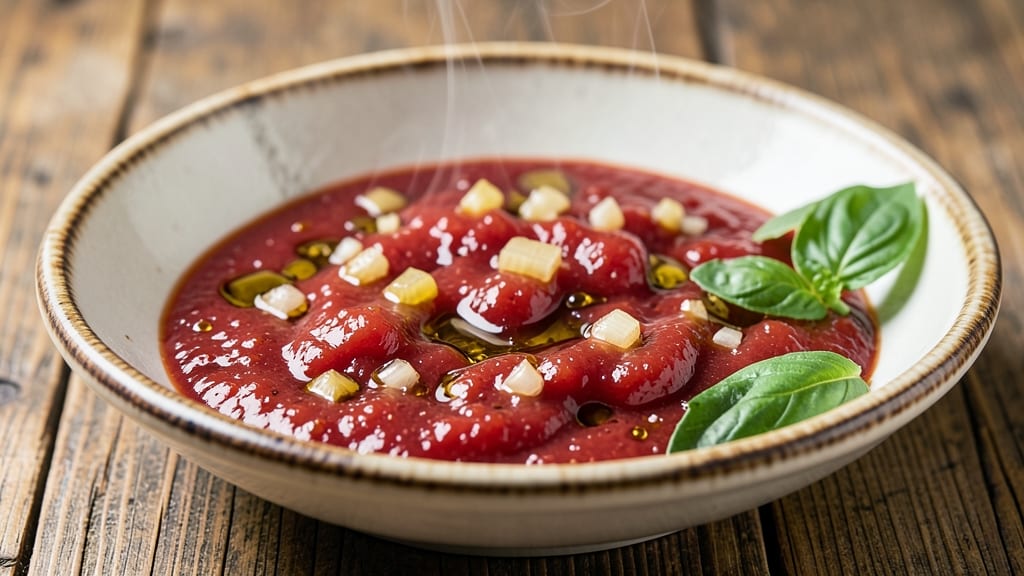
Gordon Ramsay’s tomato sauce recipe transforms simple ingredients into a restaurant-quality base that elevates any pasta dish. The secret lies in slow-simmering garlic, onions, and tomatoes until their flavors meld into a deep, umami-rich sauce.
I’ve perfected this technique over years of cooking, ensuring every spoonful delivers that professional touch you crave.
This sauce starts with a precise balance of aromatics—garlic, onions, and celery—cooked until they’re soft but never browned. Quality canned tomatoes and a splash of red wine add acidity and depth, while fresh basil and a pinch of sugar round out the flavors.
The result? A velvety, perfectly balanced sauce that’s smooth yet complex, with layers of flavor that develop as it simmers.
What makes this recipe truly special is its versatility. Use it as a base for marinara, toss it with al dente pasta, or serve it alongside grilled meats. The sauce thickens naturally as it cooks, so no extra starches are needed—just time and patience.
Once you taste the difference between this and store-bought, you’ll never go back.
Store leftovers in the fridge for up to five days or freeze for months. The flavors only improve with time, making this the ultimate pantry staple for home cooks who demand professional results. Let’s get cooking—your pasta nights just got an upgrade.
Ingredients for gordon ramsay tomato sauce
Nine simple ingredients create a restaurant-quality sauce that'll make your pasta nights unforgettable.
| Ingredient | Amount | Notes |
|---|---|---|
| Extra-Virgin Olive Oil 🫒 | ½ cup | High-quality, fruity variety preferred |
| Yellow Onion 🧅 | 1 whole | Diced into small pieces |
| Celery Stalks 🥬 | 2 whole | Diced finely for aromatic base |
| Garlic Cloves 🧄 | 6 cloves | Minced finely for depth |
| Canned San Marzano Tomatoes 🍅 | 28 oz | Crushed by hand or blender |
| Dry Red Wine 🍷 | ½ cup | Bold Cabernet or Merlot works best |
| Fresh Basil Leaves 🌿 | ½ cup | Packed, stems removed for garnish |
| Granulated Sugar 🍚 | 1 tbsp | Balances acidity naturally |
| Salt 🧂 | 1 tsp | Kosher salt for seasoning |
| Black Pepper 🌶️ | ½ tsp | Freshly ground for finish |
The San Marzano tomatoes are non-negotiable here—they're sweeter and less acidic, which keeps the sauce balanced. Trader Joe's and Whole Foods carry them, or check the Italian section at your grocery store. For the wine, grab whatever bold red you've got open—Cabernet Sauvignon or Merlot work perfectly. Fresh basil? Farmers markets have the best, but the grocery store stuff is fine if it's bright green. The olive oil should be extra-virgin—California or Italian varieties add that fruity depth. If you're using pre-minced garlic, rinse it first to remove excess moisture.
No red wine? Substitute with beef broth plus a splash of balsamic vinegar—it adds that same umami punch. Short on basil? Dried oregano at half the amount works in a pinch, but fresh is worth hunting down. The sugar might seem odd, but it rounds out the acidity—don't skip it. For the onions and celery, softoil them low and slow until they're translucent, not browned. That's the secret to building flavor. And if you're worried about canned tomatoes being mushy, crush them by hand before adding to the pot.
This sauce only gets better with time—3-4 days in the fridge lets the flavors meld perfectly. For freezing, portion into ice cube trays first, then transfer to bags. Thaw overnight in the fridge before reheating. The sauce thickens as it cooks, but if it's too thin, simmer uncovered for 10-15 minutes. And save some of that starchy tomato water—it's liquid gold for thinning later if needed. Makes about 4 cups, perfect for 2 batches of pasta.
Why You'll Love This Recipe
- No-Fuss Foundation: I swear by this sauce because it’s the kind of thing that doesn’t demand perfection—just a knife, a pot, and 20 minutes. The San Marzano tomatoes alone cut prep time in half; no peeling, no chopping, just open, drain, and stir.
- Umami Bomb: That first spoonful of simmered garlic and olive oil? It’s like a flavor grenade. The slow caramelization of the onion and celery with the San Marzano’s natural sweetness—it’s the kind of depth that makes you pause mid-bite.
- Weeknight Swiss Army: This sauce is my secret weapon for lazy dinners. Slap it on pasta, stir it into eggs, or toss it with grilled chicken—it’s the one pantry staple that turns anything into something worth eating. (Yes, even on a Tuesday night.)
- Budget Magic: A single can of San Marzano tomatoes and a small onion stretch into enough sauce for three meals. Honestly, I’ve made this so many times I’ve lost count, and it’s never let me down—either in flavor or in saving me money.
Step-by-step instructions for gordon Ramsay's tomato sauce
Here's how to build a rich, balanced sauce with layers of flavor—just like Ramsay does.
Sauté the Aromatic Base
Heat the 0.5 cup extra-virgin olive oil in a large, heavy-bottomed saucepan over medium-low heat. Add the 1 whole yellow onion and 2 whole celery stalks, both diced finely. Cook for 8-10 minutes until the vegetables soften and become translucent, stirring occasionally to prevent browning.
This slow cook is crucial—it develops the sweetness in the onion and celery without burning them. You'll know it's ready when the vegetables release easily from the pan and the mixture smells fragrant. If you see any browning, reduce the heat slightly and keep stirring.
Add Garlic and Cook Until Fragrant
Push the onion and celery to one side of the pan and add the 6 cloves minced garlic to the empty space. Cook for 30 seconds to 1 minute until the garlic turns golden and releases its aroma—don't let it burn, or it'll turn bitter. Stir everything together to combine.
Here's the thing—garlic burns faster than you think. Keep an eye on it and remove the pan from heat if it starts to darken. The goal is to infuse the oil with garlic flavor, not overpower it with bitterness.
Deglaze with Red Wine
Pour in the 0.5 cup dry red wine and increase the heat to medium-high. Let it simmer for 3-4 minutes until it reduces by about half and the alcohol cooks off. You'll see the wine turn from ruby to a deeper, more concentrated hue.
This step is where the sauce starts to build depth. The wine not only adds complexity but also helps dissolve those flavorful browned bits from the pan—don't scrape them up yet, though. Let the wine work its magic first.
Build the Tomato Base
Add the 28 oz crushed San Marzano tomatoes, 1 tbsp granulated sugar, 1 tsp salt, and 0.5 tsp black pepper. Stir well to combine, then reduce the heat to low. Let the sauce simmer uncovered for 30-40 minutes, stirring occasionally, until it thickens slightly and the flavors meld together.
Real talk: this is where patience pays off. The sauce should reduce enough to coat the back of a spoon but still remain smooth. If it thickens too quickly, add a splash of water or wine to balance it out. The sugar here isn't just for sweetness—it helps balance the acidity of the tomatoes.
Finish with Fresh Basil and Adjust Seasoning
Remove the pan from heat and stir in the 0.5 cup fresh basil leaves, stems removed. Let the sauce sit for 5 minutes to infuse, then taste and adjust the seasoning if needed. The basil should brighten the sauce with its fresh, herbal notes.
For the perfect finish, the sauce should be rich, slightly sweet, and balanced with acidity and salt. If it's too acidic, add a pinch more sugar. If it's too bland, a splash of wine or a pinch of salt will help. Serve immediately over pasta or store in the fridge for up to 5 days—it only gets better with time.
Pro Tips For Making Gordon Ramsay Tomato Sauce
- Sweat, Don’t Burn: The onions and celery should glisten with moisture, not turn to ash. If you’re impatient and crank the heat too high, you’ll end up with bitter, browned bits instead of a fragrant base—lower the heat and let them cook slowly, stirring often.
- Mince That Garlic: No, a press won’t cut it here. Finely mince the garlic cloves so they dissolve into the sauce rather than sitting as chunks. I used to skip this, and the texture was always off—now it blends seamlessly, adding depth without texture.
- Salt the Tomatoes: San Marzano tomatoes are low-acid, so they need a boost. Add a pinch of salt to the crushed tomatoes before cooking—it brightens the flavor and balances the sweetness. (Yes, even if the can says “no salt added.”)
- Simmer, Don’t Boil: Once the tomatoes hit the pot, keep the heat at a gentle simmer. A rolling boil reduces the sauce too fast, making it watery and dull. Let it bubble softly, and you’ll end up with a rich, concentrated flavor instead of sad, thin sauce.
Flavor customization for gordon ramsay tomato sauce
Sweet & Tangy Twist
Add 1 tbsp orange zest and 2 tbsp orange juice when you incorporate the tomatoes. This brightens the sauce with citrus notes that cut through the richness—perfect for seafood dishes like shrimp scampi or grilled fish.
I also toss in ½ tsp cinnamon for warmth, which pairs beautifully with the acidity. 🌟
Spicy Arrabbiata Style
Increase the heat by adding 1-2 tbsp red pepper flakes (adjust to taste) when you deglaze with wine. For extra kick, stir in 1 chopped Fresno chili along with the tomatoes.
This version is fiery but balanced—ideal for spaghetti or as a dipping sauce for crusty bread. Serve with a dollop of ricotta cheese to cool the burn.
Herb-Forward Provençal
Swap basil for a mix of ½ cup each chopped thyme, rosemary, and tarragon when finishing the sauce. Add 1 tsp dried herbes de Provence during the simmer for depth.
This variation shines with roasted chicken or as a marinade for lamb chops. Garnish with toasted pine nuts for crunch and a touch of balsamic glaze for sweetness.
Creamy Alfred-Inspired
After simmering the tomatoes, stir in ½ cup heavy cream and reduce heat to low for 5 minutes to warm through. Finish with ¼ cup grated Parmesan and a pinch of nutmeg.
This luxurious version pairs perfectly with fettuccine or grilled vegetables. For extra richness, fold in 1 egg yolk at the end—just like a true Alfredo!
Smoky Chipotle Kick
Add 1-2 chipotle peppers in adobo sauce (minced) when you deglaze with wine. For smokiness without heat, use 1 tsp smoked paprika instead. This variation works brilliantly with braised meats or as a marinade for pork tenderloin. Garnish with cilantro and a squeeze of lime for freshness.
Umami Boost with Mushrooms
Sauté 8 oz sliced cremini mushrooms alongside the onions and celery. Their earthy depth adds another layer of umami to the sauce. For extra richness, stir in 1 tbsp soy sauce when you add the tomatoes. This version is perfect for hearty dishes like beef stew or mushroom risotto.
Nutrition facts
Frequently asked questions
Why does Gordon Ramsay's tomato sauce recipe use red wine?
The red wine adds depth and complexity that simple tomato sauce lacks. It reduces during cooking, concentrating its flavors and creating a richer, more sophisticated base. Plus, the acidity helps balance the natural sweetness of the tomatoes while dissolving fond (browned bits) for extra umami. Skip it? Use beef broth plus a splash of balsamic vinegar instead.
Can I make this sauce without fresh basil?
If you're short on fresh basil, use 1 teaspoon dried basil (or ½ teaspoon dried oregano) as a substitute. For extra flavor, add a pinch of red pepper flakes or a dash of lemon zest. The sauce will still taste amazing—just slightly different. Fresh basil is ideal, but dried works in a pinch.
How do I fix tomato sauce that's too thick or too thin?
For too thick sauce, thin it with warm water or wine (start with 2 tablespoons) while stirring. For too thin sauce, simmer uncovered for 10-15 minutes to reduce it naturally. If it's still too runny, mix 1 teaspoon cornstarch with 1 tablespoon water, stir into the sauce, and simmer until thickened.
What's the best way to store leftover tomato sauce?
Let the sauce cool completely, then transfer to an airtight container. Store in the fridge for up to 5 days—it actually tastes better after resting! For longer storage, freeze portions in ice cube trays (thaw easily later) or in freezer-safe bags for up to 3 months. Label with the date to track freshness.
Can I use frozen tomatoes instead of canned?
Yes, but with adjustments! Thaw frozen tomatoes first, then drain excess liquid. Since they're less concentrated, you may need to simmer the sauce longer to achieve the same thickness. For best results, blend them first to mimic crushed canned tomatoes. Frozen works, but canned San Marzano tomatoes deliver the most consistent flavor.