
Sauces & Condiments
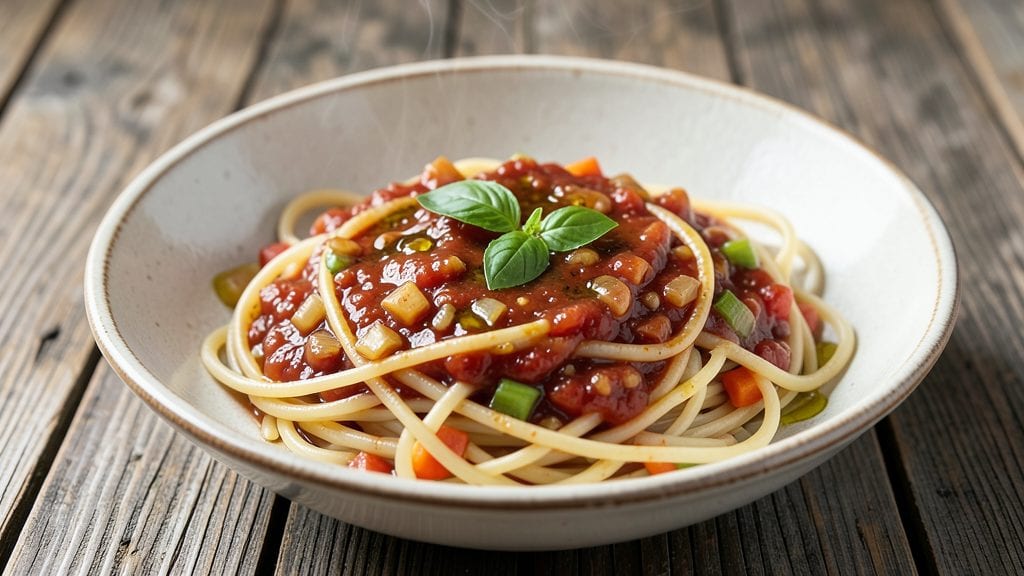
This Pioneer Woman spaghetti sauce recipe delivers the kind of deep, slow-simmered flavor that transforms weeknight dinners into comforting family meals.
The secret lies in a 3-hour simmer that develops rich umami notes from garlic, onions, and crushed tomatoes, while a splash of red wine adds complexity without overpowering the homestyle taste.
I first made this version after realizing my family needed a sauce that tasted like it had been bubbling all day—even when it wasn’t.
The beauty of this recipe is its versatility—it works as a standalone sauce for spaghetti or as a base for meatballs, chicken, or even stuffed shells.
Pioneer Woman’s approach emphasizes simple ingredients done right: no shortcuts, no processed canned sauces, just fresh tomatoes, aromatic herbs, and a touch of sweetness from sugar to balance the acidity.
The result is a sauce that’s restaurant-quality at home, with a velvety texture and layers of flavor that keep getting better as it sits.
What makes this recipe truly special is how it elevates the entire meal. The sauce clings perfectly to al dente spaghetti, while its depth pairs beautifully with garlic bread or a simple side salad.
My kids always ask for seconds, and even picky eaters can’t resist the homestyle warmth of this classic. The best part? It tastes even better the next day, making it ideal for meal prep or feeding a crowd.
Ready to make dinner feel like a celebration? This sauce is your secret weapon for turning simple pasta into a showstopping centerpiece. Let’s get cooking—your table is about to get an upgrade.
Ingredients for pioneer woman spaghetti sauce
Sixteen simple ingredients for a sauce that tastes like it simmered all day.
| Ingredient | Amount | Notes |
|---|---|---|
| Extra-Virgin Olive Oil 🫒 | ½ cup | High-quality, fruity variety |
| Yellow Onion 🧅 | 2 whole | Diced, medium size |
| Garlic Cloves 🧄 | 6 cloves | Minced, fresh preferred |
| Carrots 🥕 | 2 whole | Diced, medium size |
| Celery Stalks 🥬 | 2 whole | Diced, fresh preferred |
| Canned Crushed Tomatoes 🍅 | 28 oz | San Marzano preferred |
| Tomato Paste 🍅 | ½ cup | Squeeze tube or can |
| Dry Red Wine 🍷 | ½ cup | Cabernet Sauvignon or Merlot |
| Fresh Basil Leaves 🌿 | ½ cup | Chopped, stems removed |
| Fresh Oregano Leaves 🍃 | ¼ cup | Chopped, Mexican oregano ideal |
| Bay Leaves 🍃 | 2 whole | Dried, standard size |
| Granulated Sugar 🍯 | 1 tbsp | Balances acidity |
| Salt 🧂 | 1 ½ tsp | Kosher or sea salt |
| Ground Black Pepper 🌶️ | ½ tsp | Freshly ground preferred |
| Spaghetti 🍝 | 1 lb | Al dente preferred |
The tomatoes are the heart of this sauce—San Marzano makes all the difference with its natural sweetness and deep flavor. Grab a couple cans from Trader Joe's or Whole Foods if you want to splurge, but the regular store brand works fine too. For the red wine, any bold, dry variety like Cabernet Sauvignon or Merlot will do—whatever's open in your fridge. The fresh herbs? Farmers market basil and oregano taste worlds better than the dried stuff, but if that's all you've got, dried oregano at half the amount works in a pinch. The onion, carrots, and celery (that classic mirepoix) add depth—don't skip them, even if you're tempted to cut corners.
No red wine? Beef broth or apple cider works just as well—just use the same amount. Fresh herbs wilt fast, so if you're prepping ahead, freeze them in ice cube trays with olive oil and toss them straight into the sauce. The tomato paste can be a squeeze tube from Trader Joe's—no mess, and it keeps forever. For the spaghetti, De Cecco or Barilla are my go-tos, but any good-quality brand will work. Want to make this vegetarian? Skip the meatballs and add a handful of lentils or mushrooms for extra heartiness. The sugar balances the acidity—don't skip it, even if your tomatoes are sweet already.
This sauce gets better as it sits—4-5 days in the fridge, 3 months frozen. I always make a double batch because leftovers taste even richer. Store it in glass jars with a tight lid to keep the flavors sealed in. Reheat gently on the stove, stirring often, and add a splash of water or wine if it gets too thick. The spaghetti? Cook it al dente—it'll finish cooking in the sauce. Serve with extra Parmesan and crusty bread, and you've got a meal that feels like a celebration.
Why You'll Love This Recipe
- No-Chop Nightmare: I swear by the "sofrito" trick here—just pulse the onion, carrots, and celery in a food processor. No tears, no knife skills, and the flavor? Still deep and rich like my grandma’s.
- Garlic Bomb: That slow-cooked garlic in olive oil? It’s the secret weapon. The cloves caramelize just enough to give every bite a sweet, nutty punch—no burning, no bitterness, just pure flavor payoff.
- Leftover Legend: This sauce actually improves the next day. The flavors meld into something even richer, and I always have jars ready for quick pasta nights. Freezer-friendly too—just thaw and reheat.
- Pantry Staple Power: Onion, carrots, celery—those are the basics I always have. Add a can of tomatoes, a few herbs, and boom—dinner’s solved. No last-minute grocery runs, no stress, just reliable, crave-worthy sauce.
Step-by-step instructions for slow-simmered spaghetti sauce
Here's how to build rich, layered flavor that develops over time—no shortcuts, just deep umami.
Sauté the Vegetable Base
Heat the 0.5 cup extra-virgin olive oil in a large Dutch oven over medium heat. Add the 2 whole diced yellow onions and cook for 8-10 minutes until soft and translucent, stirring occasionally. This step is all about building flavor—don't rush it.
Add the 2 whole diced carrots and 2 whole diced celery stalks, then cook for another 5 minutes until the vegetables begin to soften. You'll notice the mixture releases moisture and the aroma becomes sweet and earthy. This is your flavor foundation, so take your time here.
Add Aromatics and Tomato Base
Push the vegetables to one side of the pot and add the 6 minced garlic cloves to the empty space. Cook for 30 seconds until fragrant—garlic burns fast, so watch closely. Stir everything together, then add the 0.5 cup tomato paste and cook for 2 minutes until it darkens slightly.
Pour in the 28 oz canned crushed tomatoes and 0.5 cup dry red wine, scraping up any browned bits from the bottom of the pot. These bits are packed with flavor—don't miss them. Bring the mixture to a gentle simmer, then reduce heat to low to maintain a slow, steady bubble.
Season and Simmer for Depth
Add the 2 whole bay leaves, 1 tbsp granulated sugar, 1.5 tsp salt, and 0.5 tsp ground black pepper. Stir well to combine, then let the sauce simmer uncovered for 1 hour. This long cooking time allows the flavors to meld and develop that deep, complex taste you're after.
After 1 hour, taste the sauce. It should be balanced—sweet from the sugar, tangy from the tomatoes, and rich from the wine. If it needs more salt, add it now. The sauce will thicken naturally as it simmers, so don't worry about adjusting the consistency yet.
Finish with Fresh Herbs
Remove the 2 whole bay leaves and stir in the 0.5 cup chopped fresh basil leaves and 0.25 cup chopped fresh oregano leaves. Simmer uncovered for another 10-15 minutes to let the herbs infuse their bright, fresh flavors into the sauce. The aroma should be vibrant and inviting—this is your signal that the sauce is ready.
Taste again and adjust seasoning if needed. The sauce should be rich, slightly sweet, and well-balanced with acidity and salt. If it's too thick, add a splash of water or pasta water to reach your desired consistency. Keep the sauce warm until ready to serve over the 1 lb spaghetti.
Pro Tips For Making Pioneer Woman Spaghetti Sauce
- Sweat, Don’t Burn: The onions and celery need to soften, not darken into something resembling a charred science experiment. Keep the heat at a steady medium and resist the urge to stir like a maniac—just let them cook for 8-10 minutes until the onions are translucent and the celery’s edges start to blur. I learned this the hard way when my sauce ended up tasting like a campfire.
- Dice Like a Pro: Tiny, even pieces of onion, carrot, and celery cook faster and more evenly, so they actually break down into the sauce instead of lurking as chewy chunks. Aim for ¼-inch dice—no bigger than a pea—and save yourself the hassle of fishing out mystery veggies later. (Yes, even if you’re impatient like me.)
- Salt the Garlic: Toss your minced garlic into the pot with a pinch of salt before it hits the oil. This prevents it from sticking and burning—something that’s happened to me more times than I’d like to admit. The salt also helps draw out moisture, so the garlic cooks evenly and infuses the sauce properly.
- Simmer Low and Slow: After adding tomatoes and herbs, drop the heat to a gentle simmer and cover the pot for the first 20 minutes. This lets the flavors meld without the sauce turning into a sticky mess. I was skeptical until I tried it—now I won’t make sauce any other way. (Your future self will thank you.)
Dietary considerations for pioneer woman spaghetti sauce
Gluten-Free Adaptations
This sauce is naturally gluten-free, but the spaghetti needs attention. Swap traditional wheat pasta for gluten-free spaghetti like Barilla GF or De Cecco GF, which cook similarly to regular pasta.
Just check labels—some brands add malt vinegar or wheat starch as fillers. For extra insurance, use a dedicated gluten-free colander to avoid cross-contamination. 🌾
Vegetarian & Vegan Options
Skip the meatballs and boost heartiness with lentils or mushrooms. I add 1 cup cooked brown lentils for protein or 8 oz sliced cremini mushrooms sautéed with garlic.
For vegan, use vegan tomato paste (like Muir Glen) and ensure wine is alcohol-free. The sauce’s umami stays rich without meat.
Low-Sugar Adjustments
The 1 tbsp sugar balances acidity, but omit it entirely if tracking carbs. Instead, add ½ tsp apple cider vinegar to enhance brightness. For extra sweetness, stir in ½ cup diced roasted red peppers—they add natural sweetness and depth without sugar.
The sauce will still taste balanced but with fewer carbs.
Dairy-Free Serving
This sauce is dairy-free, but serve with nutritional yeast instead of Parmesan for a cheesy flavor. Sprinkle 1 tbsp nutritional yeast over each serving—it adds umami and a nutty taste. Pair with garlic bread made with olive oil and dairy-free butter (like Miyoko’s) for a fully allergy-friendly meal.
Nut-Free Considerations
Watch for hidden nuts in store-bought pasta or bread. Always check labels on gluten-free pasta or breadcrumbs for nut cross-contamination warnings. If making garlic bread, use olive oil and gluten-free breadcrumbs instead of nut-based alternatives. The sauce itself is nut-free, but sides often contain allergens.
Nutrition facts
Frequently asked questions
Can I make this sauce in a slow cooker instead of a Dutch oven?
Transfer all ingredients to your slow cooker and cook on low for 6-8 hours or high for 4-5 hours. The long cook time will intensify the flavors even more. Just add the fresh herbs in the last 30 minutes of cooking to preserve their brightness.
How do I prevent the sauce from getting too thick?
If your sauce thickens too much during cooking, simply add ¼ cup hot water or pasta water and stir well. The sauce should be thick enough to coat the back of a spoon but still spoonable. For extra insurance, keep the pot uncovered while simmering to allow some moisture to evaporate naturally.
What's the best way to store leftovers?
Let the sauce cool completely, then transfer it to airtight glass jars or containers. It will keep in the refrigerator for 4-5 days and freezes beautifully for up to 3 months. When reheating, warm it gently on the stove over low heat and add a splash of water if needed to restore consistency.
Can I make this sauce without red wine?
Yes! Replace the ½ cup red wine with either ½ cup beef broth or ½ cup apple cider. Both will add depth without altering the sauce's character. For a vegetarian version, use ½ cup vegetable broth instead. The sauce will still develop rich flavors—just slightly different nuances.
How do I know when my spaghetti is perfectly al dente?
Start testing your spaghetti 1 minute before the package's recommended cook time. Taste a piece—it should be firm to the bite with a slight resistance in the center. For extra precision, cut a piece in half lengthwise: if the center looks slightly translucent but not completely white, it's perfect. The sauce will finish cooking the pasta to perfection.