
Sauces & Condiments
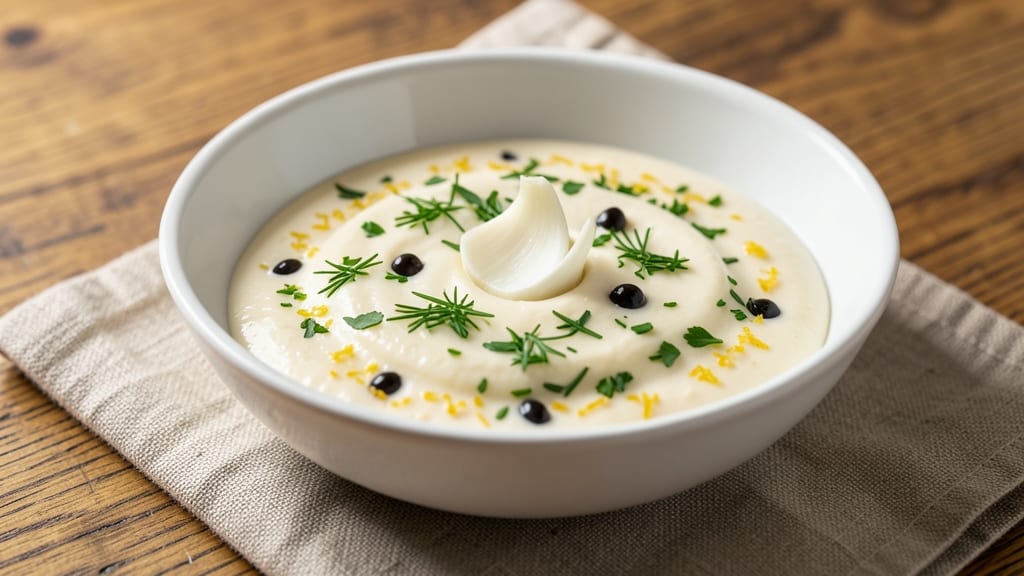
This tartar sauce recipe without pickles transforms simple pantry staples into a bright, herb-forward condiment that elevates everything from fish to fries. The secret lies in balancing creamy mayonnaise with sharp lemon, finely chopped capers, and fresh herbs—no pickles needed.
I developed this version after realizing most recipes rely on pickles for tang, but herbs and citrus deliver the same vibrant punch with cleaner ingredients.
What sets this sauce apart is its versatility and freshness—no artificial flavors or preservatives, just real ingredients that come together in minutes. The capers add a briny depth, while fresh dill and parsley bring that classic tartar aroma without overpowering.
It’s the perfect balance of creamy, tangy, and herbaceous, with a texture that’s smooth yet just slightly textured.
You’ll end up with a sauce that’s rich enough to stand up to crispy fried foods but bright enough to cut through rich proteins like steak or salmon. The best part?
It keeps well in the fridge for up to a week, so you can make a batch and use it all week long. This isn’t just a substitute—it’s an upgrade.
For those avoiding dairy or eggs, I’ve included a simple vegan adaptation using avocado oil mayo. The method remains the same, proving this sauce works for every table. Let’s get mixing—your next meal is about to get a whole lot brighter.
Ingredients for tartar sauce recipe no pickles
Nine simple ingredients transform into a bright, herb-packed tartar sauce without pickles.
| Ingredient | Amount | Notes |
|---|---|---|
| Mayonnaise 🥛 | 1 cup | High-quality, store-bought or homemade |
| Fresh Dill 🌿 | ⅓ cup | Finely chopped, stems removed |
| Fresh Parsley 🌿 | ¼ cup | Finely chopped, flat-leaf preferred |
| Capers 🫒 | 2 tbsp | Finely chopped, not drained |
| Lemon Juice 🍋 | 2 tbsp | Freshly squeezed, no pulp |
| Garlic Cloves 🧄 | 2 cloves | Finely minced, about 1 tsp |
| Extra-Virgin Olive Oil 🫒 | 1 tbsp | For richness, fruity variety |
| Salt 🧂 | ½ tsp | Kosher or sea salt |
| Black Pepper 🌶️ | ¼ tsp | Freshly ground, to taste |
| Avocado Oil Mayo 🥑 | 1 cup | For vegan adaptation only |
The mayo is where the magic happens—Duke's or Hellmann's are my go-tos, but any good brand works. Fresh herbs are non-negotiable here; Trader Joe's sells pre-washed dill and parsley in those little clamshells, which saves time. Capers? Grab the jarred kind at Whole Foods or any grocery store—they’re already packed in brine, so no extra prep. The lemon juice needs to be fresh—bottled just won’t cut it. For garlic, three cloves is perfect, but if you’re garlic-averse, start with two and adjust. The olive oil adds depth, so don’t skimp—California avocado or Bertolli are great choices.
No dill? Fresh chives or tarragon work in a pinch, though parsley is more versatile. Short on capers? Chopped green olives at half the amount add brininess. The mayo can be swapped for avocado oil mayo for a vegan version, keeping the same creamy texture. If you’re making a big batch, double the herbs—they mellow out over time. The sauce tastes even better the next day as flavors meld, so don’t hesitate to make extra. Trust me, it disappears fast.
This sauce keeps beautifully in an airtight container in the fridge for up to 1 week. If you’re prepping for a party, divide it into small containers so everyone can grab a portion. For longer storage, freeze it for up to 3 months—just thaw in the fridge overnight. It’s perfect for dipping, topping, or mixing into dressings. Pro tip: Add a splash of extra lemon juice before serving if it’s been sitting for a few days—it brightens it right up.
Why You'll Love This Recipe
- Five-Ingredient Magic: I swear by this—just mayo, fresh herbs, capers, and lemon. No chopping mountains of pickles or hunting for obscure spices. Honestly, it’s the kind of recipe where I can measure everything while scrolling through emails.
- Bright & Tangy: That lemon juice cuts through the richness of the mayo like a breath of fresh air. The dill and parsley? They add this bright, herby punch that makes it taste like summer in every bite—no overpowering sourness, just pure, clean flavor.
- Game for Any Meal: Slather it on fish tacos, dip those crispy onion rings, or even toss it with pasta. I’ve used it as a sandwich spread when I’m lazy, and it still shines. Between us, it’s the secret weapon I keep in the fridge for anything.
- No-Waste, Long-Lasting: The capers and lemon juice actually make this sauce last longer than store-bought. I’ve had a jar sit for a week, and it’s still fresh—no weird textures, no sad flavors. Plus, the herbs keep it tasting vibrant, not flat. Budget-friendly? Absolutely.
Step-by-step instructions for herb-packed tartar sauce
Here's how to make a bright, herb-forward tartar sauce that skips the pickles but packs serious flavor.
Finely Chop All Fresh Herbs
Start by chopping the 0.33 cup fresh dill and 0.25 cup fresh parsley into tiny pieces—think almost like sand. I use a sharp chef's knife and rock the blade back and forth over the herbs while they're in a small pile. This creates uniform, fine pieces that distribute evenly through the sauce. Remove any tough stems from the dill and parsley before chopping.
Set these chopped herbs aside in a small bowl. The fresher your herbs, the more vibrant your sauce will taste. If using dried herbs, you'd need much less—but we're going for that bright, fresh flavor here, so stick with the fresh herbs exactly as listed.
Mix the Base Ingredients
In a medium bowl, combine the 1 cup mayonnaise (or 1 cup avocado oil mayo for a vegan version) with the 2 tbsp lemon juice and 1 tbsp extra-virgin olive oil. Use a rubber spatula to fold everything together until smooth. The lemon juice adds that signature tang that balances the richness of the mayo.
Next, add the 0.5 tsp salt and 0.25 tsp black pepper to the mixture. Stir well to distribute the seasoning evenly. At this point, you should have a smooth, slightly tangy base. This is where the foundation of your sauce comes together, so don't rush this step—make sure everything is fully incorporated.
Incorporate the Herbs and Garlic
Add the finely chopped 0.33 cup fresh dill and 0.25 cup fresh parsley to the mayo mixture. Stir gently to combine, being careful not to overmix—you want the herbs to stay visible for that classic tartar sauce look. Now, add the 2 cloves minced garlic and the 2 tbsp chopped capers. The capers add a briny, umami depth that's essential to this recipe.
Use your spatula to fold everything together until the herbs and capers are evenly distributed. Taste the mixture now—it should be bright, herby, and slightly tangy. If it needs more acidity, add a little more lemon juice. If it needs more salt, add it gradually—you can always adjust, but you can't take salt out once it's in.
Adjust and Rest for Best Flavor
Taste the sauce again and make any final adjustments. You might want to add a tiny pinch more salt or a splash of lemon juice to balance the flavors. Once you're happy with the taste, cover the bowl and refrigerate the sauce for at least 30 minutes. This resting time allows the flavors to meld together and the herbs to release their oils, resulting in a more cohesive and flavorful sauce.
After resting, give the sauce one final stir before serving. It should be creamy, herby, and perfectly balanced with bright lemon and briny capers. This sauce is best used within 2-3 days when stored in an airtight container in the fridge. Enjoy it with fish, chicken, or even as a dip for veggie sticks!
Pro Tips For Making Tartar Sauce Recipe No Pickles
- Chop Herbs Fine: I learned this the hard way—big, uneven chunks of dill and parsley just sit there like awkward guests. Use a sharp knife and go for tiny dice, almost like confetti. This lets the flavors blend in properly instead of making you pick them out.
- Drain Capers Well: Briny capers straight from the jar? Nope. Rinse them first, then drain in a fine-mesh strainer for at least 2 minutes. That extra salt hides in the brine and throws off the balance—trust me, you’ll taste it if you skip this.
- Mix Gently, Twice: Dump everything in and stir like you’re folding a cake batter. After 30 seconds, let it sit for 5 minutes—this lets the lemon juice mellow out the mayo’s richness. Then mix again. Rushing this step makes the sauce taste flat and one-note.
- Lemon Juice First: Add the lemon juice before the herbs and capers. This cuts the mayo’s heaviness right away and keeps the sauce bright. If you mix it in last, you’ll end up chasing that tang with extra lemon, which just makes the sauce bitter.
Troubleshooting your tartar sauce recipe no pickles
Herbs Too Strong?
If your tartar sauce tastes overwhelmingly herby, it’s likely because the herbs weren’t finely chopped enough or you used too much. Start by chopping your fresh dill and parsley even finer—almost like a paste—using a microplane or food processor.
For a 1-cup batch, stick to the exact measurements: ⅓ cup dill and ¼ cup parsley. If you accidentally added too much, balance it with 1 extra tbsp lemon juice or 1 tsp extra-virgin olive oil to dilute the intensity. 🌿
Sauce Too Thin?
A runny tartar sauce usually means the mayo wasn’t properly emulsified or the lemon juice was overdone. If this happens, whisk in 1 tbsp cold water or 1 tsp cornstarch mixed with 1 tsp water to thicken it gently.
For future batches, ensure your mayo is at room temperature before mixing—cold mayo doesn’t blend as smoothly. Also, measure your lemon juice precisely: 2 tbsp is perfect; don’t eyeball it.
If you’re using a vegan mayo, it may thin out faster—opt for a thicker avocado oil mayo like Sir Kensington’s.
Lemon Too Overpowering?
If your sauce tastes like it’s swimming in lemon, the fix is simple: add ½ tsp honey or 1 tsp maple syrup to round out the sharpness. For prevention, use freshly squeezed lemon juice and strain it through a fine-mesh sieve to remove any lingering pulp.
If you’re prepping ahead, store the sauce in an airtight container and add a splash of fresh lemon juice just before serving—this keeps the brightness without overwhelming the herbs. 🍋
Capers Not Briny Enough?
Capers lose some of their punch when chopped, so if your sauce lacks depth, use undrained capers (including the brine) for the full flavor. For an extra boost, add ½ tsp fish sauce or 1 tsp soy sauce—it enhances the umami without altering the texture.
If you’re using jarred capers, rinse them briefly in cold water to remove excess salt, then pat dry before chopping. Pro tip: Toast 1 tsp capers in a dry pan for 30 seconds before adding them—they’ll develop a deeper, caramelized flavor. 🫒
Texture Too Grainy?
Gritty tartar sauce usually means the herbs or capers weren’t chopped finely enough. Pulse them in a food processor for 10-15 seconds until they’re almost paste-like, then fold them into the mayo.
For capers, use a small knife and press them against the cutting board while chopping to break them down. If you’re short on time, blend the herbs and capers with 2 tbsp water first, then mix into the mayo for a smoother consistency. 🔥
Vegan Version Separating?
Avocado oil mayo can split if not handled carefully. To prevent separation, chill the mayo and all ingredients in the fridge for 15 minutes before mixing. Use a hand mixer on low speed to combine the mayo with lemon juice and olive oil first—this creates a stable emulsion.
If it still separates, whisk in 1 tsp Dijon mustard or 1 tsp ground flaxseed (mixed with 3 tbsp water) to bind it. Store vegan tartar sauce in a jar and give it a quick shake before serving to redistribute any separated ingredients. 🥑
Nutrition facts
Frequently asked questions
Can I make this tartar sauce without fresh herbs?
Fresh herbs are ideal, but you can substitute with dried herbs if needed. Use 1 tbsp dried dill and 1 tsp dried parsley instead of the fresh amounts. For best results, finely grind the dried herbs in a spice grinder first to mimic the texture of fresh herbs. The flavor will be less vibrant but still delicious.
How long does this herb-packed tartar sauce keep?
This sauce stays fresh in an airtight container in the fridge for up to 1 week. For longer storage, freeze it for up to 3 months. Thaw overnight in the refrigerator before using. The flavors actually improve after resting for 24 hours, so don't hesitate to make a batch ahead.
What's the best way to adjust the flavor if it's too mild?
If your sauce tastes bland, add more lemon juice (½ tsp at a time) for brightness or extra capers (1 tsp) for brininess. A pinch of smoked paprika or Worcestershire sauce can also deepen the flavor without altering the texture. Taste as you go—it's easy to adjust!
Can I use this sauce for anything besides fish?
This versatile sauce works beautifully with fried chicken, steak, shrimp, or even as a dip for veggie sticks or fries. The herby, tangy flavor pairs well with grilled meats and crispy foods. For a twist, mix it into pasta salads or use it as a marinade base.
Why does my sauce sometimes separate?
Separation usually happens when mayo isn't properly emulsified or when ingredients aren't at room temperature. To fix it, whisk in 1 tsp Dijon mustard or 1 tsp ground flaxseed mixed with 3 tbsp water to bind it. For prevention, chill all ingredients for 15 minutes before mixing and use a hand mixer for smoother results.