
Sauces & Condiments
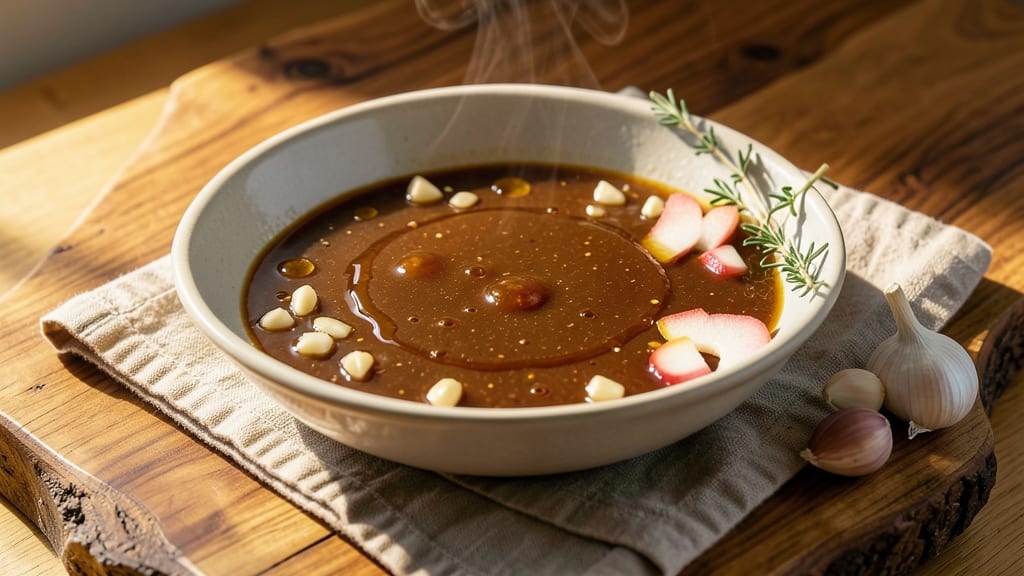
This teriyaki sauce recipe delivers glossy, sticky perfection with just five pantry staples—no specialty ingredients required. I developed it after years of restaurant kitchen work where we needed a reliable, restaurant-quality sauce that could elevate everything from grilled chicken to stir-fried vegetables.
The balance of sweetness, umami, and acidity is what makes this sauce truly special.
The key to achieving that signature glossy finish lies in simmering the sauce until it thickens to a syrupy consistency, but not so much that it loses its brightness.
I use a combination of soy sauce, honey, and mirin to create depth while keeping the sauce versatile enough for both sweet and savory applications. This version also includes fresh ginger and garlic for that authentic Japanese flavor profile without being overpowering.
What you'll end up with is a sauce that's rich, aromatic, and perfectly balanced—sweet enough to coat your taste buds but with enough acidity to cut through richness. It's the kind of sauce that transforms simple proteins into restaurant-worthy meals with minimal effort.
The best part? It keeps well in the fridge for up to two weeks, so you can make a big batch and use it all week long.
For those who want to customize, I've included variations for spicier or vegan versions in the tips section. Whether you're glazing proteins, drizzling over noodles, or using as a marinade, this teriyaki sauce will become your go-to pantry staple. Let's get started on making it!
Ingredients for teriyaki sauce
Five pantry staples transform into restaurant-quality teriyaki sauce with just one pot.
| Ingredient | Amount | Notes |
|---|---|---|
| Soy Sauce 🍶 | ½ cup | High-quality, reduced variety preferred |
| Honey 🍯 | ⅓ cup | Raw or clover preferred for depth |
| Mirin 🍶 | ¼ cup | Sweet cooking wine, not dry sherry |
| Fresh Ginger 🧄 | 2 tbsp | Finely grated, aromatic variety |
| Garlic Cloves 🧄 | 4 cloves | Minced for even distribution |
| Rice Vinegar 🍶 | ¼ cup | White or seasoned for balance |
| Sesame Oil 🫒 | 1 tbsp | Toasted, for nutty aroma |
| Cornstarch 🌾 | 1 tbsp | For silky thickening |
| Water 💧 | ¼ cup | Room temperature preferred |
| Diamond Crystal Kosher Salt 🧂 | ½ tsp | Fine grain for delicate seasoning |
The soy sauce is your flavor foundation—Kikkoman or La Choy are reliable choices, but anything reduced has deeper umami. Mirin is non-negotiable for that signature sweetness; Japanese markets carry it, or sub 1 tbsp honey + 1 tsp rice vinegar in a pinch. Fresh ginger and garlic? Buy organic if possible—their vibrant color means more punch. I always grab ginger with visible moisture and tight skin, and garlic bulbs that feel heavy for their size. Toast your sesame oil first (just warm it 30 seconds) to wake up those nutty notes—Trader Joe's sells it pre-toasted, which saves time.
No mirin? Dry sherry plus 1 tsp sugar mimics the flavor, though it won't be identical. Subbing honey? Maple syrup works 1:1, but it adds earthiness. Sesame oil too strong? Swap for 1 tsp toasted sesame seeds (toasted in a dry pan for 1 minute). The cornstarch slurry (mix with cold water first!) is key for that glossy finish—don't skip it. For extra depth, add 1 tsp fish sauce (trust me on this) or 1/2 tsp five-spice powder. Store-bought teriyaki? This version has half the sodium and none of the preservatives.
This sauce thickens as it cools, so reheat gently—microwave in 20-second bursts, stirring between each. Keeps in the fridge for 2 weeks (it actually improves with age), or freeze in ice cube trays for single-use portions. Label containers with the date—3 months frozen is the max. For restaurant-quality results, simmer uncovered until it coats the back of a spoon. Too thick? Thin with water or mirin. Too thin? Simmer longer or add more cornstarch slurry.
Why You'll Love This Recipe
- I’ll be real: my old teriyaki recipe used expensive bottles that went bad too fast. This one? Uses things I already have—soy sauce, honey, maybe a splash of mirin from the Asian aisle. The ginger and garlic? They’re cheap, fresh, and last longer than you’d think. Plus, any leftovers keep for weeks in the fridge, so I’m never scrambling for a last-minute glaze.
- Five-Ingredient Magic: I swear, this sauce is the kind of recipe where you glance at the list and think, "Wait, that’s it?" Soy sauce, honey, mirin, ginger, garlic—no fancy gadgets, no stress. The mirin adds that subtle sweetness without overpowering, while the ginger and garlic give it a warm, aromatic punch that’s actually better than store-bought.
- Sweet-Savory Balance: Here’s what sold me—the honey and soy sauce team up to create this perfect harmony of sticky, caramelized richness with just a hint of umami depth. The fresh ginger? It’s not overpowering; it just lingers like a cozy hug in every bite. Honestly, I’ve made teriyaki a dozen ways, and this combo is my go-to because it’s reliable.
- Weeknight & Potluck Hero: Between us, this sauce is my secret weapon for lazy nights and impressing guests. Drizzle it over grilled chicken for a 15-minute dinner, toss it with tofu for a quick stir-fry, or even slather it on baked salmon—it works every time. And the best part? It doubles easily, so I always have leftovers for next week’s lunch.
Step-by-step instructions for glossy, sticky teriyaki sauce
This method delivers restaurant-quality teriyaki with perfect balance—sweet, savory, and silky smooth every time.
Bloom the Aromatics in Sesame Oil
Heat a small saucepan over medium-low heat and add the 1 tablespoon sesame oil. Let it warm for 30 seconds until fragrant—you'll smell that nutty aroma develop. I like to keep the heat gentle here because sesame oil has a low smoke point and burns easily.
Add the 4 minced garlic cloves and 2 tablespoons finely grated fresh ginger. Cook for 1-2 minutes until the garlic turns golden and the ginger becomes translucent. This step builds the aromatic foundation of your sauce. Don't walk away—ginger burns quickly and turns bitter. You'll know it's ready when the raw garlic smell disappears and gives way to a warm, toasty aroma.
Combine Wet Ingredients for the Base
Increase heat to medium and pour in the 0.5 cup soy sauce, 0.25 cup mirin, and 0.25 cup rice vinegar. Stir constantly for 2-3 minutes until the mixture begins to simmer gently. The soy sauce will darken slightly as it warms, deepening the umami flavor profile.
Next, add the 0.33 cup honey and 0.25 cup water. Stir well to combine—this creates the perfect balance between sweetness and acidity that defines great teriyaki. Let the mixture simmer for 4-5 minutes until slightly reduced by about 15%. You're looking for a syrupy consistency where the sauce coats the back of a spoon. If it reduces too quickly, reduce heat slightly to maintain gentle simmering.
Thicken and Season to Perfection
In a small bowl, whisk together the 1 tablespoon cornstarch with 2 tablespoons of the simmering sauce to create a slurry. This prevents clumping and ensures smooth thickening. Slowly pour the slurry back into the saucepan while stirring continuously.
Simmer for 2-3 minutes until the sauce reaches your desired thickness—it should coat the back of a spoon but still be pourable. For perfect gloss, remove from heat and stir in the 0.5 teaspoon diamond crystal kosher salt. Taste and adjust: if it needs more depth, add a splash more soy sauce; if too sweet, a touch more rice vinegar. The sauce should be balanced—sweet enough to coat, but with enough acidity to cut through the richness.
Rest and Finish for Maximum Flavor
Let the sauce sit off heat for 5 minutes—this resting period allows all the flavors to meld completely. The cornstarch continues to set slightly, giving you that signature glossy sheen. I always find this step crucial for developing the sauce's complexity.
Before using, give it one final taste adjustment. The sauce should be vibrant with umami from the soy, bright acidity from the vinegar, and just the right amount of sweetness from the honey. For extra richness, you can finish with an additional ½ teaspoon sesame oil stirred in. This sauce keeps well in the fridge for up to 2 weeks, making it perfect for meal prep or marinating proteins ahead of time.
Pro Tips For Making Teriyaki Sauce
- Simmer Slow and Low: I learned this the hard way—boiling teriyaki sauce ruins it. Keep the heat at a gentle simmer (small bubbles, occasional swirls) so the honey doesn’t scorch or the garlic turns bitter. This isn’t the time to rush; let it meld for 10-12 minutes.
- Grate, Don’t Mince Ginger: Fresh ginger adds depth, but mincing it just makes it disappear. Use a microplane or fine grater for tiny, even pieces that dissolve smoothly into the sauce—no clumps, no chasing stray bits. (Yes, even if you’re impatient like me.)
- Balance Honey with Acid: Honey dominates fast. After simmering, taste and add ½ teaspoon rice vinegar or a splash of mirin if the sauce tastes cloying. This trick cuts sweetness and brightens the whole dish—trust me, it’s non-negotiable.
- Toast Garlic First: Sauté the garlic cloves in a dry pan for 30 seconds until fragrant and just golden. This deepens their flavor without burning, so they don’t overpower the sauce later. (Skip this, and you’ll taste raw garlic lurking in the background.)
Creative variations of this dish
Spicy Teriyaki Kick
For those who love heat, add 1 tablespoon gochujang (Korean chili paste) or 1 teaspoon sriracha to the simmering base. I like to toast ½ teaspoon red pepper flakes in the sesame oil first for extra depth—this adds smoky heat that balances beautifully.
For a smoky twist, add ½ teaspoon smoked paprika with the garlic. The key is to adjust the spice level gradually: start with ½ teaspoon chili flakes, taste, then add more if needed. 🌶️
Vegan Adaptation
Swap honey for agave nectar or maple syrup (use ⅓ cup for the same sweetness), and ensure your soy sauce is vegan-certified. For extra umami without animal products, add 1 teaspoon mushroom powder or ½ teaspoon nutritional yeast to the base.
I've found that Kikkoman Vegan Soy Sauce works perfectly—just skip the fish sauce entirely. The sauce will still be rich and glossy, with all the balanced flavors. 🌱
Sweet & Fruity Twist
Brighten your teriyaki by adding 2 tablespoons pineapple juice or 1 tablespoon mango puree to the simmering base. The acidity from the fruit cuts through the sweetness beautifully. For a tropical vibe, finish with ½ teaspoon toasted coconut flakes or a drizzle of lime zest.
This version works especially well as a glaze for grilled shrimp or tofu. The fruit adds a subtle tang that keeps the sauce from being too heavy. 🍍
Umami Bomb Boost
For restaurant-quality depth, add 1 teaspoon fish sauce (if not vegan) or ½ teaspoon soy sauce concentrate to the simmering mixture. I also like to include 1 teaspoon dried shiitake powder for an earthy, meaty note.
For a quick shortcut, use 1 tablespoon Worcestershire sauce (ensure it's gluten-free if needed). The umami boost makes this sauce perfect for marinating tougher cuts like pork shoulder or chicken thighs. 💪
Herb-Infused Variations
Fresh herbs can elevate teriyaki to new heights. Try adding 1 tablespoon finely chopped cilantro or basil at the very end (after simmering) for a bright, fresh finish. For a Mediterranean twist, stir in ½ teaspoon dried oregano with the garlic.
I also love adding 1 teaspoon lemon balm for a floral note that pairs surprisingly well with the sweet-savory balance. These herbs work best when added just before serving. 🌿
Nutrition facts
Frequently asked questions
Can I make this teriyaki sauce without mirin?
For every ¼ cup mirin called for, substitute 1 tablespoon honey plus 1 teaspoon rice vinegar. The vinegar adds the necessary acidity while the honey mimics mirin's sweetness. If you're using dry sherry instead, add an extra ½ teaspoon sugar to compensate for the lower sweetness level.
How do I prevent my teriyaki sauce from getting too thick?
If your sauce thickens too quickly, simply add 1-2 tablespoons water or mirin while stirring over low heat. For future batches, reduce the cornstarch to ½ tablespoon or simmer the sauce for a shorter time. The key is to maintain a gentle simmer—never let it boil vigorously, as this causes rapid thickening.
What's the best way to store homemade teriyaki sauce?
Transfer cooled sauce to an airtight container and refrigerate for up to 2 weeks. For longer storage, freeze in ice cube trays or small containers for 3 months. Label containers with the date—frozen sauce maintains quality best when used within 3 months. Thaw overnight in the fridge before using.
Can I use this sauce as a marinade?
Yes! This teriyaki works perfectly as a marinade for chicken, pork, or tofu. For best results, marinate proteins for 2-4 hours in the fridge. The sauce's acidity (from rice vinegar) helps tenderize meat while the sweetness caramelizes beautifully during grilling or roasting. Reserve ¼ cup marinade for basting to prevent cross-contamination.
Why does my store-bought teriyaki taste different?
Store-bought versions often contain high-fructose corn syrup, preservatives, and artificial flavors that alter the natural balance. This homemade recipe uses real honey, fresh ginger, and no additives, resulting in brighter, more complex flavors. The cornstarch thickening also creates a glossier finish than most commercial sauces.