
Sauces & Condiments
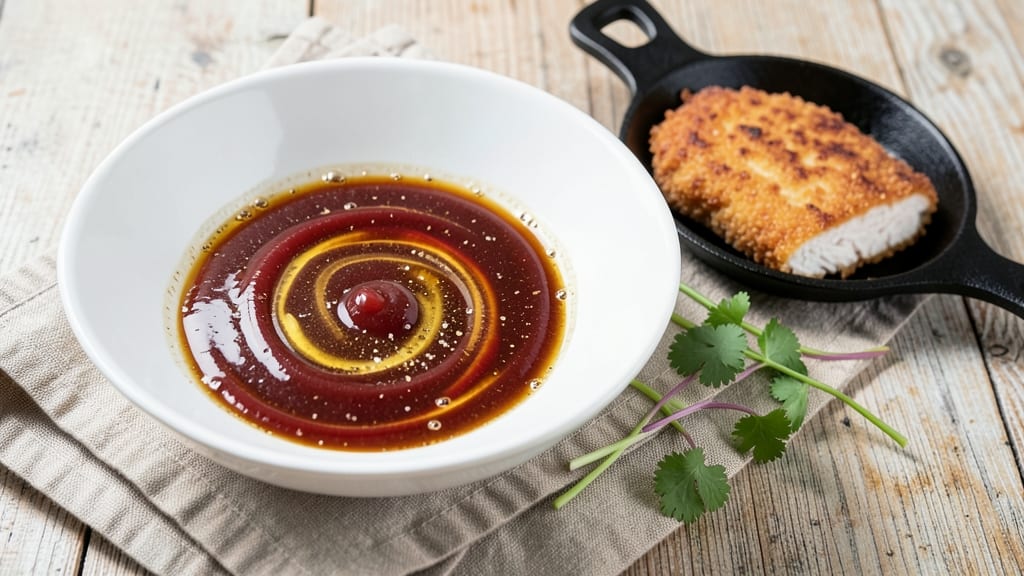
Creating a tonkatsu sauce recipe without Worcestershire is all about building umami depth with simple pantry staples—no complex ingredients required. This simmered sauce delivers that signature sweet-savory balance while keeping the process straightforward and foolproof.
The secret lies in combining soy sauce, dashi powder, and mirin to create a rich, glossy finish that clings perfectly to crispy tonkatsu.
What sets this sauce apart is its reliance on dashi powder for that unmistakable Japanese umami foundation, while mirin adds just enough sweetness to complement the savory notes. Unlike traditional recipes, this version skips Worcestershire entirely, proving you don’t need it to achieve restaurant-quality flavor.
The result? A smooth, velvety sauce that’s perfect for dipping, drizzling, or even as a marinade.
The preparation is simpler than you’d think—just 15 minutes of simmering on the stove, with no special equipment needed. The sauce thickens naturally as it reduces, creating a glossy sheen that makes every bite of tonkatsu irresistible.
Whether you’re serving classic tonkatsu or using it as a glaze for other dishes, this sauce elevates everything it touches.
Best of all, it keeps well in the refrigerator for up to 10 days, making it a versatile addition to your pantry. No more last-minute store runs—just a quick simmer and you’re ready to transform any meal. Let’s get started on this umami-packed creation.
Ingredients for tonkatsu sauce recipe without worcestershire
Nine pantry staples, 15 minutes—this tonkatsu sauce delivers restaurant-quality umami without Worcestershire.
| Ingredient | Amount | Notes |
|---|---|---|
| Soy Sauce 🍶 | ½ cup | Light or dark variety preferred |
| Dashi Powder 🍜 | 1 tbsp | High-quality for authentic umami |
| Mirin 🍶 | ¼ cup | Sweet cooking rice wine |
| Ketchup 🍅 | ¼ cup | Tomato-based for subtle sweetness |
| Sugar 🍚 | 2 tbsp | Granulated or white sugar |
| Water 💧 | ½ cup | For thinning consistency |
| Cornstarch 🌾 | 1 tsp | For thickening slurry |
| Fresh Ginger 🧅 | 1 tsp | Finely grated for subtle heat |
| Garlic Cloves 🧄 | 2 cloves | Minced for aromatic depth |
| Vegetable Oil 🫒 | 1 tbsp | For deglazing pan |
The dashi powder is non-negotiable here—Hondashi or Marukome brands deliver that authentic Japanese depth. Grab the light soy sauce for a cleaner finish, but dark works too if you prefer richness. Mirin? Trader Joe's has a solid budget option, but Kikkoman is the gold standard. The ketchup adds subtle sweetness—Heinz is fine, but French's has a smoother texture. Fresh ginger and garlic? Asian markets often have pre-grated ginger, but I always buy fresh for that zing. The sugar balances everything—white granulated dissolves fastest, but brown adds caramel notes if you're feeling adventurous.
No mirin? Substitute 1 tbsp sugar plus 1 tbsp water—it won't be identical, but close. Ketchup missing? Tomato paste at half the amount works, but you'll lose some natural sweetness. Dashi powder unavailable? Instant dashi granules (like Marukome) are a decent swap. The cornstarch slurry is key—mix it with cold water before adding to prevent clumping. For a smoother sauce, strain it through a fine-mesh sieve. Want more depth? Add 1 tsp fish sauce if you're not avoiding it.
This sauce thickens as it cools, so stir in a splash of water if it's too stiff. Keeps 10 days in the fridge, sealed tightly. Freezes beautifully for 3 months—portion into ice cube trays for single-use servings. The flavor actually improves after 24 hours as everything melds. Double the batch—you'll want leftovers for tonkatsu, grilled chicken, or even as a glaze for seared scallops.
Why You'll Love This Recipe
- Pantry Magic: Between us, this sauce is ridiculously good—and it’s made with stuff you already have. No fancy shopping trips, just soy sauce, a splash of mirin, and a pinch of dashi powder to wake up the flavors.
- Umami Bomb: That first spoonful? Chef’s kiss. The dashi powder brings deep savory notes, while the ketchup and sugar balance it with just the right tang-sweetness—no Worcestershire needed.
- Weeknight Hero: I’ve used this on tonkatsu, ramen, even grilled chicken, and it always delivers. No last-minute ingredient hunts—just open, mix, and serve.
- Budget Win: Honestly, this sauce costs me pennies per serving. A little goes a long way, and leftovers keep for weeks in the fridge—perfect for when I’m too tired to cook from scratch.
Instructions for tonkatsu sauce without Worcestershire
This umami-packed sauce delivers restaurant-quality depth using only pantry staples and precise technique.
Bloom the Aromatics in Vegetable Oil
Heat the 1 tablespoon vegetable oil in a medium saucepan over medium-low heat. Add the 2 cloves minced garlic cloves and 1 teaspoon finely grated fresh ginger—you'll immediately notice the aroma transform as the oils release. Cook for 2-3 minutes until the garlic turns a pale golden color and the ginger loses its raw bite. This gentle cooking prevents bitterness while building the sauce's aromatic foundation.
Here's the thing—don't rush this step. If the garlic starts to brown too quickly, reduce the heat slightly. You're not searing; you're gently infusing flavor. Once the aromatics are fragrant but not colored, you're ready for the next stage of flavor development.
Combine Wet Ingredients for Initial Simmer
Pour in the 0.5 cup soy sauce, 0.25 cup mirin, and 0.25 cup ketchup, stirring constantly to incorporate. Add the 2 tablespoons sugar and 0.5 cup water, then sprinkle in the 1 tablespoon dashi powder. Bring the mixture to a gentle simmer over medium heat, then reduce to low heat and let it cook uncovered for 8-10 minutes. You'll see the sauce reduce slightly and deepen in color—this is when the flavors begin to marry.
I like to stir occasionally during this phase, scraping the bottom of the pan with a wooden spoon to release any fond that might form. The sauce should smell rich and complex, with the sweetness of the mirin and ketchup balancing the saltiness of the soy sauce. If you taste it now, you'll notice the umami developing but still needing refinement.
Thicken with Cornstarch Slurry
In a small bowl, whisk together the 1 teaspoon cornstarch with 2 tablespoons cold water from the original 0.5 cup water measurement until completely dissolved. This creates your thickening agent. Pour this slurry into the simmering sauce while stirring continuously. The sauce will immediately begin to thicken—keep stirring for 2-3 minutes until it reaches a glossy, coatable consistency.
The key here is patience. If the sauce thickens too quickly, add a splash more water. You want it smooth enough to coat the back of a spoon but still pourable. Once properly thickened, give it one final taste and adjust seasoning if needed—perhaps a touch more soy sauce for saltiness or sugar for sweetness. The sauce should now have that perfect balance of sweet, savory, and slightly tangy notes.
Cool and Adjust for Perfect Texture
Remove the sauce from heat and let it cool for 5 minutes. This resting period allows the flavors to fully meld and the texture to stabilize. I've found that tonkatsu sauce tastes even better after cooling slightly—it develops a deeper complexity that you won't get when served immediately hot.
Once cooled, give it one final taste. The sauce should be thick enough to cling to tonkatsu but still smooth enough to drizzle. If it's too thick, thin with a splash of water. If it's too thin, simmer briefly over low heat to reduce. The perfect tonkatsu sauce should coat the back of a spoon but still be pourable. Transfer to a clean jar and store in the refrigerator for up to 2 weeks—it only gets better with time as the flavors continue to develop.
Pro Tips For Making Tonkatsu Sauce Recipe Without Worcestershire
- Simmer Low and Slow: Tonkatsu sauce isn’t about boiling it off—it’s about letting flavors meld. After adding sugar and ketchup, drop the heat to a bare simmer (just tiny bubbles) and keep it there for 8-10 minutes. I used to rush this, and the sauce always tasted flat or cloying. Patience here makes the difference between "meh" and "wow."
- Bloom the Dashi First: Sprinkle that dashi powder into cold water first, stir like you’re dissolving a stubborn stain, then let it sit for 30 seconds before adding to the sauce. This ensures the umami actually disperses instead of clumping into flavorless dust. (Yes, I’ve made that mistake—don’t ask.)
- Balance the Sweet-Sour Ratio: Taste as you go, but don’t just chase sweetness. If the sauce tastes one-note, add a splash of soy sauce (even if it seems salty) to cut through the ketchup’s cloying edge. My first batch was like syrup—adding ½ teaspoon extra soy at the end fixed it. Trust your tongue, not the recipe.
- Use Thick Ketchup: Skip the watery store-brand stuff—go for a chunky, vinegar-forward ketchup (like Heinz Original or a Japanese-style one). It adds body and depth without thinning the sauce. I learned this after three batches of sad, runny tonkatsu glaze. Your future self will notice the difference.
Regional styles of tonkatsu sauce recipe without worcestershire
Japanese Home-Style
This is the classic approach you’d find in Japanese home kitchens, where tonkatsu sauce is often made with minimal ingredients but maximum flavor. The key here is using light soy sauce for a cleaner base and balancing it with mirin for sweetness.
I like to add a pinch of ground white pepper (about ¼ teaspoon) to mimic the subtle heat found in traditional recipes. The sauce is simmered just until it thickens slightly, creating a glossy finish that clings beautifully to crispy tonkatsu. 🍶
Okinawan Fusion Twist
Okinawa’s culinary style loves bold, sweet-savory flavors, so this version swaps ketchup for ½ cup Okinawa-style awamori vinegar (or sub with rice vinegar if unavailable). Add 1 tablespoon grated daikon radish for a refreshing crunch and 1 teaspoon toasted sesame oil at the end for nutty depth.
The vinegar brightens the sauce, making it perfect for dipping spicy tonkatsu or grilled skewers. 🌶️
Korean-Inspired Tangy Sauce
For a Korean-inspired take, replace the mirin with ¼ cup gochujang (Korean chili paste) and add 1 tablespoon rice vinegar for tang. Use dark soy sauce instead of light to deepen the color. Finish with a splash of sesame oil and a sprinkle of toasted sesame seeds for texture.
This version pairs perfectly with pork cutlet (dwaejigogi) or even as a glaze for grilled meats. The gochujang adds a subtle spicy kick that balances the richness. 🔥
Americanized BBQ-Inspired
If you’re craving a smoky twist, swap the dashi powder for 1 tablespoon smoked paprika and add 2 tablespoons BBQ sauce (like Sweet Baby Ray’s) to the ketchup. A dash of liquid smoke (about ½ teaspoon) enhances the depth without overpowering.
This version works amazingly as a glaze for tonkatsu-style pork chops or even as a dipping sauce for fried chicken. The smoky notes complement the crispy exterior beautifully. 💨
Vegetarian Adaptation
For a plant-based version, replace the dashi powder with 1 tablespoon vegetarian dashi (like Hondashi Vegetable) and use tamari instead of soy sauce. Add 1 teaspoon nutritional yeast for a cheesy umami boost and 1 tablespoon maple syrup to replace the mirin.
This sauce is perfect for vegetable tonkatsu or as a marinade for tofu. The nutritional yeast adds a rich, savory depth that mimics the original. 🌱
Thai-Inspired Sweet-Chili
Infuse the sauce with Thai flavors by adding 1 tablespoon fish sauce (or soy sauce for vegetarian) and 1 teaspoon Thai sweet chili sauce. Stir in ½ teaspoon grated lime zest and 1 tablespoon lime juice at the end for brightness.
This version is fantastic for dipping crispy tofu tonkatsu or as a glaze for grilled shrimp. The lime zest adds a refreshing zing that cuts through the richness. 🍋
Nutrition facts
Frequently asked questions
What can I substitute for mirin if I don't have any?
Use 1 tablespoon sugar plus 1 tablespoon water as a substitute—it won't be identical but will add the needed sweetness. For a closer match, try ½ tablespoon rice vinegar plus 1 tablespoon sugar to mimic mirin's tangy-sweet profile. The sauce will still work, though the texture may be slightly thinner.
Can I make this sauce without ketchup?
Replace the ¼ cup ketchup with 2 tablespoons tomato paste mixed with 2 tablespoons water to maintain consistency. For extra depth, add ½ teaspoon smoked paprika or a pinch of garlic powder. The sauce will still achieve that glossy finish, though the color will be slightly less vibrant.
How do I prevent the sauce from getting too thick?
If your sauce thickens too quickly, immediately add 1-2 tablespoons water while stirring. The cornstarch slurry should be added gradually—start with just ½ teaspoon cornstarch if you're concerned. For a smoother texture, strain the sauce through a fine-mesh sieve after cooking. Remember, tonkatsu sauce should coat the back of a spoon but remain pourable.
Can I use this sauce for other dishes besides tonkatsu?
This versatile sauce works beautifully as a dipping sauce for fried chicken, a glaze for grilled meats, or even a marinade for tofu or shrimp. The sweet-savory balance makes it perfect for Asian-inspired dishes. For extra creativity, try drizzling it over ramen noodles or using it as a base for stir-fries. The possibilities are endless!
Why does my sauce taste too salty?
If your sauce tastes overly salty, balance it with 1-2 teaspoons more sugar or a splash of water to dilute the flavor. The mirin and ketchup already add sweetness, so adjust gradually. For a deeper flavor without extra salt, try adding ½ teaspoon grated ginger or a pinch of white pepper to enhance complexity. Taste as you go!