
Sauces & Condiments
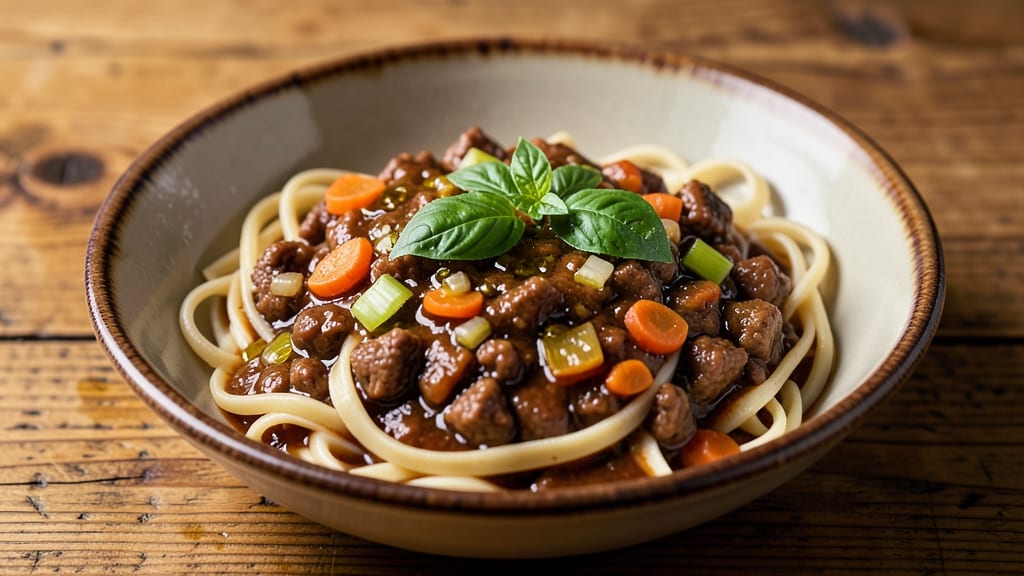
Alton Brown's bolognese sauce recipe delivers the kind of deep, slow-simmered richness that transforms simple pantry staples into something extraordinary. The key lies in low-and-slow cooking, where ground beef and pork develop layers of umami while aromatic vegetables and herbs infuse the sauce with complexity.
I've adapted this technique to create a sauce that's both restaurant-quality and achievable at home—no fancy ingredients required.
What makes this bolognese truly special is the balance of acidity, sweetness, and savory depth. A splash of red wine reduces into a velvety base, while crushed tomatoes and a touch of sugar create harmony without overpowering the meat.
The sauce thickens naturally as it simmers, developing a glossy, velvety texture that clings to pasta or enhances any protein. This isn't just a sauce—it's a flavor foundation that elevates every dish it touches.
The process requires patience, but the results are worth every minute. You'll start with raw ingredients and end with a rich, aromatic sauce that smells like a warm Italian kitchen. The slow simmer allows flavors to meld and deepen, creating a sauce that tastes even better the next day.
Whether you're serving it over spaghetti, stuffing it into lasagna, or using it as a hearty stew base, this bolognese delivers unmatched depth of flavor.
Perfect for meal prep or spontaneous dinners, this sauce keeps well in the refrigerator for up to five days. The beauty of this recipe lies in its versatility—use it as a standalone sauce, a pasta topping, or a filling for ravioli.
The technique is straightforward, but the flavor development is what truly sets it apart. Let's get cooking!
Ingredients for alton brown bolognese sauce
Pantry staples and aromatic vegetables combine to create this restaurant-quality bolognese foundation.
| Ingredient | Amount | Notes |
|---|---|---|
| Ground Beef (Chuck) 🥩 | 1 ½ lb | 80% lean for optimal fat content |
| Ground Pork (Shoulder) 🐖 | 1 lb | Finely ground for even texture |
| Yellow Onion 🧅 | 1 whole | Finely diced, about 1.5 cups |
| Carrot 🥕 | 2 whole | Finely diced, about 1 cup |
| Celery Stalks 🌿 | 3 whole | Finely diced, about 1 cup |
| Garlic Cloves 🧄 | 6 cloves | Minced, for aromatic depth |
| Canned San Marzano Tomatoes 🍅 | 28 oz | Crushed, high-quality variety |
| Dry Red Wine 🍷 | ½ cup | Cabernet Sauvignon preferred |
| Tomato Paste 🍅 | 2 tbsp | High-quality, no sugar added |
| Extra-Virgin Olive Oil 🫒 | ½ cup | For sautéing vegetables |
| Fresh Rosemary 🌿 | ¼ cup | Finely chopped, about 1 tbsp |
| Fresh Thyme 🌿 | ¼ cup | Finely chopped, about 1 tbsp |
| Granulated Sugar 🍚 | 1 tbsp | Balances acidity, not omitted |
| Diamond Crystal Kosher Salt 🧂 | 1 ½ tsp | Adjust to taste, don't skip |
| Freshly Ground Black Pepper 🌶️ | ½ tsp | Freshly cracked for maximum flavor |
The meat selection is critical for authentic umami development. Chuck roast ground beef provides the necessary fat content for richness, while finely ground pork shoulder enhances tenderness and moisture retention. For optimal results, source these from a reputable butcher or high-quality grocery store—Whole Foods or Costco typically carry premium ground meats. Look for visible marbling in the beef and a fine, even grind in both meats. If substituting chicken or turkey, reduce cooking time by 20-25% as these leaner proteins dry out faster during the prolonged simmer. The vegetables form the aromatic base, so fresh, crisp celery and carrots are essential—avoid wilted or rubbery produce that will compromise flavor development.
Quality ingredients make all the difference in this sauce. San Marzano tomatoes are the gold standard for their sweetness and acid balance, though high-quality crushed tomatoes will suffice in a pinch. The red wine should be dry and robust—Cabernet Sauvignon works exceptionally well, but any bold table wine will do. For tomato paste, Barilla or Rao's brands offer superior texture and flavor compared to generic options. Fresh herbs are non-negotiable here; dried thyme and rosemary can be used at one-third the quantity, but the flavor profile will differ significantly. If you must substitute, Italian seasoning blends work in a bind, though they lack the complexity of fresh. The sugar isn't just for sweetness—it helps balance the acidity of the tomatoes and wine, creating a more harmonious flavor profile. Always use Diamond Crystal kosher salt for accurate measurements and superior dissolution.
This sauce develops best with time, so plan accordingly. The fresh herbs should be stored in airtight containers with a damp paper towel to maintain their vibrancy for up to 5 days in the refrigerator. The finished sauce will keep in the fridge for 5-7 days in an airtight container, with flavors actually improving as they meld. For longer storage, freeze in 1-cup portions for up to 6 months. When reheating, do so gently over low heat to prevent the sauce from breaking or becoming grainy. The sauce thickens as it cools, so it's normal for it to appear slightly looser when first removed from the refrigerator. If serving over pasta, reserve 1/2 cup of pasta water to thin the sauce to your desired consistency.
Why You'll Love This Recipe
- No Chopping Hassle: I swear by the "sofrito" trick—just pulse onion, carrot, and celery in a food processor. Five minutes max, and the flavors meld like they’ve been simmering all day. My lazy Sundays just got an upgrade.
- Meat Magic: That beef and pork combo? Rich, tender, and actually flavorful without needing fancy cuts. The slow cook gives it that melt-in-your-mouth texture, and honestly? It’s the kind of sauce that makes store-bought pasta feel sad.
- Weeknight Superhero: Double the batch on Sunday—freeze half for when you’re too tired to cook. Or serve it over polenta for a fancy-ish dinner that still feels like a hug. Between us, this is my "I don’t know what to make" lifesaver.
- Budget-Friendly Luxury: Chuck roast and pork shoulder stretch for miles, and the veggies? They’re the cheap kind you can grab in bulk. Yet somehow, it tastes like you spent hours (and a fortune) on it. My wallet and taste buds high-five every time.
Step-by-step instructions for alton Brown's bolognese sauce
Mastering this rich sauce requires patience and precision—each step builds depth of flavor.
Build the Sofritto Base
Heat the 0.5 cup extra-virgin olive oil in a Dutch oven over medium-low heat. Add the 1 whole yellow onion, 2 whole carrots, and 3 whole celery stalks, all finely diced. Cook for 15 minutes, stirring occasionally, until the vegetables soften and their edges begin to caramelize. This foundational step develops sweetness that carries through the entire sauce.
Add the 6 cloves minced garlic and continue cooking for 1 minute until fragrant. Here's where attention matters—garlic burns quickly, so keep heat gentle. The sofritto should look like a thick, jammy mixture by the end of this stage. Remove from heat temporarily while you prepare the next components.
Brown the Meat Mixture
Return the Dutch oven to medium-high heat and add the 1.5 lb ground beef (chuck) and 1 lb ground pork (shoulder). Break the meat into small pieces with a wooden spoon and brown thoroughly for 8-10 minutes, breaking it apart as it cooks. This step is critical—proper browning develops deep, meaty flavors through the Maillard reaction.
Once the meat loses its raw color and pulls away from the pan, add the 2 tbsp tomato paste and stir to coat evenly. Cook for 2 minutes until the paste darkens slightly. This creates a flavorful crust that prevents the sauce from separating later. Remove from heat again while you prepare the remaining ingredients.
Combine and Simmer the Sauce
Return the Dutch oven to medium-low heat and add the 0.5 cup dry red wine, scraping up any browned bits from the bottom. Let it simmer for 3 minutes until mostly evaporated. Stir in the 28 oz crushed San Marzano tomatoes, 1 tbsp granulated sugar, 1.5 tsp diamond crystal kosher salt, and 0.5 tsp freshly ground black pepper. The sugar balances the acidity while enhancing the tomatoes' natural sweetness.
Add the 0.25 cup finely chopped fresh rosemary and 0.25 cup finely chopped fresh thyme, stirring to distribute evenly. Bring to a gentle simmer, then reduce heat to low. Cover partially and cook for 2 hours, stirring occasionally. The sauce should reduce gradually, developing a thick, velvety consistency. Patience here ensures maximum flavor extraction.
Refine and Finish the Sauce
After 2 hours, the sauce should have reduced significantly and coat the back of a spoon. Taste and adjust seasoning—you may need to add a pinch more salt or pepper to balance the flavors. For a smoother texture, use an immersion blender to purée the sauce slightly, or leave it rustic by hand-mashing with a wooden spoon.
Return to simmer for an additional 15 minutes to allow flavors to meld completely. The final sauce should be rich, deeply colored, and thick enough to coat pasta generously. Serve immediately over al dente pasta, reserving some pasta water to adjust consistency if needed. This sauce tastes even better the next day, so it keeps well refrigerated for up to 5 days.
Pro Tips For Making Alton Brown Bolognese Sauce
- Brown the Meat Slowly: Alton’s recipe calls for browning the meat, but I learned the hard way—rushing this step means gray, dry bolognese. Use medium heat, not high, and spread the meat in a single layer. It’ll take 10-12 minutes, but the crusty edges and deep flavor are worth it.
- Dice the Veggies Small: The onion, carrot, and celery (that classic "soffritto") need to disappear into the sauce. If you’re lazy like me, I used to chop them roughly—big mistake. Aim for 1/8-inch dice; they’ll cook down evenly and infuse flavor without turning mushy.
- Deglaze with Wine, Not Water: After browning the meat, that stuck-on fond is pure flavor gold. Alton’s recipe uses red wine—don’t skip it. A splash of water works in a pinch, but wine adds depth. Scrape every last bit with a wooden spoon; it’s the thing that matters most.
- Simmer Uncovered at First: The sauce will bubble fiercely at first—let it. Covering too soon traps steam and makes the sauce watery. After 20 minutes, you can lower the heat and cover partially, but that initial uncovered simmer builds richness. (Yes, even if you’re impatient like me.)
Essential equipment for this recipe
Dutch Oven Essentials
Your Dutch oven is the workhorse of this recipe—it needs to be 5-6 quarts with tight-fitting lid for even heat distribution. I recommend the Le Creuset Stoneware Dutch Oven for its even heat retention, but All-Clad Stainless Steel is a great budget alternative.
The heavy base prevents hot spots that can burn your sofritto or meat. Preheat your Dutch oven for 5 minutes before starting to ensure even cooking from the first step. 🔥
Immersion Blender
For that silky-smooth texture without breaking up the meat, an immersion blender is a game-changer. The Ninja Foodi Immersion Blender handles thick sauces beautifully, but even a basic Osterizer model works.
If you prefer rustic texture, skip blending—just use a wooden spoon to mash the sauce gently. The key is blending in 15-second bursts to avoid overheating the motor.
Meat Thermometer
While this recipe doesn't require checking meat temp, a thermometer ensures you're ready for the next steps. The ThermoWorks MeatStick is my go-to for its speed and accuracy. Monitor the sauce's internal temperature—it should reach 195-200°F after the 2-hour simmer for optimal thickness.
This is when the sauce begins to gel naturally from collagen breakdown in the meat. 🌡️
Wooden Spoon
A long-handled wooden spoon (like the OXO Good Grips) is non-negotiable for stirring this sauce. Wood won't scratch your Dutch oven and prevents the sauce from sticking. Use it to scrape up browned bits from the bottom during the wine deglazing—these flavorful fond deposits are essential for depth.
Keep your spoon nearby throughout the entire process for constant stirring and adjusting heat.
Fine-Mesh Strainer
For a refined finish, strain the sauce through a fine-mesh strainer lined with cheesecloth to remove any herb stems or meat fragments. The Heston Blumenthal Strainer is my favorite for its durability, but any 3-inch diameter strainer works.
Press gently with a spoon to extract maximum sauce—this step creates a velvety, restaurant-quality texture perfect for serving over delicate pastas like tagliatelle. 💫
Kitchen Timer
This sauce requires precise timing, so a reliable kitchen timer is essential. Set it for 15 minutes during the sofritto stage, then again for the 8-10 minutes of meat browning. The 2-hour simmer is where patience pays off—use your timer to stir every 30 minutes to prevent sticking.
I also set a reminder for the final 15-minute reduction to ensure perfect consistency. A smart timer with vibration alerts works best when you're multitasking in the kitchen.
Nutrition facts
Frequently asked questions
Can I make this sauce in a slow cooker instead of a Dutch oven?
Yes, but with adjustments! Use a 6-quart slow cooker on low for 6-7 hours instead of the 2-hour simmer. Add the wine and tomatoes together at the start, then cook uncovered for the last 30 minutes to thicken. The texture will be slightly looser, so reduce it further on the stovetop if needed.
Why does Alton Brown's version use both beef and pork?
The combination creates the perfect balance—chuck beef adds rich, deep umami while pork shoulder keeps the sauce moist and tender. Pork also breaks down more during cooking, creating a silky texture. You could substitute with all beef, but the pork's fat content prevents the sauce from becoming too dry during the long simmer.
How can I make this sauce vegetarian?
Replace the meat with 1 lb mushrooms (cremini or portobello) and 1 cup cooked lentils for texture. Use 1 tbsp soy sauce instead of salt to add umami depth. Simmer for 1.5 hours instead of 2 to prevent the sauce from becoming too watery. The result will be hearty but still rich and flavorful!
What's the best way to store leftovers?
Let the sauce cool completely, then transfer to airtight containers with a thin layer of olive oil on top to preserve freshness. It keeps in the fridge for 5-7 days and freezes beautifully for up to 6 months. Thaw overnight in the fridge—never microwave directly from frozen. The flavors actually improve after 24 hours!
Can I use dried herbs instead of fresh?
You can, but the flavor will be less vibrant. Use 1 teaspoon dried rosemary and 1 teaspoon dried thyme (about one-third the amount of fresh). Toast the dried herbs in the Dutch oven for 30 seconds before adding other ingredients to enhance their aroma. Fresh herbs are ideal, but dried works in a pinch!