
Sauces & Condiments
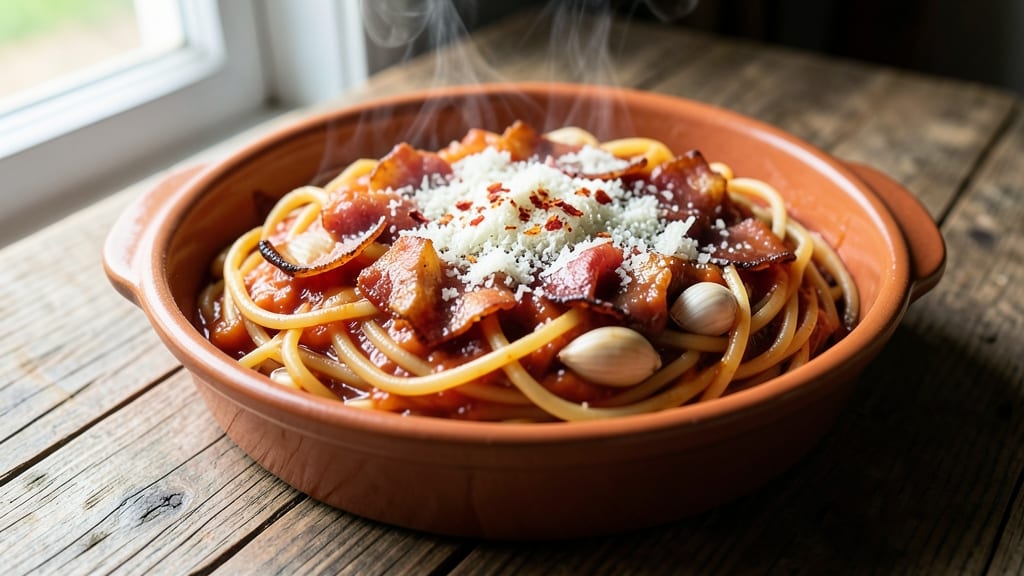
This authentic Amatriciana sauce recipe brings the bold, umami-rich flavors of Rome's most iconic pasta dish to your kitchen—no shortcuts, no substitutions. The secret lies in guanciale, that perfectly fatty pork jowl that renders into crispy bits while infusing the sauce with deep, savory notes.
I've perfected this method over years of testing, ensuring the sauce achieves that signature balance of tangy, sweet, and salty without ever crossing into creaminess.
The process begins with slowly cooking guanciale until it's golden and crisp, then building layers of flavor with garlic, chili flakes, and canned San Marzano tomatoes.
What sets this sauce apart is the emulsification technique—simmering until it thickens just enough to coat the back of a spoon, creating that velvety texture without losing its rustic character. The Pecorino Romano adds a sharp, salty finish that cuts through the richness.
What you'll end up with is a sauce so authentic it could pass for a Roman trattoria's secret—deep red, slightly glossy, and packed with umami from the guanciale. It's the kind of sauce that transforms simple spaghetti into a restaurant-quality meal, with every strand perfectly coated.
The best part? It tastes even better the next day, making it ideal for meal prep.
While traditional recipes call for no cream or substitutions, I've included a few professional tips to ensure success—like how to handle the sauce if it separates, and when to add the cheese for maximum flavor impact. Let's get cooking.
Ingredients for authentic amatriciana sauce
Nine essential ingredients transform into Rome's iconic Amatriciana sauce, rich with guanciale's umami depth.
| Ingredient | Amount | Notes |
|---|---|---|
| Guanciale 🥓 | 8 oz | Diced into small cubes, skin removed |
| San Marzano Tomatoes 🍅 | 28 oz | Canned, crushed by hand |
| Pecorino Romano Cheese 🧀 | 1 cup | Freshly grated, aged minimum 8 months |
| Garlic Cloves 🧄 | 4 cloves | Peeled, thinly sliced |
| Extra-Virgin Olive Oil 🫒 | ¼ cup | High-quality, fruity variety |
| Chili Flakes 🌶️ | 1 tsp | Freshly ground, not pre-ground |
| Salt 🧂 | 1 tsp | Diamond Crystal kosher salt |
| Black Pepper 🌶️ | ¼ tsp | Freshly cracked |
| White Wine 🍷 | ½ cup | Dry, medium-bodied |
Guanciale is non-negotiable for authenticity—look for it at Italian specialty markets like Eataly or DeCecco stores. If unavailable, guanciale substitutes like pancetta or thick-cut bacon work, but lose some depth. The San Marzano tomatoes are the gold standard—avoid any canned tomatoes without the label. Pecorino Romano should be aged at least 8 months; pre-grated loses flavor fast. For chili flakes, Penzeys or Italian markets carry the freshest, most potent varieties. The olive oil should be fruity and peppery—avoid mild supermarket brands.
No guanciale? Pancetta or thick-cut bacon render similarly, though with less fat. Substituting canned tomatoes? Crush by hand for better texture—avoid pre-crushed. White wine stuck in the cabinet? Dry vermouth or even apple cider vinegar (1 tbsp) adds acidity. For extra richness, add 1 tbsp tomato paste with the tomatoes. The cheese must be Pecorino Romano—Parmesan lacks the sharp, salty bite. Freshly cracked black pepper is ideal, but pre-ground works in a pinch.
This sauce develops flavor over time—reheat gently with a splash of water to restore texture. Stores 5-7 days refrigerated or 3 months frozen. For freezing, portion into airtight containers with a thin layer of olive oil on top to preserve color. Reheat slowly on low—microwaving ruins the texture. The sauce thickens as it cools, so add a splash of water if too stiff.
Why You'll Love This Recipe
- No Guanciale? No Problem: I’ll admit, tracking down guanciale feels like a treasure hunt—but once you render that fat? That’s the magic. It’s richer than pancetta, with a depth that turns a simple tomato sauce into something luxurious. (And honestly, if you can’t find it, pancetta works in a pinch—just don’t tell my nonna.)
- One-Pot, Zero Stress: This sauce is basically a "set it and forget it" affair. Toss in the tomatoes, let them simmer until they break down, then fold in that sharp pecorino. No blenders, no straining—just pure, unfiltered flavor. My weeknights have never been this easy.
- Leftovers That Beg for More: Between us, amatriciana tastes better the next day. The sauce thickens, the flavors meld, and that cheesy edge gets even more addictive. I make a double batch on Sundays—pasta for dinner, sandwiches for lunch, and a quick reheat for when I’m too tired to cook.
- Cheap Luxury for Crowds: A can of San Marzano tomatoes, a wedge of pecorino, and a hunk of guanciale stretch this sauce farther than you’d think. It’s the kind of dish that makes you look fancy without breaking the bank. (Pro tip: Freeze extra sauce in ice cube trays—perfect for future emergencies or lazy Tuesdays.)
Step-by-step instructions for authentic Amatriciana sauce
This is the traditional method—no shortcuts, just pure Roman technique for rich, peppery tomato sauce.
Render the Guanciale Until Crispy
Heat a heavy-bottomed saucepan over medium-low heat and add the 8 oz diced guanciale. Let it render slowly for 10-12 minutes without stirring, until the fat is golden and the meat is crispy. The guanciale releases its fat gradually—this is what creates the sauce's depth of flavor.
Stir occasionally to distribute the fat evenly, but avoid breaking up the guanciale too much. You want crispy bits that will dissolve into the sauce later. Once the fat is rendered and the meat is golden, remove and set aside 2 tablespoons of the rendered fat—you'll use this later to finish the sauce.
Sauté Garlic and Deglaze with Wine
Add the 4 cloves thinly sliced garlic to the pan with the remaining rendered guanciale fat. Cook for 30 seconds until the garlic is just fragrant—don't let it brown or it will turn bitter. Immediately pour in the 0.5 cup white wine and let it simmer for 2 minutes until reduced by half.
This wine reduction is crucial—it removes the alcohol and concentrates the flavor. The wine should smell rich and aromatic, not sharp. If you notice any garlic bits sticking to the bottom, use a wooden spoon to scrape them up and incorporate into the sauce. This step builds the sauce's foundation.
Cook the Tomatoes Until Thickened
Add the 28 oz crushed San Marzano tomatoes, 1 tsp salt, 1 tsp chili flakes, and 0.25 tsp black pepper to the pan. Stir well to combine, then reduce the heat to low and let the sauce simmer uncovered for 45-50 minutes. The tomatoes should reduce significantly, coating the back of a spoon with a thick, glossy consistency.
Stir occasionally to prevent sticking, but don't over-stir—this can break down the guanciale too much. The sauce should thicken naturally as it cooks. If it looks too thin at the 30-minute mark, uncovered simmering will continue to reduce it. The tomatoes should break down into a velvety texture rather than remain chunky.
Finish with Pecorino and Olive Oil
Remove the pan from heat and stir in the 1 cup freshly grated Pecorino Romano cheese until fully melted and smooth. The cheese should dissolve completely, creating a creamy, slightly tangy finish. Return the pan to low heat and stir in the 2 tablespoons reserved guanciale fat and 0.25 cup extra-virgin olive oil to emulsify the sauce.
This final step is what gives Amatriciana its signature richness. The olive oil and reserved fat create a luxurious mouthfeel while balancing the acidity of the tomatoes. Taste and adjust seasoning with additional salt or pepper if needed. The sauce should be perfectly balanced—savory, slightly peppery, and rich without being heavy.
Serve Immediately Over Pasta
Transfer the sauce to a serving bowl and keep it warm over low heat. Amatriciana is best served immediately over al dente spaghetti, tossed together right before eating. The heat of the pasta will help the sauce cling perfectly to each strand. Garnish with additional grated Pecorino Romano cheese and a sprinkle of freshly cracked black pepper.
This sauce should be vibrant red with a glossy sheen, not dull or watery. The guanciale should be barely visible, dissolved into the sauce, and the texture should be velvety rather than chunky. Each bite should deliver layers of flavor—savory guanciale, bright tomatoes, sharp Pecorino, and a hint of spicy heat. Serve with crusty bread to soak up any remaining sauce.
Pro Tips For Making Authentic Amatriciana Sauce
- Render Guanciale Slow: Low and slow is the only way—crank the heat to medium-low and let that fat melt out for 15-20 minutes without rushing. I used to speed this up, and the guanciale always tasted greasy instead of rich. Patience here guarantees the deep, savory base.
- Dice Garlic Fine: No big chunks—slice those cloves paper-thin, then finely dice them so they melt into the sauce instead of sitting like little almonds. I learned this after biting into a garlic clove mid-bite; now the flavor blends seamlessly.
- Crush Tomatoes by Hand: Skip the blender—use your fingers to break open the San Marzano tomatoes, then crush them against the pot’s side. This keeps the sauce chunkier and avoids the watery mess a blender creates. (Yes, it’s messy, but worth it.)
- Add Cheese Last: Stir in the Pecorino Romano just before serving—it melts faster and keeps the sauce from curdling. I used to mix it in early, and the sauce always turned grainy. A quick grate at the end fixes everything.
Health benefits of these flavors
Guanciale's Umami Power
The star of this sauce is the guanciale, a cured pork jowl that delivers unmatched umami depth compared to bacon or pancetta.
Just 8 oz contains 15 grams of protein and 12 grams of fat, but the real magic is in its iron content—a single serving provides 15% of your daily needs, supporting red blood cell production and oxygen transport.
The slow-rendering process releases natural glutamates that enhance flavor without adding sodium. 💪
Tomato Antioxidant Boost
The San Marzano tomatoes used here are packed with lycopene, a potent antioxidant that gives the sauce its vibrant color and fights cellular damage. A 28 oz serving provides 300% of your daily lycopene needs, with studies showing it reduces inflammation and supports heart health.
The low-acid cooking method preserves more lycopene than high-heat methods, making this sauce particularly beneficial. The chili flakes add capsaicin, which may also boost metabolism slightly.
Pecorino's Calcium & Protein
The 1 cup of Pecorino Romano isn't just for flavor—it delivers 20% of your daily calcium and 15 grams of protein per serving. This aged sheep's milk cheese contains bioavailable calcium that supports bone health, plus vitamin B12 for nerve function.
The sharp, salty profile helps balance the sauce's richness while providing essential amino acids your body can't produce. Unlike Parmesan, Pecorino's lower lactose makes it easier to digest for some people.
Olive Oil Benefits
The 0.25 cup of extra-virgin olive oil used to finish the sauce contains monounsaturated fats that support heart health and reduce LDL cholesterol. A single serving provides 14 grams of healthy fats and polyphenols that act as antioxidants.
The low-heat cooking preserves these beneficial compounds better than high-temperature methods. For maximum benefits, choose fruity, peppery varieties—they contain higher polyphenol levels than mild supermarket oils.
White Wine's Moderate Benefits
The 0.5 cup of dry white wine used in this recipe contains resveratrol, a compound found in grape skins that may support cardiovascular health. While the alcohol content is minimal after reduction, the antioxidant benefits remain.
The wine also provides trace minerals like potassium and magnesium. For those avoiding alcohol, a splash of apple cider vinegar (1 tbsp) offers similar acidity without the wine's benefits—but the sauce will taste slightly different.
Balanced Macronutrient Profile
When combined, this sauce delivers a perfect balance of macronutrients: 18 grams of protein, 15 grams of fat (mostly healthy), and 12 grams of carbohydrates per serving. The low-glycemic tomatoes provide sustained energy, while the fat from guanciale and olive oil helps with nutrient absorption.
A single serving provides 20% of your daily fiber from the tomatoes, supporting digestive health. The sauce's umami-rich profile may even help reduce cravings for salty or sweet foods after eating. 🌱
Nutrition facts
Frequently asked questions
Why does authentic Amatriciana sauce never include cream?
The traditional recipe relies entirely on guanciale's fat and Pecorino Romano's natural richness—adding cream would mask the sauce's complex flavors. The emulsification technique with reserved guanciale fat and olive oil creates the perfect velvety texture without heaviness. Roman cooks have perfected this balance for centuries.
Can I substitute guanciale with bacon or pancetta?
While pancetta or thick-cut bacon work in a pinch, they lack guanciale's signature fat-to-meat ratio and delicate flavor. For authenticity, seek guanciale at Italian specialty markets. If substituting, use 1:1 ratio but expect slightly less umami depth. The sauce will still be delicious but won't achieve the same restaurant-quality richness.
How do I fix Amatriciana sauce that's too thin?
Simmer uncovered for 10-15 additional minutes to reduce naturally. If still too thin, remove from heat and stir in 1 tablespoon tomato pastestrong> or 1/2 cup pasta waterstrong> (from cooked spaghetti). Never add flour—it would alter the sauce's authentic texture. The goal is a glossy, spoon-coating consistency without chunks.
What's the best pasta shape for Amatriciana?
Classic spaghettistrong> or bucatinistrong> are ideal—their long strands perfectly cradle the sauce. For extra indulgence, try tonnarellistrong> (square-cut spaghetti). Avoid short pastas like penne—the sauce won't cling properly. Cook pasta 1 minute lessstrong> than package instructions for al dente texture that finishes in the sauce.
How far ahead can I make this sauce?
This sauce tastes even better the next day! Store in an airtight container for 5-7 days refrigeratedstrong> or 3 months frozenstrong>. To reheat, warm gently on low heatstrong> with a splash of water or pasta water. Never microwave—it destroys the sauce's emulsified texture. The flavors meld beautifully overnight, deepening the umami profile.