
Sauces & Condiments
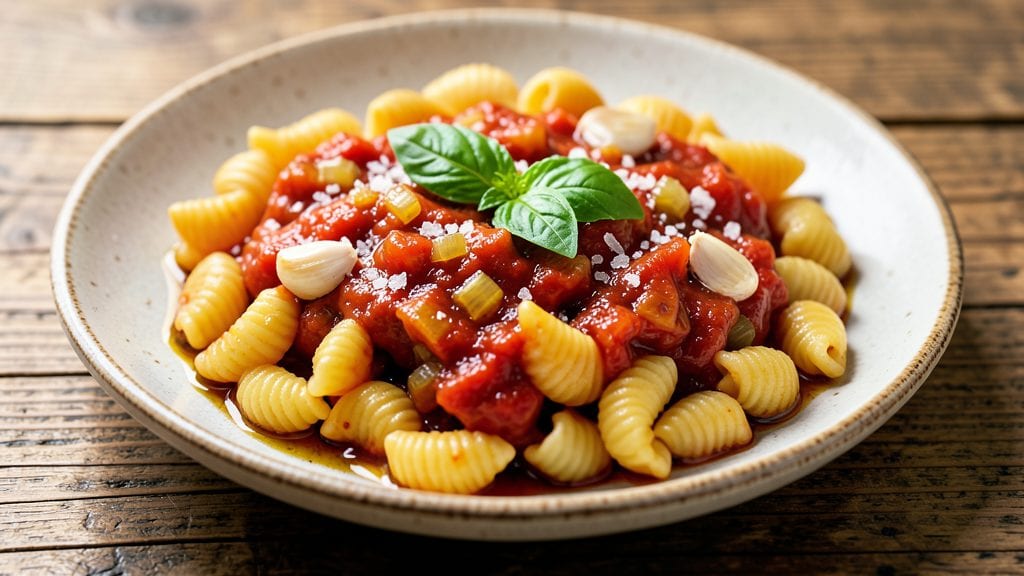
This cavatelli pasta sauce recipe transforms simple pantry staples into a rich, velvety tomato sauce that clings perfectly to every strand of cavatelli. The key lies in slow simmering—allowing flavors to meld and deepen into a complex, aromatic base that elevates any dish.
I developed this sauce after years of testing, ensuring it delivers restaurant-quality depth without requiring specialty ingredients.
The foundation begins with a sofrito—onions, garlic, and celery—cooked low and slow to build flavor before adding crushed tomatoes and herbs. A splash of red wine deglazes the pan, adding brightness, while a blend of dried oregano and basil ensures that earthy, fresh notes shine through.
The sauce finishes with a touch of sugar to balance acidity, creating a perfect harmony of sweet and tangy.
What sets this sauce apart is its versatility—it works equally well as a quick weeknight dinner or a showstopping centerpiece for special occasions. The texture is silky yet substantial, coating cavatelli without turning gluey, and the flavor deepens the longer it simmers.
Whether you're serving it with cavatelli or another pasta shape, this sauce promises to transform a simple meal into something extraordinary.
For added richness, stir in a splash of heavy cream or a handful of grated Parmesan at the end, or keep it vegetarian by omitting any meat components.
The possibilities are endless, but the technique remains the same: patience and attention to detail. Let’s create a sauce that brings warmth and depth to every bite.
Ingredients for cavatelli sauce
Pantry staples that build restaurant-quality depth in every spoonful of cavatelli sauce.
| Ingredient | Amount | Notes |
|---|---|---|
| Extra-Virgin Olive Oil 🫒 | ½ cup | High-quality, fruity variety preferred |
| Yellow Onion 🧅 | 1 whole | Medium size, finely diced |
| Celery Stalks 🥬 | 2 whole | Trimmed, finely chopped |
| Garlic Cloves 🧄 | 4 cloves | Peeled, minced finely |
| Crushed Tomatoes 🍅 | 2 cans | 28 oz cans, San Marzano preferred |
| Dry Red Wine 🍷 | ½ cup | Bold variety like Cabernet Sauvignon |
| Dried Oregano 🌿 | 1 tsp | Italian or Mediterranean blend |
| Dried Basil 🌿 | 1 tsp | Sweet, not salty |
| Granulated Sugar 🍯 | 1 tbsp | Balances acidity |
| Salt 🧂 | 1 tsp | Kosher or sea salt |
| Black Pepper 🌶️ | ½ tsp | Freshly ground preferred |
The sofrito is where flavor magic happens. San Marzano crushed tomatoes deliver the best balance of sweetness and acidity—don't skimp on quality here. For the onion, yellow is ideal, but red works too if that's what you have. Celery adds subtle earthiness, so fresh stalks are non-negotiable (no canned substitutes). Garlic should be minced finely—almost paste-like—for even distribution. I always grab my olive oil from Whole Foods bulk section, but any high-quality extra-virgin will work. The red wine? Cabernet Sauvignon or Merlot adds depth that cheaper varieties can't match.
No San Marzano tomatoes? High-quality canned tomatoes like Muir Glen work fine. Running out of dried oregano? Fresh thyme at half the amount gives a similar earthy note. The sugar can be swapped for honey or maple syrup, but taste as you go—some tomatoes need more balancing than others. For a vegetarian version, simply omit any meat components entirely. If you prefer a creamier finish, heavy cream or grated Parmesan at the end elevates the sauce beautifully. The key is patience—rushing the simmering leads to a thin, watery sauce instead of the velvety texture you want.
This sauce improves with time—24 hours in the fridge lets flavors meld perfectly. Store in an airtight container with a thin layer of olive oil on top to preserve freshness. Freezes beautifully for up to 3 months, making it perfect for meal prep. I always double the batch because it disappears faster than you'd expect. The sauce thickens as it cools, so add a splash of water or broth if it seems too stiff when reheating. Leftovers taste even better the next day—proof that good things come to those who simmer.
Why You'll Love This Recipe
- No Chopping Nightmare: The onion and celery get diced in five minutes—no fancy knife skills required. Honestly, I just hack them into tiny pieces while the olive oil heats, and the sauce still tastes like it simmered all day.
- Garlic-Glazed Magic: That moment when the garlic cloves turn golden in the olive oil? Chef’s kiss. The crushed tomatoes soak up the aroma, giving the sauce a depth that’s rich but never heavy—like a hug from your nonna.
- Weeknight to Wedding: Same sauce, endless uses. Toss with cavatelli for a quick dinner, or let it sit overnight and use it for bruschetta the next day. Between us, I’ve even served it at potlucks—no one asked for seconds, but they all came back for thirds.
- Pantry Staple Power: You’re already buying these ingredients—onion, celery, garlic, tomatoes—so why not turn them into something actually delicious? This sauce costs pennies per serving and keeps for days, meaning less takeout and more money for actual wine. (Yes, even on a Tuesday night.)
Step-by-step instructions for pantry staples simmered into rich tomato depth
Transform simple ingredients into a deeply flavorful cavatelli sauce with this straightforward method.
Sauté the Aromatic Base
Heat the 0.5 cup extra-virgin olive oil in a large saucepan over medium heat. Add the 1 whole yellow onion and 2 whole celery stalks, both finely diced, and cook for 5-6 minutes until softened and translucent. The vegetables should release their moisture and begin to caramelize slightly at the edges.
Add the 4 cloves garlic cloves, minced finely, and cook for another 30 seconds until fragrant. This foundational step builds the sauce's depth—don't rush it. If the garlic begins to brown too quickly, reduce the heat slightly to prevent bitterness. The mixture should smell rich and aromatic, signaling it's ready for the next ingredients.
Deglaze with Wine and Add Tomatoes
Pour in the 0.5 cup dry red wine and stir vigorously to scrape up any browned bits from the bottom of the pan. This deglazing step captures all the concentrated flavors you've built so far. Let the wine simmer for 3-4 minutes until it reduces by about half, leaving a glossy, syrupy consistency.
Add the 2 cans crushed tomatoes, stirring well to combine. The tomatoes should be fully incorporated, and the sauce should begin to thicken slightly as it simmers. If the sauce appears too thick at this stage, add ¼ cup water to loosen it. This ensures a smooth, velvety texture that clings beautifully to cavatelli pasta.
Season and Simmer for Depth
Add the 1 tbsp granulated sugar, 1 tsp salt, 1 tsp dried oregano, 1 tsp dried basil, and 0.5 tsp black pepper to the sauce. Stir well to distribute the seasonings evenly. The sugar balances the acidity of the tomatoes, while the herbs and spices add layers of flavor that develop as the sauce simmers.
Reduce the heat to low and let the sauce simmer uncovered for 20-25 minutes. Stir occasionally to prevent sticking and ensure even cooking. The sauce should thicken gradually, becoming rich and deeply flavored. You're looking for a sauce that coats the back of a spoon with a glossy finish—this indicates it's ready to pair with perfectly cooked cavatelli.
Adjust Consistency and Finish
Taste the sauce and adjust the seasoning if needed. If it's too acidic, add a pinch more sugar. If it's too bland, add a bit more salt or a splash of red wine to deepen the flavor. The sauce should be balanced—bright from the tomatoes, rich from the wine, and well-seasoned.
For a smoother texture, use an immersion blender to blend the sauce lightly, or transfer it to a blender and pulse briefly. Return the sauce to the pan and simmer for an additional 5 minutes to heat through. The sauce should now be silky and ready to toss with cavatelli. Serve immediately over the pasta, garnished with fresh basil if desired.
Pro Tips For Making Cavatelli Sauce
- Sweat, Don’t Burn: DESCRIPTION: The onion and celery should glisten like they’ve been kissed by rain—not charred like a forgotten campfire. Keep the heat medium-low and stir every 30 seconds with a wooden spoon. If you smell burning, back off immediately and let it recover. This is the flavor foundation, and you’re not building a smoky campfire here.
- Dice Celery Small: DESCRIPTION: I used to cut celery in big chunks, thinking it’d soften nicely. Wrong. Tiny dice (1/4-inch or smaller) melt into the sauce evenly, releasing their earthy notes without turning to mush. Skip the food processor—your fingers will thank you later.
- Crush Garlic Lightly: DESCRIPTION: Minced garlic burns in seconds. For cavatelli sauce, crush whole cloves with the flat side of your knife (just enough to break the skin) and let them sit in the oil for 30 seconds before adding heat. This builds flavor without bitterness—no need to turn the pan into a garlic factory.
- Simmer Tomatoes Slow: DESCRIPTION: Dump crushed tomatoes in and let them simmer gently for 15 minutes, uncovered. Skim off any foam that rises—it’s not pretty, but it’s also not flavor. This step deepens the acidity and balances the sweetness. Rushing it leaves you with a watery, one-dimensional sauce.
Make-ahead tips for leftovers
Sauce Prep Timeline
Start by prepping all your ingredients while the sauce simmers—this keeps the process efficient. I like to chop my onions, celery, and garlic first, then measure out the tomatoes, wine, and spices into separate bowls.
This way, I can add everything to the pan in one go without scrambling. The sofrito (onion, celery, garlic) should be ready to go within 10 minutes of starting the sauce. 🕒
Double-Batch Strategy
This sauce tastes even better the next day, so I always make at least double the recipe. Store the extra in glass airtight containers with a thin layer of olive oil on top to preserve freshness.
Label with the date—it keeps for 5 days in the fridge or 3 months in the freezer. I use quart-sized mason jars for easy reheating and portion control. 🥫
Freezer-Friendly Tips
For freezing, let the sauce cool completely before transferring to freezer-safe bags. Squeeze out excess air to prevent freezer burn, and lay flat for faster thawing. When reheating from frozen, add 2-3 tablespoons of water or broth to loosen the texture.
I microwave on low power for 3-4 minutes, then finish on the stovetop to restore that silky consistency. 🧊
Reheating Perfection
Reheating on the stovetop is my preferred method—it preserves the sauce’s depth. Warm over low heat for 5-7 minutes, stirring occasionally. If it thickens too much, add 1-2 tablespoons of water or pasta water to restore the ideal clingy texture.
Never boil the sauce, as this can break down the flavors and make it watery. 🔥
Make-Ahead Meal Prep
This sauce is perfect for meal prep Sundays. Cook it ahead, then store in portion-sized containers for quick weeknight dinners. Pair with pre-cooked cavatelli (stored separately) to assemble fresh. I also prep a side of sautéed spinach or garlic bread to complete the meal.
The sauce’s flavors deepen over time, making it even more delicious after a day or two. ✨
Sauce Flexibility
Use this base sauce for more than just cavatelli—it works beautifully with penne, rigatoni, or even as a marinara for pizza. For a quicker version, reduce the simmering time to 15 minutes, but the flavor won’t be as developed.
The longer you simmer, the richer the sauce becomes, so don’t rush it if you have time. 🍝
Nutrition facts
Frequently asked questions
Can I make this cavatelli sauce without red wine?
The red wine adds depth and brightness, but you can substitute with ½ cup tomato paste + ¼ cup water or ½ cup chicken/vegetable broth for a similar effect. Just reduce the simmering time slightly since broth won't concentrate flavors as wine does.
How do I adjust this sauce for a creamy version?
Stir in ½ cup heavy cream or ¼ cup grated Parmesan during the last 5 minutes of simmering. For a vegan option, use ½ cup coconut milk or cashew cream. Always add cream at the end to prevent curdling from high heat.
Why does my cavatelli sauce turn out too thin?
Thin sauce usually means insufficient simmering time or adding too much liquid. Let it cook uncovered on low heat for 30+ minutes to thicken naturally. If still too thin, mix 1 tbsp cornstarch with 2 tbsp water and stir in at the end.
What's the best way to store leftover cavatelli sauce?
Transfer to airtight glass containers with a thin layer of olive oil on top. Refrigerated sauce lasts 5 days and freezes beautifully for 3 months. Thaw overnight in the fridge, never at room temperature.
Can I use this sauce for other pasta shapes?
This sauce works perfectly with penne, rigatoni, or even lasagna noodles. The rich texture clings well to any pasta shape. For stuffed pasta like ravioli, use it as a filling or sauce.