
Sauces & Condiments
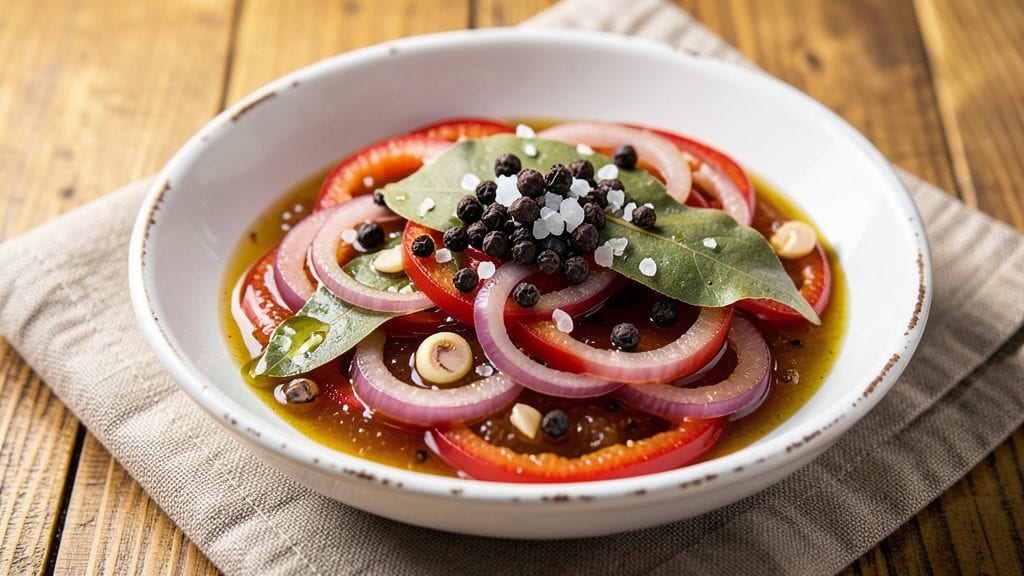
This escabeche sauce recipe delivers the tangy, vinegar-bright flavor that transforms simple proteins and vegetables into restaurant-worthy dishes. The combination of white vinegar, olive oil, garlic, and aromatic spices creates a versatile sauce that works as both a marinade and a pickling liquid.
I developed this version after realizing how much simpler and more flavorful homemade escabeche is compared to store-bought alternatives.
The beauty of escabeche lies in its simplicity—just five core ingredients come together to create a sauce that's bold enough to stand alone or subtle enough to complement. Simmering the vinegar, oil, and spices for just 10 minutes allows the flavors to meld without losing their bright acidity.
The result is a sauce that's equally effective for pickling shrimp, marinating chicken, or adding tangy depth to salads.
What sets this escabeche apart is its balance: the vinegar's sharpness is softened by olive oil, while garlic and spices add layers of complexity. The sauce maintains its crisp, tangy profile even after refrigeration, making it perfect for meal prep.
Whether you're using it to pickle vegetables or tenderize meats, this escabeche will elevate your dishes with minimal effort.
Traditionally used in Spanish and Latin American cuisine, this sauce works equally well in modern dishes. Let's create it—your taste buds will thank you for the bright, vinegar-forward flavor that lasts for weeks in the refrigerator.
The instructions ahead will guide you through every step to achieve professional results at home.
Ingredients for escabeche sauce
Five core ingredients transform into a tangy sauce perfect for pickling or marinating proteins.
| Ingredient | Amount | Notes |
|---|---|---|
| White Vinegar 🍶 | 1 cup | Distilled or apple cider vinegar |
| Extra-Virgin Olive Oil 🫒 | ½ cup | High-quality, fruity variety |
| Garlic Cloves 🧄 | 4 cloves | Fresh, peeled, thinly sliced |
| Ground Black Peppercorns 🌶️ | 1 tsp | Freshly cracked preferred |
| Bay Leaves 🌿 | 2 whole | Dried, crumbled if desired |
| Diamond Crystal Kosher Salt 🧂 | 1 tsp | Fine grain preferred |
| Red Bell Pepper 🌶️ | 1 whole | Sliced thin, seeds removed |
| Red Onion 🧅 | 1 whole | Thinly sliced, outer layers removed |
| Cayenne Pepper 🔥 | ¼ tsp | Adjust for heat preference |
| Fresh Parsley 🌿 | ¼ cup | Chopped, stems removed |
The vinegar is the heart of this sauce—distilled or apple cider both work, but avoid anything with added flavors. Trader Joe's carries excellent distilled vinegar at a great price, and Whole Foods often has small bottles of Spanish sherry vinegar if you want something more refined. Garlic should be fresh, never dried or powdered—it makes all the difference. For the olive oil, California avocado oil adds a neutral base, but stick with extra-virgin for that fruity depth. The red bell pepper and onion? Heirloom varieties from the farmers market have more flavor, but regular grocery store peppers work just fine. Just make sure they're firm and vibrant—no soft spots or wrinkles.
No white vinegar? Substitute with apple cider vinegar or even lemon juice, though the flavor profile will shift slightly. Short on garlic? Garlic powder at half the amount works in a pinch, but fresh is non-negotiable for authentic flavor. Want to dial down the heat? Skip the cayenne entirely—it's optional but adds that signature kick. The parsley is purely for freshness; if you're pickling something like shrimp, you can omit it entirely. For the bay leaves, crushed releases more flavor, but whole leaves can be easily removed after simmering. If you're using this as a marinade, strain out all the solids for a smoother finish.
This sauce keeps beautifully—4-6 weeks in the fridge, sealed in an airtight jar. The flavors actually improve over time, deepening as the vinegar mellows. For longer storage, freeze in ice cube trays—perfect for single-use portions. The pickled vegetables or marinated proteins will stay crisp and flavorful for up to 2 weeks submerged in the sauce. I like to make a big batch and keep it on hand for quick weeknight meals—nothing beats the convenience of having a restaurant-quality pickling liquid ready to go.
Why You'll Love This Recipe
- Pantry Magic: I swear by this sauce—no shopping list, no stress. Just vinegar, oil, and whatever’s already in my spice rack. The kind of recipe that makes me feel like a chef even when I’m too tired to chop.
- Garlic Kiss Perfection: That first bite? The vinegar cuts through the richness of the oil, while the garlic and peppercorns add a sharp, aromatic punch. It’s bright, bold, and lingers—like a hug for your taste buds.
- Weeknight Wonder: Drizzle it over grilled fish, toss it with roasted veggies, or use it to wake up a sad salad. Honestly, I’ve even dumped it on scrambled eggs when I’m desperate, and it worked. Versatile enough for a fancy dinner or a lazy Sunday.
- Lasts All Week: Make a big batch—it keeps for ages in the fridge. I’ve had it survive three days of my family “forgetting” to eat leftovers, and it still tastes fresh. Plus, the cost? Ridiculously cheap for something this flavor-packed.
Step-by-step instructions for escabeche sauce
Here's how to create this vibrant, tangy sauce that transforms ordinary proteins into extraordinary dishes.
Prepare the Vegetable Base
Begin by slicing the whole red onion into thin, even rounds—about ⅛-inch thick. Remove the seeds and membranes from the red bell pepper, then slice it into ¼-inch thick strips. The thinner the slices, the quicker they'll soften and absorb the marinade's flavors. Place both vegetables in a medium bowl and set aside.
In a small bowl, combine the 4 cloves thinly sliced garlic, 1 tsp ground black peppercorns, and 0.25 tsp cayenne pepper. This aromatic blend will infuse the sauce with deep, layered flavors. Give it a quick stir to distribute the spices evenly before adding them to the vegetables.
Combine Wet Ingredients
In a separate measuring cup, pour the 1 cup white vinegar and 0.5 cup extra-virgin olive oil. The vinegar provides the signature tang, while the olive oil adds richness and helps tenderize the vegetables. Whisk these together until fully emulsified—this ensures a smooth, cohesive sauce rather than separated layers.
Add the crumbled 2 whole bay leaves and 1 tsp diamond crystal kosher salt to the vinegar-oil mixture. The bay leaves contribute earthy depth, while the salt enhances all the flavors. Stir well to dissolve the salt completely, creating a flavorful brine that will penetrate the vegetables.
Marinate the Vegetables
Pour the vinegar mixture over the sliced red onion and red bell pepper in the bowl. Add the garlic-spice blend and toss everything together until every piece is thoroughly coated. The vegetables should glisten slightly from the oil, indicating they're properly saturated with the marinade.
Cover the bowl with plastic wrap and let the mixture marinate at room temperature for at least 30 minutes, or up to 2 hours in the refrigerator for deeper flavor penetration. This resting period allows the vinegar to gently break down the vegetable fibers, resulting in tender, flavorful slices that hold their shape beautifully.
Finish with Fresh Herbs
After marinating, give the vegetables one final toss to redistribute any settled flavors. Remove the bay leaves—they've done their job and can be discarded. Add the 0.25 cup chopped fresh parsley and stir gently to incorporate. The parsley adds a bright, fresh contrast to the tangy, spiced vegetables, completing the sauce's flavor profile.
Taste and adjust the seasoning if needed. You might want to add a pinch more salt or cayenne to suit your preference. The sauce should balance sharp vinegar, sweet vegetables, and subtle heat. Serve immediately over grilled fish, shrimp, or chicken, or store in an airtight container in the refrigerator for up to 5 days. The flavors will continue to develop over time, becoming even more complex.
Pro Tips For Making Escabeche Sauce
- SIMMER, DON’T BOIL: Start your escabeche on medium-low heat—you’re not making pickles, you’re infusing flavor. After 5 minutes, if the vinegar isn’t gently bubbling, it’s too hot. I learned this the hard way when my garlic burned into bitter sludge (yes, I’ve tasted it).
- PEEL GARLIC IN ADVANCE: Don’t peel those cloves right before adding them—it’s a mess. Toss whole garlic cloves in the vinegar cold, then peel them after simmering. The skins slide off clean, and you won’t waste time fiddling while the sauce cooks.
- CRUSH PEPPERCORNS, DON’T GRIND: Whole peppercorns stay stubbornly intact; a quick smash with the flat of a knife releases flavor without turning the sauce gritty. I used to pulse them in a spice grinder, and the texture was all wrong—this method gives you control.
- STRAIN THE BAY LEAVES: Bay leaves add depth, but left in, they make the sauce taste like herbal tea. Strain them out before serving—it’s a 10-second step that keeps the flavor bright. (Yes, even if you’re impatient like me.)
Perfect pairings for this escabeche sauce
Seafood Showstoppers
Escabeche sauce shines brightest with delicate seafood like shrimp and white fish. For shrimp, marinate 1 lb large shrimp in the sauce for 30 minutes before grilling or sautéing. Serve over couscous with lemon wedges for a North African-inspired twist.
With cod or halibut, brush the sauce on both sides before baking at 375°F for 12-15 minutes—the vinegar keeps the fish moist while adding zesty flavor. 🍤
Grilled Chicken Pairing
Use this sauce as a marinade for chicken thighs—coat 4 bone-in thighs and let them sit for at least 2 hours in the fridge. Grill over medium-high heat for 6-8 minutes per side, basting with extra sauce.
The vinegar tenderizes the meat while infusing it with garlic and spice. Serve with charred corn and avocado slices for a smoky, tangy fiesta plate.
Vegetable Medley
Pickle zucchini, eggplant, and cauliflower in escabeche for a vibrant side dish. Cut vegetables into ½-inch thick slices, pack tightly into a quart jar, and pour the warm sauce over them.
Let cool completely before sealing—these pickled veggies stay crisp for up to 2 weeks. Serve alongside grilled lamb chops or as a refreshing addition to grain bowls.
Taco Night Upgrade
Toss shredded chicken or beef with escabeche sauce for tacos that pop with flavor. The tangy marinade cuts through the richness of the meat, balancing every bite. Top with pickled red onions, cilantro, and lime crema for a restaurant-quality street-food experience.
I love using this sauce on fish tacos with cabbage slaw—it’s a game-changer. 🌮
Salad Dressing Twist
Strain the sauce (without the vegetables) to create a bold dressing for mixed greens or roasted vegetable salads. Thin it with 1 part water to 2 parts sauce for a lighter drizzle.
The bright acidity pairs perfectly with butternut squash or beets. Add a splash of orange juice for a citrusy depth that brightens winter salads.
Cheese Board Essential
Dip aged cheddar, Manchego, or goat cheese into escabeche for a tangy, savory contrast. The vinegar softens the cheese slightly while adding a refreshing bite. Pair with fig jam, nuts, and crusty bread for a sophisticated appetizer.
I often serve this at holiday gatherings—it’s a crowd-pleaser that requires zero effort. 🧀
Nutrition facts
Frequently asked questions
Can I use apple cider vinegar instead of white vinegar?
Yes, apple cider vinegar works beautifully and adds a subtle sweetness that complements the sauce. Just note that the flavor profile will be slightly fruitier than traditional white vinegar escabeche. For authenticity, stick with white vinegar, but apple cider is a delicious alternative when you're out.
How long does this escabeche sauce last in the fridge?
The sauce stays fresh for 4-6 weeks when stored in an airtight container. The flavors actually deepen over time, making it perfect for meal prep. For longer storage, freeze in ice cube trays—thawed portions work great for quick marinades or dressings.
What's the best way to use escabeche with seafood?
For seafood like shrimp or white fish, marinate for 30 minutes before cooking. The acidity tenderizes delicate proteins while adding vibrant flavor. Brush it on fillets before grilling or baking, or serve as a dipping sauce for ceviche-style dishes. The key is balance—don't over-marinate shellfish.
Can I make escabeche without cayenne pepper?
Skip the cayenne if you prefer mild heat. The sauce will still have great depth from the garlic, black pepper, and vinegar. For extra flavor without spice, add a pinch of smoked paprika or a dash of dried oregano instead. Taste as you go—adjust to your preference.
Why does my escabeche sauce separate?
Separation happens when oil and vinegar aren't properly emulsified. Stir vigorously when combining them, or whisk in a splash of water (1 tsp) to help bind the mixture. For a smoother sauce, strain out the vegetables and spices before serving—this creates a silky dressing perfect for salads.