
Sauces & Condiments
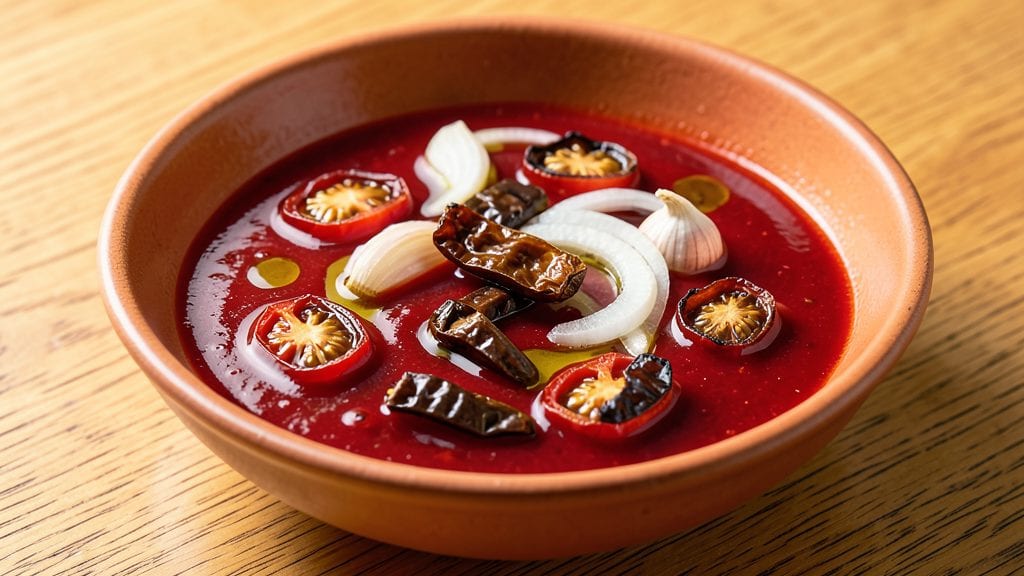
This Mexican red salsa sauce recipe transforms simple ingredients into a versatile, restaurant-quality condiment that elevates every dish from tacos to grilled meats. The secret lies in roasting tomatoes and chiles—charred edges deepen flavor while preserving freshness for weeks when stored properly.
I developed this recipe after years of testing, balancing heat, acidity, and smoky depth to create something both bold and approachable.
The foundation uses roasted tomatoes and dried chiles, which build complex, layered flavors without overwhelming heat. For a milder version, reduce the chile count or swap in mild poblano; for extra fire, add habanero or increase the arbol chile.
The sauce thickens naturally as it cools, creating a perfect consistency for dipping, drizzling, or simmering into soups. Professional results require just 15 minutes of prep and 10 minutes of blending, making it ideal for meal prep.
What you’ll end up with is a vibrant, chunky sauce with smoky undertones and a perfect balance of acidity from lime juice. The texture remains fresh and vibrant for 2-3 weeks in the fridge, or even longer when canned—far beyond store-bought versions.
This isn’t just a condiment; it’s a flavor multiplier that transforms ordinary meals into something extraordinary. Ready to make it?
Use it as a dip for tortilla chips, a topping for grilled chicken or fish, or a base for chili and soups. The possibilities are endless, and the best part? Every batch tastes like it came from a Mexican kitchen. Let’s get started with the ingredients you’ll need.
Ingredients for mexican red salsa sauce
Simple ingredients, roasted to perfection—this vibrant salsa transforms ordinary meals into extraordinary ones.
| Ingredient | Amount | Notes |
|---|---|---|
| Roma Tomatoes 🍅 | 4 whole | Halved lengthwise, seeds removed |
| Dried Arbol Chiles 🌶️ | 2 pieces | Stems removed, seeds optional |
| Dried Guajillo Chiles 🌶️ | 2 pieces | Stems removed, seeds optional |
| White Onion 🧅 | 1 whole | Quartered, skin left on |
| Garlic Cloves 🧄 | 4 cloves | Peeled, left whole |
| Extra-Virgin Olive Oil 🫒 | ¼ cup | High-quality, fruity variety |
| Fresh Lime Juice 🍋 | ¼ cup | Freshly squeezed, strained |
| Salt 🧂 | 1 tsp | Diamond Crystal kosher salt |
| Cumin Seeds 🌿 | ½ tsp | Toasted lightly for aroma |
| Fresh Cilantro 🌿 | ¼ cup | Chopped, stems removed |
The tomatoes and chiles are the heart of this sauce, so choose them wisely. Roma tomatoes hold their shape better than beefsteak varieties when roasted, and dried arbol and guajillo chiles from La Tienda or Goya deliver that authentic Mexican heat without bitterness. If you can't find guajillo, ancho chiles work beautifully too. Toast the chiles whole for about 30 seconds per side—just enough to release their aroma without burning. The onion and garlic? Yellow onion adds sweetness, while garlic cloves should be peeled but left whole until after roasting. Pro tip: Roast everything on the same sheet pan for easy cleanup.
No dried chiles? Fresh jalapeños or serranos can substitute at double the quantity, but you'll lose that deep, smoky complexity. Swapping guajillo for pasilla chiles adds richness, while habanero cranks up the heat dramatically. The olive oil matters—California avocado oil has a neutral profile that won't overpower the flavors. For the lime juice, Key lime juice adds a brighter tang than regular lime, but regular will work just fine. If you're sensitive to cilantro's soapy taste, fresh parsley makes a great substitute. And trust me, the cumin seeds? Toast them in a dry pan for 30 seconds—that aroma is worth the extra minute.
This sauce is a flavor powerhouse that keeps getting better. Store it in an airtight container in the fridge for up to 3 weeks, or freeze portions for 6 months. The texture actually improves after a day or two as the flavors meld. I like to portion it into ice cube trays for easy single-use servings—perfect for drizzling on tacos or soups. For an extra-smooth version, blend again after chilling. And if you make a big batch, canning is an option—just follow proper canning guidelines for acidity levels. The leftovers? Absolutely essential for my weekly meal prep.
Why You'll Love This Recipe
- Here’s what sold me: the slow simmer with onion and garlic until the tomatoes break down into a glossy, almost jam-like texture. That’s when the real flavor happens—the sweetness of the tomatoes caramelizing with the chiles’ heat, balanced by the garlic’s punch. It’s the kind of sauce where every spoonful tastes like you put in effort, even though you didn’t.
- No Soaking Required: I’ll admit, I used to dread the soaking step with dried chiles. But these guajillo and arbol? Just toast them—no waiting, no fuss. Five minutes in a dry pan, and you’re ready to blend. That smoky aroma alone makes me want to eat the chiles straight off the spoon.
- Deep Umami Magic: Here’s what sold me: the slow simmer with onion and garlic until the tomatoes break down into a glossy, almost jam-like texture. That’s when the real flavor happens—the sweetness of the tomatoes caramelizing with the chiles’ heat, balanced by the garlic’s punch. It’s the kind of sauce where every spoonful tastes like you put in effort, even though you didn’t.
- Weeknight Workhorse: Between us, this is my go-to for tacos, grilled fish, or even scrambled eggs. (Yes, even on a Tuesday night.) The best part? It doubles as a marinade or a quick dip for chips when I’m too tired to cook. Just store it in the fridge, and it’s ready to transform whatever’s on the menu.
Step-by-step instructions for Mexican red salsa sauce
Transform simple ingredients into a vibrant, deeply flavorful sauce that balances smoky chili heat with bright tomato sweetness.
Prepare and Roast the Base Ingredients
Preheat your oven to 425°F and line a baking sheet with parchment paper. Arrange the halved roma tomatoes, quartered white onion (skin left on), and whole garlic cloves in a single layer on the sheet. Drizzle everything with the 0.25 cup extra-virgin olive oil, tossing gently to coat evenly.
Roast for 25-30 minutes until the tomatoes collapse slightly and the onions turn translucent with golden spots. The garlic should be fragrant and just beginning to brown at the edges. This roasting process deepens their natural sweetness and develops complex caramelized flavors that form the sauce's foundation.
Toast and Rehydrate the Dried Chilies
While the vegetables roast, place the dried arbol chiles and dried guajillo chiles on a dry skillet over medium heat. Toast them for 30-45 seconds per side until fragrant and slightly puffed—this awakens their natural oils and removes any bitterness. Immediately transfer to a heatproof bowl.
Pour 1 cup hot water (just boiled) over the toasted chilies and let them soak for 15 minutes. This rehydration process makes them pliable and allows their rich, smoky flavors to infuse the water. After soaking, carefully drain the chilies, reserving the soaking liquid for the sauce.
Blend the Roasted Vegetables and Chilies
Transfer the roasted roma tomatoes, white onion, and garlic cloves to a high-powered blender. Add the rehydrated dried arbol chiles and dried guajillo chiles, along with the reserved 1 cup chili soaking liquid. The liquid should just cover the ingredients—this ensures a smooth, velvety texture without thinning the sauce too much.
Blend on high speed until completely smooth, scraping down the sides as needed. Taste the mixture and adjust seasoning with the 1 tsp salt and 0.5 tsp toasted cumin seeds, which should be lightly toasted in a dry skillet until fragrant. The sauce should be vibrant red with a rich, slightly smoky aroma that hints at the chili heat to come.
Finish with Acid and Fresh Herbs
Return the blended mixture to a saucepan and place it over medium-low heat. Stir in the 0.25 cup fresh lime juice and simmer gently for 5-7 minutes until the flavors meld and the sauce thickens slightly. The acidity from the lime brightens the smoky, earthy notes, creating a perfect balance.
Remove from heat and stir in the 0.25 cup chopped fresh cilantro, reserving a few sprigs for garnish. The cilantro adds a fresh, herbaceous finish that cuts through the richness of the roasted vegetables and chilies. Let the sauce cool to room temperature before transferring to a clean jar—this allows the flavors to settle and intensify.
Store and Use for Maximum Freshness
The sauce will thicken further as it cools, so you may need to whisk in 1-2 tablespoons of water if it becomes too stiff. Store in an airtight container in the refrigerator for up to 2 weeks, or freeze for up to 3 months. This sauce is incredibly versatile—use it as a dip, a marinade, or a bold sauce for tacos, grilled meats, or even drizzled over avocado toast.
For an extra layer of complexity, let the sauce sit at room temperature for 30 minutes before serving. This resting period allows the flavors to fully develop, resulting in a sauce that's deeply flavorful with a perfect balance of heat, acidity, and smokiness. Each spoonful should deliver a harmonious blend of roasted sweetness and chili fire, with a bright finish from the lime and cilantro.
Pro Tips For Making Mexican Red Salsa Sauce
- Char the Chiles: Toss dried arbol and guajillo chiles in a dry skillet over medium-high heat for 30 seconds per side until fragrant and slightly blistered—this unlocks their depth. I learned this the hard way: skipping this step leaves your salsa tasting flat, like someone forgot to wake up the spices.
- Peel the Tomatoes: Blister whole Roma tomatoes directly over a gas flame or under a broiler for 2-3 minutes per side until skins blacken—then plunge into ice water to loosen. Peeling them raw is a mess; charring them first makes the skins slide off like magic. (Yes, even if you’re impatient like me.)
- Soak Chiles Separately: Split guajillo and arbol chiles into two bowls and soak them individually for 10 minutes—guajillos need 15-20 if they’re tough. Mixing them together risks one type overpowering the other, and you’ll end up with a salsa that’s either too sweet or too fiery. Trust me, your taste buds will notice.
- Toast the Onion: Cook diced white onion in oil over medium-low heat until it’s golden and caramelized, about 12-15 minutes—don’t rush. I used to rush this, and the salsa always tasted raw. Patience here makes the difference between good salsa and great salsa.
Regional styles of this dish
Oaxacan Roasted Style
In Oaxaca, this sauce takes center stage with mole-like depth. Start by adding 2 tablespoons of toasted sesame seeds and 1 tablespoon of ground cumin to the roasted base. Swap guajillo chiles for ancho and pasilla chiles (4 total) for a deeper, earthier flavor.
After blending, simmer the sauce with 1 cup chicken broth for 10 minutes to create a thicker, almost molé-inspired consistency. Serve with tlayudas (Oaxacan "pizza") or grilled birria for an authentic experience. 🌶️
Yucatán Smoky Chipotle
For a smoky, slightly sweet variation, incorporate 2 chipotle peppers in adobo sauce (chopped) into the blended mixture. Add 1 tablespoon of honey or piloncillo syrup to balance the heat, and finish with ¼ cup chopped epazote for a Yucatán touch.
This version pairs beautifully with cochinita pibil or grilled pescado a la talla. The chipotle adds a slow, smoldering heat that lingers perfectly. ✨
Northern Mexico Crispy
In states like Chihuahua and Sonora, salsa gets a crispy texture. After blending, spread the sauce thinly on a baking sheet and broil for 3-5 minutes until the edges crisp slightly. Let it cool and crumble into chicharrón-style pieces.
This version works as a topping for quesadillas or huaraches, adding a delightful crunch. For extra texture, stir in ¼ cup toasted pepitas before serving. 💫
Puebla's Mole-Inspired
Puebla’s version blends salsa with mole for a rich, complex sauce. After roasting, add 1 tablespoon of ground almonds and ½ teaspoon of cinnamon to the blended mixture. Simmer with ½ cup tomato paste for 5 minutes to thicken.
This sauce shines with mole poblano-style dishes or as a dip for chiles poblanos. The almonds add a nutty depth that’s uniquely Pueblan. 🌟
Veracruz Citrus Kick
Veracruz’s coastal influence brings bright citrus to the salsa. After blending, stir in 2 tablespoons of freshly grated orange zest and 2 tablespoons of orange juice. Add 1 teaspoon of ground coriander for a refreshing twist.
This version pairs wonderfully with ceviche or grilled shrimp. The citrus cuts through the smokiness, making it lighter and more refreshing. 🍊
Baja California Raw Style
For a fresher take, skip roasting and blend 4 ripe Roma tomatoes, 1 jalapeño, ½ white onion, 4 garlic cloves, and ½ cup cilantro with 2 tablespoons lime juice. Add 1 teaspoon of salt and ½ teaspoon of cumin.
This raw version is perfect for fish tacos or as a dip for totopos. The acidity from the lime keeps it bright and fresh. 💡
Nutrition facts
Frequently asked questions
Can I make this sauce without roasting the vegetables?
You can try a quick version by blending raw tomatoes, onion, garlic, and chiles with lime juice, but roasting develops deeper, caramelized flavors. For a fresh take, see the Baja California style in our regional variations—it skips roasting entirely for a bright, citrusy salsa perfect for seafood dishes.
How do I adjust the heat level?
For milder heat, reduce arbol chiles to 1 or swap for mild poblano. For extra fire, add 1 habanero or increase arbol to 3 pieces. Toasting seeds out of chiles also reduces heat. Always taste before blending—you can't remove heat once it's in!
Can I substitute fresh chiles for dried?
Yes! Use 2-3 fresh jalapeños or serranos per dried chile, but you'll lose smoky depth. For best results, roast fresh chiles first (30 seconds per side) to mimic the dried chile flavor. The sauce will be brighter but still delicious—great for quick weeknight meals.
Why does my sauce get watery after blending?
The chili soaking liquid adds moisture—simmer the blended sauce for 5-7 minutes to thicken naturally. If still too thin, blend in 1 tsp cornstarch mixed with 1 tbsp water. For chunkier texture, reserve some roasted veggies before blending and stir them in at the end.
What's the best way to store leftovers?
Transfer to airtight containers and refrigerate for up to 3 weeks. For longer storage, freeze in ice cube trays—perfect for single servings! The sauce actually improves after 24 hours as flavors meld. Label with dates to track freshness.