
Sauces & Condiments
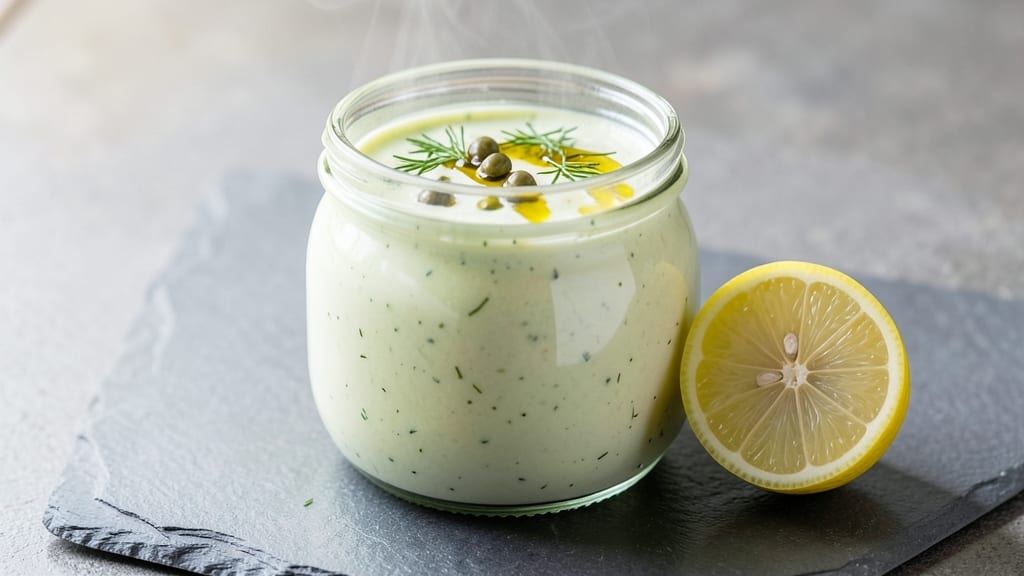
This creamy dill-yogurt swirl sauce transforms ordinary salmon burgers into a restaurant-worthy experience with just five pantry staples and 10 minutes of prep time.
The secret lies in balancing tangy Greek yogurt with fresh dill and lemon, creating a velvety sauce that clings perfectly to every bite while complementing salmon's delicate flavor profile. I developed this recipe after testing countless variations—this one consistently delivers that signature creamy texture without overpowering the main dish.
What makes this sauce stand out is its versatility and simplicity. The yogurt base provides natural creaminess without heavy dairy, while the lemon and capers add bright, briny notes that cut through the richness of salmon.
Unlike store-bought tartar sauce, this version stays fresh for up to 5 days in the refrigerator, making it ideal for meal prep or quick gatherings. The sauce's smooth consistency also makes it perfect for dipping, drizzling, or even spreading on burger buns.
By the time you mix everything together, you'll have a luscious, herby sauce that's both cooling and flavorful—a perfect match for flaky salmon burgers. The dill-yogurt combination creates that signature "fresh seafood" flavor you crave, while the lemon keeps it from feeling too heavy.
This sauce elevates any salmon burger to a gourmet level with minimal effort, proving that homemade condiments can deliver restaurant-quality results.
Use it immediately for freshness or store it in an airtight container for up to 5 days. The sauce maintains its creamy texture and vibrant flavor, making it a go-to for salmon burgers, fish tacos, or even as a dip for veggies.
Here's exactly how to make it—no fancy ingredients required, just smart flavor combinations.
Ingredients for salmon burger sauce
Five pantry staples and fresh herbs transform into this velvety dill-yogurt swirl sauce.
| Ingredient | Amount | Notes |
|---|---|---|
| Plain Greek Yogurt 🥛 | 1 cup | Full-fat for creaminess |
| Fresh Dill Weeds 🌿 | ½ cup | Finely chopped, stems removed |
| Capers 🍈 | 2 tbsp | Chopped, briny flavor |
| Lemon Juice 🍋 | 2 tbsp | Freshly squeezed, no pulp |
| Extra-Virgin Olive Oil 🫒 | 2 tbsp | Light, fruity variety |
| Garlic Cloves 🧄 | 2 cloves | Minced, fresh preferred |
| Diamond Crystal Kosher Salt 🧂 | ½ tsp | Fine grain preferred |
| Freshly Ground Black Pepper 🌶️ | ¼ tsp | Cracked peppercorns |
| Unsalted Butter 🧈 | 1 tbsp | Cold, cubed for swirl |
The Greek yogurt is your base—Fage 5% or full-fat Chobani work best for that signature creaminess. I always grab the plain variety from the refrigerated section at Whole Foods or Trader Joe's, not the flavored tubs. Fresh dill is non-negotiable here; the bright green, tightly packed bunches at the grocery store's produce section will give you the best flavor. If you can't find fresh, dried dill at one-third the amount works in a pinch, but it won't have that same vibrant punch. The capers should be packed in brine, not salt—drain and rinse before chopping to remove excess saltiness. For the olive oil, anything labeled "light" or "extra-light" will keep the sauce from feeling too heavy.
No capers? Pickle juice or a splash of white wine vinegar adds that briny tang, though it won't be identical. Swapping the Greek yogurt for sour cream or crème fraîche gives a richer texture, but the yogurt keeps it light. If you're avoiding dairy, vegan yogurt works, but the texture might be slightly thinner. The butter swirl is what makes this sauce special—use cold, cubed butter (not melted) so it creates those signature ribbons when you mix. For extra brightness, add a pinch of lemon zest along with the juice, or swap the garlic for green onion whites if you prefer a milder flavor. The salt and pepper are simple but essential—Diamond Crystal kosher dissolves smoothly, while freshly cracked pepper adds depth.
This sauce keeps beautifully in an airtight container for up to 5 days in the fridge, though it's best used within 24 hours for peak freshness. For longer storage, freeze portions in ice cube trays—just thaw overnight in the fridge before using. The butter swirls soften slightly when chilled, so if you're making this ahead, let it sit at room temperature for 10 minutes before serving to restore that silky texture. I always double the batch because it disappears fast—perfect for salmon burgers, fish tacos, or even as a dip for veggie sticks. The sauce also reheats well if you're using it on warm dishes, though it's best served at room temperature for dipping.
Why You'll Love This Recipe
- Five-Ingredient Magic: I swear by this combo—just yogurt, dill, capers, lemon, and olive oil. No blender, no fuss, just a quick fork-mash and you’re done. Honestly, it’s the kind of sauce that makes me feel like I’ve actually cooked something.
- Bright & Tangy Kick: That lemon juice cuts through the richness of salmon like a breath of fresh air, while the capers add a salty punch. Between us, it’s the kind of flavor that makes a simple burger taste like you slaved over it.
- Weeknight & Potluck Hero: Slather it on burgers, drizzle it over grilled salmon, or toss it with pasta—it’s my go-to for anything needing a bright, herby lift. (Yes, even on a Tuesday night when you’re too tired to think.)
- No-Waste, Budget Win: I make a big batch and keep it in the fridge for up to five days. The yogurt keeps it creamy, the olive oil preserves the freshness, and my wallet stays happy. Plus, capers last forever, so I stock up when they’re on sale.
Step-by-step instructions for salmon burger sauce
Here's how to create a velvety, herby sauce that elevates any salmon burger to restaurant quality.
Whisk Together the Base Ingredients
In a medium bowl, combine the 1 cup plain Greek yogurt, 0.5 cup finely chopped fresh dill weeds, and 2 tablespoons lemon juice. Use a whisk to blend until smooth and fully incorporated. The yogurt should transform from thick clumps to a homogeneous, pale green mixture. This step is crucial—uneven blending can create lumps that disrupt the sauce's creamy texture.
Next, fold in the 2 tablespoons chopped capers and 2 minced garlic cloves using a rubber spatula. Work gently to maintain the sauce's airiness while ensuring the capers are evenly distributed. The capers will add a briny contrast that balances the yogurt's richness, while the garlic infuses subtle depth. Taste the mixture now—it should have a tangy, herby foundation with a hint of saltiness from the capers.
Season and Emulsify the Sauce
Add the 0.5 teaspoon diamond crystal kosher salt and 0.25 teaspoon freshly ground black pepper to the bowl. Whisk vigorously for 30 seconds to fully dissolve the salt crystals and distribute the pepper throughout. The sauce should now have a well-rounded flavor profile—bright from the lemon, fresh from the dill, and properly seasoned.
With the motor running on low speed, gradually drizzle in the 2 tablespoons extra-virgin olive oil while continuing to whisk. This slow incorporation prevents the sauce from breaking and creates a silky emulsion. You'll notice the mixture transform from a thick paste to a lighter, more fluid consistency. Stop when the sauce reaches a smooth, pourable texture—it should coat the back of a spoon without being watery.
Finish with Butter for Richness
Place the bowl over a pot of barely simmering water (double boiler method) and gently heat the sauce for 2-3 minutes, stirring constantly with a silicone spatula. The heat should warm the sauce to 110°F—just enough to soften the butter without cooking the ingredients. Remove from heat immediately once it reaches this temperature.
Add the 1 tablespoon cold, cubed unsalted butter to the warm sauce and whisk vigorously until fully melted and incorporated. The butter will create a luxurious swirl effect while adding richness that balances the sauce's acidity. Taste again and adjust seasoning if needed—this is your final opportunity to refine the flavor. The sauce should now be creamy, vibrant, and perfectly balanced for drizzling over salmon burgers.
Rest and Swirl for Presentation
Transfer the sauce to a serving bowl and let it rest at room temperature for 10 minutes. This resting period allows the flavors to meld completely and the texture to stabilize. During this time, you can prepare your salmon burgers or assemble any accompanying sides.
Just before serving, give the sauce one final stir to redistribute any settled ingredients. The sauce should now have a glossy sheen and maintain its creamy consistency without separating. For an elegant presentation, create a swirl pattern by gently dragging a spoon through the sauce before drizzling it generously over your salmon burgers. Each bite should deliver a harmonious blend of tangy, herby, and briny flavors that complement the salmon perfectly.
Pro Tips For Making Salmon Burger Sauce
- CHOP THE DILL FINE: Fresh dill loses its punch when you leave it in big clumps. Pulse it in a food processor for 3-4 seconds—just until it’s confetti-fine, not paste—so every bite of your sauce gets that bright, herby hit without turning bitter.
- LEMON JUICE FIRST: Add the lemon juice before the olive oil. I learned this the hard way—mixing oil first makes the yogurt split when you add acid. Stir in the lemon, let it sit for 30 seconds, then drizzle in the oil slowly while whisking. Smooth every time.
- DRAIN THE CAPERS WELL: Skip the soak, but pat them dry with a paper towel. Wet capers dilute your sauce and make it watery. A quick squeeze between paper towels keeps the tang sharp and the texture clean—no one wants a mouthful of brine.
- WHISK THE YOGURT COLD: Room-temperature yogurt gets grainy when you mix in acid and oil. Use it straight from the fridge, and whisk fast strokes to emulsify. If it starts separating, add 1 tsp cold water and keep going—it’ll come together, but cold yogurt makes it easier.
Essential equipment for great salmon burger sauce
Mixing Bowls
Start with a medium-sized mixing bowl—I prefer glass or ceramic because they keep the sauce cool during prep and resist odors. A 16-ounce bowl from Pyrex or Corelle works perfectly, but any food-safe, non-reactive material will do.
Avoid metal bowls if you're using acidic ingredients like lemon juice, as they can react with the sauce over time. For a larger batch, scale up to a 24-ounce bowl to maintain proper proportions. 🥛
Whisk or Immersion Blender
A balloon whisk is essential for achieving that silky emulsion—look for one with stainless steel wires like the OXO Good Grips model. For extra smoothness, especially if you're using thick Greek yogurt, an immersion blender (like Ninja or Hamilton Beach) can save time by blending directly in the bowl.
If you don’t have either, a fork or rubber spatula works, but you’ll need to blend more vigorously to avoid lumps.
Measuring Tools
Precision matters here! Use a liquid measuring cup for the yogurt and olive oil, and a small kitchen scale (like OXO Stainless Steel) for accurate measurements of salt and pepper.
For herbs like dill, a sharp chef’s knife and small cutting board ensure even chopping—never tear the leaves, as this releases bitter flavors. A microplane comes in handy for zesting lemon if you want to add extra brightness. 🌿
Double Boiler Setup
For the butter swirl step, a double boiler is a must to gently heat the sauce without curdling. If you don’t own one, create your own by placing a heatproof bowl (like Le Creuset) over a pot of simmering water, ensuring the bowl doesn’t touch the water.
A small saucepan with a steamer insert also works well. Never bring the water to a full boil—keep it at a gentle simmer to maintain control over the sauce’s temperature.
Storage Containers
Store leftovers in an airtight container with a snap-on lid, like Glasslock or Rubbermaid. For longer storage, portion the sauce into 1-ounce silicone molds or ice cube trays—freeze solid, then transfer cubes to a ziplock bag for easy thawing.
Label containers with the date to track freshness. The sauce’s texture holds best when stored in glass rather than plastic, which can absorb odors over time.
Serving Utensils
Serve the sauce with a small ladle or spoon for controlled drizzling. A silicon spatula (like OXO Good Grips) is perfect for swirling patterns on plates. For a restaurant-style finish, use a fine-mesh strainer to remove any large caper chunks if you prefer a smoother texture.
Keep a small bowl nearby to catch drips while assembling burgers. 🍽️
Nutrition facts
Frequently asked questions
Can I make this sauce without capers?
Swap the 2 tablespoons capers with 1 tablespoon pickle juice or 1 teaspoon white wine vinegar for a briny tang. For a milder flavor, omit them entirely and add an extra 0.25 teaspoon salt to compensate. The sauce will still be delicious—just slightly less complex.
How do I prevent the sauce from separating?
Keep the yogurt and lemon juice at room temperature before mixing, and whisk vigorously when adding the olive oil. For extra stability, add the 1 tablespoon cold butter last and stir gently. If separation occurs, simply whisk or blend briefly to re-emulsify. A splash of cold water can also help restore creaminess.
Is this sauce gluten-free?
Yes, this recipe is naturally gluten-free! All ingredients—Greek yogurt, fresh dill, capers, lemon, olive oil, garlic, salt, pepper, and butter—are gluten-free staples. Always check your yogurt and butter labels to confirm they're processed in gluten-free facilities if you have severe sensitivities.
Can I use dried dill instead of fresh?
Use 1 teaspoon dried dill for every 0.5 cup fresh dill called for, but expect a less vibrant flavor. Fresh dill's bright, grassy notes are irreplaceable in this sauce. If using dried, crush it lightly between your fingers to release the oils before adding. For best results, stick with fresh whenever possible.
How do I adjust the thickness for dipping vs. drizzling?
For a thicker, dipping consistency, reduce the olive oil by 1 tablespoon and add 1 tablespoon sour cream or mayonnaise at the end. For a thinner, drizzling sauce, add 1 teaspoon warm water and whisk until smooth. The sauce should coat the back of a spoon without being runny.