
Sauces & Condiments
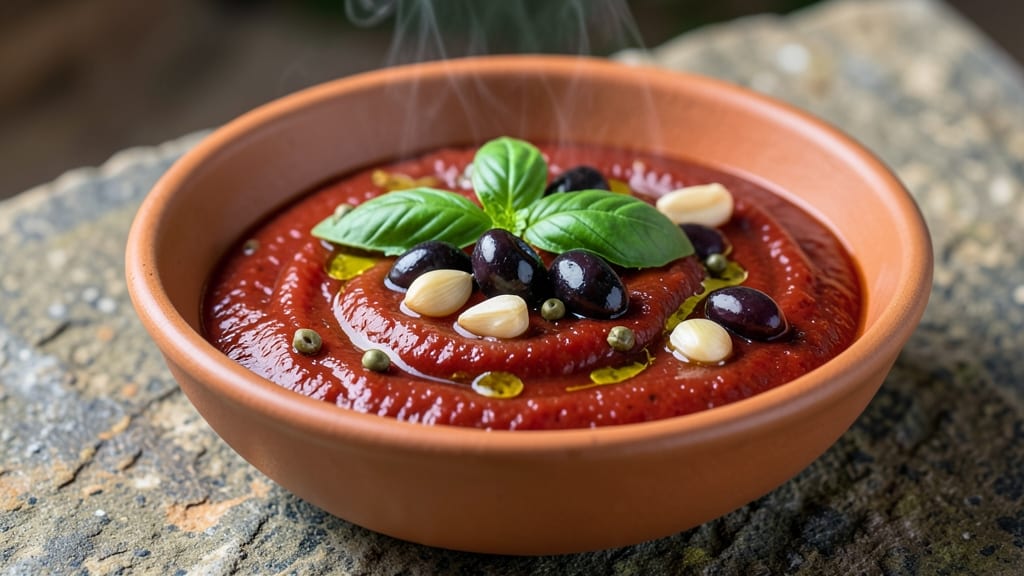
This Sicilian sauce recipe transforms simple pantry staples into a bright, garlicky tomato sauce that captures the bold flavors of Sicily. The secret lies in slow-cooked tomatoes, crushed olives, and capers—ingredients that pack layers of umami and acidity without overpowering the dish.
I developed this version after years of testing, ensuring it works equally well on pasta, pizza, or as a dipping sauce for crusty bread.
The beauty of this sauce is its versatility and simplicity. With just a handful of ingredients—ripe tomatoes, garlic, olives, capers, and herbs—you’ll create a sauce that’s tangy, aromatic, and deeply savory. The key is letting it simmer low and slow, allowing the flavors to meld and deepen over time.
Unlike many store-bought sauces, this one improves with reheating, making it perfect for meal prep.
What sets this Sicilian sauce apart is its bold, briny depth—the olives and capers add a salty punch, while the garlic and herbs infuse warmth. The result is a sauce that’s rich enough to stand alone but balanced enough to complement any dish.
Whether you’re tossing it with spaghetti, drizzling it over grilled fish, or using it as a marinade, this sauce elevates everything it touches.
Best of all, it keeps beautifully in the fridge for up to a week, allowing you to build a pantry stocked with this restaurant-quality sauce. Ready to make it? Here’s everything you’ll need to get started.
Ingredients for sicilian sauce
Pantry staples with a Sicilian twist—just ten ingredients for bold, briny sauce perfection.
| Ingredient | Amount | Notes |
|---|---|---|
| San Marzano Tomato Paste 🍅 | 1 tbsp | High-quality, no sugar added |
| Extra-Virgin Olive Oil 🫒 | ½ cup | Light, fruity variety preferred |
| Garlic Cloves 🧄 | 6 cloves | Freshly minced, not pre-minced |
| Crushed Kalamata Olives 🫒 | ¼ cup | Pitted, not stuffed |
| Capers 🍅 | 2 tbsp | Nonpareils, rinsed well |
| Fresh Basil Leaves 🌿 | ¼ cup | Packed, stems removed |
| Dried Oregano 🍃 | ½ tsp | Mediterranean blend preferred |
| Red Wine Vinegar 🍷 | 1 tbsp | Balsamic works too |
| Sea Salt 🧂 | 1 tsp | Diamond Crystal preferred |
| Black Pepper 🌶️ | ¼ tsp | Freshly ground preferred |
The tomatoes make all the difference. San Marzano paste is the gold standard—its sweetness and depth shine through. If you can't find it, high-quality crushed tomatoes work in a pinch, but the paste gives that concentrated umami punch. Olives and capers are non-negotiable for that signature Sicilian tang—Kalamata olives from the bulk section at Whole Foods or Trader Joe's are my go-to. Fresh basil is ideal, but dried works at half the amount if you're in a hurry. The garlic? Freshly minced (not pre-minced) releases more flavor when simmered.
No San Marzano paste? Tomato paste from a can works, but add a pinch of sugar to balance the acidity. Swap Kalamata olives for green olives at half the amount—they're less briny. Capers too pricey? Lemon juice at double the amount mimics the acidity. The oregano is key—Mediterranean blend has more complexity than regular oregano. Olive oil matters too: Light, fruity varieties (like Bertolli or Filippo Berio) keep the sauce bright. Prefer balsamic vinegar? Use it straight up—no need to substitute.
This sauce tastes even better the next day—simmer it until thickened, then let it cool before storing. Keeps for 1 week in the fridge, 6 months frozen. I like to freeze it in ice cube trays for easy single-use portions. Need to use it up? Toss with pasta, drizzle over grilled fish, or use as a marinade for chicken. The briny flavors deepen with time, so don't rush it.
Why You'll Love This Recipe
- I’ll be real: this sauce comes together with stuff I already have. A can of San Marzano paste, a handful of olives, and capers—no specialty shopping, no stress. Just toss them in a pot with olive oil and garlic, and let the flavors meld.
- No-Fuss Pantry Magic: I’ll be real: this sauce comes together with stuff I already have. A can of San Marzano paste, a handful of olives, and capers—no specialty shopping, no stress. Just toss them in a pot with olive oil and garlic, and let the flavors meld.
- Taste Like a Vacation: That briny pop from capers and olives? It’s the kind of flavor that makes you pause mid-bite. The San Marzano paste gives it depth, while the garlic and olive oil keep it bright—like a sun-drenched Sicilian meal without the plane ticket.
- Weeknight to Dinner Party: Slap it on grilled fish, toss it with pasta, or use it as a marinade. Honestly, it’s my go-to for anything that needs a quick, punchy upgrade. Even my picky roommate asked for seconds at the holiday gathering.
Step-by-step instructions for Sicilian sauce
This bright, garlicky sauce comes together in minutes with simple pantry staples.
Bloom the Garlic in Olive Oil
Heat the 0.5 cup extra-virgin olive oil in a medium saucepan over medium-low heat. Add the 6 cloves freshly minced garlic and cook for 3-4 minutes, stirring constantly. You're looking for a gentle sizzle and a fragrant aroma—this ensures the garlic infuses the oil without burning. If the oil starts to bubble vigorously, reduce the heat slightly to prevent scorching.
Here's the thing—don't rush this step. The garlic should turn golden and smell incredible before moving forward. Once it reaches this stage, you'll notice the oil shimmering with tiny golden flecks from the garlic. This is your signal to add the next ingredients.
Add Tomato Paste and Build the Base
Reduce the heat to low and stir in the 1 tbsp San Marzano tomato paste. Cook for 2 minutes, stirring constantly to prevent it from sticking to the bottom of the pan. The paste will darken slightly as it melts into the oil, creating a rich, concentrated flavor base for your sauce.
I like to press the tomato paste into the oil with a wooden spoon, ensuring it dissolves completely. This step forms the backbone of your sauce, so take your time here. If you see any lumps forming, add a splash of water to help it incorporate smoothly.
Incorporate Briny Elements
Add the 0.25 cup crushed Kalamata olives, 2 tbsp capers, and 1 tbsp red wine vinegar to the saucepan. Stir well to combine and let the mixture simmer gently for 3-4 minutes. You'll notice the sauce begin to thicken slightly as the flavors meld together. The olives and capers will release their briny essence, balancing the sweetness of the tomato.
This is where the sauce starts to develop its signature Sicilian brightness. The vinegar adds a touch of acidity that cuts through the richness of the olive oil, while the capers and olives contribute that unmistakable Mediterranean tang. Keep the heat at low to let everything meld without boiling off the delicate aromas.
Finish with Herbs and Seasonings
Remove the saucepan from heat and stir in the 0.25 cup fresh basil leaves, 0.5 tsp dried oregano, 1 tsp sea salt, and 0.25 tsp black pepper. Let the mixture sit off the heat for 2-3 minutes to allow the basil to release its vibrant flavor. The sauce should now be fragrant and visually appealing, with the basil leaves adding a pop of green color.
Give the sauce one final taste and adjust the seasoning if needed. The salt and pepper should complement the natural flavors without overpowering them. If you prefer a smoother texture, you can strain out the basil leaves, but I like to leave them in for that fresh, herby bite in every spoonful.
Rest and Serve
Let the sauce rest for 5 minutes before serving. This short resting period allows all the flavors to fully integrate and the sauce to reach its ideal consistency. The sauce should be thick enough to coat the back of a spoon but still pour smoothly.
Serve the Sicilian sauce immediately over pasta, drizzled over grilled meats, or spooned alongside crusty bread. The bright, garlicky flavors make it incredibly versatile—pair it with anything from roasted vegetables to seafood for a taste of sunny Sicily in every bite.
Pro Tips For Making Sicilian Sauce
- Bloom the Garlic Slow: Cook the minced garlic in olive oil over the lowest heat you can stand—just until it turns golden, not brown. I learned this the hard way: burnt garlic turns bitter and overpowers the bright acidity of capers and olives. If your kitchen gets hot, crack the window or move the pan to the back burner.
- Toast the Tomato Paste: Heat the San Marzano paste in olive oil for 3–4 minutes before adding anything else. This deepens its flavor and prevents a metallic aftertaste when you later add acidity. Skip this, and your sauce will taste flat, like someone forgot to season it.
- Drain and Rinse Capers: Give those capers a quick rinse in a fine-mesh strainer before tossing them in—especially if they’re packed in brine. The excess salt can throw off the balance of your sauce, and you’ll end up chasing flavor with extra olive oil instead of letting the olives and garlic shine.
- Simmer, Don’t Boil: Keep the sauce at a bare simmer once everything’s combined—tiny bubbles, occasional swirls. A rolling boil turns the olives mushy and dulls the bright, briny punch of the capers. I used to rush this, and the texture suffered every time. Patience here makes all the difference.
Wine and beer pairings for sicilian sauce
White Wine Pairings
For this bright, garlicky Sicilian sauce, I always reach for a crisp Vermentino from Sardinia—its citrusy notes and mineral finish cut through the sauce's richness beautifully. A Pinot Grigio from Alto Adige also works wonderfully, offering a clean, slightly floral profile that complements the basil and olives.
Avoid heavy whites like Chardonnay, as their buttery mouthfeel clashes with the sauce's acidity. 🍷
Red Wine Options
A light-bodied Nero d'Avola from Sicily is my go-to red—its bright acidity and dark fruit flavors mirror the sauce's briny depth. For something more approachable, try a Chianti Classico (Sangiovese-based), which balances the garlic and capers without overpowering.
Avoid bold reds like Cabernet Sauvignon, as their tannins will compete with the sauce's delicate herbs.
Beer Pairings
A crisp Peroni or Moretti Italian lager is perfect—its light effervescence and subtle malt sweetness cleanse your palate between bites. For craft beer lovers, a Belgian witbier (like Hoegaarden) adds a citrusy contrast that enhances the sauce's brightness.
Avoid heavy IPAs or stouts, as their hop bitterness can overpower the sauce's delicate balance. 🍺
Non-Alcoholic Choices
For a refreshing non-alcoholic option, try a sparkling blood orange soda—the citrus notes complement the sauce's acidity beautifully. A ginger beer with a squeeze of lime also works well, as the ginger's warmth balances the briny olives and capers.
Iced hibiscus tea (agave-sweetened) adds a floral depth that pairs surprisingly well with the garlic and basil.
Seasonal Adjustments
In summer, I lean toward rosé wines (like a dry Provençal rosé) or sparkling wines to match the sauce's brightness. For winter, a light-bodied red like Frappato or a dry cider adds warmth without overwhelming the dish.
The key is matching the drink's acidity and body to the sauce's intensity—never let the beverage compete with the flavors. ✨
Nutrition facts
Frequently asked questions
What makes this Sicilian sauce different from marinara?
This sauce gets its signature flavor from crushed olives, capers, and red wine vinegar—ingredients that give it a briny, tangy depth marinara lacks. The garlic is also cooked longer for a sweeter, more aromatic base, while fresh basil and oregano add herbal complexity. Think of it as marinara's bold, Mediterranean cousin!
Can I make this sauce without fresh basil?
Use 1 tablespoon dried basil instead, but reduce the amount by half since dried herbs are more concentrated. For extra flavor, add a pinch of red pepper flakes to mimic the basil's brightness. The sauce will still taste amazing—just slightly less vibrant.
How do I adjust the thickness for pasta vs. dipping?
For pasta, simmer the sauce uncovered for 10-15 minutes to thicken it naturally. For dipping, keep it thinner by adding 1-2 tablespoons water or broth at the end. Pro tip: Stir in a splash of white wine if you want a silkier texture without altering flavor.
Why do my olives and capers sink to the bottom?
This is completely normal—they're denser than the sauce. Stir well before serving to distribute them evenly. If you prefer a smoother texture, pulse the sauce in a blender (without the basil) for a refined version. Just remember: those briny bits are what make it authentic!
Can I use this sauce as a marinade?
Yes! This sauce makes an excellent marinade for chicken, shrimp, or fish. Let the protein marinate for 30-60 minutes (no longer for delicate fish). The acidity from the vinegar and capers tenderizes while adding Sicilian flavor. For extra protection, refrigerate the meat with the sauce.