
Sauces & Condiments
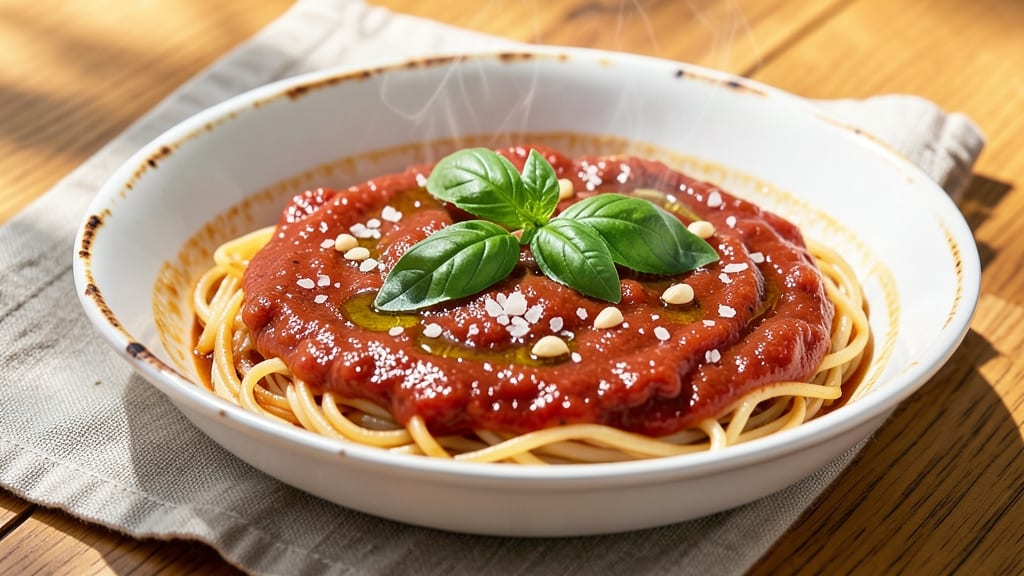
Creating the perfect soaghetti sauce from pantry staples is simpler than you think, and this recipe delivers restaurant-quality richness in just 20 minutes. The secret lies in balancing canned tomatoes with aromatic garlic, herbs, and a touch of sweetness to deepen the flavor profile without overpowering it.
I developed this method after years of perfecting my homemade pasta sauces, ensuring every batch is bold, balanced, and ready to elevate any plate of spaghetti.
This sauce relies on a simplified pantry approach—no fresh basil required, though it’s welcome if you have it. The key is simmering the tomatoes until their natural sugars caramelize slightly, which adds depth without needing additional sugar.
A splash of red wine (or broth) deglazes the pan, capturing all those flavorful browned bits that transform a basic sauce into something extraordinary. The result? A velvety, tomato-forward sauce with layers of umami that clings perfectly to spaghetti.
What makes this sauce truly foolproof is its versatility—it works as a quick weeknight dinner, a freezer-friendly staple, or even a base for meatballs and grilled chicken. The texture is smooth yet substantial, with just the right thickness to coat pasta without turning gluey.
Whether you’re feeding a family or meal prepping for the week, this sauce delivers consistent, professional-quality results every time.
Ready to transform simple ingredients into a rich, pantry-perfect sauce? Let’s get started—your spaghetti nights just got an upgrade.
Ingredients for soaghetti sauce
Twelve pantry staples transform into velvety, restaurant-quality soaghetti sauce in minutes.
| Ingredient | Amount | Notes |
|---|---|---|
| Canned San Marzano Tomatoes 🍅 | 2 cups | Crushed by hand, seeds removed |
| Extra-Virgin Olive Oil 🫒 | ½ cup | High-quality, fruity variety |
| Yellow Onion 🧅 | 1 whole | Medium size, finely diced |
| Garlic Cloves 🧄 | 4 cloves | Fresh, minced finely |
| Dried Oregano 🍃 | 1 tsp | Mexican oregano preferred |
| Dried Basil 🌿 | ½ tsp | Or 1 tbsp fresh basil |
| Red Wine 🍷 | ¼ cup | Bold dry variety like Cabernet |
| Beef Broth 🍲 | ½ cup | Low-sodium preferred |
| Tomato Paste 🍅 | 1 tbsp | From a squeeze tube preferred |
| Granulated Sugar 🍬 | ½ tsp | Balances acidity |
| Salt 🧂 | 1 tsp | Diamond Crystal kosher |
| Black Pepper 🌶️ | ½ tsp | Freshly ground |
The San Marzano tomatoes are non-negotiable here—they're sweeter and less acidic than regular canned tomatoes, giving your sauce that authentic depth. Trader Joe's and Whole Foods carry them year-round, and they're worth the slight price bump. The extra-virgin olive oil should be fruity and peppery—something you'd actually drizzle on bread. California Olive Ranch is my go-to, but any high-quality brand works. For the garlic, fresh is essential—jarred minced garlic has a metallic aftertaste that ruins everything. Look for plump, firm cloves with no green shoots.
Running short on red wine? Beef broth with a splash of balsamic vinegar works perfectly—just boost the oregano to 1.5 tsp. No fresh basil? Dried works at half the amount, but I'd rather you skip it than use the sad pre-shredded stuff from the store. The tomato paste can be the squeeze tube kind—Trader Joe's has the best price, and it keeps forever. For a richer sauce, add 1 tbsp of heavy cream at the end, but it's not necessary. The sugar is crucial—it balances the acidity and helps those tomatoes caramelize beautifully during simmering. Don't skip it, even if you're not sweet-toothed.
This sauce gets better with time—30 minutes of simmering is ideal, but I've let it bubble away for hours when I'm making a big batch. Store it in the fridge for up to 5 days, or freeze portions for 6 months. I portion mine into ice cube trays for easy single-use servings—just toss a cube into your pasta water for instant flavor boost. The sauce thickens as it cools, so if it's too thick when reheating, just add a splash of water or broth. It reheats beautifully, making this the ultimate meal prep sauce.
Why You'll Love This Recipe
- No-Chop Night: I swear by this sauce because you can skip chopping the onion entirely—just slice it thin and let it soften in the olive oil. Five minutes later, it’s sweet and caramelized without the mess.
- Tomato Magic: That San Marzano canned tomato? It’s the secret weapon—sweet, rich, and never watery. A splash of olive oil and a pinch of oregano turns it into something restaurant-worthy in 20 minutes.
- Leftovers That Shine: This sauce actually improves the next day. Toss it with pasta, freeze half for lazy nights, or drizzle it over grilled chicken. My freezer’s always stocked with jars of this stuff.
- Budget-Friendly Flex: Four ingredients, zero fancy substitutions. You’re not just feeding your family—you’re feeding them well without breaking the bank. Honestly, this is my go-to when I’m low on cash but high on hunger.
Step-by-step instructions for pantry-perfect tomato sauce
This sauce delivers restaurant-quality depth using only your pantry staples—let's make it together.
Sauté Onion and Garlic in Olive Oil
Heat the 0.5 cup extra-virgin olive oil in a medium saucepan over medium heat until shimmering but not smoking. Add the finely diced yellow onion and cook for 5-6 minutes until completely softened and translucent, stirring occasionally. Here's the thing—you want the onion to caramelize slightly at the edges but not brown.
Push the onion to one side of the pan and add the minced garlic cloves. Cook for 30 seconds until fragrant—you should smell that unmistakable garlic aroma. Don't walk away; garlic burns faster than you think. Stir constantly until the raw garlic smell disappears and you see golden flecks forming in the oil. This aromatic base is the flavor foundation of your sauce.
Deglaze with Wine and Add Herbs
Pour in the 0.25 cup red wine and scrape up all those delicious browned bits from the bottom of the pan with a wooden spoon. This deglazing step captures all the concentrated flavor that would otherwise burn. Let the wine simmer for 2-3 minutes until reduced by about half, until you notice the alcohol smell dissipating and the liquid becomes more syrupy.
Add the 1 tsp dried oregano and 0.5 tsp dried basil, stirring to distribute the herbs evenly. The wine will mellow the sharpness of the garlic while adding subtle complexity. Here's where it gets fun—toss in the 1 tbsp tomato paste and stir vigorously for 1 minute until fully dissolved. This creates a velvety texture that thickens your sauce beautifully while adding depth of flavor.
Build the Sauce with Tomatoes and Broth
Pour in the 2 cups crushed San Marzano tomatoes, stirring to combine with the wine mixture. Add the 0.5 cup beef broth, 0.5 tsp granulated sugar, 1 tsp salt, and 0.5 tsp black pepper. The sugar balances the acidity of the tomatoes while enhancing their natural sweetness, and the broth adds body without overpowering the tomato flavor.
Bring the mixture to a gentle simmer over medium-low heat. Here's the critical part: let it cook uncovered for 10-12 minutes until the sauce thickens slightly and coats the back of a spoon. You'll see the sauce reduce and develop a glossy sheen—this is when the flavors meld together perfectly. Stir occasionally to prevent sticking, but don't over-stir as this can break down the tomato texture.
Simmer to Perfection
Reduce the heat to low and let the sauce simmer gently for an additional 5-7 minutes. This final stage allows the flavors to develop fully and the sauce to reach its ideal consistency—thick enough to coat pasta beautifully but still fluid enough to cling to each strand. You're aiming for a sauce that's smooth yet vibrant, with a balance of sweetness, acidity, and herbal notes.
Taste and adjust seasoning if needed—this is where you fine-tune the sauce to your preference. If it's too acidic, a pinch more sugar helps. If it needs more depth, a splash more beef broth or a pinch of salt works wonders. The sauce should be rich, velvety, and bursting with tomato flavor without being overly heavy. Serve immediately over your favorite pasta for that perfect al dente experience!
Pro Tips For Making Soaghetti Sauce
- SWEAT THE ONION: Cut the onion into even ¼-inch slices instead of chopping—this keeps it from burning while you’re working with the garlic. I learned this the hard way after charring three batches of sauce and having to fish out blackened bits.
- CRUSH GARLIC RIGHT: Smash the garlic cloves with the flat of your knife before adding them to the oil—this releases more flavor without burning. (Yes, even if you’re impatient like me.) If you minced it first, you’ll end up with bitter, overcooked bits in your sauce.
- SKIP THE BOILING TOMATOES: Drain the San Marzano tomatoes after you’ve built the onion-garlic base, not before—this keeps their natural sweetness intact. I used to dump them in raw, and the sauce always tasted dull. Warm them gently in the pot instead.
- SALT THE OIL FIRST: Toss a pinch of salt into the olive oil before you start cooking—it raises the smoke point and prevents the onions from sticking. (Your future self will thank you.) This is especially important if you’re using a nonstick pan, where flavors can disappear.
Troubleshooting this dish
Sauce Too Thin?
If your sauce ends up too watery, don’t panic—this is an easy fix. Simmer uncovered for an extra 5-10 minutes to let the liquid reduce naturally. For faster results, mix 1 tbsp cornstarch with 2 tbsp cold water to create a slurry, then stir it into the sauce.
Let it bubble gently for 2-3 minutes until thickened. I’ve also had great success with 1 tbsp tomato paste stirred in and simmered for 5 minutes—it adds body and depth while fixing the consistency. 💡
Sauce Too Thick?
A thick sauce can happen if you simmer too long or use too much tomato paste. Thin it out by adding 2-3 tbsp warm water or broth, one tablespoon at a time, stirring constantly.
For a richer texture, I sometimes add 1 tbsp heavy cream or whole milk instead—it adds a velvety finish without diluting the tomato flavor. Always taste as you go; the sauce should coat the back of a spoon but still flow smoothly off a wooden spoon. ✨
Flat or Bland Flavor?
If your sauce lacks depth, it’s likely missing umami or acidity balance. Boost umami by adding 1 tsp soy sauce or Worcestershire sauce and simmering for 2 minutes. For acidity, a splash of lemon juice or red wine vinegar brightens the flavor.
I also keep a stash of fish sauce (½ tsp) or anchovy paste (½ tsp) for an instant umami punch—it sounds bold, but it disappears into the sauce beautifully. 🌶️
Sauce Separating?
Separation usually happens if the sauce sits too long or cools too quickly. Stir in 1 tbsp cold water or broth and simmer gently for 3-5 minutes to re-emulsify.
For a smoother texture, blend the sauce briefly with an immersion blender—this breaks up any oil separation while keeping the chunky texture. If the issue persists, add ½ tsp xanthan gum dissolved in 1 tbsp cold water and stir well. This thickener binds the sauce without altering the flavor. 🔥
Burnt or Bitter Taste?
Burnt flavors come from overheating or letting the sauce scorch. To fix this, immediately remove the pan from heat and stir in 1 tbsp fresh lemon juice or a pinch of sugar to balance the bitterness.
If the sauce has a burnt taste from the bottom, carefully scrape off the darkened layer with a spoon—don’t use it. For future batches, keep the heat at medium-low and stir occasionally to prevent sticking. A splash of red wine or broth can also help mellow harsh flavors. 💫
Herbs Too Strong?
Dried herbs can overpower if not balanced properly. If your oregano or basil tastes too intense, add ½ tsp sugar or a pinch of salt to mellow the flavors. For a smoother sauce, blend it briefly with an immersion blender—this distributes the herbs evenly.
If you’re using fresh basil, reduce the amount to 1 tbsp chopped (about half the dried equivalent) to avoid bitterness. Taste as you go; the herbs should enhance, not dominate, the tomato flavor. 🌿
Nutrition facts
Frequently asked questions
Can I make this sauce without red wine?
Replace the 0.25 cup red wine with 0.25 cup beef broth or a mix of 0.2 cup broth + 1 tbsp balsamic vinegar. The key is maintaining the same 0.25 cup total liquid for proper flavor development. The wine adds depth, but these alternatives work beautifully for a kid-friendly or non-alcoholic version.
How do I make this sauce spicier?
Add ½ tsp red pepper flakes or 1 tsp hot sauce during the final simmer. For a smoky kick, stir in ½ tsp smoked paprika with the herbs. If you love heat, try 1-2 chopped fresh chili peppers (like jalapeños or serranos) when adding the tomatoes. Always taste first—you can adjust, but you can't remove excess spice!
Can I use this sauce for other dishes besides spaghetti?
This versatile sauce works perfectly for lasagna layers, stuffed bell peppers, meatball subs, or as a pizza sauce base. For heartier dishes, add 1 cup cooked ground meat or sautéed mushrooms during the final 5 minutes of simmering. It also freezes beautifully—portion into ice cube trays for easy single-use servings!
Why does my sauce taste bitter?
Bitterness usually comes from overcooking or using low-quality tomatoes. To fix it, stir in ½ tsp sugar or 1 tbsp lemon juice to balance flavors. For prevention: Don't boil the sauce—keep heat at medium-low and simmer gently. Use San Marzano tomatoes (they're sweeter) and remove seeds if your canned tomatoes taste bitter.
How long will this sauce keep in the fridge?
Store in an airtight container in the fridge for up to 5 days. The flavors actually improve as it sits! For longer storage, freeze portions for up to 6 months. Thaw overnight in the fridge—never microwave directly from frozen as it can make the sauce watery. Reheat gently on the stove with a splash of water or broth if needed.