
Sauces & Condiments
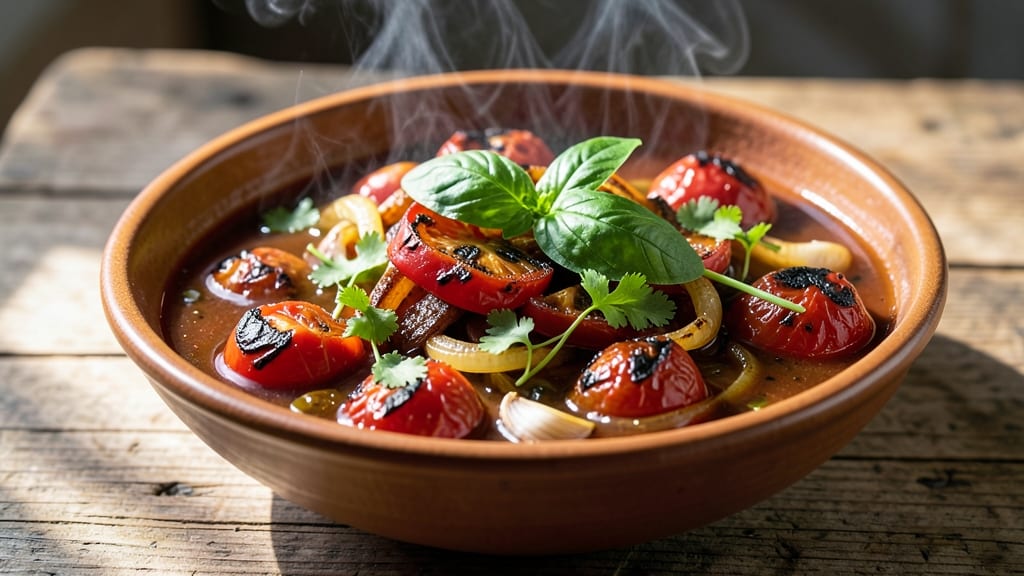
This sofrito sauce recipe transforms simple pantry ingredients into a smoky, aromatic base that elevates everything from grilled meats to rice dishes in minutes.
The foundation of Spanish and Latin American cuisine, sofrito delivers layers of flavor without overwhelming the dish—just tomatoes, peppers, garlic, and herbs simmered into a velvety paste. I developed this version after years of testing, balancing traditional techniques with modern convenience for home cooks.
The beauty of sofrito lies in its versatility—it works as a marinade, stir-in sauce, or even a quick salsa base. What makes this recipe stand out is the smoky depth from charred tomatoes and peppers, which builds while simmering low and slow.
Unlike store-bought versions, this homemade sauce delivers fresh, vibrant flavors with no preservatives, and it keeps beautifully in the fridge for up to a week.
By the time you finish blending, you’ll have a rich, velvety sauce with just the right balance of sweetness, acidity, and herbal notes. The texture is thick enough to cling to proteins or grains but still spreadable for quick dips or drizzling.
This isn’t just a condiment—it’s the secret weapon that turns simple meals into restaurant-quality dishes with minimal effort.
Use it to marinate grilled chicken, stir into rice for paella-inspired flavor, or drizzle over roasted vegetables. For a vegan twist, simply omit any animal-based ingredients while keeping the same technique. Let’s get cooking—your taste buds will thank you.
Ingredients for sofrito sauce
Ten simple ingredients create this velvety sofrito base for restaurant-quality meals in minutes.
| Ingredient | Amount | Notes |
|---|---|---|
| Roma Tomatoes 🍅 | 4 whole | Halved, seeds removed for smooth texture |
| Red Bell Pepper 🧅 | 1 whole | Charred for smoky depth, seeds removed |
| Yellow Onion 🧅 | 1 whole | Medium size, finely chopped |
| Garlic Cloves 🧄 | 6 cloves | Fresh, minced for aromatic punch |
| Fresh Basil Leaves 🌿 | ½ cup | Packed, stems removed for purity |
| Fresh Cilantro Leaves 🌿 | ¼ cup | Packed, stems removed for brightness |
| Extra-Virgin Olive Oil 🫒 | ½ cup | High-quality, fruity variety |
| Red Wine Vinegar 🍷 | 1 tbsp | Dry variety for acid balance |
| Diamond Crystal Kosher Salt 🧂 | 1 tsp | Fine grain for even seasoning |
| Ground Black Pepper 🌶️ | ½ tsp | Freshly ground for heat |
The tomatoes and bell pepper are the flavor anchors—Roma tomatoes concentrate sweetness better than beefsteak varieties, while red bell peppers deliver that essential smoky depth when charred properly. For charring, I use a cast-iron skillet over high heat, turning occasionally until blackened in spots. Whole Foods Market carries excellent Roma tomatoes year-round, and their organic red bell peppers hold up beautifully to charring. The garlic should be freshly minced just before simmering to preserve its volatile oils—pre-minced garlic loses flavor within hours. Fresh basil and cilantro from the grocery store's refrigerated section work fine, but farmers market herbs have significantly more aroma and flavor intensity.
No Roma tomatoes? Heirloom or vine-ripened tomatoes work in a pinch, though they'll yield slightly more liquid. Substituting smoked paprika (1 tsp) for the charred pepper adds smokiness without charring. For vinegar, apple cider vinegar provides a milder tang, though red wine vinegar's acidity cuts through the richness beautifully. The olive oil must be extra-virgin quality—cheap oils can make the sauce taste flat. If you're vegan, simply omit the optional smoked paprika or use liquid smoke (½ tsp) for depth. The salt measurement is precise—Diamond Crystal kosher salt dissolves completely, unlike table salt which can leave graininess.
This sofrito sauce develops more flavor overnight, so make a double batch if you'll use it over several meals. Store in an airtight glass jar in the refrigerator for up to 7 days, or freeze in ice cube trays for 3-month portions. The sauce thickens as it cools, so add a splash of water when reheating. For best texture, bring to a gentle simmer before using—never boil, as this can break the emulsion. I always keep a jar in my fridge for quick marinades or rice stir-ins, and it transforms even the simplest grilled vegetables into a gourmet meal.
Why You'll Love This Recipe
- No-Chop Nightmare: I swear, this sauce only needs three things chopped—onion, pepper, garlic. The tomatoes? Just crush them with your hands. Twenty minutes later, you’re done. (Yes, even on a Tuesday night when you’d rather binge Netflix.)
- Sweet-Savory Magic: That caramelized onion and roasted red bell pepper? It’s like a hug for your taste buds. The garlic and basil tie it all together—bright, herby, with just enough acidity to keep it interesting. Honestly, I’ve made it three ways, and this version always wins.
- Your New Pantry MVP: Freeze half the batch—it’s that good. Toss it with pasta, drizzle it over grilled chicken, or use it as a marinade. My roommates now call it “the secret sauce,” and I let them think I’m a genius. (Between us, it’s just smart prep.)
- Budget-Friendly Flex: Roma tomatoes and onions are cheap, and this sauce stretches like crazy. A single batch feeds four for dinner and gives you leftovers for lunch. I’ll be real: my grocery bill dropped when I started making this weekly. No sad takeout nights here.
Step-by-step instructions for sofrito sauce
Transform fresh ingredients into a vibrant, aromatic sauce that elevates any dish in under 20 minutes.
Char the Vegetables for Depth of Flavor
Begin by charring the red bell pepper and half of the Roma tomatoes over an open flame or under a broiler for 3-4 minutes per side until blackened in spots. This step develops a smoky complexity that defines authentic sofrito. Transfer the charred vegetables to a cutting board and let them cool for 5 minutes before peeling off the charred skin with your fingers—it's easier than you think once cooled.
While the vegetables cool, halve the remaining Roma tomatoes and remove the seeds. Finely chop the yellow onion, discarding the outer layer if it appears bruised. The onion should be cut into a brunoise—tiny dice no larger than 1/8-inch—to ensure even distribution throughout the sauce. This precise cutting technique prevents any single ingredient from dominating the flavor profile.
Sauté the Aromatics in Olive Oil
Heat 0.25 cup of the extra-virgin olive oil in a medium saucepan over medium heat until shimmering but not smoking. Add the minced garlic cloves and sauté for 30 seconds until fragrant—this is where the magic begins. The garlic should perfume the air without browning, as burnt garlic introduces bitterness that overpowers the delicate herbs.
Add the finely chopped yellow onion and cook for 4-5 minutes until softened and translucent. This step builds the sauce's foundation by developing the onion's natural sweetness. Stir occasionally to prevent sticking, but avoid excessive agitation that could cause the onion to release too much moisture too quickly.
Combine All Ingredients and Simmer
Add the charred red bell pepper and tomatoes to the pan, along with the remaining 0.25 cup of extra-virgin olive oil. Stir to combine, then increase the heat to medium-high and bring the mixture to a gentle boil. Once boiling, reduce the heat to low and let it simmer uncovered for 8-10 minutes, stirring occasionally. This controlled simmer allows the flavors to meld while reducing the sauce slightly for a thicker consistency.
After 5 minutes of simmering, add the 0.5 cup fresh basil leaves and 0.25 cup fresh cilantro leaves, stirring gently to incorporate. The herbs should wilt slightly but remain vibrant, indicating they're infused rather than cooked into oblivion. This is the moment when the sauce transforms from a simple vegetable blend into a complex, aromatic sofrito.
Finish with Acid and Seasoning
Remove the sauce from heat and stir in the 1 tbsp red wine vinegar, 1 tsp diamond crystal kosher salt, and 0.5 tsp ground black pepper. Taste immediately and adjust the seasoning if needed—sofrito should balance sweet, smoky, and acidic notes with a touch of heat. The vinegar brightens the flavors while cutting through the richness of the olive oil.
For a smoother texture, transfer the sauce to a blender or food processor and pulse for 10-15 seconds until combined but still slightly textured. Strain through a fine-mesh sieve if you prefer an ultra-smooth consistency, pressing down with a spoon to extract every drop of flavor. The resulting sauce should coat the back of a spoon and carry the essence of all its components.
Pro Tips For Making Sofrito Sauce
- CHAR THE ONIONS LOW: I learned this the hard way—sautéing onions on high heat turns them bitter before they soften. Keep it at medium-low, stirring often, until they’re translucent and just starting to caramelize. That’s when their sweetness peaks, and the sauce stops tasting like raw onion.
- COOK TOMATOES UNTIL BURSTY: Roma tomatoes need time to break down, but don’t rush it. Simmer them until they split open and release their juices—about 15-20 minutes. If they’re still holding shape, the sauce will be chunky and underdeveloped. (Yes, even if you’re impatient like me.)
- SALT THE GARLIC: Toss minced garlic in a pinch of salt before adding it to the pot. This prevents burning and draws out moisture, so it blends smoothly into the sauce instead of sticking to the pan like a sad, crispy mess.
- STIR IN BASIL LATE: Fresh basil wilts and turns bitter if cooked too long. Add it in the last 2 minutes—just enough to warm through and release its aroma. If you’re worried about flavor, chop it fine so it disperses evenly without needing extra time. (Your future self will thank you.)
Essential equipment for perfect results
Blender Essentials
Your blender is the workhorse of this sauce—look for a high-performance model like the Ninja BL610 or Vitamix 5200 for smooth, even blending without overheating. I’ve found that immersion blenders (like the Ninja MagiPress) work beautifully for direct-in-pot blending, saving cleanup time.
Avoid cheap blenders—they struggle with fibrous vegetables and can leave your sofrito grainy. 💡
Heavy-Bottomed Pot
A stainless steel or enameled cast-iron pot (like All-Clad D5 or Le Creuset) is ideal for simmering sofrito—it distributes heat evenly and prevents scorching. I use my 10-inch Lodge skillet for charring and a 3-quart saucepan for simmering.
Avoid thin aluminum pans, which can react with acidic ingredients like tomatoes and vinegar, altering the flavor.
Char Tools
For that essential smoky depth, you’ll need a way to char your vegetables. A cast-iron skillet on the stovetop works perfectly, but I also love using a grill grate or broiler pan for even charring.
If you’re grilling outdoors, a gas grill grate over direct heat gives the best results. Just watch closely—charred skin should be blackened but not burnt to a crisp.
Fine-Mesh Sieve
A stainless steel fine-mesh sieve (like the OXO Good Grips) is a game-changer for straining sofrito to ultra-smooth perfection. Press the pulp with a wooden spoon to extract every last drop of flavor.
If you’re skipping straining, a potato masher helps break down any remaining chunks after blending. For a rustic texture, skip straining entirely—it’s still delicious!
Measuring Tools
Precision matters in sofrito—use a stainless steel measuring spoons (like OXO Good Grips) for vinegar, salt, and pepper, and a digital kitchen scale for herbs if you’re feeling fancy. I measure my olive oil in a 1-cup liquid measuring cup with a spout for easy pouring.
A microplane for garlic and sharp chef’s knife for onions are also must-haves for consistent results every time. 🔪
Storage Containers
Store your sofrito in glass jars with airtight lids (like Ball Mason jars) for up to 7 days in the fridge or 3 months in the freezer. For freezer storage, portion into ice cube trays—thaw as needed for quick marinades or stir-ins.
Avoid plastic containers, as they can absorb odors and flavors over time. Label your jars with the date to track freshness.
Nutrition facts
Frequently asked questions
Can I make sofrito sauce without charring the vegetables?
Yes, but you'll miss that essential smoky depth that defines authentic sofrito. For a quick version, simply roast the bell pepper and tomatoes in a 400°F oven for 15 minutes until softened, then proceed with the recipe. The flavor will be milder but still delicious—perfect for busy weeknights.
How long does homemade sofrito sauce last?
Store-bought versions often contain preservatives, but homemade sofrito tastes best fresh. Keep it in an airtight glass jar in the fridge for up to 7 days or freeze in ice cube trays for 3 months. The sauce thickens as it cools, so add a splash of water when reheating for the perfect consistency.
What are the best ways to use sofrito sauce?
This versatile sauce works as a marinade for grilled meats, stir-in for rice dishes, or quick salsa base. Try drizzling it over roasted vegetables, using it in place of tomato sauce for pasta, or mixing into mayo for a flavorful sandwich spread. The possibilities are endless—it's the secret ingredient in many Caribbean and Spanish dishes!
Can I make sofrito sauce vegan?
Simply omit any animal-based ingredients while keeping the same technique. This recipe is already vegan-friendly as written, but you could add smoked paprika (1 tsp) for extra depth if desired. The sauce's rich, smoky flavors work perfectly in vegan dishes like stuffed peppers or lentil stews.
Why did my sofrito turn out too thick or too thin?
Texture issues usually come from simmering time or blending technique. For a thicker sauce, simmer uncovered for 10-12 minutes to reduce more liquid. If it's too thin, blend longer or strain through a fine-mesh sieve to remove excess liquid. Remember, sofrito should coat the back of a spoon but still be spreadable—not glue-like or watery.