Sauces & Condiments
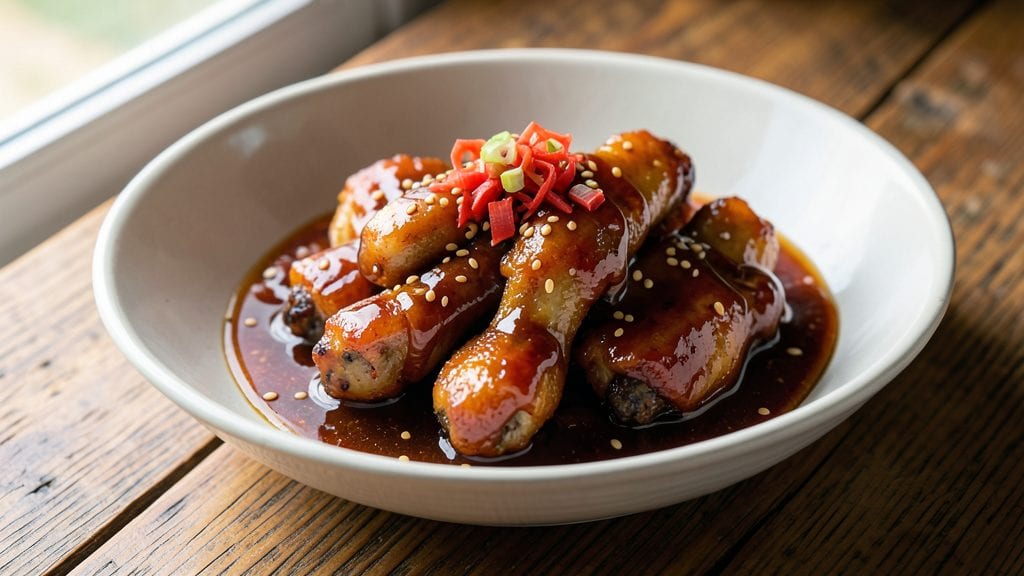
This teriyaki wing sauce recipe delivers the perfect balance of sticky-sweet glaze and umami depth that transforms ordinary wings into restaurant-quality bites. The secret lies in a precise blend of soy sauce, honey, and aromatic ginger-garlic paste that simmers into a glossy, flavorful sauce with just the right thickness.
I developed this recipe after testing countless versions, and it consistently delivers that signature teriyaki shine without being overly sweet or cloying.
The beauty of this sauce is its versatility—it works equally well on crispy wings, tofu, or even roasted vegetables.
What makes it stand out is the layered flavor profile: the soy sauce provides that classic umami punch, while the honey and brown sugar create a caramelized depth that clings beautifully to whatever you're coating. The ginger and garlic add aromatic warmth that elevates it beyond basic sweet-and-sour sauces.
By the time you're done, you'll have a sauce that's rich enough to coat wings thoroughly yet light enough to drip attractively. The perfect balance of sweetness and savory depth makes it impossible to resist dipping back in for more.
This isn't just another teriyaki sauce—it's the one that will have everyone asking for seconds, and it keeps well in the fridge for up to two weeks.
Whether you're prepping for game day or looking to elevate weeknight dinners, this sauce delivers professional-quality results with simple ingredients and just 15 minutes of active time. The best part? You can adjust the sweetness or add a dash of sriracha for heat to suit any preference.
Let's get started on making this crowd-pleasing sauce that will become your new go-to glaze.
Ingredients for teriyaki wing sauce
Nine simple ingredients create the perfect sticky-sweet teriyaki glaze for wings or anything else.
| Ingredient | Amount | Notes |
|---|---|---|
| Soy Sauce 🍶 | ½ cup | High-quality, reduced variety preferred |
| Honey 🍯 | ⅓ cup | Light or clover preferred |
| Brown Sugar 🍚 | ⅓ cup | Packed, light or dark |
| Ginger-Garlic Paste 🧄 | 2 tbsp | Fresh or high-quality jarred |
| Rice Vinegar 🍶 | 1 tbsp | White or seasoned |
| Sesame Oil 🫒 | 1 tbsp | Toasted, not flavored |
| Cornstarch 🌾 | 1 tsp | For thickening |
| Water 💧 | 2 tbsp | For cornstarch slurry |
| Sriracha 🌶️ | 1 tsp | Optional, for heat |
| Sesame Seeds 🌰 | 1 tsp | Toasted, for garnish |
The soy sauce is your flavor foundation—Kikkoman or La Choy are reliable choices, but if you've got a premium brand like Japanese soy sauce from an Asian market, use it. Honey should be light and smooth (none of that thick, dark stuff). Trader Joe's has great options for both. Ginger-garlic paste is a game-changer—it's pre-minced and ready to go, saving you chopping time. If you're making this often, buy a jar of the stuff or make your own with fresh ginger and garlic. The sesame oil needs to be toasted (not flavored), so check the label—Kadoya is my go-to. For the cornstarch, Bob's Red Mill is my preferred brand, but any food-grade cornstarch works.
No soy sauce? Coconut aminos works in a pinch (though it's lighter in color). Short on honey? Maple syrup at the same amount gives a similar sweetness. The ginger-garlic paste can be swapped for 1 tbsp fresh grated ginger and 1 minced garlic clove, but trust me, the jarred stuff is easier. Want more depth? Add 1 tsp fish sauce or a splash of mirin. The sriracha is optional but adds that perfect kick—Huy Fong is the classic choice. If you're making this ahead, skip the sesame seeds until serving so they stay crisp.
This sauce keeps beautifully—up to 2 weeks in the fridge in an airtight container. For extra shine, add a generous splash of water before sealing. Freezes for up to 6 months if you want to make a big batch. I like to portion it into small jars so I can grab just what I need for wings or tofu. The sesame seeds? Toast them in a dry pan for 30 seconds before sprinkling—they smell amazing while they're toasting!
Why You'll Love This Recipe
- Here’s the secret: the rice vinegar cuts through the sweetness, keeping every bite balanced—crispy wings? Yes. Sauce pooling at the bottom? No. It clings like it’s been glued on, and that’s saying something.
- Five-Ingredient Magic: I swear by this combo—soy sauce, honey, and brown sugar team up like old friends, while that ginger-garlic paste adds a zing that makes it impossible to stop dipping. No fancy techniques, just stir and simmer.
- Glaze That Sticks: Here’s the secret: the rice vinegar cuts through the sweetness, keeping every bite balanced—crispy wings? Yes. Sauce pooling at the bottom? No. It clings like it’s been glued on, and that’s saying something.
- Game for Any Night: Between us, I use this on wings, tofu, even roasted carrots. The sauce doubles as a marinade or a quick drizzle for rice bowls. Honestly, I’ve lost count of how many ways I’ve repurposed it—it’s my lazy-day hero.
Step-by-step instructions for sticky-sweet teriyaki glaze
This sauce delivers that perfect balance of sweet, savory, and umami—ready in minutes!
Combine Wet Ingredients in a Saucepan
In a medium saucepan, pour in the 0.5 cup soy sauce, 0.33 cup honey, and 0.33 cup brown sugar. Add the 2 tablespoons ginger-garlic paste and 1 tablespoon rice vinegar, stirring constantly to dissolve the sugar completely. This is where the magic starts—the sweetness from the honey and brown sugar will begin to bloom while the ginger-garlic paste infuses its bold, aromatic punch.
Place the saucepan over medium heat and bring the mixture to a gentle simmer. You'll notice tiny bubbles forming around the edges—this is your signal that the flavors are beginning to meld together. Let it cook uncovered for 5 minutes, stirring occasionally, until the sugar fully dissolves and the mixture becomes smooth and glossy. If you see any sugar grains lingering, keep stirring—they'll eventually melt into a luscious, syrupy base.
Add Sesame Oil and Sriracha for Depth
Once the mixture is smooth and simmering gently, reduce the heat to low and stir in the 1 tablespoon sesame oil and 1 teaspoon sriracha. The sesame oil will add a nutty aroma that deepens the sauce's complexity, while the sriracha introduces a subtle heat that cuts through the sweetness. Stir well to distribute these flavors evenly—you want every drop of sauce to carry that perfect balance.
Let the sauce simmer for another 3-4 minutes on low heat. You'll notice the mixture thickening slightly as the flavors continue to meld. Here's where it gets fun: taste the sauce now. If you want it sweeter, add a touch more honey; if you prefer more heat, add a pinch more sriracha. This is your chance to customize it to your liking before committing to the thickening step.
Thicken the Sauce with Cornstarch Slurry
In a small bowl, whisk together the 1 teaspoon cornstarch and 2 tablespoons water until smooth. This slurry is your secret weapon for achieving that perfect, glossy consistency. Once fully combined, slowly pour it into the simmering sauce while stirring constantly. The moment you add it, you'll see the sauce begin to thicken almost instantly—this is the reaction you're aiming for!
Continue stirring for 2-3 minutes until the sauce reaches your desired thickness. It should coat the back of a spoon but still be pourable—think of it like a thick syrup that clings beautifully to wings or noodles. If it thickens too quickly, add a splash of water to loosen it. The goal is a sauce that's sticky enough to hold its shape but still flows smoothly. Once you reach this point, remove the saucepan from heat.
Finish and Garnish for Maximum Flavor
Let the sauce cool slightly for 2-3 minutes, then give it one final taste. Adjust the seasoning if needed—maybe a pinch more salt to enhance the umami or a drizzle of honey to balance the heat. Once you're happy with the flavor, transfer the sauce to a bowl and stir in the 1 teaspoon sesame seeds. These toasted seeds add a delightful crunch and visual appeal that takes the sauce from ordinary to extraordinary.
Use the sauce immediately for the best results—it's perfect for glazing wings, drizzling over rice, or tossing with noodles. If you need to store it, transfer it to an airtight container and refrigerate for up to 1 week. When reheating, warm it gently on the stove over low heat, stirring occasionally until it reaches a smooth, pourable consistency again. This sauce is a game-changer, and once you taste it, you'll never go back to store-bought glaze again!
Pro Tips For Making Teriyaki Wing Sauce
- Simmer Low and Slow: I used to blast this sauce on high, thinking it’d caramelize faster—wrong. The honey and brown sugar burn before the flavors meld. Keep it at a gentle simmer (just bubbles breaking, not rolling) for 15-20 minutes. That’s when the ginger-garlic paste actually softens and the soy sauce stops tasting like it came from a bottle.
- Balance the Sweet Early: Taste as you go, especially when adding honey and sugar. If the sauce tastes cloyingly sweet, toss in a splash of rice vinegar now instead of waiting. The acid cuts through the sweetness and brightens the whole thing—trust me, your wings won’t taste like dessert.
- Strain the Paste: That ginger-garlic paste? It’s convenient, but it leaves behind fibrous bits that make the sauce look (and taste) uneven. Strain it through a fine-mesh sieve into the pot before simmering. Yes, it’s an extra step, but your sauce will look professional and coat the wings smoothly.
- Skip the Raw Honey: If your honey’s thick and stubborn, microwave it for 10 seconds first—just enough to make it pourable. Cold honey clumps in the sauce and never fully incorporates, leaving you with a gloppy, uneven finish. Warm it slightly, then add it to the simmering liquid.
Health benefits of these flavors
Umami Boost
The soy sauce in this teriyaki wing sauce is the star of the umami show, delivering that deep, savory punch that makes every bite irresistible. A ½ cup provides about 1,200mg of sodium—perfect for enhancing flavor without overwhelming your dish.
The amino acids in soy sauce also help tenderize proteins like wings or tofu, making them juicier. I love using Kikkoman or Japanese soy sauce for that authentic depth. 💪
Natural Energy Sweetness
The honey and brown sugar combination provides quick-energy carbohydrates that satisfy cravings without the crash of refined sugar. A ⅓ cup each gives you about 220 calories and 55g of carbs, but the natural fructose in honey helps balance blood sugar levels better than white sugar.
Plus, the caramelization during cooking creates complex flavors that make this sauce taste gourmet. 🍯
Anti-Inflammatory Ginger
The 2 tbsp ginger-garlic paste (or fresh equivalent) packs a punch with gingerol, a compound that reduces inflammation and aids digestion. Ginger also helps balance the sweetness while adding warmth that lingers on your palate.
Fresh ginger has even more potency, but jarred paste is more convenient and still delivers benefits. I always keep a jar of Penzeys ginger-garlic paste on hand for quick recipes. 🌶️
Heart-Healthy Sesame Oil
The 1 tbsp toasted sesame oil adds more than just nutty aroma—it contains polyunsaturated fats that support heart health when used in moderation. These fats help lower bad cholesterol (LDL) while maintaining good cholesterol (HDL).
Just be mindful of the serving size—sesame oil is calorie-dense at 120 calories per tablespoon. The toasted variety has a deeper flavor than regular sesame oil. 🫒
Digestive Aid Vinegar
The 1 tbsp rice vinegar serves a dual purpose: it adds tangy brightness and acts as a natural digestive aid. Vinegar helps break down proteins and fats, making your meal easier to digest.
Plus, it balances the sweetness beautifully while adding complexity. White rice vinegar is milder than apple cider vinegar, so it won't overpower the other flavors. 🍶
Antioxidant Garnish
Those 1 tsp toasted sesame seeds aren't just for crunch—they're packed with antioxidants like sesamin and sesamolin that support liver health and reduce oxidative stress. Toasting them enhances their flavor and makes them easier to digest.
I like to toast them in a dry pan for 30 seconds until fragrant—they smell amazing while they're toasting! 🌰
Nutrition facts
Frequently asked questions
Can I make this sauce without cornstarch?
You can substitute cornstarch with 1 tbsp arrowroot powder or 1 tbsp potato starch for a similar thickening effect. For a thinner, more liquid glaze, simply omit it—the sauce will still be delicious but less sticky. If you prefer no thickener at all, reduce the water in the cornstarch slurry to 1 tbsp instead.
How do I adjust the sweetness or heat level?
For a sweeter sauce, add 1-2 tbsp more honey while simmering. To reduce sweetness, add 1 extra tbsp soy sauce or ½ tsp salt. For more heat, increase the sriracha to 1.5-2 tsp or add ½ tsp red pepper flakes. Always taste as you go!
What's the best way to use leftover sauce?
Leftover sauce keeps for 1-2 weeks refrigerated in an airtight container. Reheat gently on low heat, stirring often until smooth. Use it to glaze baked salmon, drizzle over stir-fried veggies, or toss with rice noodles. For extra shine, add 1 tsp water before reheating.
Why did my sauce turn out too thin?
This usually happens if you didn't simmer long enough or added too much water when thinning. Next time, cook the cornstarch slurry for 1 extra minute or reduce the water by 1 tsp. For immediate fixes, mix ½ tsp cornstarch with 1 tsp cold water and stir into the sauce while hot.
Can I use this sauce on non-wing proteins?
This sauce works perfectly on tofu, chicken thighs, shrimp, or even roasted vegetables. For tofu, marinate it for 15 minutes before baking. For seafood, keep cooking time to 3-4 minutes max to avoid overcooking. The sauce's balance makes it versatile for any protein!