
Sauces & Condiments
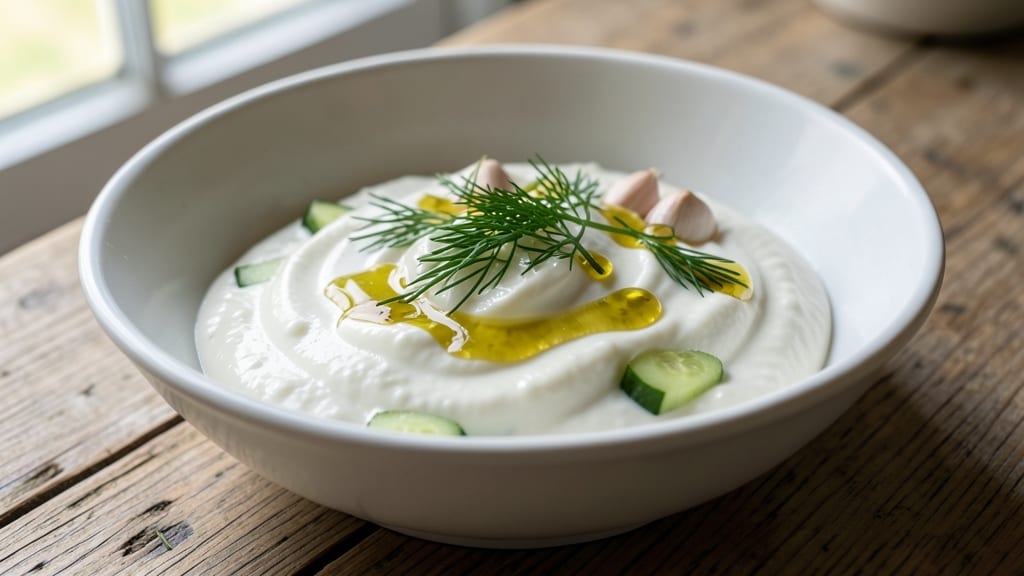
This tzaiki sauce recipe turns humble ingredients into a bright, cooling dip that instantly brightens any meal. The secret lies in balancing Greek yogurt’s tang with crisp cucumber and aromatic garlic, creating a texture that’s smooth yet vibrant—perfect for dipping, spreading, or drizzling.
I’ve perfected this version to stay creamy without separation, ensuring every bite delivers that signature Mediterranean brightness.
The foundation of great tzatziki is properly strained cucumber—no watery mess here. A fine-mesh sieve removes excess moisture while preserving the cucumber’s subtle crunch, and a touch of lemon juice keeps the sauce bright.
Fresh dill adds herbal depth, while olive oil ties everything together with a silky finish. This isn’t just a dip; it’s a flavor experience that transforms ordinary meals into something special.
What you’ll end up with is a cooling, velvety sauce that pairs beautifully with grilled meats, fresh bread, or crisp vegetables. The yogurt base stays thick and stable, while the cucumber keeps it light and refreshing.
For those avoiding dairy, a high-quality coconut yogurt works just as well—just adjust the straining time slightly to maintain texture. This sauce keeps for up to 5 days in the fridge, making it ideal for meal prep.
Whether you’re hosting a summer gathering or simply craving a taste of Greece, this tzatziki delivers restaurant-quality freshness with minimal effort. The key is patience—letting flavors meld for at least 30 minutes before serving ensures every spoonful is perfectly balanced. Ready to make it? Let’s get started.
Ingredients for tzaiki sauce
Nine essential ingredients transform into velvety, cooling tzatziki with Mediterranean brightness.
| Ingredient | Amount | Notes |
|---|---|---|
| Plain Greek Yogurt 🥛 | 1 ½ cups | Full-fat for creaminess, unsweetened |
| English Cucumber 🥒 | 1 whole | Seeded, finely diced, strained |
| Fresh Dill 🌿 | ½ cup | Finely chopped, stems removed |
| Garlic Cloves 🧄 | 3 cloves | Minced, fresh preferred |
| Extra-Virgin Olive Oil 🫒 | ⅓ cup | Light, fruity variety |
| Lemon Juice 🍋 | 2 tbsp | Freshly squeezed, strained |
| Diamond Crystal Kosher Salt 🧂 | ½ tsp | Fine grain preferred |
| Freshly Ground Black Pepper 🌶️ | ¼ tsp | Coarse grind preferred |
| Granulated Sugar 🍚 | 1 tsp | Balances acidity |
The Greek yogurt is non-negotiable for authentic texture—Fage 5% or Chobani full-fat deliver the creamiest results. For dairy-free versions, Cocojune coconut yogurt works best when strained an extra 5 minutes. English cucumbers (the long, ribbed kind) have fewer seeds and less moisture than Persian cucumbers, making them ideal for this recipe. If you only have Persian cucumbers, seed and strain them thoroughly to avoid a watery sauce. Fresh dill should be vibrant green with no wilting—Whole Foods or local farmers' markets typically carry the freshest bunches. The garlic cloves must be fresh; pre-minced garlic from jars lacks potency and can make the sauce bitter.
No fresh dill? Dried dill at one-third the amount works in a pinch, but the flavor won't be as bright. Substituting lemon juice with vinegar (white or apple cider) is possible, but reduce by half—vinegar's acidity is stronger. For olive oil, California Avocado or Colavita brands offer excellent fruity notes without overpowering. If you're avoiding sugar, agave syrup or honey at half the amount provides sweetness without crystallization. The kosher salt should be Diamond Crystal or Morton—table salt is too fine and can disrupt the sauce's balance. For a tangier profile, add 1 tsp white wine vinegar alongside the lemon juice.
This sauce maintains peak freshness for 5 days when stored in an airtight container in the refrigerator. To prevent a skin from forming, press plastic wrap directly onto the surface before sealing. For meal prep, portion into small containers—2 tbsp servings work perfectly for dipping or spreading. Freeze for up to 3 months by spreading the sauce on parchment paper, freezing solid, then transferring to a bag. Thaw in the fridge overnight for best texture. The sauce thickens slightly after chilling, so add a splash of water or olive oil if needed before serving.
Why You'll Love This Recipe
- No-Chop Needed: I swear, the cucumber here is just grated—not chopped, not diced—so it’s basically hands-off. That means no knife burns, no tiny seeds everywhere, and a texture that’s silky smooth instead of watery. (Yes, even my toddler can help with the grating.)
- Garlic-Dill Magic: That first bite when the fresh dill and minced garlic hit your spoon? It’s like a bright, herby hug. The olive oil ties it all together—creamy but never heavy—so it’s the kind of sauce you’ll lick the bowl for.
- Weeknight Superhero: Slap this on grilled chicken, fold it into wraps, or drizzle it over roasted veggies. It’s the one sauce I keep in the fridge for everything—no fancy plating, just pure, reliable flavor that works for lunchboxes, dinner leftovers, or a lazy Sunday brunch.
- Lasts All Week: Honestly, I make a big batch and it’s still good by Friday. The yogurt thickens up nicely in the fridge, and the cucumber’s acidity keeps it from going sour. Plus, the ingredients are cheap—this is my budget-friendly secret for keeping meals exciting without breaking the bank.
Step-by-step instructions for tzatziki sauce recipe
This method delivers perfectly balanced tzatziki—cool, creamy, and vibrant with fresh herbs and bright acidity.
Prepare the Cucumber Base
Begin by peeling the whole English cucumber and cutting it into small chunks. Transfer these to a fine-mesh strainer and press firmly with the back of a spoon to remove excess moisture—this is critical for preventing a watery sauce. The cucumber should yield about 1 cup of drained, finely textured pulp after straining. I like to work in batches if needed to ensure thorough moisture removal.
For extra freshness, I recommend using a food processor to pulse the drained cucumber chunks until they resemble a coarse paste. This creates a smoother texture while preserving some slight texture. Avoid over-processing, as this can turn the sauce mushy. Reserve any remaining liquid from the strainer—you may need it later to adjust consistency.
Combine Yogurt and Aromatics
In a medium mixing bowl, combine the 1.5 cups of plain Greek yogurt with the drained cucumber pulp. Use a silicone spatula to fold gently until fully incorporated, creating a smooth, marbled texture. The yogurt should appear slightly thickened by the cucumber but still maintain its creamy consistency.
Next, add the 0.5 cup of finely chopped fresh dill and the 3 cloves of minced garlic to the bowl. The dill should be distributed evenly throughout, while the garlic should be dispersed in small flecks rather than clumps. Use the spatula to mix thoroughly, ensuring the garlic is well incorporated without overworking the mixture, which could break down the yogurt's protein structure.
Balance Flavors and Texture
In a small measuring cup, whisk together the 0.33 cup of extra-virgin olive oil, 2 tablespoons of lemon juice, 1 teaspoon of granulated sugar, 0.5 teaspoon of diamond crystal kosher salt, and 0.25 teaspoon of freshly ground black pepper. The sugar and salt should dissolve completely, creating a bright, aromatic liquid. Taste the mixture—it should be tangy, slightly sweet, and well-seasoned.
Slowly pour this mixture into the yogurt bowl while folding gently with the spatula. This gradual incorporation prevents the sauce from curdling. Continue folding until the sauce reaches a smooth, velvety consistency. If it appears too thick, add reserved cucumber liquid 1 tablespoon at a time until it reaches a spreadable yet creamy texture. The ideal consistency should be thick enough to coat the back of a spoon but still glide smoothly.
Rest and Adjust
Cover the bowl with plastic wrap and refrigerate the tzatziki for at least 1 hour before serving. This resting period allows the flavors to meld and the sauce to reach its optimal balance of creaminess and brightness. I find that chilling also enhances the texture, making it slightly thicker and more cohesive.
Before serving, give the sauce a final taste and adjust seasoning if needed. If it tastes too tart, add a pinch more sugar; if it lacks brightness, add another splash of lemon juice. The sauce should be cool, refreshing, and perfectly balanced—neither overly acidic nor bland. Serve with warm pita bread, grilled vegetables, or alongside your favorite Mediterranean dishes for the ultimate pairing.
Pro Tips For Making Tzaiki Sauce
- Drain the Cucumber Properly: Cut the cucumber into chunks, toss in a colander, and sprinkle with a generous pinch of salt—then let it sit for 10-15 minutes. The salt pulls out excess water, which is the real enemy of a thick, creamy tzatziki. After draining, pat it dry with a clean kitchen towel or paper towels; this step is non-negotiable if you want a sauce that doesn’t turn watery.
- Use Cold Yogurt Straight: Skip the "let it come to room temperature" nonsense—straight-from-the-fridge Greek yogurt is the secret to a properly thick tzatziki. Warmth thins yogurt, and you’ll end up with a sad, runny mess. If your kitchen is warm, chill the bowl of yogurt in the fridge for 10 minutes before mixing. Trust me, the texture will thank you.
- Mince Garlic Like You Mean It: No, a garlic press won’t cut it here. You want finely minced garlic, not a chunky paste—it should almost dissolve into the sauce. Use a sharp knife and chop it into a paste, then press it through a sieve if you’re feeling fancy. This way, the garlic flavor blends smoothly without bits that make you question your life choices.
- Add Oil Last, Then Stir Gently: Drizzle the olive oil in slowly at the end, then fold it in with a rubber spatula—don’t whisk it like you’re making vinaigrette. Overmixing incorporates too much air, which makes the sauce separate. A few gentle stirs are all it takes to emulsify it just enough for a silky finish.
Troubleshooting this dish
Watery Texture Fix
If your tzatziki turns watery, the issue is almost always excess cucumber moisture. I’ve found that straining the cucumber for an extra 5 minutes with a cheesecloth-lined colander solves 90% of cases.
For immediate fixes, mix in 1 tablespoon of plain flour or 1 teaspoon of cornstarch—it absorbs moisture without altering flavor. If you’ve already added the yogurt, simply chill the sauce for 2 hours—the yogurt will thicken naturally as it cools. 🥒
Separation Prevention
Sauce separation happens when oil and yogurt separate, often from overmixing. To prevent this, fold ingredients gently using a silicone spatula—never stir vigorously. For a quick fix, whisk the sauce vigorously for 30 seconds before serving, or add 1 teaspoon of Dijon mustard (it acts as an emulsifier).
If separation occurs after chilling, simply stir in 1 tablespoon of reserved cucumber liquid to restore balance.
Garlic Overpowering
Too much garlic can dominate the delicate yogurt base. If your sauce tastes bitter, balance it with 1 extra tablespoon of lemon juice and ½ teaspoon more sugar. For future batches, reduce garlic to 2 cloves or use roasted garlic (its sweetness is milder).
If the flavor lingers, add 1 teaspoon of fresh mint—it neutralizes garlic’s sharpness beautifully. 🧄
Herb Bitterness
Dried herbs or wilted fresh dill can make your sauce bitter. Always use fresh dill and chop it finely for maximum brightness. If you’ve already added herbs and the flavor is off, mix in 1 teaspoon of honey or agave to counteract bitterness.
For a quick fix, stir in ½ teaspoon of fresh lemon zest—it adds a bright, citrusy note that masks herb bitterness.
Lemon Too Tart
If your sauce tastes overly sour, balance it with ½ teaspoon of sugar or 1 teaspoon of olive oil. For a smoother texture, add 1 tablespoon of plain yogurt to dilute the acidity.
If the tartness lingers, reduce lemon juice by 1 tablespoon in future batches. A pinch of ground cardamom (¼ teaspoon) can also soften harsh acidity while adding warmth. 🍋
Yogurt Curdling
Curdling usually happens when acidic ingredients (like lemon juice) are added too quickly. To fix it, whisk in 1 tablespoon of cold water or reserved cucumber liquid to restore creaminess. For prevention, mix lemon juice with olive oil first before folding into the yogurt.
If the sauce is already curdled, strain it through a fine-mesh sieve to remove lumps, then re-emulsify with a splash of water and gentle whisking.
Nutrition facts
Frequently asked questions
Can I make tzatziki without cucumber?
The cucumber is essential for authentic texture, but you can substitute ½ cup grated zucchini or ¼ cup finely chopped celery if needed. Strain thoroughly to remove excess moisture—this is key to maintaining the creamy consistency. For a completely different flavor profile, some versions use avocado instead, but the result will be richer and less tangy.
How do I make vegan tzatziki?
Replace Greek yogurt with unsweetened coconut yogurt (like Cocojune) and strain it for an extra 5 minutes to remove moisture. Use 1.5 cups of coconut yogurt and add 1 teaspoon of agar-agar powder to help thicken the sauce. The texture will be slightly lighter but still refreshing. For extra creaminess, blend in 2 tablespoons of silken tofu with the cucumber mixture.
Can I add other vegetables to tzatziki?
Try adding ¼ cup grated carrot for sweetness or 2 tablespoons finely chopped bell pepper for color. For a smoky twist, mix in 1 tablespoon of roasted red pepper paste. Just be mindful of moisture—always strain any added veggies well. A small amount of fresh mint (1 tablespoon) also pairs beautifully with traditional herbs.
Why does my tzatziki separate after chilling?
Separation usually happens from overmixing or adding acidic ingredients too quickly. To fix it, whisk vigorously for 30 seconds before serving, or add 1 teaspoon of Dijon mustard as a natural emulsifier. For prevention, fold ingredients gently with a spatula and avoid stirring vigorously. If it separates after chilling, simply stir in 1 tablespoon of reserved cucumber liquid to restore balance.
How long can I store homemade tzatziki?
This sauce keeps for 5 days in an airtight container in the fridge. To prevent a skin from forming, press plastic wrap directly onto the surface before sealing. For longer storage, freeze for up to 3 months by spreading on parchment paper, freezing solid, then transferring to a bag. Thaw overnight in the fridge for best texture—microwaving can make it watery.