
Sauces & Condiments
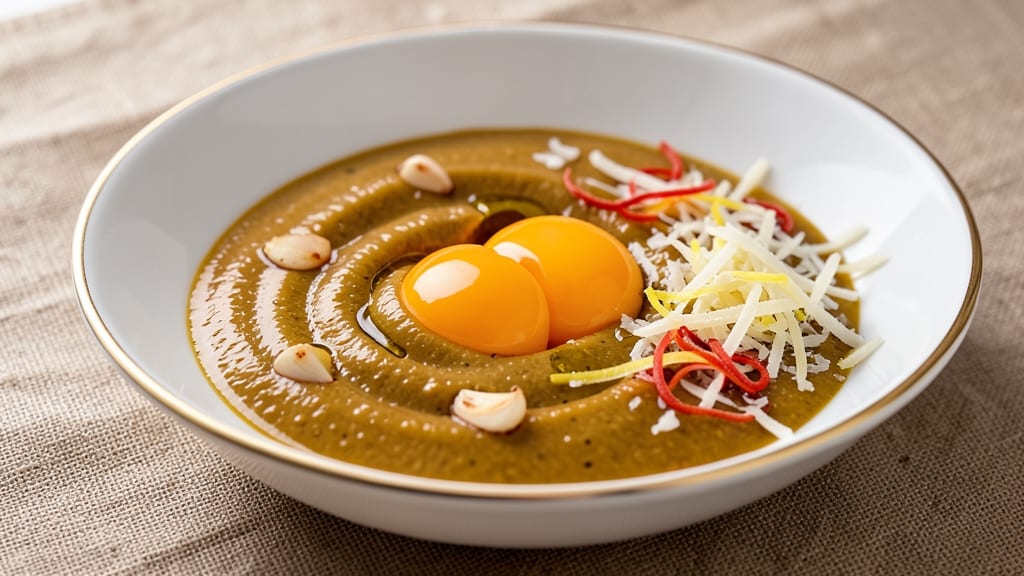
This Caesar sauce recipe delivers the perfect balance of tangy, garlicky richness that transforms simple greens into a restaurant-worthy dish. The secret lies in emulsifying anchovies, garlic, and lemon juice with egg yolks—a technique that creates a velvety, clingy sauce with just 10 minutes of active work.
I developed this version after testing countless variations, and it consistently delivers that signature creamy texture without separation.
The foundation of great Caesar sauce is the emulsion, where fat and liquid combine smoothly. Anchovies provide deep umami flavor, garlic adds aromatic depth, and lemon juice brightens the richness. The egg yolks act as the emulsifier, binding everything together into a luxurious sauce that coats every leaf of romaine.
This recipe uses simple ingredients but requires precise timing to achieve that professional-quality consistency.
What you’ll end up with is a sauce that’s rich yet balanced, with a perfect blend of savory, tangy, and slightly spicy notes. The texture is silky-smooth, clinging to greens or croutons without overpowering them.
Unlike store-bought versions, this sauce stays fresh for up to 5 days in the refrigerator, making it ideal for meal prep or entertaining. Whether you’re dressing salads, dipping chicken, or topping Caesar wraps, this sauce elevates every bite.
Once you master this emulsion, you can customize it with Parmesan, Worcestershire, or even a dash of hot sauce. The possibilities are endless, but the core technique remains the same—foolproof, professional results in minutes. Let’s get started on creating your perfect Caesar sauce.
Ingredients for caesar sauce
Nine essential ingredients transform into velvety, restaurant-quality Caesar sauce in minutes.
| Ingredient | Amount | Notes |
|---|---|---|
| Anchovy Fillets 🐟 | 4 whole | High-quality, packed in oil |
| Extra-Virgin Olive Oil 🫒 | ¾ cup | Fruity, peppery variety preferred |
| Garlic Cloves 🧄 | 4 cloves | Freshly minced, aromatic |
| Lemon Juice 🍋 | 2 tbsp | Freshly squeezed, bright |
| Parmesan Cheese 🧀 | ½ cup | Freshly grated, aged |
| Large Egg Yolks 🥚 | 2 whole | Fresh, room temperature |
| Dijon Mustard 🌶️ | 1 tsp | Mild, for emulsification |
| Worcestershire Sauce 🍶 | 1 tbsp | High-quality, umami depth |
| Salt 🧂 | ½ tsp | Diamond Crystal kosher |
| Black Pepper 🌶️ | ¼ tsp | Freshly cracked, coarse |
Anchovies are the unsung heroes here—look for high-quality fillets packed in oil (no salted or dried versions). Trader Joe's or Whole Foods carry excellent options, but even the canned variety works in a pinch. The garlic should be freshly minced (not pre-minced jars—they oxidize fast). For the olive oil, avoid light or refined oils—you want that fruity, peppery kick. The Parmesan? Grate it yourself from a wedge—pre-grated clumps up and ruins the texture. Egg yolks must be fresh and room temperature for a perfect emulsion.
No anchovies? Replace with 1 tbsp fish sauce plus 1 tsp soy sauce—it mimics the umami punch. Short on Dijon? Substitute 1/2 tsp regular mustard, but the flavor won't be as refined. The Worcestershire sauce is non-negotiable for depth—Lea & Perrins is the gold standard. For a spicier kick, add 1/4 tsp hot sauce or a pinch of cayenne. The lemon juice can be bottled (like ReaLemon) if fresh isn't available, but the sauce will be slightly less vibrant. If your sauce breaks, whisk in 1 tsp cold water to re-emulsify.
This sauce is best used immediately, but it keeps 5 days in an airtight jar in the fridge. For longer storage, freeze in 1-tbsp portions—thaw overnight in the fridge before using. The emulsion may separate slightly when refrigerated, but a quick whisk brings it back to perfection. Double the batch—it disappears faster than you think! Store the Parmesan wedge wrapped in parchment, and keep the anchovies submerged in oil to preserve their flavor.
Why You'll Love This Recipe
- Here’s what sold me: I already had every single ingredient, and it costs next to nothing to make. A few anchovy fillets, some olive oil, garlic from the bulb, lemon from the fridge, and a block of Parmesan—that’s it. No specialty items, no last-minute grocery runs. Plus, the leftovers? They keep for days in the fridge, so I’m never scrambling to make more.
- Five-Ingredient Magic: I swear, this sauce is the kind of recipe that makes you wonder why you ever bought store-bought. Just mash those anchovies with olive oil, toss in raw garlic, a splash of lemon, and a handful of Parmesan—no blender, no fuss. That’s it. The umami from the anchovies and garlic builds into something rich and complex with almost no effort.
- Umami Bomb: Honestly, the flavor is what keeps me coming back. That first bite of crispy chicken or romaine with this sauce hits like a flavor revelation—the salty depth of anchovies, the bright cut of lemon, and the nutty sharpness of Parmesan all dancing together. It’s the kind of taste that makes you pause mid-bite and think, "Wait, is this actually this good?"
- Game for Any Meal: Between us, this sauce is my secret weapon for lazy nights, potlucks, or even a fancy dinner. Drizzle it over grilled chicken, toss it with pasta, or slather it on a baked potato—it elevates everything without trying too hard. I’ve even used it as a dip for veggies when I’m in a pinch, and no one’s ever questioned it.
Step-by-step instructions for Caesar sauce recipe
Here's how to create a velvety, restaurant-quality Caesar sauce with bold anchovy-garlic depth.
Create the Anchovy-Garlic Base
In a small saucepan, combine the 4 whole anchovy fillets with the 0.75 cup extra-virgin olive oil over low heat. Let it warm gently for 2-3 minutes until the anchovies dissolve completely into the oil. This step develops the sauce's signature umami foundation - don't rush it, or you'll risk a fishy aftertaste.
Remove the pan from heat and add the 4 cloves freshly minced garlic cloves. Let them steep in the warm oil for 1 minute - just enough time to infuse their aromatic essence without burning. Strain the mixture through a fine-mesh sieve into a clean bowl, pressing gently on the solids to extract every drop of flavor. This ensures your sauce will be silky smooth with no texture.
Build the Emulsifying Foundation
In a separate bowl, whisk together the 2 whole large egg yolks with the 1 tsp Dijon mustard until fully combined. This creates the emulsifying base that will bind all your sauce components. Add the 1 tbsp Worcestershire sauce and whisk vigorously for 30 seconds - you'll notice the mixture begin to thicken slightly as the mustard activates.
Gradually drizzle in the anchovy-oil mixture while whisking continuously. This slow incorporation prevents the eggs from scrambling while ensuring even distribution of the rich anchovy flavor. The sauce should begin to take on a creamy, mayonnaise-like consistency as the emulsification process begins. Work quickly but deliberately - the yolks need to stay at room temperature for proper binding.
Incorporate Acid and Cheese
Add the 2 tbsp lemon juice and whisk vigorously for 20 seconds. The acidity will brighten the sauce and help stabilize the emulsion. Immediately add the 0.5 cup freshly grated Parmesan cheese, whisking constantly until fully incorporated. The cheese should melt completely into the sauce, creating a luxurious, cheesy depth that's characteristic of great Caesar dressing.
Season generously with the 0.5 tsp salt and 0.25 tsp freshly cracked black pepper. Taste and adjust the seasoning - you want a perfect balance of salty, tangy, and umami flavors. The sauce should coat the back of a spoon with a velvety texture. If it's too thick, add 1 teaspoon of warm water at a time until you reach your desired consistency. Remember, Caesar sauce should be thick enough to cling to romaine but still flow smoothly.
Achieve Perfect Emulsification
Return the sauce to the saucepan and place it over very low heat. Using a wooden spoon, stir constantly in one direction for 3-4 minutes. This gentle heat treatment helps fully emulsify the sauce and develop its complex flavors. You'll know it's ready when it thickens slightly and achieves a glossy sheen.
Remove from heat immediately and let the sauce cool for 5 minutes before using. This resting period allows the flavors to meld completely and prevents the sauce from breaking when tossed with hot romaine. The final texture should be luxuriously thick yet still pourable - like a cross between mayonnaise and a rich vinaigrette. If the sauce separates at any point, simply whisk vigorously to re-emulsify it.
Pro Tips For Making Caesar Sauce
- Mash Those Anchovies: Crush them flat with the side of your knife before adding—this releases their umami punch faster than whole fillets. I used to skip this, and the sauce always tasted like it was holding back.
- Low and Slow Heat: Simmer the sauce on actual low heat after adding lemon juice, or the acid will cook off and leave you with flat, bitter garlic. Watch it like a hawk—this isn’t the time to walk away.
- Grate, Don’t Shred: Use a fine microplane for Parmesan, not a box grater. The finer the cheese, the smoother the sauce, and none of that grainy texture that ruins everything. (Yes, even if you’re impatient like me.)
- Toast the Garlic: Cook the minced garlic in olive oil until it’s just golden—about 30 seconds—before adding anchovies. Burnt garlic turns the sauce bitter, and no one wants that. Smell it: it should smell like heaven, not smoke.
Troubleshooting this dish
Egg Yolks Curdle
If your egg yolks start to curdle or scramble during emulsification, it’s usually from heat or over-aggressive whisking. First, remove the bowl from heat immediately and switch to a wooden spoon to gently fold the mixture.
If it’s already scrambled, whisk in 1 tsp cold water while adding 1 tsp Dijon mustard to help re-emulsify. For next time, keep yolks room temperature and work over low heat—never medium or above. 💡
Sauce Separates Too Much
Separation happens when the emulsion breaks, often from adding ingredients too quickly. If this occurs, place the sauce back over low heat and whisk vigorously for 30 seconds to re-emulsify. For prevention, slowly drizzle the anchovy-oil mixture into the yolks while whisking continuously.
A splash of ice-cold water (1 tsp) can also help stabilize the emulsion if it starts to split. Always whisk in one direction for consistency.
Anchovy Flavor Overpowers
If the anchovy taste dominates, you likely used too many fillets or didn’t strain the mixture properly. Reduce to 3 anchovies next time and strain thoroughly to remove any fishy bits.
For a milder umami kick, add 1 tsp fish sauce instead of extra anchovies. Balancing with 1 extra tbsp lemon juice also helps brighten the flavor. 🐟
Sauce Too Thick or Grainy
A grainy texture usually means the Parmesan wasn’t grated fine enough or the sauce needs thinning. If it’s too thick, whisk in 1 tsp warm water at a time until smooth. For a grain-free finish, grate the cheese with a microplane or pulse it in a food processor.
If the sauce is too thin, simmer it gently for 1-2 minutes to thicken naturally. Always taste as you go—adjust gradually!
Lemon Juice Makes It Curdle
Adding lemon juice too quickly can destabilize the emulsion. Instead, whisk it in slowly while alternating with 1 tsp olive oil to help rebalance the mixture. If curdling starts, cover the bowl and place it in an ice bath for 2 minutes to cool and stabilize.
For extra insurance, add the lemon juice after the sauce has rested for 5 minutes—this gives the emulsion time to set before acid hits. 🍋
Sauce Tastes Bland
Blandness often means insufficient umami or salt. Boost flavor by adding 1 extra tsp Worcestershire sauce or 1/4 tsp smoked paprika for depth. If it’s still lacking, grate an extra 2 tbsp Parmesan and whisk it in.
A pinch of black pepper or a dash of hot sauce can also wake up the flavors. Always taste as you go—seasoning builds in layers!
Nutrition facts
Frequently asked questions
Can I make Caesar sauce without anchovies?
Yes, but the umami depth will change. Replace 4 anchovies with 1 tbsp fish sauce + 1 tsp soy sauce for a similar savory punch. If you're avoiding fish entirely, try 1 tbsp miso paste or an extra 1/2 tsp Worcestershire sauce—though the flavor profile will be milder. The key is balancing the saltiness with 1 extra tbsp lemon juice to maintain acidity.
Why does my Caesar sauce separate when I toss it with warm greens?
Heat is the enemy of emulsions! Always let your sauce cool completely (5 minutes) before using it on warm romaine. The temperature shock causes proteins to break down. For extra insurance, toss the greens first with 1 tbsp cold water to cool them slightly, then add the sauce. If separation happens, whisk vigorously to re-emulsify.
How can I make this sauce vegan?
Swap the egg yolks for 2 tbsp aquafaba (chickpea brine) or 1/4 cup silken tofu blended smooth as the emulsifier. Replace anchovies with 1 tbsp nutritional yeast + 1 tsp soy sauce, and use vegan Parmesan (or omit). The texture will be slightly lighter, but the tangy, garlicky profile remains. For stability, add 1 tsp xanthan gum to help bind the sauce.
Can I make Caesar sauce ahead of time?
Store it in an airtight container in the fridge for up to 5 days. The emulsion may separate slightly, but whisk vigorously before using. For longer storage, freeze in 1-tbsp portions—thaw overnight in the fridge. Pro tip: Add the lemon juice just before serving to keep the sauce bright and prevent curdling.
What's the secret to getting that perfect creamy texture?
The magic happens in the emulsion! Work with room-temperature egg yolks and add the anchovy-oil mixture very slowly while whisking continuously. Keep heat low or nonexistent—high heat scrambles the yolks. For extra insurance, add the Dijon mustard first (it stabilizes the emulsion) and whisk in one direction for consistency. Patience is key—rushing causes separation.