
Sauces & Condiments
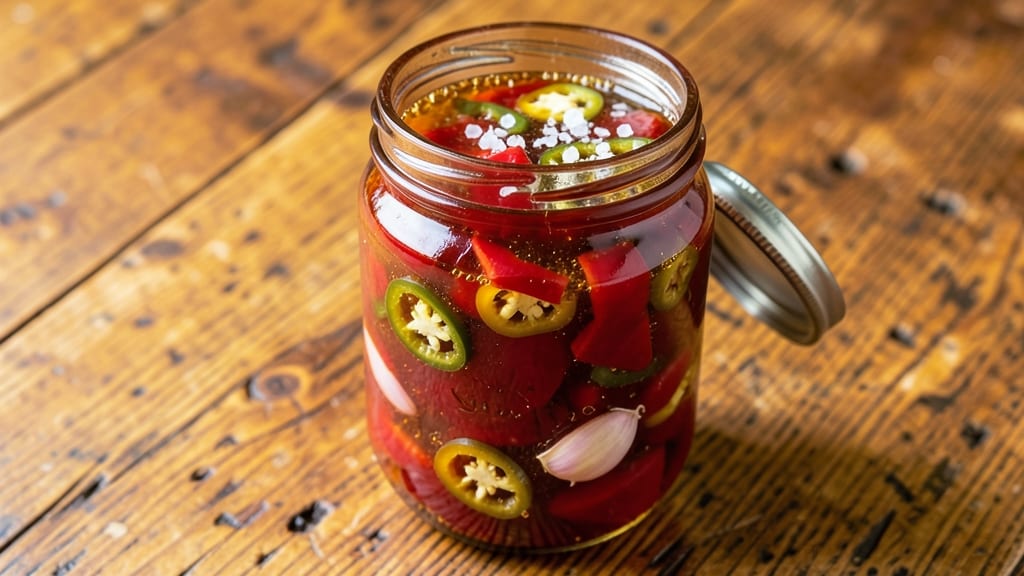
This lacto-fermented hot sauce recipe unlocks fermentation magic—no cooking needed, just probiotic power from simple ingredients. This lacto-fermented hot sauce recipe builds beneficial bacteria while developing bold, complex heat—no stove needed. I perfected it after discovering how fermented peppers deepen flavor while preserving natural enzymes intact.
The process relies on cabbage juice brine (a natural fermentation starter) and precise salt ratios to create ideal conditions for good bacteria. You’ll use fresh peppers, garlic, and vinegar for balance, then let time—2 to 4 weeks—work its magic in a cool, dark place.
The result? A tangy, spicy condiment packed with gut-friendly probiotics and vibrant color.
What sets this apart is the no-heat approach, preserving all the nutritional benefits of fermentation while delivering restaurant-quality heat. The sauce thickens naturally as fermentation progresses, creating a velvety texture that clings perfectly to tacos, eggs, or grilled meats.
Safety is built in through proper fermentation techniques and storage methods.
Perfect for vegans, fermenting enthusiasts, or anyone seeking a healthier alternative to store-bought hot sauces. Once you taste the difference, you’ll never go back to processed heat. Let’s get fermenting—your gut (and taste buds) will thank you.
Ingredients for lacto fermented hot sauce
Simple ingredients transform into probiotic-rich hot sauce—no cooking, just fermentation magic.
| Ingredient | Amount | Notes |
|---|---|---|
| Fresh Red Bell Peppers 🌶️ | 3 whole | Organic preferred, seeds removed |
| Fresh Jalapeño Peppers 🌶️ | 3 whole | Seeds removed for mild heat |
| Fresh Garlic Cloves 🧄 | 6 cloves | Peeled, smashed for faster fermentation |
| Raw Apple Cider Vinegar 🍶 | ½ cup | Unpasteurized for fermentation |
| Raw Cabbage Juice Brine 🥬 | 1 ½ cups | Homemade or store-bought |
| Diamond Crystal Kosher Salt 🧂 | 1 ½ tbsp | Fine grain, non-iodized |
| Fresh Ginger Root 🌿 | 2 tbsp | Grated, organic preferred |
| Extra-Virgin Olive Oil 🫒 | ¼ cup | For sealing, high-quality |
| Filtered Water 💧 | ½ cup | For brine adjustment |
| Nutritional Yeast Flakes 🍞 | 1 tbsp | For umami depth, optional |
The peppers are the heart of this sauce, so pick fresh, firm ones from the produce section. Trader Joe's and Whole Foods carry organic options that ferment beautifully. For the cabbage juice brine, you can either make it fresh from sauerkraut juice or buy it pre-made at specialty stores. The salt is crucial—Diamond Crystal kosher dissolves perfectly and won't alter flavor. Ginger adds warmth, but if you're sensitive to it, reduce to 1 tbsp grated. The garlic cloves should be smashed (not minced) to release their flavor without turning to mush.
No fresh peppers? Dried arbol or chipotle peppers work in a pinch, but soak them first to rehydrate. Running low on cabbage juice? Substitute with watered-down apple cider vinegar (1:1 ratio), though flavor will differ slightly. The nutritional yeast isn't mandatory but adds a cheesy umami that balances the heat. For vinegar, raw, unpasteurized is ideal—Bragg or Maelstrom are solid choices. If your sauce turns out too thin, simmer it gently (though the intro says no cooking, a quick reduction is fine for texture).
Store your fermenting jar in a cool, dark place (65-75°F) for 2-4 weeks, checking weekly for bubbles. Once fermented, transfer to a clean glass jar with a tight seal. Keeps in the fridge for 6-12 months—the flavor actually improves over time. For serving, use a sterilized spoon to avoid contamination. The sauce thickens naturally, but if you prefer it thinner, add a splash of filtered water. Always taste before storing—fermentation can intensify flavors!
Why You'll Love This Recipe
- No Chopping Chaos: I just toss in whole bell peppers and jalapeños—peels, seeds, and all—then crush garlic with the flat of my knife. The cabbage juice brine does all the work while I sip my coffee.
- Garlic-Vinegar Magic: That raw apple cider vinegar cuts through the heat while the fermented garlic adds this deep, funky richness. It’s the kind of flavor that makes you reach for seconds without even thinking.
- Pantry-to-Table Flex: I keep a jar in the fridge for tacos, scrambled eggs, or even drizzled over grilled cheese. Honestly, it’s my go-to for anything that needs a little kick—and it lasts months, so no last-minute grocery runs.
- Fermented Frugality: A single batch stretches into dozens of meals, and the ingredients cost pennies compared to store-bought hot sauces. Plus, the longer it ferments, the better it tastes—so it’s basically free money in flavor.
Step-by-step instructions for lacto-fermented hot sauce
This no-cook method transforms vibrant peppers into probiotic-rich hot sauce with just patience and precision.
Prepare the Fermentation Vessel and Ingredients
Sanitize a clean glass jar with a wide mouth (at least 1-quart size) by rinsing it with filtered water and a splash of raw apple cider vinegar. Sterilization prevents unwanted mold growth during fermentation. In a food processor, finely chop the 3 whole fresh red bell peppers and 3 whole fresh jalapeño peppers (seeds removed for milder heat) until they resemble a coarse paste—think between a dice and a rough chop.
Transfer the chopped peppers to the jar, then add the 6 cloves fresh garlic cloves (peeled and smashed with the flat side of a knife for faster fermentation) and the 2 tablespoons fresh ginger root (grated). The ginger will add a bright, zesty complexity that balances the pepper heat. Pack everything down firmly to eliminate air pockets, which could lead to mold. Leave about 1 inch of headspace at the top.
Create the Brine Solution
In a separate bowl, combine the 1.5 cups raw cabbage juice brine, 1.5 tablespoons diamond crystal kosher salt, and 0.5 cup filtered water. Stir until the salt fully dissolves—this creates the perfect environment for lactobacillus bacteria to thrive. The cabbage juice brine provides natural enzymes that aid fermentation while adding a subtle tang.
Pour the brine over the pepper-garlic-ginger mixture in the jar, ensuring all ingredients are submerged. If any solids float to the top, press them down gently with a clean spoon. The liquid level should cover the contents by at least 1 inch. Seal the jar with its lid (or a fermentation lid if available) and leave it at room temperature, away from direct sunlight.
Ferment for Optimal Flavor Development
Let the mixture ferment at 68-72°F for 5-7 days, checking daily for bubbles or foam on the surface—these are signs of active fermentation. You'll notice the liquid may become slightly cloudy or develop a faint effervescence. Taste after 3 days if you're eager; the flavor will evolve from sharp and acidic to complex and mellow over time.
After 5 days, open the jar and stir in the 0.25 cup extra-virgin olive oil and 1 tablespoon nutritional yeast flakes. The oil helps preserve the sauce and adds a silky texture, while the nutritional yeast contributes a cheesy umami depth. Seal the jar again and let it ferment for 2 more days to allow the flavors to meld completely.
Strain and Bottle the Hot Sauce
After the full 7-day fermentation period, strain the mixture through a fine-mesh sieve or cheesecloth into a clean glass bottle, pressing gently on the solids to extract all the liquid. Discard the leftover pepper solids or compost them—they're nutrient-rich. The resulting hot sauce should be vibrant red-orange with a smooth, slightly thick consistency.
Store the bottled hot sauce in the refrigerator, where it will continue to develop flavor for up to 3 months. The longer it ages, the more complex and balanced the flavors become. Use it to elevate soups, marinades, or drizzle it over tacos and grilled meats for a probiotic kick with every spicy bite.
Pro Tips For Making Lacto Fermented Hot Sauce
- Chop Peppers Small: I learned this the hard way—big chunks mean uneven fermentation and a hot sauce that’s more chunky than smooth. Aim for peppers finely diced (about 1/8-inch pieces), so every bite gets that tangy, spicy punch without texture surprises. (Yes, even if you’re impatient like me.)
- Salt the Garlic: Toss those garlic cloves in a pinch of salt before adding them to the brine—it softens them faster and keeps them from turning bitter. I used to skip this, and my sauce always had those stubborn, hard cloves lurking in every jar.
- Use Cabbage Juice Early: Don’t wait until the last minute to make that cabbage brine—extract it the same day you prep the peppers. Fresh juice means better fermentation speed and a cleaner, brighter flavor. I once used week-old brine, and the sauce tasted dull and flat.
- Seal Tight, Then Wait: After packing your jar, press the lid down firmly and give it a quick twist to remove air bubbles—this prevents mold. Then, let it ferment at room temp for 3–5 days before refrigerating. I used to rush the waiting, and my sauce would either taste underdeveloped or go too sour too fast.
Best sauces and condiments for this lacto fermented hot sauce
Classic Pairings
This lacto-fermented hot sauce shines on tacos al pastor—drizzle it over corn tortillas with marinated pork and pineapple for a tangy-spicy contrast. 🌶️ I also love it on grilled shrimp skewers, where the probiotic richness balances the seafood’s sweetness.
For a vegan bowl, mix it into black bean and quinoa salads with avocado and lime.
Umami Boosters
Enhance the depth by adding 1 tbsp miso paste or 1 tsp soy sauce during fermentation. The umami compounds in these ingredients amplify the pepper’s natural heat while adding complexity. I’ve also experimented with smoked paprika (½ tsp) for a subtle BBQ-like depth—perfect for pulled pork or smoked brisket.
Sweet Heat Balance
Sweetness tames the heat beautifully. Try honey (1 tbsp) or agave (2 tbsp) in the final straining step. For a tropical twist, blend in ½ cup mango purée before bottling. The result? A Caribbean-inspired hot sauce that’s ideal for jerk chicken or coconut curry.
Global Variations
Thai-inspired: Add 1 tsp galangal and 1 tbsp fish sauce (or soy sauce for vegan) to the brine. The aromatic galangal brings citrusy warmth, while fish sauce adds saltiness. Serve with pad thai or satay. 🌏
Mexican-style: Swap jalapeños for 2 habaneros (seeds removed) and add 1 tsp cumin to the brine. The extra heat pairs perfectly with chiles rellenos or queso dip. For a smoky kick, char the peppers before fermenting.
Probiotic Power Uses
Use this sauce as a gut-friendly marinade for tofu or tempeh, where the probiotics tenderize while adding flavor. Stir it into homemade mayo (replace half the oil with the sauce) for a spicy condiment.
Even popcorn lovers will adore it—drizzle it over freshly popped kernels with a pinch of salt.
Nutrition facts
Frequently asked questions
Why does this hot sauce need cabbage juice brine instead of just saltwater?
The cabbage juice provides natural enzymes and beneficial bacteria that kickstart fermentation while adding subtle tangy depth. Regular saltwater lacks these microbial starters, which can make fermentation slower or inconsistent. The brine also contains lactic acid bacteria from the cabbage, which are essential for safe, probiotic-rich fermentation.
How do I know when my fermented hot sauce is ready to strain?
Your sauce is ready when it develops a smooth, slightly thick consistency and the flavors have mellowed after 7 days of fermentation. Look for bubbles that have slowed down and a pleasant tangy aroma. Taste test after 5 days—if the heat is balanced and the acidity has softened, it's time to strain. Over-fermenting can make it too sour.
Can I use dried peppers instead of fresh ones?
Yes, but you'll need to soak dried peppers in warm water for 30 minutes first to rehydrate them. Use about 1/3 the quantity of dried peppers compared to fresh (e.g., 1 tbsp dried jalapeños instead of 3 fresh). The flavor will be more concentrated, so adjust to taste. Dried peppers work best for smoky or aged hot sauces.
What should I do if mold appears during fermentation?
If you see any mold (usually fuzzy spots), discard the entire batch immediately—it's a sign of contamination. To prevent this, always keep ingredients submerged, use clean tools, and ferment at 68-72°F. If you notice mold within the first 3 days, the issue is likely surface contamination from improper sealing.
How long will my finished hot sauce keep in the fridge?
Properly stored, your fermented hot sauce will stay fresh for 6-12 months in the refrigerator. The flavor actually improves over time as the probiotics continue to develop. For best quality, use within 6 months—after that, the heat may mellow but the sauce remains safe to consume.