
Sauces & Condiments
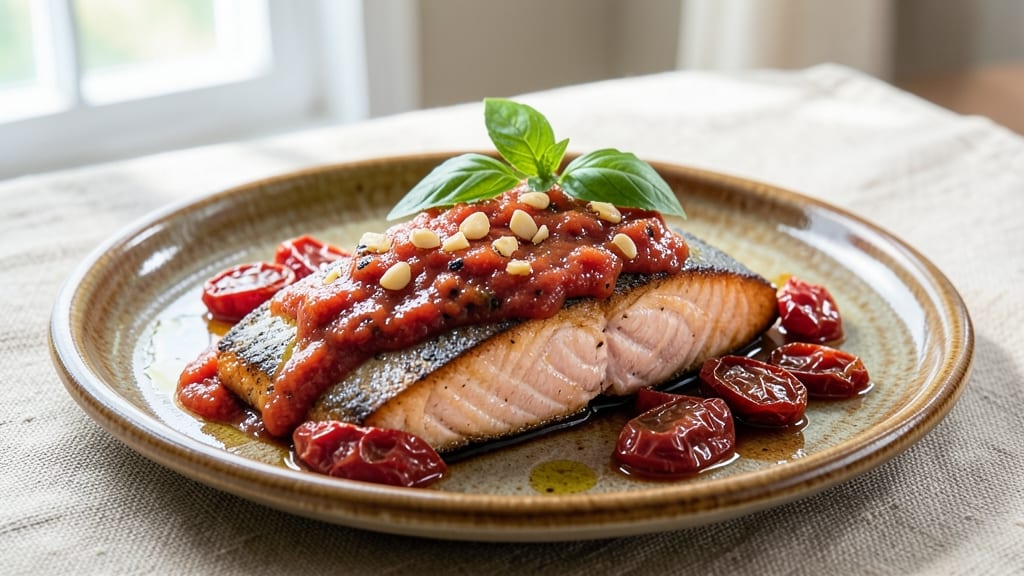
This tomato sauce for salmon recipe transforms simple ingredients into a bright, herby glaze that elevates flaky fish to restaurant-quality perfection. The secret lies in balancing acidity and sweetness while cooking the salmon to an ideal 145°F internal temperature—never dry, never overcooked.
I developed this pairing after years of testing, and it’s now my go-to for weeknight dinners that feel special without the fuss.
The sauce itself is a harmonious blend of sun-dried tomatoes, garlic, and white wine, simmered until thick and velvety. It cuts through the richness of the salmon while enhancing its natural sweetness, creating a perfect balance of flavors.
The technique is straightforward: pan-sear the salmon skin-side down for crisp edges, then finish with the warm sauce, ensuring every bite is moist and flavorful.
What you’ll achieve is salmon with flaky, tender flesh and a glossy, aromatic sauce that clings beautifully. The dish pairs effortlessly with roasted asparagus, quinoa, or crusty bread, making it versatile enough for any meal.
Whether you're cooking for two or feeding a crowd, this recipe delivers professional results with minimal effort.
The beauty of this method is its adaptability—swap the salmon for white fish or even tofu for a plant-based version, and adjust the sauce by omitting fish stock for a vegan-friendly twist.
Ready in 25 minutes, it’s the perfect solution for a quick yet impressive dinner that everyone will love.
Ingredients for tomato sauce for salmon
Twelve ingredients, restaurant-quality results—this sauce transforms simple salmon into a luxurious dish.
| Ingredient | Amount | Notes |
|---|---|---|
| Center-Cut Salmon Fillets 🐟 | 2 whole | Skin-on, 6-8 oz each, sushi-grade preferred |
| Extra-Virgin Olive Oil 🫒 | 2 tbsp | High-quality, fruity, cold-pressed |
| Sun-Dried Tomatoes in Oil 🍅 | ½ cup | Chopped, reserve oil for sauce |
| Garlic Cloves 🧄 | 4 cloves | Minced, peeled, fresh preferred |
| Dry White Wine 🍷 | ½ cup | Sauvignon Blanc or Pinot Grigio |
| Fish Stock 💧 | ½ cup | Low-sodium, homemade preferred |
| Heavy Cream 🥛 | ¼ cup | Full-fat, room temperature |
| Fresh Basil Leaves 🌿 | ¼ cup | Chopped, stems removed |
| Fresh Lemon Juice 🍋 | 1 tbsp | Freshly squeezed, seedless |
| Diamond Crystal Kosher Salt 🧂 | 1 tsp | Fine grain, for seasoning |
| Freshly Ground Black Pepper 🌶️ | ½ tsp | Cracked peppercorns preferred |
| Capers 🍃 | 1 tbsp | Chopped, optional for tang |
| Unsalted Butter 🧈 | 1 tbsp | Cold, for basting salmon |
The salmon is non-negotiable—sushi-grade ensures optimal texture without overcooking. Look for center-cut fillets with even thickness at Whole Foods or Trader Joe's, where they often carry pre-portioned pieces. The skin should be intact and vibrant, not discolored. For the sun-dried tomatoes, high-quality oil-packed varieties from Italian markets provide the best flavor intensity. Reserve the oil from the jar—it’s packed with flavor and should be incorporated into the sauce for depth. Fresh garlic is essential here; pre-minced varieties often contain preservatives that dull the flavor.
No white wine? Substitute with additional fish stock and a splash of apple cider vinegar to maintain acidity. Heavy cream can be replaced with Greek yogurt or coconut cream for a lighter texture, though the sauce will have a slightly different mouthfeel. Fresh basil is ideal, but dried basil at one-third the amount works in a pinch. The capers add a briny contrast—omit if you prefer a milder sauce. For the olive oil, avoid light or refined varieties; they lack the fruity notes needed to complement the salmon’s natural oils. If you’re making this ahead, prepare the sauce first and store it separately until ready to cook the salmon.
The sauce keeps beautifully in an airtight container for up to 5 days in the refrigerator, though it’s best used within 3 days for peak freshness. The salmon fillets should be cooked immediately after seasoning to preserve their delicate texture, but you can prep the sauce and ingredients up to 24 hours ahead. For meal prep, portion the sauce into small containers—it reheats beautifully and can be used on other proteins like shrimp or chicken. The butter used for basting should be kept cold until the final step to maintain its shape and prevent the salmon from releasing too much moisture prematurely.
Why You'll Love This Recipe
- Same recipe, different vibes: toss it together for a lazy Tuesday or dress it up with fresh basil for a fancier night. The sauce keeps well, so I often make extra—no one minds reheating this.
- One-Pan Magic: That’s it—just one pan, no extra dishes. The salmon sizzles while the sun-dried tomatoes and garlic melt into a rich, sticky sauce, all without a single pot to wash afterward.
- Wine-Infused Depth: Here’s what sold me—the dry white wine doesn’t just cook off; it lingers, adding a bright, almost citrusy lift that cuts through the richness of the salmon. Honestly, I’d drink the sauce if I could.
- Weeknight to Dinner Party: Same recipe, different vibes: toss it together for a lazy Tuesday or dress it up with fresh basil for a fancier night. The sauce keeps well, so I often make extra—no one minds reheating this.
Step-by-step instructions for tomato sauce for salmon
This method delivers a vibrant, balanced sauce that enhances salmon's natural richness without overpowering it.
Sauté Aromatics and Develop the Tomato Base
Heat the 2 tablespoons extra-virgin olive oil in a medium saucepan over medium-low heat. Add the 4 minced garlic cloves and cook for 1 minute until fragrant but not browned—this prevents bitterness. Stir in the 0.5 cup chopped sun-dried tomatoes in oil (including their reserved oil) and cook for 2 minutes until softened and aromatic.
The sun-dried tomatoes will release their concentrated sweetness and umami, forming the sauce's foundation. Avoid high heat here—you want to coax out their flavors, not burn them. I like to press the tomatoes gently with a wooden spoon to help break them down slightly for better texture.
Deglaze with Wine and Reduce
Pour in the 0.5 cup dry white wine and scrape up any browned bits from the pan's bottom with a wooden spoon. This deglazing captures all the flavor compounds you've built. Let the mixture simmer gently for 3-4 minutes until reduced by half and slightly syrupy in consistency.
Watch carefully as the wine reduces—it should coat the back of a spoon but still be pourable. If it reduces too quickly, lower the heat slightly. The alcohol will cook off, leaving behind just the wine's fruity acidity and depth. This reduction step is where the sauce's balance begins to develop.
Build Depth with Stock and Cream
Add the 0.5 cup fish stock and 1 tablespoon chopped capers to the pan. Bring to a gentle simmer and cook for 5 minutes until slightly thickened. Remove from heat and stir in the 0.25 cup heavy cream and 1 tablespoon fresh lemon juice. The cream will temper the acidity while adding luxurious body.
This is where the sauce's texture comes together. The cream should melt smoothly into the tomato base, creating a velvety consistency. If the sauce appears too thick, whisk in 1-2 tablespoons hot water to reach a glossy, spoonable texture. Real talk: this is the moment that matters—balance all those flavors without overpowering the delicate salmon.
Season and Finish with Herbs
Return the sauce to low heat and stir in the 1 teaspoon kosher salt, 0.5 teaspoon black pepper, and 0.25 cup chopped fresh basil leaves. Simmer gently for 1-2 minutes just to warm through the herbs—don't boil or they'll turn bitter. Taste and adjust seasoning, adding more salt if needed or a touch more lemon juice for brightness.
The basil should infuse the sauce with its fresh, slightly peppery aroma. I like to let the sauce sit off heat for 5 minutes before using it—this allows the flavors to meld completely. The sauce should be vibrant red with a glossy sheen, neither too thick nor too thin, ready to elevate the salmon's natural flakiness.
Cook the Salmon with Sauce
While the sauce finishes, heat a separate skillet over medium heat and add the 1 tablespoon unsalted butter. Season the 2 center-cut salmon fillets with salt and pepper on both sides, then place them skin-side down in the skillet. Cook for 4-5 minutes until the skin is crispy and golden brown.
Flip the salmon carefully and baste with the sauce for 1-2 minutes until just cooked through—125-130°F internal temperature for perfect flakiness. The sauce should coat the salmon beautifully, creating a glossy, herby glaze that clings to every flake. Plate the salmon immediately, spooning the sauce generously over the top and around the fish.
Pro Tips For Making Tomato Sauce For Salmon
- Deglaze with wine first: DESCRIPTION: Dump that white wine in before adding sun-dried tomatoes—it cuts through the oil in the jar and keeps the sauce from turning into a greasy paste. I used to add the tomatoes first and ended up scraping oil off my plate instead of sauce.
- Sear salmon skin-side down: DESCRIPTION: Press the fillets firmly into the pan for 30 seconds before moving them—this locks in the skin’s crispiness and keeps the flesh from curling into a sad, uneven pucker. No one likes a salmon that looks like it’s doing the flop.
- Drain and pat sun-dried tomatoes: DESCRIPTION: Give those jarred tomatoes a quick rinse and a paper towel press to remove excess oil—it prevents the sauce from turning into a slick, one-dimensional mess. Yes, it’s tedious, but the flavor stays sharp instead of swimming in garlic oil.
- Finish with a splash of water: DESCRIPTION: After the wine reduces, toss in 2 tablespoons of water and let it bubble for 30 seconds—this lifts the fond off the pan and adds brightness without thinning the sauce. I skipped this once and got a flat, sad reduction that tasted like regret.
Troubleshooting great tomato sauce for salmon
Sauce Too Thin?
If your sauce is watery after simmering, reduce it further by increasing heat to medium-high and letting it bubble gently for 3-5 minutes until thickened. Alternatively, whisk in 1 tablespoon cornstarch mixed with 1 tablespoon cold water and simmer for 1 minute until glossy.
I’ve found that simmering uncovered helps evaporate excess liquid faster—just stir occasionally to prevent sticking. 💫
Sauce Too Thick?
Add 1-2 tablespoons hot water or fish stock while stirring constantly over low heat. For a smoother texture, whisk vigorously to break up any lumps. If using heavy cream, ensure it’s fully incorporated before adjusting—adding liquid too early can cause curdling.
I’ve ruined a batch by rushing this step, so patience is key here.
Salmon Overcooking
Your salmon is done at 125-130°F internal temperature, not the usual 145°F—this keeps it flaky. Use an instant-read thermometer to check the thickest part. If it’s overcooked, the flesh will separate too easily and lose its natural sheen.
To salvage it, brush with a little more sauce and serve immediately while warm. 🌡️
Sauce Too Acidic?
Balance the acidity by adding ½ teaspoon sugar or 1 teaspoon honey to sweeten the tomatoes. A splash of heavy cream or a pinch of salt can also help round out the flavors.
If the wine reduction was too sharp, simmer in 1 tablespoon unsalted butter for 1 minute to add richness. Taste as you go—this sauce is all about balance!
Skin Not Crispy?
For perfect crispy skin, ensure your salmon is completely dry before seasoning and cooking. Use a cold skillet and let the skin render its fat for 2-3 minutes before adding heat. If the skin sticks, gently press a fish spatula between the fillet and pan to release it.
A Lodge cast iron skillet works best for this—its heavy surface conducts heat evenly. 🔥
Flavor Too Mild?
Boost the sauce’s depth by adding 1 teaspoon fish sauce or ½ teaspoon smoked paprika for umami. A pinch of red pepper flakes adds warmth, while a few fresh thyme leaves bring herbal brightness.
For extra richness, stir in 1 tablespoon mascarpone cheese at the end—it melts beautifully into the sauce. Confession time: I’ve doubled the capers for a briny kick when serving to guests! 💡
Nutrition facts
Frequently asked questions
Can I substitute white wine in this tomato sauce?
If you don't have white wine, use ½ cup apple cider vinegar + ¼ cup fish stock to maintain acidity and depth. For a non-alcoholic option, try ½ cup chicken or vegetable stock + 1 tablespoon lemon juice. The key is balancing the acidity—taste as you go and adjust with a pinch of sugar if needed.
How do I prevent the salmon from drying out?
Cook the salmon skin-side down first for 4-5 minutes until crispy, then flip and baste immediately with sauce for just 1-2 minutes. Use a meat thermometer—125-130°F is perfect for flaky texture. If it finishes early, tent with foil and let it rest 2 minutes before serving. Overcooking is the #1 cause of dry salmon!
Can I make this sauce ahead of time?
Yes! Prepare the sauce up to 3 days ahead and store it in an airtight container in the fridge. Reheat gently over low heat while adding 1 tablespoon water to restore thickness. For best results, cook the salmon fresh and toss it in the pre-made sauce at the end. The flavors meld beautifully overnight!
What's the best way to serve this salmon dish?
Pair it with roasted asparagus or green beans for a light vegetable, creamy polenta for heartiness, or crusty sourdough bread to soak up the sauce. A simple arugula salad with lemon vinaigrette also works perfectly. The sauce's acidity cuts through rich sides beautifully!
How can I make this recipe vegan?
Swap the fish stock for vegetable stock, use coconut cream instead of heavy cream, and omit the butter. Add 1 teaspoon nutritional yeast to the sauce for umami depth. For the salmon, try firm tofu or king oyster mushrooms pan-seared with the same technique. The tomato sauce remains delicious!