
Sauces & Condiments
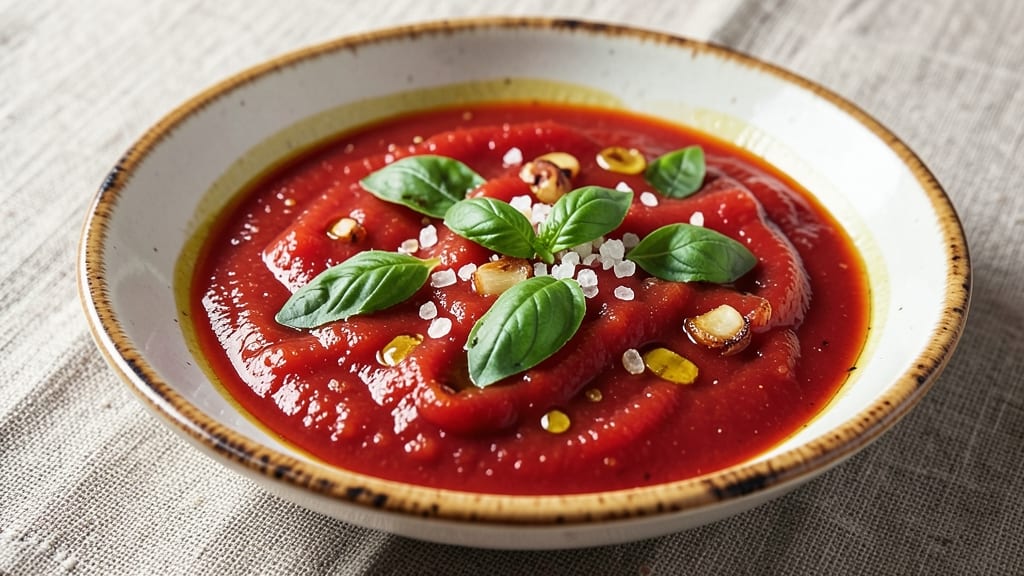
This classic tomato sauce recipe delivers the foundation of Italian cooking—deep, umami-rich flavor that transforms simple meals into something extraordinary. The secret lies in slow simmering canned tomatoes with aromatics until they break down into a velvety, concentrated sauce, then finishing with fresh herbs for brightness.
I’ve perfected this method over years of testing, ensuring it works equally well for pasta, pizza, or as a standalone condiment.
The beauty of this sauce is its versatility and simplicity. With just a few pantry staples—canned tomatoes, garlic, onions, olive oil, and herbs—you’ll create a sauce that’s richer than store-bought but takes less than 30 minutes to prepare.
The key technique is patience: letting the sauce reduce gradually develops layers of flavor that no shortcut can replicate. This isn’t just a sauce; it’s the backbone of Italian comfort food.
What you’ll end up with is a smooth, deeply flavorful tomato sauce with a perfect balance of acidity and sweetness, finished with fresh basil that adds a vibrant, aromatic finish.
The texture is ideal for tossing with al dente pasta or spreading on crispy pizza crust, but it’s also fantastic as a dipping sauce or topping for grilled meats. Every bite carries that restaurant-quality depth you crave.
Store it in the fridge for up to 5 days or freeze for months—this sauce only gets better with time as the flavors meld. Whether you’re feeding a family or prepping for meal prep, this classic tomato sauce is your go-to for effortless, professional results.
Let’s get started with the ingredients you already have.
Ingredients for classic tomato sauce
Pantry staples meet Italian tradition for this restaurant-quality tomato sauce.
| Ingredient | Amount | Notes |
|---|---|---|
| San Marzano Plum Tomatoes 🍅 | 28 oz | Canned, whole peeled tomatoes |
| Extra-Virgin Olive Oil 🫒 | ½ cup | High-quality, fruity variety |
| Yellow Onion 🧅 | 1 whole | Medium size, finely chopped |
| Garlic Cloves 🧄 | 4 cloves | Fresh, minced for depth |
| Fresh Basil Leaves 🌿 | ¼ cup | Packed, loosely chopped |
| Diamond Crystal Kosher Salt 🧂 | 1 ½ tsp | Adjust to taste gradually |
| Freshly Ground Black Pepper 🌶️ | ½ tsp | For subtle heat balance |
| Dried Oregano 🍃 | 1 tsp | Italian variety preferred |
| Red Wine Vinegar 🍷 | 1 tbsp | Brightens acidity balance |
| Granulated Sugar 🍬 | ½ tsp | Balances acidity naturally |
The tomatoes are non-negotiable—San Marzano is the gold standard, with their sweet, meaty texture and low acidity. Whole peeled cans give you control over crushing, which builds better texture. I stock up at Whole Foods or Trader Joe's during summer harvests when they're freshest. For the garlic, fresh is essential—dried lacks that umami punch. The olive oil should be fruity, not bitter; California or Italian varieties work best. Fresh basil? Use more than you think—it's the aromatic finish that makes this sauce sing.
No San Marzano? Crush a 28-oz can of high-quality crushed tomatoes—just skip the added salt. Short on basil? Dried oregano at half the amount gets you close, but fresh is irreplaceable. The vinegar can be swapped for lemon juice, but red wine vinegar adds complexity. Sugar seems counterintuitive, but it rounds the acidity beautifully. For a deeper flavor, add 1 tsp tomato paste to the oil before cooking. And if you're making this for pizza, add a pinch of red pepper flakes—trust me, it elevates everything.
This sauce develops better with time—30 minutes at a simmer is ideal, but don't rush it. Store in the fridge for 5-7 days in an airtight container, or freeze for up to 6 months. The flavor actually improves after 24 hours as the components meld. For meal prep, make a double batch—it's perfect over pasta, with grilled chicken, or as a pizza topping. The basil wilts fast, so add it last or store it separately and mix in just before serving.
Why You'll Love This Recipe
- No Chopping Nightmare: I swear by this—just dice one onion and smash a few garlic cloves. That’s it. The San Marzano tomatoes do all the heavy lifting, bursting with sweetness while I sip my coffee.
- Sunshine in a Jar: That first spoonful? Pure brightness. The olive oil sings with garlic, the tomatoes deepen into rich umami, and the basil? It’s like a fresh breeze after a long day. Honestly, it’s the kind of sauce that makes me want to eat it straight from the pot.
- Pasta Party Starter: Sunday supper? Weeknight dinner? This sauce is my go-to for both. Toss it with spaghetti, spoon it over grilled chicken, or freeze half for lazy Mondays. My college roommate still begs for my "secret" sauce—it’s just this, with a sprinkle of parmesan.
- Budget Magic: A single can of San Marzano tomatoes and a bulb of garlic stretch into meals for days. I make double batches, freeze portions, and never stress about takeout. Between us, this is how I feed my family for under $10.
Step-by-step instructions for classic tomato sauce
Here's how to craft a timeless tomato sauce that balances sweetness, acidity, and umami perfectly.
Sauté the Onion and Garlic Foundation
Heat the 0.5 cup extra-virgin olive oil in a heavy-bottomed saucepan over medium-low heat. Add the 1 whole finely chopped yellow onion and cook for 8-10 minutes, stirring occasionally, until the onion becomes translucent and begins to caramelize at the edges. This slow cooking develops deeper sweetness and prevents burning.
Push the onions to the sides of the pan and add the 4 cloves minced garlic cloves. Cook for 30-60 seconds until fragrant but not browned—garlic burns quickly, and you want to preserve its sweet, aromatic qualities rather than bitter notes. Here's the thing—don't walk away during this step. Garlic can go from perfect to burnt in seconds.
Build the Sauce Base with Tomatoes and Seasonings
Pour in the 28 oz San Marzano plum tomatoes, crushing them lightly with your hands as you add them. This helps break down the tomatoes and releases more flavor. Stir in the 1.5 tsp diamond crystal kosher salt, 0.5 tsp freshly ground black pepper, 1 tsp dried oregano, 1 tbsp red wine vinegar, and 0.5 tsp granulated sugar. The vinegar brightens the tomatoes while the sugar subtly balances their natural acidity.
Bring the mixture to a gentle simmer over medium heat, then reduce the heat to low. The sauce should bubble softly—if it's too vigorous, the tomatoes will break down too quickly and lose their texture. Let it simmer uncovered for 25-30 minutes, stirring occasionally. You're looking for a sauce that thickens naturally as the moisture evaporates and the flavors meld together.
Finish with Fresh Basil and Refine the Texture
After 25-30 minutes, stir in the 0.25 cup loosely chopped fresh basil leaves. The fresh basil adds a bright, herbal note that cuts through the richness of the tomatoes. Taste the sauce and adjust the seasoning if needed—this is where you can fine-tune the balance. If it needs more acidity, add a splash of red wine vinegar. If it's too thick, whisk in 1-2 tablespoons of water to loosen it to your desired consistency.
Simmer for another 5-10 minutes to let the basil infuse fully. The sauce should now have a velvety texture with a deep, complex flavor—sweet from the tomatoes, bright from the vinegar, and aromatic from the herbs. Real talk: this is the moment that matters, where all your efforts come together into something truly classic. Let it cool slightly before serving, as the flavors continue to develop even after the heat is off.
Pro Tips For Making Classic Tomato Sauce
- CRUSH THE ONIONS: I used to chop them fine and end up with a sauce that tasted like onion water. Now I cut them into ¼-inch slices—big enough to soften but not disappear. The texture stays subtle, and you won’t regret it when the sauce is silky.
- SWEAT THE GARLIC LOW: After burning three batches, I finally figured out: garlic belongs on low heat once it hits the pot. It takes 3-4 minutes to soften properly, and if you rush it, you’ll taste bitterness. Patience here makes all the difference.
- SALT THE TOMATOES FIRST: Yes, even if you’re using San Marzanos. Toss the halved tomatoes with a generous pinch of salt and let them sit for 10 minutes before cooking. It draws out the water, concentrates the flavor, and gives you a smoother sauce faster.
- STIR THE BASIL IN LATE: I was skeptical until I tried it—adding fresh basil at the very end (last 30 seconds) keeps its bright, herbal punch instead of letting it turn bitter. Tear it by hand instead of chopping; those leaves release flavor better when they’re whole.
Common mistakes when making great classic tomato sauce
Overcooking the Tomatoes
One of the biggest mistakes is letting the sauce boil vigorously. When tomatoes simmer too hard, they break down too quickly, losing their natural sweetness and becoming pasty rather than velvety. I’ve ruined multiple batches by cranking the heat too high—always keep it at a gentle bubble.
If your sauce starts to foam excessively, reduce the heat immediately. The goal is 25-30 minutes of low simmering, not rapid boiling. 🌡️
Skipping the Onion Caramelization
Rushing the onion cooking is another common error. When onions don’t caramelize, they add a raw, sharp flavor that overpowers the tomatoes. I learned this the hard way—my first batch tasted bitter because I only cooked the onions for 5 minutes instead of the full 8-10 minutes.
The key is patience: let them soften and develop that sweet, golden edge before adding garlic. Trust me, your sauce will thank you.
Adding Basil Too Early
Fresh basil is delicate and wilts quickly in heat. If you add it too soon, you’ll end up with a mushy, bitter flavor instead of the bright aroma you want. I always wait until the very end—after the 25-30 minute simmer—to stir in the basil.
This ensures it stays vibrant and adds that fresh, herbal finish. Pro tip: If you’re prepping ahead, store the basil separately and mix it in just before serving. 🌿
Ignoring the Vinegar-Sugar Balance
The vinegar and sugar might seem like small details, but they’re crucial for balancing the sauce. Without the 1 tbsp red wine vinegar, the tomatoes can taste flat, while skipping the 0.5 tsp sugar makes the acidity too sharp.
I once made a batch without sugar and nearly threw it out—it tasted harsh. The sugar rounds out the acidity, creating that perfect harmony. Taste as you go and adjust gradually.
Using Low-Quality Tomatoes
Not all canned tomatoes are created equal. Cheap, watery tomatoes with added salt or preservatives will never give you that rich, concentrated flavor. I’ve tried store-brand tomatoes, and they always result in a thin, bland sauce.
Invest in San Marzano plum tomatoes—their natural sweetness and meaty texture are worth every penny. If you can’t find them, look for high-quality crushed tomatoes without added salt. Your sauce deserves better ingredients. 🍅
Forgetting to Taste and Adjust
Many home cooks pour all the ingredients into the pot and walk away, only to discover the sauce is either bland or over-seasoned. I always taste the sauce at least twice: once after adding the tomatoes and seasonings, and again after simmering.
Adjust the salt, vinegar, or sugar as needed—this is where you fine-tune the flavor. Remember, you can always add more, but you can’t take it out. A little patience here makes all the difference. 💡
Nutrition facts
Frequently asked questions
Can I make this sauce without fresh basil?
Yes, but the flavor will be different. Use 1 teaspoon dried basil instead, but add it with the other dried herbs. For extra depth, try 1/2 teaspoon dried thyme alongside it. The sauce will still be delicious, though the aroma won't be as vibrant as with fresh basil.
How do I adjust the thickness for different uses?
For pasta, aim for a medium consistency—like heavy cream. If too thick, whisk in 1-2 tablespoons water or pasta water. For pizza, make it slightly thinner to spread easily. For dipping, reduce it longer until it coats the back of a spoon. Stir frequently during simmering to control thickness.
What's the best way to store leftover sauce?
Transfer to an airtight container and refrigerate for up to 5 days. For longer storage, freeze in 1-cup portions—leave 1/2-inch headspace to prevent expansion cracks. Thaw overnight in the fridge and reheat gently on low heat, stirring occasionally. The flavor actually improves after 24 hours in the fridge!
Can I substitute vinegar with something else?
Yes, but results vary. For brightness, use 1 tablespoon lemon juice or 1 teaspoon balsamic vinegar. Red wine vinegar gives the most complex flavor, while white wine vinegar is milder. Avoid apple cider vinegar—it adds too much tartness. Taste and adjust other seasonings accordingly.
Why did my sauce turn out too acidic?
This usually happens from over-simmering or using tomatoes with high acidity. Balance it by adding 1/2 teaspoon sugar or 1/4 teaspoon baking soda (just a pinch!) to neutralize. For future batches, reduce simmer time to 20 minutes or use San Marzano tomatoes which are naturally sweeter. Taste as you go to prevent this!