
Sauces & Condiments
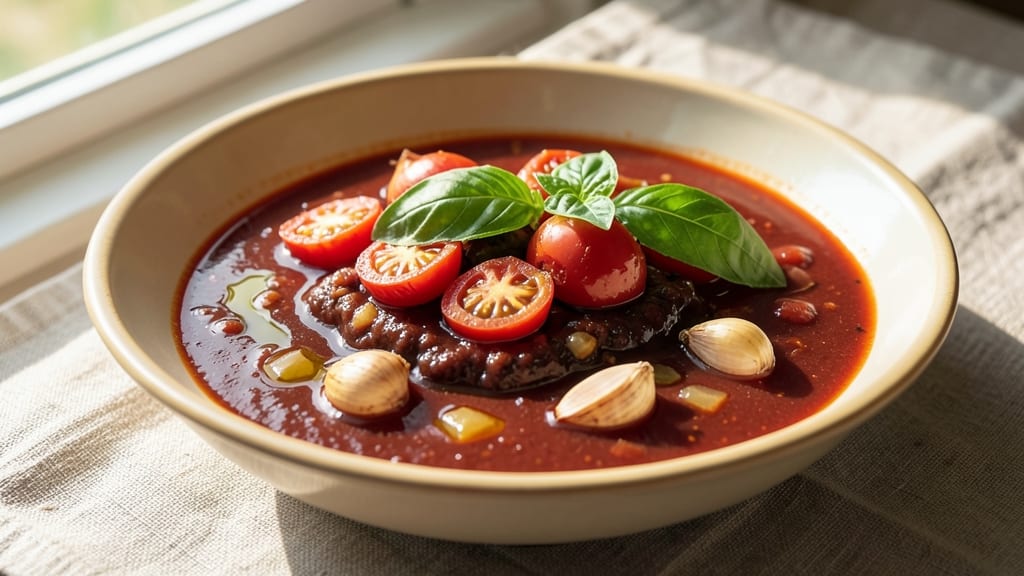
This canned tomato marinara sauce recipe turns humble pantry staples into a velvety, umami-packed masterpiece you’ll want to master. The secret lies in simmering the tomatoes low and slow, allowing their natural sweetness to concentrate while building layers of flavor through aromatics and herbs.
I developed this recipe during a particularly busy month when fresh tomatoes weren't an option, and it became my go-to sauce for everything from pasta to pizza toppings.
What makes this sauce special is its versatility and depth of flavor achieved with minimal ingredients. You'll only need canned tomatoes, olive oil, garlic, and basic pantry staples—no fancy equipment or specialty items required.
The key technique is creating a flavor base by cooking onions and garlic until they're deeply aromatic before adding the tomatoes, which transforms ordinary canned tomatoes into something extraordinary.
By the time you're done, you'll have a velvety, well-balanced marinara sauce with perfect acidity and umami depth. The sauce thickens naturally as it simmers, creating a consistency that clings beautifully to pasta and enhances any dish it touches.
This is the kind of sauce that makes you appreciate how simple ingredients can create something truly special when given proper attention.
The best part? This sauce keeps beautifully in the refrigerator for up to a week, allowing you to make a big batch and use it throughout the week.
Whether you're tossing it with spaghetti, using it as a pizza sauce, or serving it as a dip for garlic bread, this marinara delivers restaurant-quality results with pantry staples. Let's get started on creating your perfect sauce.
Ingredients for canned tomato marinara sauce
Eight simple ingredients transform into velvety marinara magic—no fancy tomatoes needed!
| Ingredient | Amount | Notes |
|---|---|---|
| Canned San Marzano Tomatoes 🍅 | 28 oz | Crushed by hand for texture |
| Extra-Virgin Olive Oil 🫒 | ½ cup | High quality, fruity variety |
| Yellow Onion 🧅 | 1 whole | Diced fine for even cooking |
| Garlic Cloves 🧄 | 4 cloves | Minced finely for deep flavor |
| Tomato Paste 🍅 | 2 tbsp | Squeeze tube preferred for ease |
| Dried Basil 🌿 | 1 tsp | Or 1 tbsp fresh basil leaves |
| Dried Oregano 🍃 | ½ tsp | Italian or Mediterranean blend |
| Salt 🧂 | 1 tsp | Kosher or sea salt preferred |
| Black Pepper 🌶️ | ¼ tsp | Freshly ground for best flavor |
| Red Wine 🍷 | ¼ cup | Dry, bold variety like Cabernet |
The tomatoes make or break this sauce. San Marzano cans are ideal, but any high-quality crushed tomatoes work—just check they're not watery. Trader Joe's and Whole Foods carry great options, but the store brand at Walmart or Target is often just as good. The key is to crush them by hand (or with a potato masher) for that rustic texture. If you're using whole peeled tomatoes, give them a quick pulse in the food processor—don't over-blend, or you'll lose that chunky appeal. The tomato paste is non-negotiable here; it's what gives that deep, concentrated flavor. I always grab the squeeze tubes at Trader Joe's—no mess, lasts forever.
No red wine? Substitute with extra tomato paste or a splash of balsamic vinegar. Fresh basil is ideal, but dried works perfectly at one-third the amount—just be sure it's labeled Italian or Mediterranean. The onions and garlic are your flavor foundation, so don't rush them. Cook them until they're golden and deeply aromatic (about 8-10 minutes). That's where the magic happens! If you're short on time, pre-minced garlic from a jar works, but fresh is always better. The olive oil should be the good stuff—something you'd drizzle on bread. None of that cheap, flavorless cooking oil. And if you're worried about the sauce being too acidic, a pinch of sugar balances it out beautifully.
This sauce gets better with time—like, seriously, it's a game-changer. Let it simmer for at least 45 minutes, but 1-2 hours is even better. It thickens as it cooks, so if it's too thin, just simmer uncovered for another 10-15 minutes. Store it in the fridge for up to 1 week, or freeze it in 1-cup portions for up to 6 months. I always make a double batch because it disappears so fast. It reheats beautifully—just warm it gently on the stove or microwave it in 30-second bursts to keep it smooth. Perfect for pasta, pizza, or even as a dip for garlic bread!
Why You'll Love This Recipe
- Here’s what sold me: the tomatoes. San Marzano aren’t just better—they’re obviously better. Sweet, meaty, and with that perfect acidity that cuts through the richness of olive oil and tomato paste. Simmer them low and slow, and you get a sauce so deep it’ll make you question why you ever bought jarred stuff.
- No-Chop Nightmare: I swear by this recipe when I’m too tired to dice onions. Just one onion gets minced in a food processor—two minutes—and the San Marzano tomatoes handle the rest. The garlic? Smash those cloves with the flat of a knife, no peeling required. That’s how you turn a Tuesday into a "I actually cooked something" win.
- San Marzano Magic: Here’s what sold me: the tomatoes. San Marzano aren’t just better—they’re obviously better. Sweet, meaty, and with that perfect acidity that cuts through the richness of olive oil and tomato paste. Simmer them low and slow, and you get a sauce so deep it’ll make you question why you ever bought jarred stuff.
- Pasta Party Starter: Between us, this sauce is my secret weapon for lazy Sundays and last-minute dinner guests. Dump it over spaghetti for 10 minutes, or let it simmer all day while you prep garlic bread and a simple salad. It’s the backbone of my "I don’t know what I’m doing" dinner parties—and somehow, it always saves the night.
Step-by-step instructions for canned tomato marinara sauce
Transform simple pantry staples into a rich, flavorful marinara that rivals restaurant-quality versions.
Sauté Aromatics Until Fragrant
Heat the 0.5 cup extra-virgin olive oil in a large, heavy-bottomed saucepan over medium heat. Add the 1 whole yellow onion, diced fine, and cook for 5-6 minutes until soft and translucent. You'll notice the onions release their sweet aroma and begin to caramelize slightly at the edges.
Lower the heat to medium-low and add the 4 cloves garlic cloves, minced finely. Cook for 30-60 seconds until the garlic becomes golden and fragrant—this prevents it from burning. The key here is patience; garlic burns in seconds and turns bitter. Stir constantly to distribute the heat evenly.
Build the Sauce Base with Tomatoes and Wine
Pour in the 0.25 cup red wine and let it simmer for 2-3 minutes until it reduces by about half. You'll see the alcohol cook off, leaving behind a deeper, more concentrated flavor. This step is crucial for developing the sauce's complexity—don't skip it.
Add the 28 oz canned San Marzano tomatoes (crushed by hand for texture) and the 2 tbsp tomato paste. Stir well to combine, scraping up any browned bits from the bottom of the pan. These bits are packed with flavor and will enrich your sauce. Bring the mixture to a gentle simmer over medium heat and let it cook uncovered for 15 minutes to allow excess moisture to evaporate.
Season and Simmer for Depth of Flavor
Add the 1 tsp dried basil, 0.5 tsp dried oregano, 1 tsp salt, and 0.25 tsp black pepper. Stir everything together and reduce the heat to low. Let the sauce simmer uncovered for 20-25 minutes, stirring occasionally. You're looking for a thick, glossy consistency—this happens as the tomatoes break down and release their juices.
Taste the sauce and adjust the seasoning if needed. The acidity of the tomatoes and the depth of the wine should balance perfectly. If the sauce is too thick, add 1-2 tablespoons of water to loosen it. If it's too thin, simmer it uncovered for another 5-10 minutes to reduce further. The goal is a sauce that coats the back of a spoon but isn't gluey.
Finish and Rest for Maximum Flavor
Once the sauce reaches your desired consistency, remove it from the heat and let it rest for 10-15 minutes. This resting period allows the flavors to meld and deepen. You'll notice the sauce becomes even more aromatic and cohesive as it sits.
Give it a final taste and adjust the seasoning one last time if necessary. Serve immediately over pasta, or store it in an airtight container in the refrigerator for up to 5 days or freeze for up to 3 months. The longer it rests, the more complex and delicious it becomes—this sauce only gets better with time!
Pro Tips For Making Canned Tomato Marinara Sauce
- CRUSH THE ONIONS: Dice them fine—like, smaller than you think—so they melt into the sauce instead of sitting as chunks. I used to cut them in big wedges, and half the time I’d taste onion in every bite. A sharp knife and a quick chop (no need to peel if you’re in a hurry) save time and keep the texture smooth.
- SWEAT THE GARLIC LOW: After cooking the onions, turn the heat down to medium-low and add the garlic. Too much heat burns it in seconds, and that bitter taste ruins the whole sauce. I learned this the hard way—my grandmother would shush me when I’d crank the burner. Just let it sit until fragrant, not brown.
- DILUTE THE PASTE FIRST: Mix the tomato paste with a splash of water or broth before adding it to the pot. This prevents clumping and ensures it blends evenly into the sauce. I skip this sometimes, and the paste just sits like little orange rocks. Two tablespoons of water do the trick—no one will notice.
- SIMMER NOT BOIL: Once everything’s combined, keep the sauce at a gentle simmer—tiny bubbles at the edges, not a rolling boil. High heat breaks down the tomatoes too fast, making the sauce thin and mealy. Lower heat = richer flavor, even if it takes 20 minutes longer. (Yes, even if you’re impatient like me.)
Regional styles of canned tomato marinara sauce
Classic Italian
The foundation of any great marinara is its Italian roots, where slow-simmered tomatoes meet aromatic herbs. In Rome, this sauce is often called salsa di pomodoro—simple, bright, and built on San Marzano tomatoes crushed by hand for texture.
I add a splash of red wine (like a bold Chianti) to deepen the flavor, then finish with fresh basil just before serving. The key is patience: simmer for at least 45 minutes to let the acidity mellow and the flavors meld. 🌿
Neapolitan Twist
Neapolitan marinara leans richer with garlic-infused olive oil and a touch of sugar (just ½ tsp) to balance the acidity. I like to add a pinch of cinnamon (trust me, it works!) and crushed red pepper flakes for subtle heat.
The sauce is traditionally served with pizza Margherita, so it’s slightly thinner—almost like a ragù—to cling to the dough. Use whole peeled tomatoes instead of crushed for a rustic texture, and simmer uncovered for 1 hour to concentrate the flavors. 🍕
Southern U.S. Style
In the South, marinara often gets a smoky, hearty upgrade with smoked paprika and a dash of Worcestershire sauce. I swap the red wine for apple cider vinegar (just 1 tbsp) to brighten the sauce, and add diced bell peppers for sweetness.
This version is perfect for spaghetti with meatballs or as a pizza topping. Cook it with low-and-slow heat for 30 minutes to let the smoky flavors develop deeply. 🌶️
Sicilian Sun-Dried
Sicily’s marinara shines with sun-dried tomatoes (about ½ cup, chopped) and anchovies (just 1 fillet, dissolved in the oil). The anchovies add umami depth without overpowering, and the sun-dried tomatoes bring a concentrated, sweet-savory note. I finish with a squeeze of lemon juice and fresh parsley for brightness.
This sauce pairs beautifully with pasta alla Norma or as a dip for garlic knots. Simmer for 40 minutes to let the anchovy flavor integrate smoothly. 🍋
Modern Fusion
For a contemporary twist, I blend in roasted garlic (from 2 cloves) and a splash of balsamic glaze (just 1 tbsp) at the end. Add crumbled feta or goat cheese for creaminess, and finish with toasted pine nuts for crunch.
This version works as a pasta sauce or dipping sauce for crudités. Keep the heat medium-low and simmer for 30 minutes to avoid burning the balsamic. ✨
Spicy Carolina
In the Carolinas, marinara gets a kick with hot honey (just 1 tsp) and Cajun seasoning (about ½ tsp). I add diced jalapeños and smoked sausage (like Andouille) for depth.
This sauce is perfect for shrimp and grits or as a pizza topping. Simmer for 25 minutes to let the spices bloom, and adjust the heat with extra hot honey if needed. 🔥
Nutrition facts
Frequently asked questions
Can I substitute store-brand canned tomatoes for San Marzano?
Yes, but choose a high-quality brand with minimal added water. Look for whole peeled tomatoes or crushed tomatoes with no chunks of tomato juice. If using watery brands, simmer the sauce uncovered for 10-15 extra minutes to thicken it properly. The flavor difference is subtle when properly seasoned.
Why does my sauce taste too acidic?
This happens when the tomatoes aren't simmered long enough to mellow their acidity. Always cook the sauce uncovered for at least 45 minutes. For immediate balance, add ½ tsp sugar or 1 tbsp tomato paste to deepen the flavor. A splash of red wine (as in the recipe) also helps round out the acidity.
How do I make this sauce thicker?
Simmer uncovered for 10-15 extra minutes to evaporate moisture. If still too thin, mix 1 tbsp tomato paste with 1 tbsp water and stir in. For a quicker fix, mash a few cooked tomato chunks at the bottom of the pan into the sauce. Avoid adding flour or cornstarch—it alters the authentic flavor.
Can I make this sauce in a slow cooker?
Follow the same steps but transfer everything to the slow cooker after sautéing the aromatics. Cook on low for 4-5 hours or high for 2-3 hours, stirring occasionally. The slow cooker's gentle heat develops deeper flavor. Just add 1 extra tablespoon of tomato paste to account for the longer cooking time.
What's the best way to freeze this sauce?
Cool the sauce completely, then portion into airtight containers or freezer bags, leaving ½-inch headspace for expansion. Label with the date—it keeps for up to 6 months. Thaw overnight in the fridge and reheat gently on the stove, stirring occasionally. For best texture, avoid microwaving directly from frozen.